 Bellingham Siding
 Why Edgemoor's Climate Is Hard on Siding
Edgemoor sits close to Bellingham Bay, on wooded, bluff-influenced lots shaped by mature tree canopy — a setting that gives the neighborhood its character but also creates one of the toughest exterior environments in Whatcom County. The combination of salt-laden air off the water, long stretches of driving rain, and shade that blocks sun and wind from drying a wall down after a storm is a lot to ask of any siding material. Salt air accelerates corrosion in fasteners, flashing, and trim hardware. Wind-driven rain off the bay finds its way into any gap in caulk or flashing that a drier inland home would never expose. And the tree cover that makes Edgemoor lots so appealing also keeps walls damp longer, which is exactly the condition moss and algae need to establish themselves.
None of this makes Edgemoor a bad place to own a home. It means the siding on that home has to be selected and installed with this specific mix of conditions in mind — not treated the same as a dry, sun-exposed lot on the other side of Bellingham.
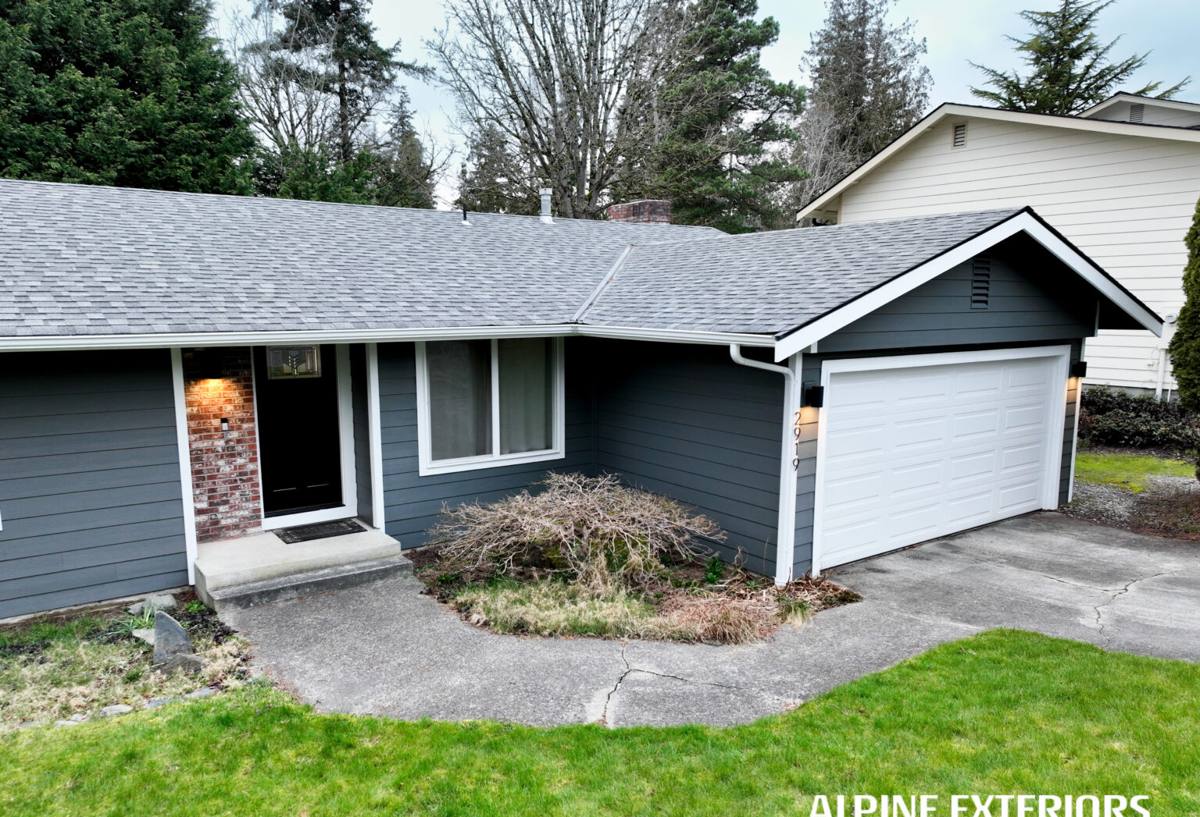
What Edgemoor Homes Actually Need From Their Siding
Moisture management, not just water resistance
A siding product's water resistance only matters if the wall assembly behind it can also dry out. On shaded, damp lots like much of Edgemoor, siding stays wet longer after every rain event, so the drainage plane, weep paths, and back-ventilation behind the panels matter as much as the panel material itself. A siding job that looks right on install day but traps moisture behind it will show problems within a few wet seasons, usually as soft trim, peeling paint, or staining at butt joints.
Real moss and algae resistance
Moss doesn't just grow on roofs. On shaded siding it takes hold at horizontal joints, under trim, and anywhere water sheets slowly instead of running off. Once established, moss holds moisture directly against the siding surface, which speeds up whatever deterioration the material is already prone to. A factory finish that resists mildew and algae growth, combined with detailing that keeps water moving instead of pooling, makes a measurable difference on a lot like this.
Hardware that won't corrode near the water
Fasteners, flashing, and trim connectors close to Bellingham Bay see more corrosion pressure than the same hardware a few miles inland. Standard fasteners can start staining or weakening years before the siding itself would otherwise need attention. Corrosion-resistant fastener and flashing choices are a small line item that prevents a much bigger repair down the road.
Why We Install Only James Hardie in This Climate
We standardized on James Hardie fiber cement siding for every home we work on, and neighborhoods like Edgemoor are a clear example of why. Hardie's HZ5 product line is engineered specifically for climates with heavy moisture exposure — the Pacific Northwest is one of the regions it's built around. It's non-combustible, dimensionally stable in wet-dry cycling, and finished with the ColorPlus factory coating, which is baked on under controlled conditions rather than field-applied. That matters directly for moss and mildew resistance: a factory finish holds its integrity and color far longer under damp, shaded conditions than a field-applied paint job, and it's backed by a real, transferable warranty on both the substrate and the finish.
We don't install vinyl, LP SmartSide, Cemplank, Allura, primed spruce, or cedar, and in a climate like Edgemoor's the reasoning is straightforward. Vinyl can warp and doesn't hold up structurally against wind-driven rain intrusion behind panels. Cedar and primed wood need active, ongoing maintenance — refinishing, moss treatment, caulk renewal — to keep moisture out, and that maintenance burden only grows in a shaded, high-moisture setting. Other fiber cement brands may perform reasonably, but we've chosen to standardize on one system, one factory finish process, and one warranty structure so we can guarantee the installation quality behind it. That's a professional standard we hold across every job, not a claim that every alternative fails.
What a Correct Installation Involves
Fiber cement siding performs the way it's supposed to only when the details behind and around the panels are done correctly. In a wet, shaded climate like Edgemoor's, these details aren't optional extras — they're the difference between a wall that dries out after every storm and one that slowly traps moisture.
- A drainage gap (rain screen) behind the siding so any moisture that gets past the panel face can escape instead of sitting against the sheathing
- Factory-primed cut edges resealed on site with the manufacturer-specified sealant, since raw cut edges are the fastest path for water into the panel
- Corrosion-resistant fasteners driven to the manufacturer's specified pattern and depth — overdriven or underdriven nails are a common cause of early failure
- Proper flashing and kick-out details at every window, door, roofline, and penetration, directing water away from the wall rather than behind it
- Correct starter strip and butt-joint treatment so horizontal seams don't become the first place moss and water collect
- Caulking only where the manufacturer calls for it — over-caulking traps moisture just as reliably as under-caulking lets it in
Any one of these steps done wrong can undercut everything the material itself is capable of. This is why installation quality matters as much as product choice, especially on a lot with the shade and moisture load Edgemoor properties tend to have.
Our Process for Edgemoor Jobs
We start with a walk-around assessment that looks specifically at moisture and moss patterns on the existing siding — where water is pooling, where moss has already established, and where trim or flashing is showing early corrosion. That tells us as much about the job as the siding's age does. On wooded, bluff-adjacent lots we also plan around mature trees and root systems near the foundation line, since equipment staging and material handling need to respect them rather than cause avoidable damage.
From there, the scope is priced around what your home's exposure actually needs — north-facing and heavily shaded walls typically get more attention to drainage and moss-resistant detailing than sun-exposed elevations on the same house. We handle permitting through the City of Bellingham as part of the job, and we sequence work around the wet season where possible so panels, cut edges, and fresh caulk aren't sitting exposed to rain before they're fully sealed.
James Hardie vs. Other Siding Options in a Wet, Shaded Climate
Every siding material has a place. Here's how the main options actually compare once you account for salt air, shade, and moss pressure specifically — not just general durability claims.
| Factor | James Hardie Fiber Cement | Vinyl | Cedar / Primed Wood |
|---|---|---|---|
| Moisture and rot resistance | Non-combustible, dimensionally stable, does not rot | Doesn't rot itself, but seams and panels can trap moisture behind them | Vulnerable to rot without consistent maintenance |
| Moss and algae resistance | Factory finish resists mildew growth | Can host surface algae, especially in shaded areas | Highly prone to moss in damp shade without regular treatment |
| Salt air / coastal durability | Strong; substrate and finish both engineered for exposure | Can become brittle over time with UV and salt exposure | Finish degrades faster near salt air; needs more frequent refinishing |
| Maintenance burden | Low — occasional wash, no repainting needed for the warranty period | Low material maintenance, but repairs are visible and hard to color-match | High — regular refinishing, caulking, and moss treatment |
| Typical performance life when installed correctly | Decades, with a transferable warranty backing it | Variable; depends heavily on installation and sun/moisture exposure | Shorter without disciplined maintenance |
Signs Your Current Siding Is Losing the Fight
If your Edgemoor home's siding is more than a decade or two old, or has visible moss on north- or shade-facing walls, it's worth a look before small issues become structural ones. Watch for:
- Moss or dark streaking concentrated along horizontal joints and under trim
- Soft or spongy spots when you press on the siding or trim boards
- Paint that's peeling or bubbling rather than just fading
- Visible gaps or cracked caulk at window and door trim
- Rust staining running down from fasteners or metal flashing
- Warping, cupping, or panels that no longer sit flush against the wall
Any of these on their own might just need a repair. Several at once, especially on the shaded side of the house, usually means moisture has been getting behind the siding for a while.
Why a Crew That Already Works Edgemoor Matters
Detailing a wall correctly for a shaded, salt-air, high-moss environment isn't something you learn from a manufacturer's install manual alone — it comes from having actually worked this kind of lot before, seen where water collects on homes like these, and adjusted the drainage and flashing details accordingly. A crew that regularly works Edgemoor and similar bluff and waterfront neighborhoods around Bellingham has already made those judgment calls on other homes with the same exposure yours has. That's the difference between a technically correct install on paper and one that actually holds up through a Whatcom County winter.
If you're weighing a siding replacement or repair on an Edgemoor home, we're happy to take a look and give you a straightforward, no-pressure estimate — no invented urgency, just an honest read on what your home's siding actually needs. Use the form below to get started.