 Bellingham Siding
 Building Decks That Actually Hold Up in Happy Valley
Happy Valley sits close enough to Bellingham Bay that the weather it deals with is a little different from a deck built inland. The combination of salt-laden air, near-constant winter rain, and shaded, moss-prone yards means a deck here ages faster than the same structure would in a drier part of Whatcom County. We've built and repaired decks throughout this neighborhood long enough to know which shortcuts show up as problems in year three, not year twenty.
This page covers what a custom deck actually needs to survive Bellingham's climate, what our process looks like from first visit to final walkthrough, and why hiring a crew that already understands Happy Valley's specific conditions makes a real difference in how long your investment lasts.
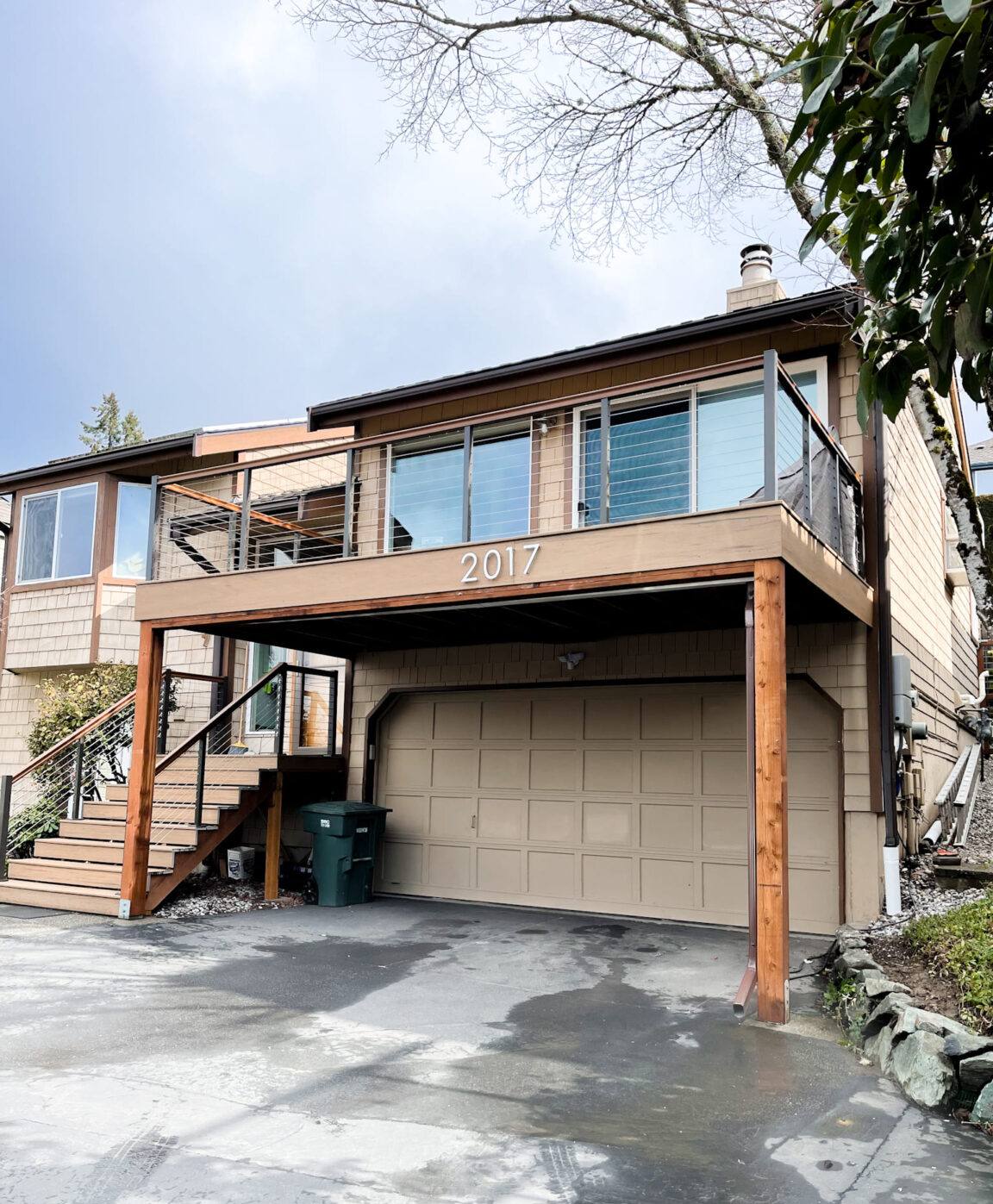
What Bellingham's Climate Does to an Unprotected Deck
A deck built without the local climate in mind doesn't fail all at once. It fails slowly, in ways that are easy to miss until the damage is expensive.
Moss and Constant Moisture
Happy Valley's tree cover and the region's long wet season create ideal conditions for moss and algae growth on horizontal surfaces. Beyond looking bad, moss holds moisture against decking boards and traps it in fastener holes and board gaps, which is exactly the environment that accelerates rot in wood and can trap grime in composite grain patterns if the boards aren't properly ventilated underneath.
Salt Air and Metal Corrosion
Proximity to Bellingham Bay means airborne salt reaches yards and structures more than most homeowners expect, even a few miles inland. Salt air speeds up corrosion in fasteners, brackets, and railing hardware. A deck built with standard hardware instead of marine-grade or coated fasteners can develop rust streaks, weakened joints, and loosening connections years before it should.
Driving Rain and Water Intrusion
Whatcom County's rain doesn't always fall straight down. Wind-driven rain gets under poorly flashed ledger boards, behind railing posts, and into end grain that hasn't been sealed. This is where most of the serious structural failures we see start — not on the visible deck surface, but at the connection points a homeowner never looks at.
Choosing the Right Decking Material for This Climate
There's no single "best" decking material for every homeowner — it depends on budget, how much upkeep you're willing to do, and how the deck will be used. Here's how the common options actually perform in a wet, salt-air, moss-prone environment like Happy Valley.
| Material | Moisture & Moss Resistance | Maintenance | Typical Lifespan Here |
|---|---|---|---|
| Pressure-treated fir/pine | Good if sealed regularly; end grain is a weak point | Annual cleaning and re-sealing recommended | 15–20 years with upkeep |
| Cedar | Naturally rot-resistant, still needs sealing against moss staining | Periodic cleaning, oil/stain every 2–3 years | 20–25 years with upkeep |
| Composite (Trex, TimberTech, etc.) | Won't rot; can still grow surface moss/algae if shaded and damp | Occasional washing, no sealing or staining | 25–30+ years, backed by manufacturer warranty |
| PVC decking | Fully moisture-proof surface | Lowest maintenance of the group | 25–30+ years, backed by manufacturer warranty |
We don't push one product line over another. What we push is matching the material to how much maintenance you actually want to do. A shaded, moss-prone Happy Valley yard is a tougher environment for wood than a sunny, open lot, and that's worth factoring in honestly before you commit.
Where Decks Actually Fail First: Framing and Substructure
Homeowners tend to focus on the decking boards because that's what they see. But the structure underneath — ledger board, joists, posts, and footings — is where nearly every serious deck failure originates, and it's invisible once the project is finished.
Ledger Board Flashing
The ledger board, where the deck attaches to the house, needs proper flashing to keep wind-driven rain from working its way behind the siding and into the rim joist. This is one of the most common failure points we find on older or improperly built decks in this area, and it's often the most expensive to fix once rot has spread into the house framing.
Joist Protection
Joists cut and drilled on site expose fresh wood that hasn't been treated, which becomes an entry point for moisture. Joist tape or a comparable flashing membrane over the top of each joist keeps water from soaking into the wood through fastener holes — a small step that makes a large difference in a climate this wet.
Post Footings and Grade Contact
Footings need to be sized and set below frost depth and clear of standing water, which matters in yards with heavier clay soil or poor drainage — common in parts of Happy Valley. Posts sitting in perpetually damp soil or resting directly on grade are one of the fastest ways to shorten a deck's structural life.
Railings, Fasteners, and Hardware: The Salt-Air Factor
Hardware is a place where cutting corners doesn't show up right away, but it always shows up eventually. In a coastal-influenced climate like Bellingham's, we use fasteners and structural connectors rated for exterior, corrosion-resistant use — hot-dip galvanized or stainless, depending on the application — rather than standard-grade hardware that's fine in a dry inland climate but corrodes faster here.
Railing systems get the same consideration. Metal railing components, cable rail hardware, and post connectors are all points where salt air accelerates wear. We spec hardware based on what actually holds up near Bellingham Bay, not just what's cheapest on the shelf.
Our Deck-Building Process in Happy Valley
Every property is different, but our process follows the same core steps to make sure nothing gets missed:
- On-site visit to assess the yard's drainage, sun/shade exposure, soil conditions, and how the deck will attach to the house
- Honest conversation about material options and what each one actually requires in terms of long-term upkeep
- Design and layout, including footing placement, joist spacing, and railing/stair details specific to the site
- Permit handling where required, including structural details for inspection
- Proper ledger flashing, joist protection, and corrosion-resistant hardware throughout — not just on the visible surface
- Final walkthrough covering how to maintain the specific material you chose for our climate
We don't treat any of these steps as optional add-ons. Skipping flashing or using standard hardware might save a little on the front end, but in this climate it shows up as a maintenance headache or a repair bill within a few years.
Permits and Practical Considerations for Whatcom County
Most raised decks and any deck attached to a house require a building permit in Whatcom County, with specifics depending on height, size, and attachment method. We handle the permit application and inspection scheduling as part of the build process so you're not left figuring out county requirements on your own. If you're replacing an older deck, we'll also flag anything from the original build — undersized footings, missing flashing, outdated hardware — that wouldn't pass inspection today even if it was standard practice when it was built.
Maintenance That Actually Matters in a Wet Climate
Whatever material you choose, a little seasonal maintenance goes a long way toward getting the full lifespan out of a deck in this climate. Here's what we recommend for Happy Valley homeowners:
- Sweep or blow off leaves and debris regularly, especially in shaded areas where moisture collects
- Wash the deck surface at least once a year to remove moss and algae before it takes hold
- Check and clear gaps between boards so water can drain instead of pooling
- Inspect railing posts and fasteners annually for rust streaks or looseness
- Reseal or re-stain wood decking every 2–3 years, or per manufacturer guidance for composite/PVC
- Confirm downspouts and gutters aren't draining directly onto or under the deck structure
Why Local Experience in Happy Valley Matters
A deck built by a crew unfamiliar with this area's conditions can still look great on installation day. The problems that come from skipped flashing, mismatched hardware, or the wrong material for a shaded, damp lot don't show up until later — and by then they're a repair project instead of a planning decision. Working with a contractor who already builds regularly in Happy Valley and understands what Bellingham's salt air, rain, and moss season do to a structure over time means those decisions get made correctly the first time.
If you're planning a new deck or need to replace one that's showing its age, we're happy to take a look and talk through honest options for your property. Reach out for a free, no-pressure estimate using the form below.