 Bellingham Siding
 Why Edgemoor's Waterfront Setting Is Tough on Decks
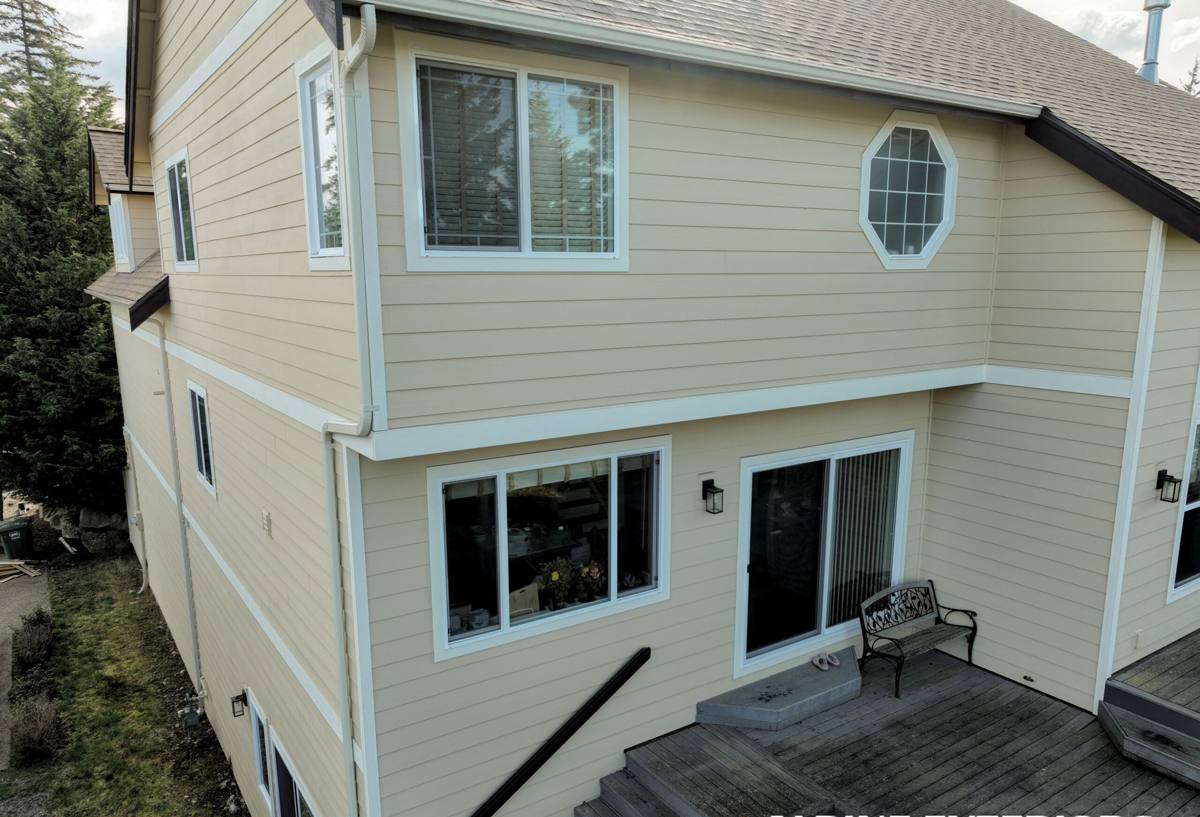
Edgemoor sits close to the water along Bellingham Bay, and that proximity is exactly what makes decking here different from a build in a more inland Whatcom County neighborhood. Salt-laden air moves off the bay and settles on every exposed surface, including fasteners, flashing, and the deck boards themselves. Add in Bellingham's long stretch of driving rain from fall through spring, plus a moss and algae season that can run eight months or more on shaded, north-facing exposures, and you have a combination that punishes decking that wasn't built with this specific climate in mind.
None of this means a deck in Edgemoor can't last. It means the material choice, the fastening hardware, the substructure, and the drainage details all have to be selected for salt exposure and near-constant moisture cycling, not just for looks. A deck that would perform fine in a drier inland yard can fail early here if it's built to a generic spec.
What Salt Air Actually Does Over Time
Salt air doesn't rot composite decking the way it rots untreated wood, but it does accelerate corrosion in any exposed metal — screws, joist hangers, post bases, and railing brackets. Once corrosion starts at a fastener, it can telegraph staining into the board around it and eventually loosen the connection. This is why hardware selection matters as much as board selection on a bay-adjacent property.
What Moss Season Does to a Deck Surface
Moss and algae need shade, organic debris, and standing moisture to take hold — all three of which are common on Bellingham decks tucked under trees or facing north. Left unaddressed, growth on composite decking creates a slick, slippery surface and can trap moisture against the board longer than the material was designed to handle. It's a maintenance issue, not usually a structural one, but it's one every Edgemoor deck owner should plan for from day one rather than discover the hard way.
What Composite Decking Actually Solves — and What It Doesn't
Composite decking is a reasonable answer to a lot of what makes wood decks high-maintenance in this climate: it won't splinter, it doesn't need annual staining, and it resists the kind of moisture-driven warping and cupping that plagues cedar and pressure-treated lumber near the water. That's the real appeal for Edgemoor homeowners tired of refinishing a deck every couple of years.
What composite decking doesn't do is make the substructure, fasteners, or flashing irrelevant. A composite board is only as good as what's underneath it. We've seen composite deck surfaces that still look nearly new sitting on top of a substructure that was never properly protected from moisture — which means the visible material was never the weak point to begin with.
Capped vs. Uncapped Composite
Most composite decking sold today is "capped" — meaning the wood-plastic core is wrapped in a polymer shell that resists staining, fading, and moisture absorption far better than older, uncapped composite boards from years back. In a salt-air, high-rainfall setting like Edgemoor, we treat full-cap protection (top, bottom, and sides) as close to a baseline requirement rather than an upgrade. Partially capped boards — protected on top but exposed on the underside or cut ends — are more vulnerable to moisture wicking at the exact places where standing water and debris tend to collect.
Choosing the Right Board for a Bluff-Side or Bay-View Home
Not every composite product on the market is a good fit for this specific exposure. When we're speccing decking for a home in Edgemoor, we're weighing a few things beyond color and price:
- Full encapsulation — boards protected on all sides hold up better against salt film and prolonged wetting than partially capped alternatives.
- Slip resistance — a textured or wood-grain surface matters more here than in a dry inland yard, since moss and algae growth make smooth composite surfaces genuinely dangerous when wet.
- Manufacturer warranty structure — we read the fine print on fade, stain, and structural warranties, and we explain to homeowners what's actually covered versus what sounds covered.
- Color performance in a marine environment — darker boards absorb more heat and can show salt film more visibly; lighter and mid-tone colors often hold up more predictably near the water.
We don't push one brand as the only acceptable option. We do steer homeowners away from lower-tier, uncapped composite products for waterfront applications — not because the product is inherently bad everywhere, but because the moisture and salt exposure here will find every weak point in a product that wasn't built for it, and a warranty claim years down the road is a poor substitute for getting the material choice right the first time.
The Substructure: The Part Nobody Sees but Everything Depends On
This is where most deck failures actually start, composite or not. In a high-rainfall, salt-air setting, the framing underneath the decking needs its own moisture strategy independent of whatever surface material sits on top.
What a Correct Substructure Includes
A properly built substructure for this climate includes joist tape or another moisture barrier over the framing lumber, corrosion-resistant fasteners and hardware rated for coastal or treated-lumber contact, proper flashing where the deck ties into the house to prevent water intrusion behind siding, and ledger board attachment done to current code with the right structural connectors — not just lag screws driven into rim joist.
Drainage and Airflow Under the Deck
Standing water and trapped humidity under a deck accelerate everything bad: corrosion, moss growth on the underside of boards, and premature aging of the framing. We grade and space the substructure to keep air moving and water shedding away from the house, which matters even more on a property that already gets Bellingham's full share of fall and winter rain.
Our Installation Process, Step by Step
We approach every Edgemoor composite deck project the same structured way, adjusted for the specific footprint, elevation, and exposure of the property.
- On-site assessment — we look at sun exposure, prevailing wind and salt exposure, drainage patterns, and the condition of any existing structure being replaced.
- Design and material selection — board color, railing style, and fastening system chosen for both the homeowner's preference and the site's actual exposure.
- Permitting — we handle the paperwork required for the scope of work, coordinated with the City of Bellingham or Whatcom County depending on the property's jurisdiction.
- Demolition and structural inspection — if we're replacing an existing deck, we inspect ledger attachment, posts, and footings before deciding what can be reused versus what needs to be rebuilt.
- Substructure build — framing, moisture barrier, flashing, and corrosion-resistant hardware installed to code.
- Composite installation — boards fastened with a hidden or approved fastening system, proper gapping for drainage and thermal movement, and clean edge and stair detailing.
- Final walkthrough — we go over care expectations with the homeowner before we consider the job finished, including what to watch for in year one.
Composite vs. Wood vs. PVC: What It Actually Costs to Own
Homeowners in Edgemoor usually aren't just comparing sticker price — they're comparing what a deck actually costs over ten or fifteen years in this climate, including maintenance labor and material replacement.
| Factor | Cedar / Wood | Composite | PVC / Vinyl |
|---|---|---|---|
| Upfront material cost | Lowest | Mid-range | Highest |
| Maintenance in this climate | Annual staining/sealing, more with salt exposure | Periodic washing; no staining or sealing | Periodic washing; no staining or sealing |
| Moisture/warping resistance | Lower; prone to cupping near salt air | High, especially fully capped boards | Highest; fully synthetic |
| Slip resistance when mossy | Depends on finish; degrades over time | Good with textured boards | Can be slicker; varies by product |
| Typical lifespan here | 10–15 years with upkeep | 25+ years with basic care | 25–30+ years |
Wood remains a legitimate choice for homeowners who want that specific look and are willing to keep up with staining and sealing on a strict schedule. Composite is the middle path most Edgemoor homeowners land on: a real reduction in maintenance without the higher cost and different aesthetic of full PVC systems.
Ongoing Care: What Edgemoor Composite Decks Actually Need
"Low maintenance" doesn't mean "no maintenance." A composite deck near the bay still needs attention, just far less than a wood deck does.
- Rinse or sweep off salt film and organic debris regularly, especially after storms blowing off the bay.
- Wash the surface with a soft-bristle brush and a composite-safe cleaner once or twice a year, more often on shaded sections prone to moss.
- Keep gutters and downspouts near the deck clear so runoff isn't dumping extra water onto the surface or substructure.
- Trim back overhanging branches to reduce shade, debris, and the moisture that moss needs to establish.
- Check railing posts, stair connections, and fastener points annually for early signs of corrosion staining.
- Avoid pressure-washing at high pressure directly into board seams, which can drive water into the substructure rather than clean the surface.
Permitting and Code in Bellingham and Whatcom County
Most deck projects of meaningful size require a permit, and requirements can differ slightly depending on whether the property falls under City of Bellingham jurisdiction or unincorporated Whatcom County. Structural elements — footings, ledger attachment, guardrail height, and stair geometry — are inspected against current building code regardless of which decking material is chosen. We handle this coordination as part of the job rather than leaving it to the homeowner to sort out, which matters especially on waterfront or bluff-adjacent lots where setback and slope considerations can come into play.
Why Hiring a Crew That Already Works Edgemoor Matters
A lot of the decisions above — hardware selection, board encapsulation, substructure moisture strategy — aren't things a homeowner can easily verify after the fact. They're built in during construction, and they're the difference between a deck that looks the same at year one and year ten and one that starts showing problems early. A crew that regularly works this specific stretch of Bellingham's waterfront has already seen how salt air and moss season treat different products and details over time, and builds accordingly from the start rather than learning it through a callback.
Local also means practical things: knowing which permitting office to coordinate with, understanding typical lot grading and drainage patterns in the neighborhood, and being genuinely reachable if a question comes up after the job is done.
If you're weighing a composite deck for your Edgemoor property, we're glad to walk the site, talk through material options honestly, and give you a straightforward estimate — no pressure, no upsell, just what the job actually needs. The form below is the fastest way to get that conversation started.