 Bellingham Siding
 Siding Installation Built for Columbia's Climate
Columbia sits close enough to Bellingham Bay that homes here deal with a specific mix of weather stress: salt-laden air drifting off the water, wind-driven rain that hits walls sideways instead of straight down, and a long, damp moss season that can run from fall through spring. Siding that isn't installed correctly for these conditions doesn't fail dramatically — it fails slowly, with trapped moisture, soft trim, and paint that won't hold, often years before the homeowner notices anything wrong from the curb.
Siding installation in this neighborhood isn't just about picking a product and nailing it up. It's about how the water management behind the siding is built, how the material handles being wet more often than dry for months at a time, and how well the crew understands what Whatcom County weather actually does to a wall system over ten, twenty, and thirty years.
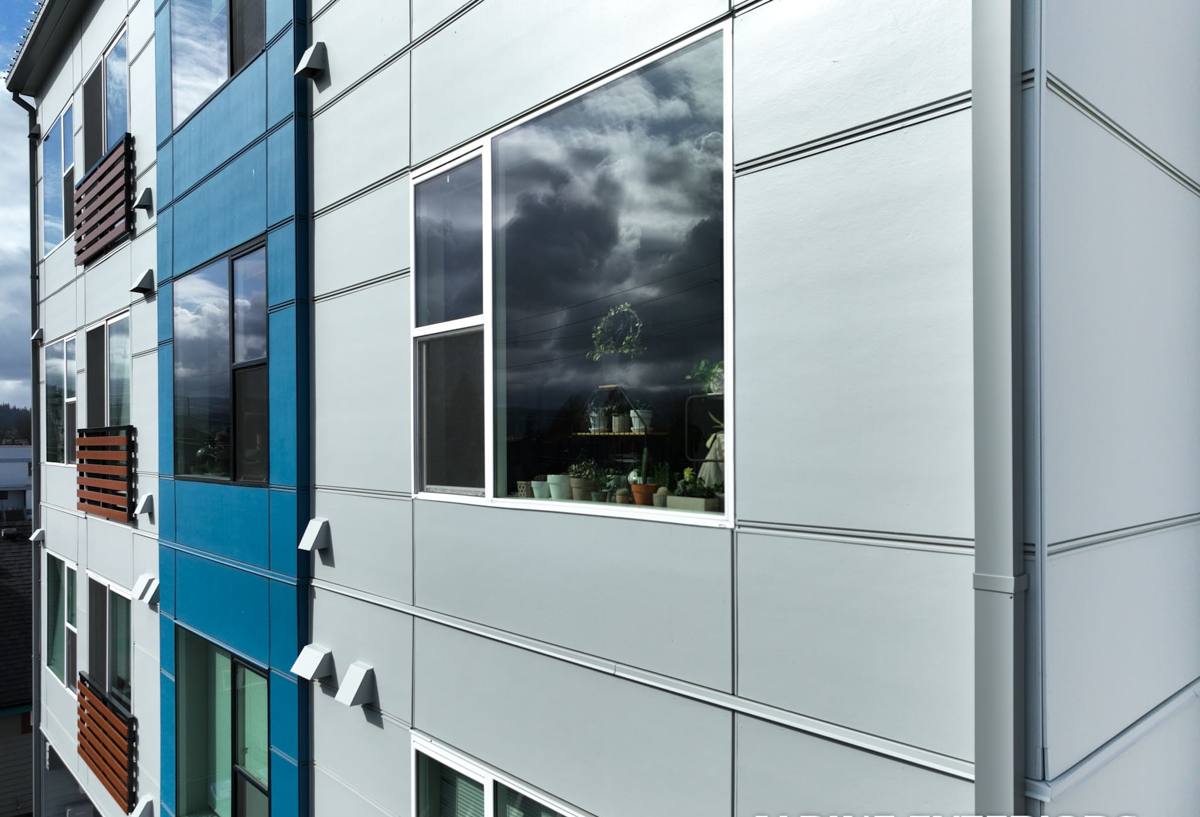
What Salt Air, Driving Rain, and Moss Season Do to a Wall
Salt Air
Proximity to the water means airborne salt settles on exterior surfaces and works into any gap, seam, or exposed fastener. Salt accelerates corrosion in metal flashing, fasteners, and trim components, and it can degrade coatings that aren't formulated to handle it. Over time, this shows up as rust streaking, pitted metal, and paint that chalks and fails faster than it would further inland.
Driving Rain
Bellingham's storms frequently come with real wind behind them, which pushes water sideways into laps, seams, and penetrations that would stay dry in a calmer climate. A siding system that relies on caulk and good intentions instead of proper overlap, flashing, and drainage will eventually let water behind the cladding — and once it's behind the siding, it has nowhere to go but into the sheathing and framing.
Moss and Prolonged Dampness
Extended damp periods keep exterior surfaces wet for days at a stretch, which is exactly what moss, algae, and mildew need to establish themselves. Beyond the appearance issue, sustained moisture contact softens wood-based products, promotes rot at ground-contact areas, and keeps the wall assembly from ever fully drying out between rain events.
Why We Only Install James Hardie Fiber Cement
We've made a deliberate decision to install James Hardie fiber cement siding exclusively — not vinyl, not LP SmartSide, not primed spruce or cedar, not other fiber cement brands. Fiber cement is inherently non-combustible and dimensionally stable, meaning it doesn't expand, contract, warp, or absorb water the way wood-based or engineered-wood products can. James Hardie's HZ5 product line is specifically engineered for climates like ours — wet, mild, and cycling through damp and dry conditions constantly rather than freezing hard.
The factory-applied ColorPlus finish is baked on under controlled conditions, which gives it better fade and moisture resistance than a field-applied paint job, and it comes with a meaningful, transferable warranty backing both the substrate and the finish. When a product is installed correctly, that combination holds up to salt air and driving rain far better than the alternatives we've chosen not to carry — and it means fewer callbacks, less maintenance, and a longer real-world service life for the homeowner.
What Correct Installation Actually Involves
The siding itself is only part of the system. Most siding failures we get called to diagnose on older homes trace back to installation shortcuts, not the material itself. A correct installation in a climate like Columbia's includes:
- A properly lapped and sealed weather-resistive barrier behind the siding, installed shingle-style so water sheds outward at every seam
- Correctly flashed windows, doors, and any wall penetrations, integrated with the weather barrier rather than just caulked over
- Proper fastener placement, type, and spacing per manufacturer specification — critical for both wind performance and long-term holding power in salt-exposed air
- Correct minimum clearances between the bottom of the siding and grade, decks, patios, and roof lines, so splash-back and standing water can't wick into the material
- Rain-screen or drainage gap detailing where appropriate, giving any moisture that does get behind the cladding a path to drain and dry
- Factory-mitered or properly caulked joints and corners, finished per manufacturer instructions so seams stay sealed under wind-driven rain
Skip any one of these steps and the siding may look fine for a few years while problems quietly build behind it. This is why installation quality matters as much as product choice — the best siding on the market, installed wrong, will still let water in.
Our Installation Process
1. On-Site Assessment
We walk the home, look at existing siding condition, check for signs of past moisture intrusion, and evaluate trim, flashing, and water management details specific to the property.
2. Tear-Off and Sheathing Check
Old siding comes off and we inspect the sheathing underneath. This is often the first time hidden moisture damage from a previous installation becomes visible, and it needs to be addressed before anything new goes up.
3. Weather Barrier and Flashing
We install a new weather-resistive barrier and flash every window, door, and penetration before a single piece of siding goes on. This step is the actual waterproofing system — the siding is the second line of defense, not the first.
4. Hardie Installation to Manufacturer Spec
Panels or planks are installed with correct fastener schedules, clearances, and joint treatment, following James Hardie's published installation requirements so the product warranty stays intact.
5. Trim, Caulking, and Final Detail
Trim, corners, and transitions are finished and sealed, and we walk the job with the homeowner before calling it complete.
Signs a Columbia Home May Need New Siding
Because siding problems often develop out of sight, homeowners usually notice secondary symptoms before they notice the siding itself. Common indicators worth a professional look include:
- Paint that's peeling, bubbling, or needing repainting more often than every several years
- Soft or spongy spots when you press on siding or trim, especially near the bottom of walls
- Persistent moss or algae growth that returns quickly after cleaning
- Visible warping, cupping, or gaps opening up between siding pieces
- Rising energy bills without another clear cause, which can point to a compromised wall assembly
- Musty smells or visible staining on interior walls that share an exterior wall with problem siding
What Affects the Cost of a Siding Installation
Every home is different, and we won't quote a number without seeing the property, but the factors below are what actually move the price on a Columbia-area installation.
| Factor | Why It Matters |
|---|---|
| Tear-off complexity | Multiple existing layers or hazardous materials (like old asbestos-containing siding) add labor and disposal steps |
| Sheathing and framing condition | Hidden rot or moisture damage found during tear-off requires repair before new siding can go on |
| Home size and wall complexity | More corners, gables, and trim details mean more cutting, flashing, and labor time |
| Siding profile and finish selection | Different Hardie plank widths, textures, and ColorPlus colors carry different material costs |
| Access and site conditions | Tight lots, slopes, or limited staging space can affect scaffolding and material handling needs |
| Window, door, and trim scope | Replacing or re-flashing openings alongside the siding adds scope but improves the overall water management system |
Why a Crew That Already Works in Columbia Matters
Whatcom County's building codes, wind exposure ratings, and typical moisture conditions aren't identical everywhere in the county, and a crew that regularly works this specific area already has a working understanding of what tends to go wrong on homes near the water versus further inland. That familiarity shows up in small decisions — how much clearance to leave at grade, which corners of a house tend to take the worst of the driving rain, how aggressive the moss growth gets on north-facing walls — that a crew unfamiliar with the area might not weigh correctly.
It also matters for accountability. A local, established crew is easy to reach if a question comes up five years after installation, and has a direct stake in its reputation within the community it works in — not just the immediate neighborhood, but Bellingham and Whatcom County as a whole.
Caring for New Siding After Installation
James Hardie fiber cement is low-maintenance compared to wood or vinyl, but "low-maintenance" isn't "no-maintenance," especially in a climate that stays damp for extended stretches. A simple annual routine keeps it performing well:
- Rinse the exterior gently once or twice a year to clear salt residue, pollen, and early moss growth
- Inspect caulking at trim, corners, and penetrations and have any cracked or missing sections resealed
- Keep gutters clean and downspouts directing water away from the foundation and siding base
- Trim back vegetation and landscaping so foliage isn't holding moisture against the wall
- Do a visual walk-around after major storms to catch any impact damage or loosened trim early
If your Columbia home's siding is showing its age, or you're planning ahead for a replacement, we're happy to take a look and talk through what your home actually needs — no pressure, no obligation. Use the form below to request a free estimate.