 Bellingham Siding
 Silver Beach Sits at the Edge of Bellingham Bay — Your Siding Has to Handle It
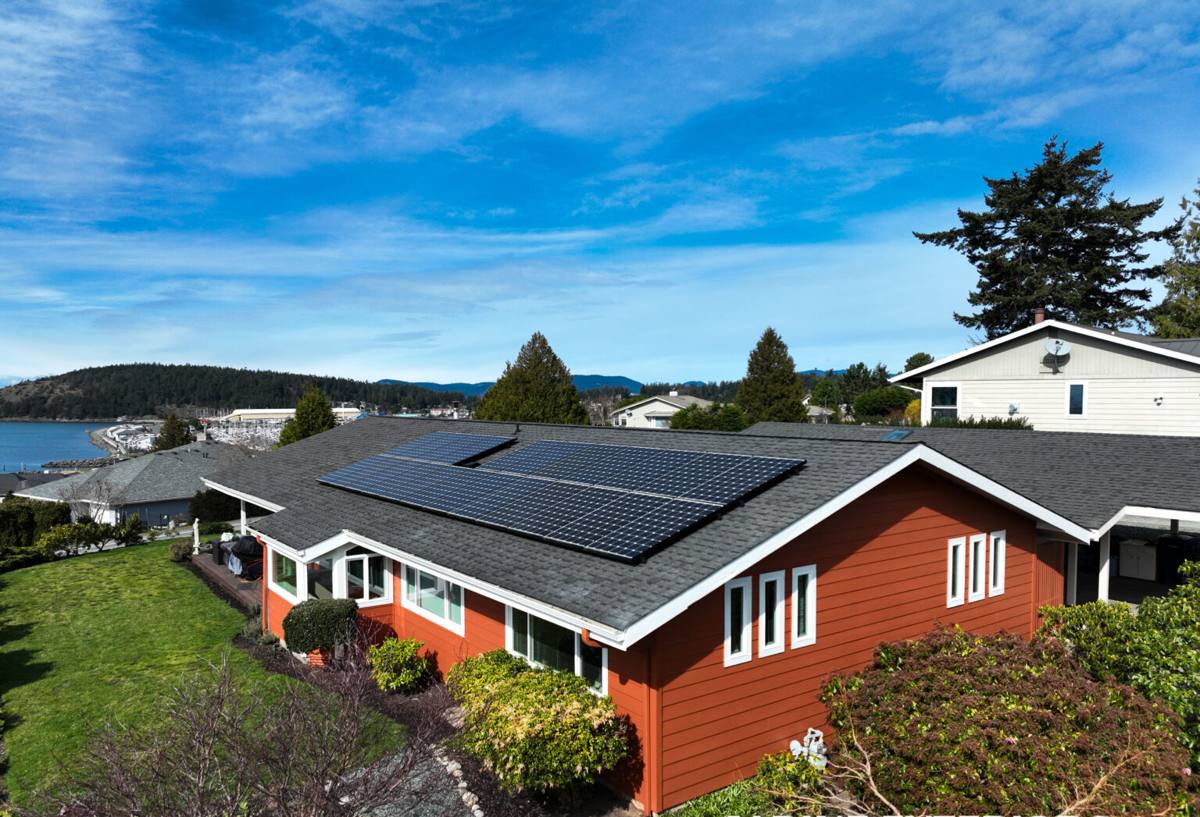
Silver Beach is one of the few Bellingham neighborhoods where you can smell the water from your front yard. That proximity to Bellingham Bay is part of what makes the area desirable, and it's also exactly what wears out siding faster than almost anywhere else in Whatcom County. Salt-laden air, wind-driven rain coming off the water, and long stretches of shade and dampness under mature evergreens combine to create a punishing environment for exterior cladding. We've worked on homes throughout this neighborhood long enough to know which products hold up and which ones quietly fail behind a fresh coat of paint.
This page is specifically about installing fiber cement siding on Silver Beach homes — not siding in general. The climate here isn't identical to inland Bellingham or the drier parts of Whatcom County, and a siding job that ignores that difference is a callback waiting to happen.
What Silver Beach's Climate Actually Does to a House
Salt air and moisture-driven corrosion
Homes closer to the water deal with airborne salt that accelerates corrosion on fasteners, flashing, and trim — and it works on siding materials too, breaking down finishes and softening anything that isn't dimensionally stable when it gets wet. Over years, that constant low-grade exposure is harder on a house than one big storm.
Driving rain, not just rain
Bellingham gets plenty of straightforward vertical rainfall, but Silver Beach's exposure to wind off the bay means rain regularly hits siding sideways. Wind-driven rain finds every gap in flashing, every under-caulked seam, and every place where siding wasn't held off the wall enough to drain and dry. A siding system that only performs well in calm, straight-down rain isn't enough here.
Moss, algae, and a long damp season
Between the water, the tree cover common in this neighborhood, and Western Washington's extended wet season, north- and west-facing walls stay damp for months at a time. That's ideal growing conditions for moss and algae, which trap moisture against the siding surface and accelerate whatever deterioration is already happening underneath.
Why Fiber Cement Is the Right Material Here — If It's Installed Right
Fiber cement resists the specific failure modes that Silver Beach throws at a house: it doesn't rot, it doesn't feed mold or moss the way organic materials do, and it holds paint and factory finishes far longer than wood or many composites in a high-moisture, high-salt environment. But fiber cement is not a "set it and forget it" product. It performs exactly as well as its installation. A textbook fiber cement job and a rushed one can look identical on move-in day and behave completely differently five years later — especially in a climate like this one.
That's the real reason we standardized on James Hardie rather than the cheaper fiber cement alternatives on the market. Hardie's ColorPlus factory-finished panels and their HZ5 formulation are engineered specifically for high-moisture, high-humidity regions like the Pacific Northwest — this isn't a generic siding product adapted for our climate, it's built around it. Combined with correct installation, that gives Silver Beach homeowners a wall system that's actually matched to the conditions it has to survive.
What Correct Installation Looks Like on a Silver Beach Home
A drainage plane, not just a barrier
The single biggest factor in how long siding lasts in a wet, wind-exposed neighborhood is what happens behind the panels, not the panels themselves. We install a weather-resistive barrier and, on homes with the moisture exposure typical of Silver Beach, a rainscreen or furring strategy that gives water a way to drain and air a way to circulate. Siding nailed flat against sheathing with no drainage path traps moisture — and in this climate, trapped moisture doesn't dry out between storms, it just accumulates.
Flashing at every transition
Windows, doors, roof lines, deck ledgers, and any penetration through the wall are where wind-driven rain actually gets in. We flash every one of these transitions according to Hardie's published details, not shortcuts — because on a house exposed to sideways rain off the bay, a missed flashing detail shows up as a stain or soft spot within a couple of wet seasons, not a couple of decades.
Fastening and gapping to spec
Fiber cement has to be fastened at the correct pattern and depth, with the correct gaps at butt joints and trim to allow for expansion and drainage. Over-driven nails crack panels and create entry points for water; missing gaps trap moisture at the seams — exactly where salt-air corrosion and moss growth start.
Sealing and caulking chosen for the exposure
Not every caulk and sealant performs the same in a salt-air, high-moisture environment. We use products rated for exterior, high-exposure use at the joints and transitions that matter, rather than whatever's cheapest at the counter.
Why We Only Install James Hardie — Not the Alternatives
We get asked regularly why we don't offer vinyl, LP SmartSide, or cheaper fiber cement brands as options. In a neighborhood like Silver Beach, the answer is straightforward: those products carry trade-offs that this specific climate exposes faster than a drier or more sheltered location would.
- Vinyl siding can warp, fade, and become brittle under UV and temperature swings, and its seams and J-channels give wind-driven rain more opportunities to get behind the cladding.
- LP SmartSide and other engineered wood products use wood strand cores that, when moisture gets past the finish through a scratch, seam gap, or failed caulk joint, can swell and deteriorate — a real risk in a neighborhood where walls stay damp for extended stretches.
- Off-brand fiber cement (Cemplank, Allura, and similar) may use thinner formulations or less rigorous factory finishing than Hardie's ColorPlus process, which matters more here than in a drier climate where finish degradation is slower.
- Primed spruce or cedar siding requires an ongoing paint and maintenance commitment that's harder to keep up with in a climate where the wood stays wet for months of the year — and any lapse invites rot.
None of these are "bad" products in every setting. They're just not the standard we're willing to put our name behind on a house that has to survive Silver Beach's combination of salt air, wind-driven rain, and moss season year after year.
Choosing the Right Hardie Product Line and Finish
James Hardie makes several siding profiles, and picking the right one for a Silver Beach home is about more than looks.
| Consideration | Why It Matters Here |
|---|---|
| Panel profile (lap, shingle, panel) | Affects how many horizontal joints exist — each joint is a potential water entry point in wind-driven rain |
| ColorPlus factory finish vs. field paint | Factory-baked finish resists fading and holds up to salt air and UV far longer than a job-site paint job |
| HZ5 formulation | Engineered for high-moisture climates like ours rather than a generic national product |
| Color choice (dark vs. light) | Darker colors show water spotting and moss growth less readily on shaded, damp-prone walls |
| Trim and accessory matching | Mismatched trim materials create differential expansion and extra joints to seal and maintain |
We walk homeowners through these choices based on which side of the house faces the water, how much shade a wall gets, and how the home is oriented to prevailing wind — not just a color swatch preference.
Our Process for a Silver Beach Fiber Cement Project
1. On-site assessment
We look at the home's specific exposure — proximity to the water, tree cover, existing moisture damage, and current siding condition — before recommending a scope of work.
2. Tear-off and sheathing inspection
Removing the old siding lets us check the sheathing and framing for existing moisture damage. In a neighborhood with a long damp season, catching a soft spot now is far cheaper than discovering it after new siding is up.
3. Weather barrier and drainage plane installation
We install the water-resistive barrier and drainage strategy suited to the home's exposure before a single piece of Hardie board goes up.
4. Flashing and trim
All windows, doors, and penetrations are flashed to manufacturer specification, and trim is installed to shed water away from joints.
5. Hardie panel installation
Panels are fastened, gapped, and sealed to spec, with attention to the seams and transitions that take the most weather exposure.
6. Final inspection and walkthrough
We review the finished job with the homeowner, including basic care guidance specific to a waterfront-adjacent property.
Maintaining Fiber Cement Siding in a Moss-Prone, Salt-Air Neighborhood
Hardie siding is low-maintenance compared to wood or vinyl, but "low-maintenance" isn't "no-maintenance," especially this close to the water.
- Rinse siding periodically to remove salt residue and airborne grime, particularly on the water-facing side of the home
- Keep gutters and downspouts clear so overflow doesn't run down the siding face
- Trim back vegetation and tree limbs that keep walls shaded and damp longer than necessary
- Address moss or algae growth early with gentle cleaning rather than pressure-washing directly into seams
- Re-caulk high-exposure joints (around windows, trim, and penetrations) if you notice cracking or separation
- Watch for any soft spots, staining, or discoloration near the foundation line, which can signal a drainage issue rather than a siding issue
Why Local Experience in This Specific Neighborhood Matters
Siding contractors who mostly work inland or in more sheltered parts of Whatcom County don't always build in the extra margin that a waterfront-adjacent neighborhood like Silver Beach demands. We've installed and serviced fiber cement siding on homes throughout this area, which means we already know which elevations take the worst of the wind-driven rain, how much moss pressure to expect on shaded walls, and how the salt air here compares to other parts of Bellingham. That local pattern recognition shows up in small decisions — where we add extra flashing, which color and finish combinations hold up best, how aggressive the drainage detailing needs to be — that a generic installation approach would miss.
If your Silver Beach home needs new siding or you're evaluating options after storm damage or age-related wear, we'd be glad to take a look and talk through what correct, climate-appropriate James Hardie installation would involve for your specific property. Reach out for a free, no-pressure estimate using the form below.