 Bellingham Siding
 Why Silver Beach Windows Take More Abuse Than the Spec Sheet Suggests
Every window manufacturer tests their product in a lab. Nobody tests it against a Whatcom County winter. Homes in the Silver Beach neighborhood deal with a steady combination of moisture-heavy marine air, wind-driven rain off the water, and long stretches of gray, damp weather that never quite lets a house dry out between storms. That combination is harder on windows than dry heat or occasional hard rain ever will be, because the wood, vinyl, and sealants never get a real break to recover.
We've worked enough jobs in and around Bellingham to know that a window that looks fine from the curb can already be failing where it counts — at the seals, the sill, and the flashing behind the trim. A custom window job here isn't about upgrading style. It's about correcting the parts of the original installation that were never built for this climate in the first place.
Moisture Coming From Every Direction
Salt-tinged marine air moving in off the bay carries moisture that settles into wood grain, corrodes hardware, and slowly breaks down cheaper seals and finishes. Add driving rain that comes in sideways during a real Whatcom County storm, and any gap in the flashing or any sealant joint past its service life becomes a path for water to get behind the siding. Once water is behind the wall, it doesn't dry out quickly in this climate — it sits, and it works.
Moss Season Isn't Just a Roof Problem
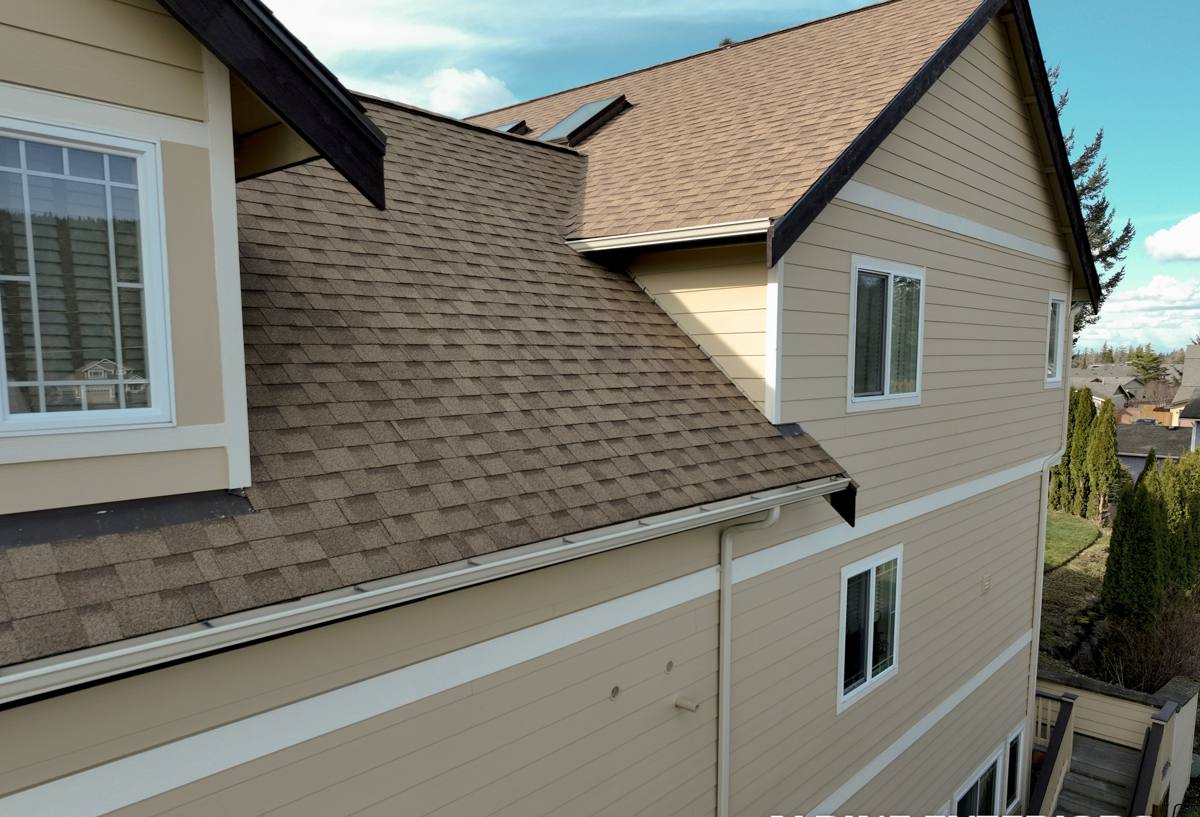
Moss and algae growth shows up on more than just north-facing roofs. On older homes, it collects on window sills, in the corners of frames, and along horizontal trim boards that stay shaded and damp for months at a time. That growth holds moisture directly against the wood or frame material, which accelerates rot in wood-framed windows and speeds up seal degradation on cheaper vinyl units. A window that's rated for a dry climate simply doesn't account for months of near-constant dampness sitting right at the frame.
What "Custom" Should Mean on a Real Job
"Custom windows" gets used loosely in this trade. For us, it means the window is built and installed to match the actual opening and the actual conditions of the house — not just ordered off a standard size chart and shimmed into place.
Matching the Opening, Not Just the Glass
Older homes in this area, especially anything built before the 1980s, rarely have perfectly square or standard-sized openings after decades of settling. A true custom window is measured to the actual rough opening, accounting for any drift, so the final unit doesn't need excessive shimming or gaps that get papered over with caulk. Caulk is not a substitute for a correctly sized window — it's a temporary patch that fails first in a climate like this.
Frame Material Trade-Offs
There's no single "best" frame material for every home — it depends on the house, the exposure, and the budget. Here's how the common options actually perform in this climate, as a matter of professional judgment rather than brand preference:
| Frame Material | Moisture Resistance | Maintenance | Typical Fit |
|---|---|---|---|
| Vinyl | Good — won't rot, but seals and corners are the weak point over time | Low | Most homes on a value-conscious budget |
| Fiberglass | Very good — dimensionally stable in wet-dry cycling | Low | Homes with heavy sun/rain exposure, longer hold horizon |
| Wood (unclad) | Poor without diligent upkeep in this climate | High | Historic homes where original wood profiles matter |
| Wood-clad (aluminum or fiberglass exterior) | Good — exterior shell protects the wood core | Moderate | Homes wanting a wood interior look without the exterior upkeep |
We'll walk through these trade-offs honestly during an estimate rather than pushing whatever happens to be in stock. The right call depends on which side of the house takes the weather and how long you plan to be in it.
Signs Your Windows Are Already Losing
Most homeowners don't notice window failure until it shows up as a comfort problem or a utility bill. By then, the moisture damage underneath has usually had a head start. Worth checking for:
- Fogging or condensation between panes on double-glazed units (a sign the seal has failed)
- Soft or spongy wood at the sill or bottom corners of the frame
- Visible moss, algae, or black staining collecting at the frame edges
- A noticeable draft near the frame even when the window is fully latched
- Paint that's bubbling or peeling specifically around the window trim, not the rest of the wall
- Difficulty opening, closing, or locking that wasn't there a year or two ago
- Visible daylight or a hairline gap between the frame and the siding
Any one of these on its own isn't an emergency. Several of them together, or on more than one window, usually means the issue is systemic rather than a one-off.
How We Approach a Window Job in Silver Beach
Assessment and Measurement
We start by looking at the whole opening — not just the window itself, but the condition of the framing, sheathing, and existing flashing behind the trim. If there's hidden rot or moisture damage, that gets addressed before a new window ever goes in. Installing a new window over a compromised opening just delays the same problem.
Flashing and Water Management — The Part That Actually Matters Here
In a climate with this much driving rain, the flashing detail around a window matters more than almost any other part of the job. We install proper head flashing above the unit, a sloped sill pan to direct any intruding water back out rather than into the wall cavity, and side flashing that integrates correctly with the house wrap or building paper already in place. This is the step that gets rushed on low-bid jobs, and it's the step that determines whether the window is still performing in ten years.
Installation Day
We set the window plumb, level, and square, shim it correctly rather than relying on the frame to hold its own shape, and insulate the gap around the unit without over-packing it — too much expanding foam can bow a frame just as easily as too little insulation causes drafts.
Final Check and Cleanup
Every window gets operated, latched, and checked for a clean, even reveal before we consider the job done. We clean up job debris and leave the work area the way we found it.
What Drives the Cost of a Window Project
Costs vary by house, and we'd rather give an honest range than a number that doesn't hold up once we're actually looking at your openings. In general terms:
| Factor | Why It Matters |
|---|---|
| Number and size of openings | More or larger windows means more material and labor |
| Frame material chosen | Vinyl, fiberglass, and clad-wood carry different material costs |
| Condition behind the existing window | Hidden rot or moisture damage adds repair scope before installation |
| Access and second-story work | Upper-floor or hard-to-reach windows take more time and equipment |
| Glass package | Double vs. triple pane, low-E coatings, and gas fill affect unit price |
As a rough starting point, homeowners in this region typically see installed costs somewhere in the low-to-mid four figures per window, with plenty of variation on either side depending on the factors above. We'll give you a firm number once we've actually measured and inspected — not before.
Energy Performance and Comfort in a Marine Climate
Whatcom County doesn't get extreme heat, but it does get long stretches of damp cold, and that's where an underperforming window shows up fastest — as a cold draft near the glass, condensation on the interior pane, or a room that never quite feels as warm as the thermostat says it should. A properly sealed, correctly flashed window with a glass package suited to a marine climate makes a noticeable difference in comfort, and it takes pressure off the heating system during the months it's running the most.
Why a Crew That Already Works This Neighborhood Matters
A window installer who mostly works drier inland climates will often default to standard details that work fine there and fail here. Crews that regularly work Bellingham and the surrounding Whatcom County neighborhoods already know which flashing details hold up against driving rain, which frame materials are worth the extra cost on a water-exposed elevation, and which shortcuts show up as callbacks two winters later. That local pattern recognition is the actual value of hiring a crew with real experience in this specific area, rather than a general contractor working outside their usual conditions.
Keeping New Windows Performing for the Long Haul
A well-installed window still needs some upkeep in this climate. Keep weep holes clear of debris and moss so water can drain out rather than pool at the sill. Rinse frames periodically to keep algae and moss from establishing, especially on shaded, north-facing walls. Check exterior caulking annually and touch it up before a small gap turns into a water path. And keep an eye on interior condensation — a sudden increase can be an early signal that a seal is starting to fail, well before you'd notice it any other way.
If you're weighing a window project for your Silver Beach home, we're glad to come take a look and give you a straightforward, no-pressure estimate — including an honest read on whether custom units are the right call or if targeted repairs would serve you just as well. There's a form below whenever you're ready.