 Bellingham Siding
 Window Installation Built for Happy Valley's Marine Climate
Happy Valley homes sit close enough to Bellingham Bay and the surrounding water to feel it in the windows. Salt-laden air, wind-driven rain off the Sound, and a moss season that runs longer here than almost anywhere else in the Lower 48 all work on window frames, sills, and hardware year-round. A window that would hold up fine in a drier inland climate can start failing early here if it wasn't built, or installed, with this specific exposure in mind.
This page covers what Happy Valley homeowners actually need to know about window installation in Whatcom County's marine climate: what the weather does to windows over time, what a correct installation looks like, how our process works, and why local installation experience matters more here than in most parts of the country.
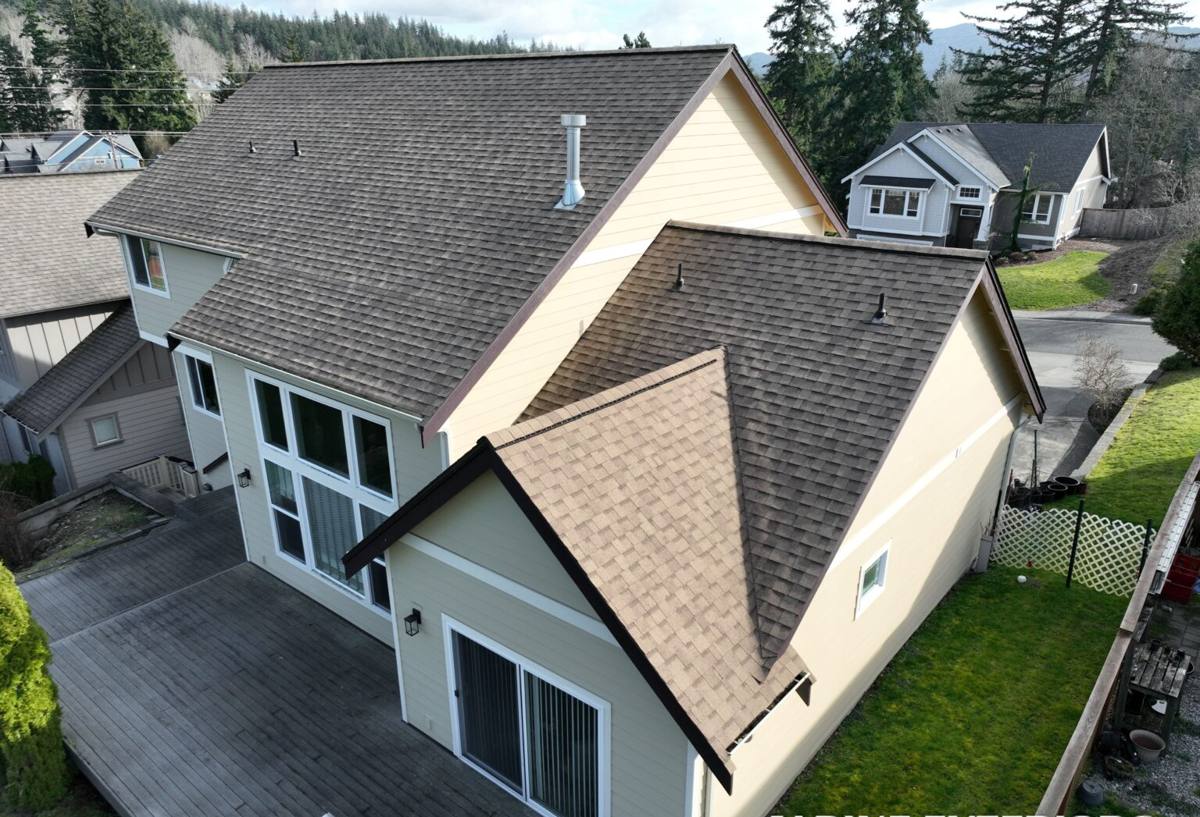
What Salt Air, Rain, and Moss Actually Do to Windows
Salt-Laden Air and Hardware Corrosion
Airborne salt from the bay settles on everything, including window frames and hardware. Over years, it accelerates corrosion on lower-grade fasteners, hinges, and locking mechanisms, and it can pit unprotected aluminum and lower-quality vinyl cladding. This is slow, cumulative damage — you won't see it in year one, but by year eight or ten on a poorly specified window, you'll notice stiff locks, pitted finishes, or streaking on the sill.
Driving Rain and Water Intrusion
Bellingham doesn't just get rain — it gets rain pushed sideways by wind off the water. That matters for windows because most water intrusion problems aren't about the glass or the sash; they're about what happens at the edges, where the window meets the wall. Wind-driven rain finds gaps that a gentle, straight-down rain never would. If the flashing and sealant details around a window aren't done right, water gets behind the trim and into the wall assembly, and you often don't find out until there's already rot or mold.
Moss and Trapped Moisture
Whatcom County's long, damp moss season means anything that stays wet for extended periods — window sills, bottom rails, exterior trim — becomes a place moss and algae can take hold. Moss itself doesn't destroy a window, but it holds moisture against the surface far longer than it would otherwise sit there, and that prolonged dampness is what breaks down caulk joints, swells wood components, and shortens the life of weatherstripping.
Signs Your Happy Valley Home Needs New Windows
Not every window problem calls for full replacement, but in this climate certain signs usually mean the window's ability to manage water and air has broken down, not just its appearance:
- Fogging or a visible film between the glass panes (the seal has failed and the insulating gas is gone)
- Soft, discolored, or spongy trim and sill material around the window frame
- Persistent condensation on the inside of the glass, especially on lower floors or shaded sides of the house
- Drafts you can feel with your hand near the frame on a windy day
- Windows that are difficult to open, close, or lock, particularly older aluminum-frame units
- Visible moss, algae, or dark staining building up on sills and bottom corners year after year
- Noticeably higher heating bills compared to similar homes nearby
Any one of these on its own might just need attention. Several together, especially on a home more than 20-25 years old, usually points to windows that are past the point where sealing or minor repair solves the underlying problem.
What a Correct Window Installation Involves
The window unit itself matters, but in this climate the installation details matter just as much, if not more. A quality window installed poorly will leak; a modest window installed correctly will often outperform it.
Flashing and Moisture Management
Every window opening needs a flashing sequence that sheds water down and out, never letting it pool or wick sideways into the wall. That means sill pan flashing at the bottom, properly lapped side and head flashing, and correct integration with the home's existing weather-resistive barrier (house wrap or building paper). This is the single detail most responsible for whether a window stays dry for 20+ years or starts leaking in five.
Sealing and Insulation
Around the window frame itself, the gap between the unit and the rough opening needs to be insulated (typically with low-expansion foam or backer rod, not packed fiberglass) and sealed with an exterior-grade sealant rated for this climate's temperature swings and constant moisture. Interior air sealing matters too — it's what stops drafts and condensation on cold, wet days.
Level, Plumb, and Properly Shimmed
A window that isn't shimmed level and plumb will operate poorly and stress its own seals over time, which shortens its service life regardless of how good the unit or the flashing job was. This is a basic step, but it's one that's easy to rush on a job that isn't being supervised closely.
Choosing the Right Window Materials for This Climate
There's no single "best" window material for every home — the right choice depends on your home's exposure, your budget, and how much maintenance you're willing to do. Here's how the common options actually perform under salt air, driving rain, and a long moss season:
| Frame Material | How It Handles This Climate | Maintenance | General Cost Position |
|---|---|---|---|
| Vinyl | Good moisture and salt resistance; won't corrode or rot; can become brittle with age in extreme cold, which is rarely an issue here | Low — occasional cleaning | Lower to mid |
| Fiberglass | Excellent dimensional stability and moisture resistance; handles wet-dry cycling with minimal expansion/contraction | Low | Mid to higher |
| Aluminum | Strong but prone to condensation and, without a quality thermal break, more susceptible to corrosion near salt air over time | Moderate | Mid |
| Wood / Wood-Clad | Attractive and traditional, but the wood core is vulnerable if the exterior cladding or finish is ever compromised by trapped moisture | Higher — finish and joint upkeep | Higher |
We install and stand behind vinyl and fiberglass window systems as our default recommendation for most Happy Valley homes because of how consistently they perform against sustained moisture exposure with low upkeep. We're generally cautious about wood-clad windows in this specific climate — not because the product is bad, but because their long-term performance depends heavily on the cladding and finish never being breached, and that's a harder standard to guarantee over decades of coastal weather. If you have your heart set on a wood-frame look, we'll talk through the trade-offs honestly rather than talk you out of it.
Our Installation Process
Every job follows the same sequence, whether it's one window or a whole-house replacement:
- On-site assessment. We look at your existing windows, the condition of the surrounding trim and wall assembly, and the specific exposure your home faces (wind direction, sun, drainage around the foundation).
- Accurate measurement and product selection. We measure each opening individually — older homes are rarely perfectly square — and walk you through material and glazing options based on that opening and your priorities.
- Removal and opening prep. Old units come out carefully so we can inspect the rough opening for hidden rot or water damage before anything new goes in. Any damaged framing gets addressed before installation, not covered up.
- Flashing, installation, and sealing. The new window is set level and plumb, flashed to shed water properly, insulated around the frame, and sealed inside and out with climate-appropriate materials.
- Trim and finish work. Exterior and interior trim is finished to match your home, with attention to how it will hold up to ongoing moisture exposure.
- Final walkthrough. We test operation, check seals, and walk the job with you before we consider it done.
What to Ask Before You Hire a Window Contractor
Because so much of a window's long-term performance comes down to installation quality, the contractor matters as much as the product. Before you hire anyone for window work in Happy Valley, it's worth asking:
- Are you licensed and insured to do this work in Washington State?
- Who handles the flashing and moisture barrier integration — is that a step you always do, or only "if needed"?
- What's the manufacturer's warranty, and what's your own labor warranty on top of it?
- Can you explain, in plain terms, how you'll keep water out around the new window?
- Do you have experience working on homes in this specific area, with this level of coastal exposure?
- Will you show me any hidden rot or damage you find before you close up the opening, rather than after?
A contractor who answers these clearly and specifically, without getting vague, is one who's done this enough times to know why each step matters.
Why Local Experience in Happy Valley Matters
Window installation isn't a one-size-fits-all job. A crew that regularly works in Happy Valley and the surrounding Bellingham area already understands how this specific stretch of Whatcom County behaves — which sides of a house typically take the worst of the wind-driven rain, how quickly moss reestablishes on north-facing trim, and what kinds of window and flashing details actually hold up here versus what looks fine on paper but fails in year six. That's not something you can fully substitute with a generic install checklist, and it's the difference between a window installation that's still performing in twenty years and one that starts causing problems in five.
We also know the practical side of working in this area — permitting expectations, typical home ages and construction types in the neighborhood, and what local building conditions tend to reveal once an old window comes out.
If you're weighing whether it's time to replace windows on your Happy Valley home, or you just want a straight answer about what's going on with the ones you have, we're happy to take a look. Reach out for a free, no-pressure estimate using the form below — we'll assess your specific situation and give you an honest read on what your home actually needs.