 Bellingham Siding
 Roofing a Silver Beach Home for the Weather It Actually Gets
Silver Beach is a neighborhood of mature trees, older housing stock, and roofs that rarely get a break from moisture. Between the tree canopy holding shade over large sections of roof, the driving rain that comes through Whatcom County in wetter stretches of the year, and the salt-tinged marine air that reaches homes across the greater Bellingham area, a shingle roof here is under more or less constant low-grade pressure. None of that makes asphalt shingles the wrong material. It's still the most practical, cost-effective roofing option for the large majority of homes in this neighborhood. It does mean the roof has to be built by someone who understands exactly what's working against it, rather than someone installing the same generic system they'd use on a dry, open lot somewhere else.
This page is specifically about asphalt shingle roofing for Silver Beach — what the local conditions demand, what a correct tear-off and install actually involves, and how we run the job from the first walk-through to the final cleanup. If you're comparing bids or trying to figure out why your current roof is aging faster than it should, this is written for that.
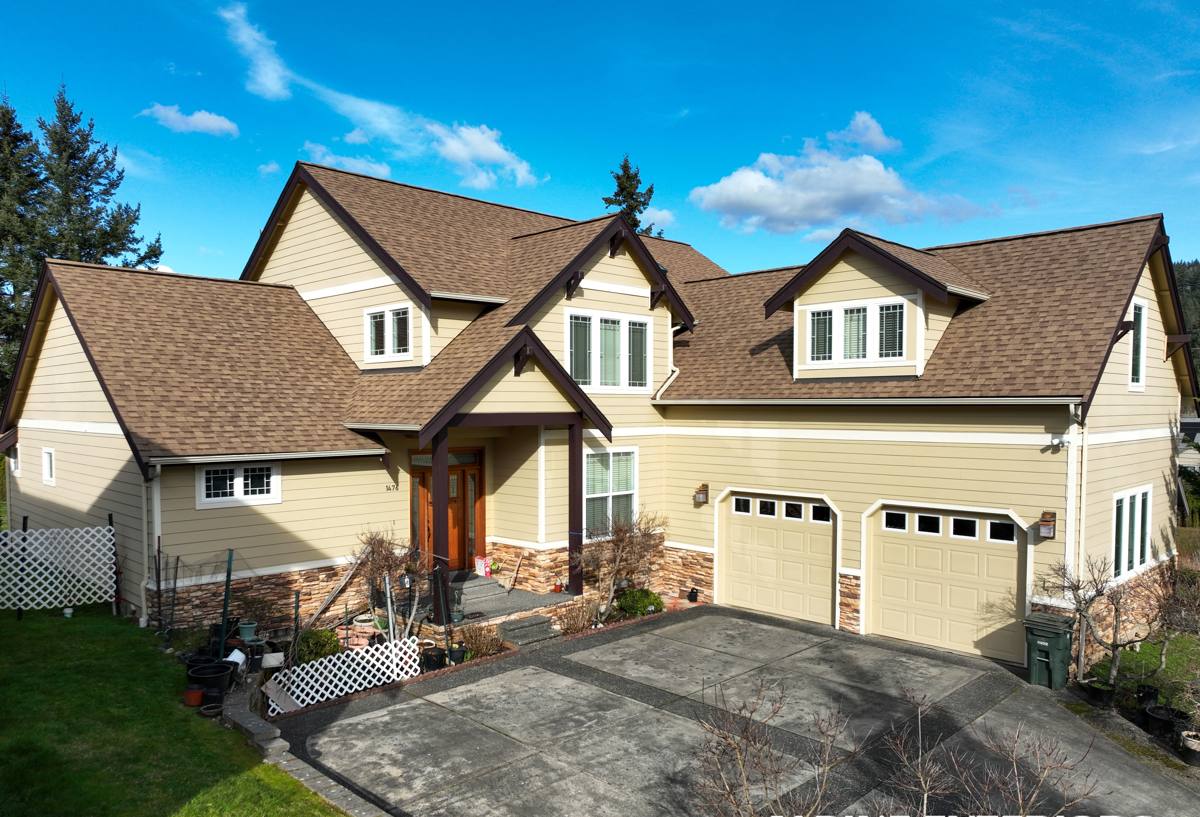
The Three Things Working Against a Silver Beach Roof
Shade and Tree Cover
A lot of homes in this part of Bellingham sit under or near mature trees, which is part of what makes the neighborhood what it is, but it also means certain roof planes almost never get direct sun. Shaded, north-facing slopes stay damp long after the rest of the roof has dried out, and that lingering moisture is exactly what moss and algae need to take hold. Left untreated, moss doesn't just sit on top of the shingles — it lifts tabs, holds water against the granule surface, and shortens the life of the roof underneath it.
Wind-Driven, Not Just Falling, Rain
Rain in this region doesn't always fall straight down and run off the way a roof is designed to shed it. During storms, it gets pushed sideways and forced upward under shingle edges, testing the underlayment and flashing in ways a calm, straight-down rain never would. A roof that's only built to handle water falling on it, and not water being driven into it, tends to develop leaks first at the details rather than in the open field of the shingles.
Salt Air's Slow Work on Metal
Marine air off the water reaches homes throughout the Bellingham area, and over years it quietly corrodes lower-grade fasteners and flashing metal. It's not dramatic and it doesn't show up on day one — it shows up five or eight years later as a rust-thinned flashing seam that finally lets water through. Roofs built with corrosion-resistant hardware from the start don't run into that problem; roofs built with the cheapest available fasteners often do.
Below the Shingles: What Actually Keeps Water Out
The shingles themselves get all the attention, but they're rarely the reason a roof fails early. The layers underneath them, and the way they're tied together, do most of the real work.
A correct job starts with a full tear-off to the roof deck, not a layover on top of the existing shingles. That's the only point in the job where hidden rot, soft spots, or old moisture damage actually gets found, since none of it is visible from inside the attic until it's advanced. Skipping the tear-off means sealing whatever problems already exist under a fresh layer and hoping they don't matter.
From there, the deck gets synthetic or self-adhered underlayment rather than basic felt, because felt alone is a weaker line of defense against wind-driven rain getting forced under shingle tabs. At eaves, valleys, and other spots where water concentrates, ice-and-water shield membrane goes down as an added barrier exactly where the roof is most likely to take on moisture.
Where Leaks Actually Start
Almost every leak we trace on an older Silver Beach roof starts at a flashing detail, not in the middle of a shingle field. Valleys where two roof planes come together, chimney and skylight penetrations, and the point where a roofline meets a wall all need flashing that's lapped correctly and integrated with the underlayment as part of one connected system. Flashing that's just caulked into place after the fact is a shortcut that tends to fail quietly, years after the crew that did it has moved on.
Keeping the Deck Dry From Underneath
A roof can look fine from the street and still be shortening its own life because of poor attic airflow. Balanced intake and exhaust ventilation keeps the underside of the deck dry through the wet months, which matters for two reasons at once: it slows wood rot, and it reduces the trapped moisture that feeds moss growth from below the shingles, not just from rain hitting the top of them.
Matching the Shingle to the Lot
Not every Silver Beach roof needs the same shingle. A steep, sun-exposed south-facing roof and a shaded, tree-covered north slope on the same street can reasonably call for different products, and it's worth understanding the tradeoffs before picking one for cost alone.
| Shingle Type | Typical Lifespan | Best Fit |
|---|---|---|
| 3-Tab Shingles | 15-20 years | Lowest upfront cost; thinner profile and lower wind rating make them a weaker match for exposed or storm-battered lots |
| Architectural (Laminated) Shingles | 25-30 years | Heavier, better wind resistance, and the practical default choice for most homes in this neighborhood |
| Algae-Resistant / Premium Shingles | 30+ years | Copper or zinc granules resist moss and dark streaking; worth the upcharge on heavily shaded roof planes |
For a shaded lot under mature trees, the algae-resistant upgrade tends to pay for itself in a cleaner-looking, longer-lasting roof. For a more open, sun-exposed roof plane, a standard architectural shingle with a solid wind rating is usually the better value, since moss pressure is lower there to begin with.
What Actually Drives the Price on a Bid
Two written estimates for the same roof can land thousands of dollars apart, and it's rarely because one contractor is simply charging more for identical work. It's almost always a difference in real scope.
| Factor | Why It Moves the Price |
|---|---|
| Tear-off vs. layover | Whether the deck gets inspected and repaired, or problems get sealed under a new layer |
| Underlayment grade | How well the roof resists wind-driven rain getting under shingle edges |
| Shingle tier and wind rating | Expected lifespan and how the roof holds up in a storm |
| Flashing scope | Whether valleys, chimneys, and wall transitions get full attention or a quick patch |
| Ventilation upgrades | Long-term moisture control and how far the shingle warranty is actually protected |
| Tree cover and access | Extra care, staging, and cleanup time on wooded or hard-to-reach lots |
A bid that breaks these out line by line is worth far more than a single number at the bottom of a page. If a contractor can't explain what's driving their price when asked, that's usually a sign the number was guessed rather than calculated.
How We Run a Roofing Job in Silver Beach
- In-person inspection: We walk the roof and attic ourselves, not from a photo or a drive-by estimate, and note the actual condition of the deck, flashing, and ventilation.
- Written, itemized estimate: Tear-off, underlayment, flashing, shingle product, ventilation, and cleanup are each spelled out, not folded into one vague total.
- Scheduling with the weather in mind: We build reasonable flexibility into the timeline, because wet stretches are a normal part of working in this region rather than something we treat as a surprise.
- Site protection: On the wooded, tighter lots common in this neighborhood, that means tarping landscaping and walkways before tear-off begins, not after something's already been damaged.
- Tear-off and deck repair: Old roofing comes off completely, and any deck damage we find gets repaired before anything new goes down.
- Underlayment, flashing, and shingle installation: Each layer goes on to manufacturer specification, with extra care at valleys, penetrations, and wall transitions.
- Final walkthrough and magnetic sweep: We review the finished roof with you and run a magnetic sweep of the yard and driveway before we call the job done.
Maintenance Checklist for Silver Beach Homeowners
A correctly installed roof still benefits from a little seasonal attention, especially under tree cover. This is worth keeping in mind whether we installed your roof or not:
- Clear gutters and downspouts before the wet season, since clogged gutters back water up under the lowest shingle course
- Have visible moss or dark streaking treated before it spreads across a full roof plane, not after
- Trim back branches that overhang the roof, since falling debris and constant shade both work against shingle life
- Check the attic after any major windstorm for new water staining, especially near valleys and penetrations
- Keep an eye on granule buildup in the gutters, which signals shingles wearing thinner than they should be for their age
- Have the roof looked at every few years even without an obvious problem, since flashing and ventilation issues are easier to catch early than after a leak
Why a Crew That Already Works This Neighborhood Matters
A crew that regularly roofs homes in Silver Beach has already seen how shaded lots hold moss longer than open ones, how wind-driven rain finds its way through underlayment that wasn't lapped correctly, and how salt air quietly eats through underspecified metal over the years. That's practical knowledge that shows up in small decisions throughout a job, and it's the kind of thing a crew unfamiliar with this specific corner of Bellingham simply hasn't had the chance to learn yet.
It also matters after the job is finished. A workmanship warranty only means something if the company behind it is still reachable years later, with an established, ongoing presence in Whatcom County rather than a name that did one job in the area and moved on.
Free Estimate for Your Silver Beach Roof
If your roof is showing early wear, you're comparing bids, or you just want an honest read on how much life is left in what's up there now, we're glad to come take a look. There's no pressure and no obligation — use the form below to request a free estimate.