 Bellingham Siding
 Birchwood's Siding Problem Isn't Like Everywhere Else
Birchwood is one of Bellingham's older, well-established residential pockets, and that comes with a specific siding challenge. Homes here sit close enough to Bellingham Bay to catch salt-laden air on a regular basis, tucked under mature tree canopy that keeps north- and east-facing walls shaded and damp for long stretches of the year, and squarely inside a Whatcom County weather pattern that delivers driving, wind-blown rain for months at a time. Individually, any one of those conditions is manageable. Together, they're exactly the combination that ages cheap or mismatched siding fast — and it's why we treat a Birchwood James Hardie installation differently than a siding job on a dry, open lot ten miles inland.
This page is specifically about installing James Hardie fiber cement siding on Birchwood homes. We don't install vinyl, LP SmartSide, or cedar — we'll explain why that matters for this neighborhood in particular, not just in general.
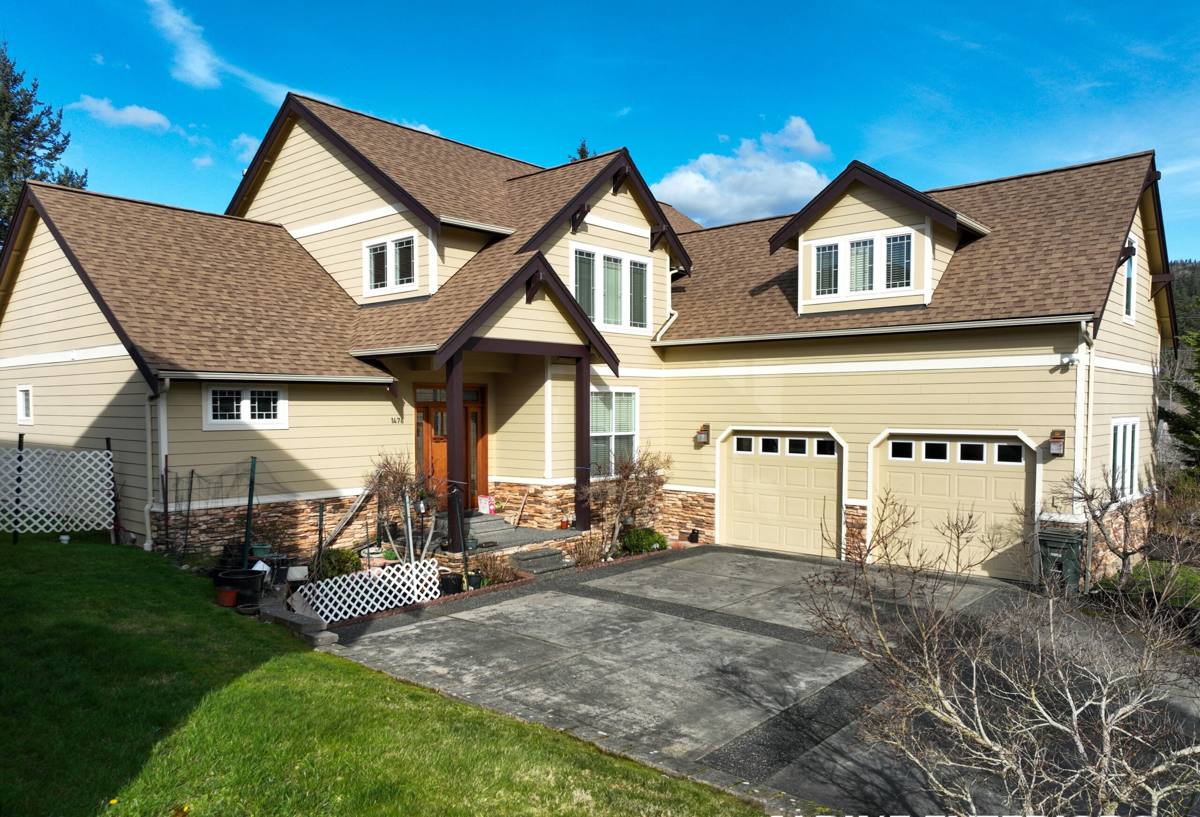
What Bellingham's Climate Actually Does to a Wall
Salt Air
Proximity to salt water means airborne salt settles on exterior surfaces and works into seams, fasteners, and any exposed wood or metal trim. Over years, that accelerates corrosion on fasteners and finishes that aren't rated for it, and it degrades paint films faster than inland exposure does. Siding materials that rely on a surface-applied finish — rather than a factory-cured, baked-on finish — tend to chalk, fade, and lose adhesion sooner in this kind of exposure.
Driving Rain
Whatcom County doesn't just get rain — it gets rain pushed sideways by wind off the Sound and the Strait. That matters because driving rain finds every gap in a siding system: unsealed butt joints, undersized flashing, siding installed too tight to the ground or to trim. A material that's dimensionally stable and installed with correct clearances holds up. A material that swells, cups, or wicks moisture at the edges does not.
Moss and Sustained Dampness
Under tree cover, walls can stay damp for days after a storm passes. That's a long moss and mildew season by any standard, and it's hard on organic or semi-organic siding materials — wood-based products in particular can hold moisture against the substrate and begin to break down from the back side, where you can't see it until the damage is advanced. Fiber cement doesn't feed mold and moss growth the way wood fiber substrates can, which is a real, practical advantage for shaded Birchwood lots.
Why We Install James Hardie and Nothing Else Here
We standardized on James Hardie fiber cement for every home we side, and Birchwood's climate is a good illustration of why. Hardie's ColorPlus finish is baked on at the factory in multiple coats under controlled conditions, which holds color and resists chalking and fading far better than field-applied paint in a salt-air environment. The board itself is fiber cement — it doesn't rot, it isn't a food source for moss or mildew, and it's non-combustible, which matters given Whatcom County's wildfire-season air quality events in recent years even if direct fire risk is lower here than east of the Cascades.
We've chosen not to install vinyl, LP SmartSide, Cemplank, Allura, or bare cedar and primed spruce. Each of those products has legitimate uses and honest strengths — cedar's appearance, vinyl's low upfront cost, engineered wood's workability. But in a marine climate with driving rain and long damp stretches, they carry trade-offs we're not willing to put our name on: vinyl can warp and doesn't hold up structurally to wind-driven debris the way fiber cement does; wood-based and engineered wood products are more sensitive to sustained moisture exposure at seams and cut edges; unfinished or site-primed products depend entirely on field paint quality, which is the first thing salt air and rain go after. James Hardie's engineered HZ climate line and factory finish system are built to answer exactly these conditions, and that's the product we stand behind.
The HZ5 Product Line: Built for This Zone
James Hardie manufactures its siding in climate-specific formulations, and the Pacific Northwest falls under the HZ5 engineering zone — the version of the product formulated for high-moisture, temperate coastal climates like ours. That's a meaningful distinction from siding sold generically across the country. HZ5 boards are engineered with moisture and freeze-thaw cycling in this region's range in mind, which is part of why we spec Hardie's HZ5 line specifically for Bellingham and Whatcom County projects rather than a one-size-fits-all product.
For Birchwood homes, that plays out in a few concrete ways: better resistance to moisture-related expansion and contraction at butt joints, a finish system designed to hold up under prolonged damp exposure, and a product engineered to work correctly with the flashing and clearance details this climate demands.
Product Lines Commonly Used in Birchwood
| Product | Typical Use | Why It Fits Birchwood |
|---|---|---|
| HardiePlank Lap Siding | Primary wall cladding, most home styles | Widest color and texture range; handles shaded, damp elevations well |
| HardieShingle | Accent gables, dormers | Matches the shingle-style detailing common on older Bellingham homes |
| HardiePanel | Board-and-batten accents, garages | Clean modern look where owners want a texture contrast |
| HardieTrim | Corners, window and door casing | Non-combustible, paint-stable trim that won't rot at end grain |
What a Correct Installation Actually Involves
James Hardie siding performs the way it's designed to only when it's installed to the manufacturer's specifications — and this is where a lot of the real-world failures we get called out to inspect actually originate. The board itself is rarely the problem; the installation is.
Non-Negotiables on a Birchwood Job
- Correct water-resistive barrier and house wrap, lapped and taped per code, installed before any siding goes up
- Rainscreen or drainage gap where conditions call for it, so bulk water has somewhere to go besides sitting against the wall
- Proper flashing at every window, door, deck ledger, and roof-to-wall transition — this is the single most common failure point on older Bellingham homes we've re-sided
- Minimum ground clearance and roof clearance per Hardie's install guide, so splash-back and roof runoff don't sit against the bottom course
- Correct fastener type, spacing, and embedment — under- or over-driven nails compromise both the seal and the warranty
- Factory-primed cut edges sealed on site, since any exposed cut edge is a moisture entry point
- Caulking only where Hardie's details call for it — over-caulking traps moisture just as badly as under-caulking lets it in
Skip any one of these on a home that's already fighting salt air, driving rain, and shade-driven dampness, and you've built in a failure point that won't show up for a year or two — right about when it's hardest to trace back to the install.
Our Process for a Birchwood Project
1. On-Site Assessment
We walk the home and look specifically at moisture history: staining, soft trim, failed caulk joints, tree cover and shade patterns, and how the property drains. Birchwood's mix of home ages means we often find older wall assemblies that need attention to the water-resistive barrier and flashing, not just new siding over an existing problem.
2. Scope and Product Selection
We spec HardiePlank, panel, or shingle profiles and a ColorPlus finish based on the home's style and the owner's preference, and we confirm trim, flashing, and drainage details before anything is ordered.
3. Tear-Off and Substrate Repair
Old siding comes off, and any damaged sheathing or framing found underneath gets repaired before house wrap goes back on — this step gets skipped by crews that don't allow for it in their bid, and it's where hidden moisture damage actually gets fixed.
4. Weather Barrier and Flashing
New water-resistive barrier, proper flashing at every penetration, and a drainage plane appropriate to the wall assembly and exposure.
5. Installation
Hardie boards installed to manufacturer clearance, fastening, and joint-treatment specs, with factory-primed cut edges sealed on site.
6. Final Walkthrough
We review the finished work with the homeowner, confirm caulking and touch-up paint at cut edges, and go over what routine maintenance looks like going forward.
Cost Factors on a Birchwood Home
Every home is different, and we won't quote a number without seeing the property, but these are the variables that actually move the price on a job in this neighborhood:
| Factor | Why It Matters |
|---|---|
| Wall assembly condition | Sheathing or framing repair from prior moisture intrusion adds labor before siding can go on |
| Home age and trim complexity | Older Bellingham homes often have more window and gable detail, which adds cutting and flashing time |
| Siding profile mix | Combining lap, shingle, and panel for architectural accents costs more than a single profile |
| Tear-off scope | Full removal of old siding down to the sheathing versus a simpler re-clad |
| Access and site conditions | Tree cover, slope, and tight lot lines common in Birchwood can affect staging and labor time |
| Color and finish | Standard ColorPlus colors versus custom or premium finishes |
Maintenance: What Birchwood Owners Should Actually Do
James Hardie siding is low-maintenance, not no-maintenance — especially under the moss and moisture load this neighborhood sees.
- Rinse siding gently once or twice a year to clear salt residue, pollen, and organic buildup, especially on shaded elevations
- Trim back tree and shrub growth that keeps a wall section shaded and damp longer than the rest of the house
- Check caulk joints at trim and penetrations annually and touch up before a small gap becomes a water path
- Keep gutters and downspouts clear so roof water isn't dumping onto or splashing back against the siding
- Watch for moss or algae staining as an early signal of a damp microclimate on the wall, not just a cosmetic issue
- Touch up any chipped or scratched paint at impact points promptly rather than letting bare fiber cement sit exposed
Why a Crew That Already Works Birchwood Matters
Installation quality is the difference between James Hardie siding that looks and performs well for decades and a job that develops problems in a few years despite using the right product. A crew that already works in Birchwood and around Bellingham Bay knows the flashing details this shade-and-salt combination demands, recognizes what moisture damage looks like on this area's older wall assemblies before it's opened up, and specs clearances and drainage with driving rain in mind rather than defaulting to a dry-climate install. That local pattern recognition is worth as much as the product itself — a correctly installed Hardie system and an incorrectly installed one can look identical on install day and perform completely differently five years in.
If you're weighing a siding project for a Birchwood home, we're happy to take a look and walk you through what your specific home needs — no pressure, no obligation. Reach out for a free estimate using the form below.