 Bellingham Siding
 Birch Bay Roofs Work Harder Than Most
Birch Bay sits right on the water along the Strait of Georgia, in the northwest corner of Whatcom County near the Canadian border. That shoreline location is part of what makes the neighborhood beautiful, and it's also exactly why roofs here wear out faster and fail in different ways than roofs a few miles inland. Salt-laden air, wind coming straight off open water, and a moss season that can run most of the year all put steady, compounding stress on a roof system. A repair that would hold up fine in a sheltered inland yard can come apart quickly out here if it isn't done with the local conditions in mind.
This page is about roof repair specifically — patching, fixing, and restoring a roof that still has useful life left, rather than a full tear-off. Repair is often the right call, but only when it's diagnosed and done correctly. Done wrong, a repair just buys a homeowner a few dry months before the same problem reappears, usually worse.
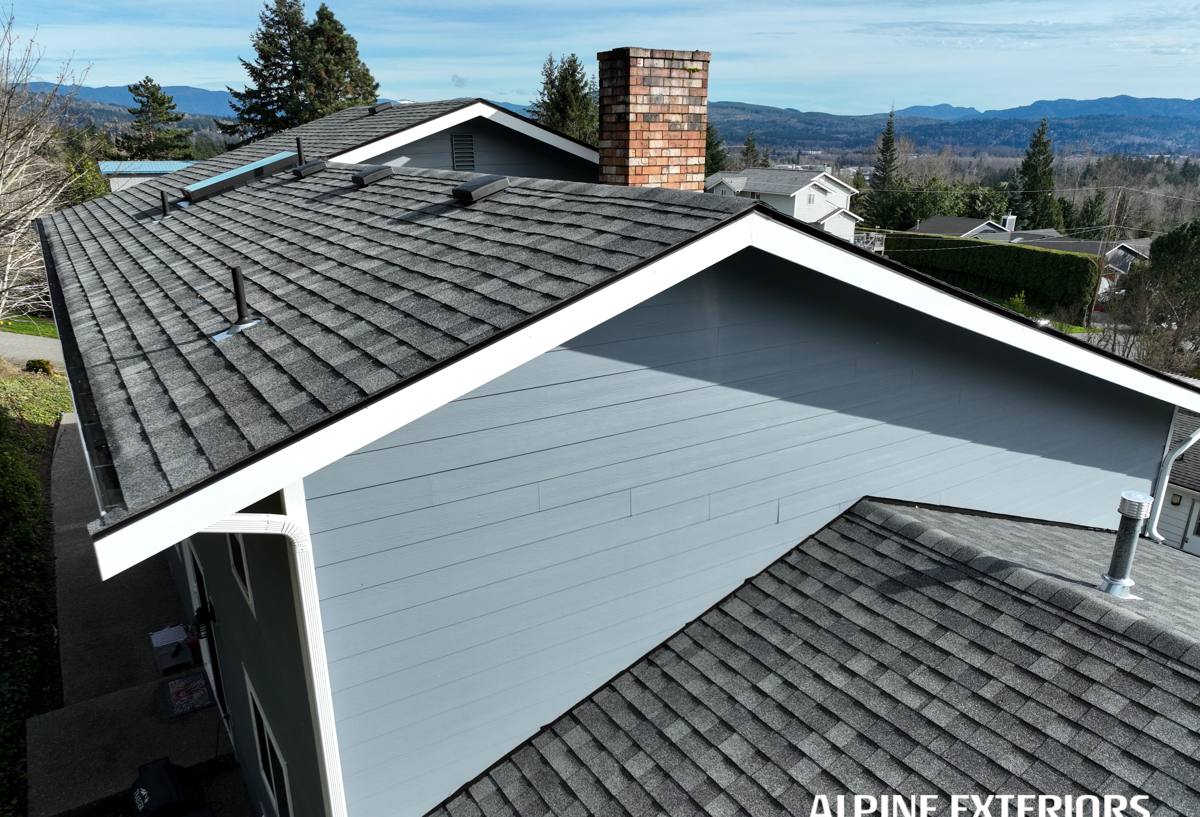
What the Local Climate Actually Does to a Roof
Salt Air and Metal Fatigue
Airborne salt from the Strait of Georgia settles on every exposed surface, including roofing. Over time it accelerates corrosion on exposed fasteners, flashing, gutters, and any metal roofing components. Galvanized nails and lower-grade flashing metal corrode faster near the shoreline than they would a few miles inland. That corrosion is often what turns a small leak into a bigger one — a fastener that's rusted through no longer holds a shingle or panel down the way it should, and once flashing starts to pit, it stops shedding water reliably at the seams and edges where roofs actually fail.
Wind Off the Water
Birch Bay's exposure means wind gusts off the water hit roofs with less to slow them down first. Wind doesn't just tear off loose shingles — it drives rain sideways and up under laps, edges, and flashing that were never designed to handle water moving in that direction. A roof can look intact from the ground and still be taking on water at a ridge cap, a rake edge, or a valley because sustained wind is pushing rain where gravity alone would never carry it.
A Long, Wet Moss Season
Whatcom County's mild, damp climate keeps roofs wet for long stretches of the year, and moss and algae take hold anywhere moisture lingers — north-facing slopes, areas shaded by trees, and low-slope sections that drain slowly. Moss isn't just cosmetic. As it grows, it lifts shingle edges, holds moisture against the roofing material far longer than it should sit there, and works its way into laps and fastener lines. Left alone, a mossy patch today is often a soft, leaking patch within a season or two.
Signs a Birch Bay Roof Needs Repair
Most roof problems don't announce themselves as a dramatic leak. They show up as small signals that are easy to miss until they add up. Homeowners in this area should watch for:
- Granules collecting in gutters or at downspout outlets — a sign shingles are wearing thin
- Dark streaking or thick moss growth, especially on north-facing or shaded slopes
- Curling, cupping, or cracked shingles, particularly on sections exposed to wind off the water
- Rust staining or visible corrosion around flashing, vents, or metal roof panels
- Soft spots, sagging, or a slightly spongy feel when walking a low-slope section
- Water stains on interior ceilings, especially near chimneys, skylights, or where two rooflines meet
- Daylight visible through the roof deck from inside an attic
- Gutters pulling away from the fascia or overflowing during heavy rain
Any one of these on its own might not mean much. Several together, or any sign paired with an active interior leak, means it's worth having someone look before the next storm system moves through.
Repair or Replace? How We Make the Call
Not every roof problem needs a full replacement, and a good contractor shouldn't default to recommending one. The honest answer depends on the roof's age, how much of it is affected, and whether the underlying deck and structure are still sound. The table below covers how we generally think through that decision.
| Factor | Favors Repair | Favors Replacement |
|---|---|---|
| Roof age | Under roughly 15-18 years, or well-maintained | Near or past the material's expected service life |
| Extent of damage | Isolated to one slope, valley, or flashing area | Widespread granule loss, curling, or moss across most slopes |
| Decking condition | Solid, no soft spots or rot found on inspection | Soft, delaminated, or water-damaged sheathing |
| Leak history | First occurrence, clear single cause | Recurring leaks in different spots over time |
| Storm or wind damage | Limited area, other roofing still in good shape | Damage scattered across multiple sections |
We'll always tell a homeowner straight when a repair is genuinely the more sensible option, and just as directly when we think a repair would only be a short-term fix on a roof that's really at the end of its service life. Spending money patching a roof that has three or four other weak points forming isn't a favor to anyone.
What a Correct Repair Involves
Real Diagnosis, Not Guesswork
The most common mistake in roof repair isn't bad workmanship — it's fixing the visible symptom instead of the actual entry point. Water travels. A stain on a bedroom ceiling might trace back to a flashing gap several feet away, following a rafter or sheathing seam before it shows itself indoors. A correct repair starts with tracing the leak to its actual source, not just patching wherever the drip appears inside the house.
Matching Materials and Method to the Roof
Repairs need to use materials and techniques appropriate to the existing roofing system — matching shingle profile and weight, using corrosion-resistant fasteners and flashing given the salt-air exposure here, and tying new material into old so the repair sheds water the same way the surrounding roof does. A patch that doesn't integrate properly with the existing courses or panels can create a new water path instead of closing the old one.
Addressing the Cause, Not Just the Hole
If moss caused the failure, a repair that doesn't also address drainage, shading, or ongoing moss control is going to fail again on roughly the same timeline. If wind-driven rain got under a flashing detail, the fix needs to correct the flashing geometry, not just reseal the surface. Sealant and patching compound have their place, but they're not a substitute for correcting the underlying detail that let water in.
Our Process for Birch Bay Repair Work
- Inspection. We get on the roof (weather permitting) and in the attic where accessible, checking flashing, fasteners, decking, ventilation, and the areas most exposed to wind and salt spray.
- Honest diagnosis. We explain what we found, what's causing it, and whether repair or replacement makes more sense — in plain terms, not sales pressure.
- Written scope and estimate. A clear description of the repair, the materials involved, and the cost before any work begins.
- The repair itself. Proper tie-in with existing roofing, corrosion-resistant fasteners and flashing, and attention to the drainage or ventilation issue that contributed to the failure.
- Cleanup and check. Site cleaned up, debris and old material removed, and a final look to confirm the repair is doing its job.
Cost Factors for Roof Repair
Repair costs vary a lot based on scope, access, and roofing type, so we won't put a number on a job we haven't seen. What generally moves the price:
| Factor | Why It Matters |
|---|---|
| Size of affected area | A single flashing repair costs far less than re-roofing multiple slopes |
| Roof pitch and access | Steep or hard-to-reach sections take longer and require more safety setup |
| Roofing material | Composition shingle, metal, and low-slope membrane repairs use different materials and labor |
| Decking condition | Rotted or soft sheathing found underneath adds material and labor to replace it |
| Underlying cause | A repair that also needs drainage, ventilation, or moss-control work costs more than a simple patch |
We provide a written estimate after seeing the actual roof — not a phone quote based on square footage alone.
Why It Matters That We Already Work in Birch Bay
A roofer who mainly works drier, more sheltered inland neighborhoods can still do competent work, but they may not automatically account for salt exposure, wind-driven rain angles, or how aggressively moss returns this close to the water. A crew that regularly works Birch Bay and the surrounding Whatcom County coastline already knows to use corrosion-resistant fasteners as standard, to pay extra attention to flashing on wind-exposed slopes, and to plan repair timing around the wetter stretches of the year rather than fighting the weather mid-job.
Local, ongoing presence also means we're not disappearing after the invoice is paid. If a repair needs a follow-up check after the next big storm, we're a short drive away, not a company that only passes through the area occasionally.
Maintenance That Extends a Repair's Life
A well-done repair still needs some basic upkeep to hold up in this climate, especially given how fast moss and debris accumulate here:
- Keep gutters and downspouts clear so water isn't backing up under the roof edge
- Have moss treated or removed before it thickens, rather than after it's visibly taken over a slope
- Trim back overhanging branches that keep sections of roof shaded and damp
- Schedule a roof check after any unusually severe windstorm, even if nothing looks obviously wrong from the ground
Simple habits like these are usually what separates a repair that lasts a decade from one that needs revisiting in two years.
If you're dealing with a leak, visible moss, storm damage, or you just want an honest opinion on the condition of your roof, we're glad to take a look. Request a free, no-pressure estimate using the form below and we'll get back to you to schedule a time.