 Bellingham Siding
 Why Birch Bay Decks Wear Out Faster Than You'd Expect
Birch Bay sits right on the water, and that changes what a deck goes through year to year compared to a deck a few miles inland in Bellingham or Ferndale. Salt-laden air moves off the bay and settles on every horizontal surface, including deck boards, railings, and any exposed fasteners. Combine that with Whatcom County's long wet season and the moss and algae growth that comes with it, and you get a deck that's fighting three problems at once: corrosion, moisture intrusion, and surface growth that makes boards slick and eventually breaks down the wood fiber underneath.
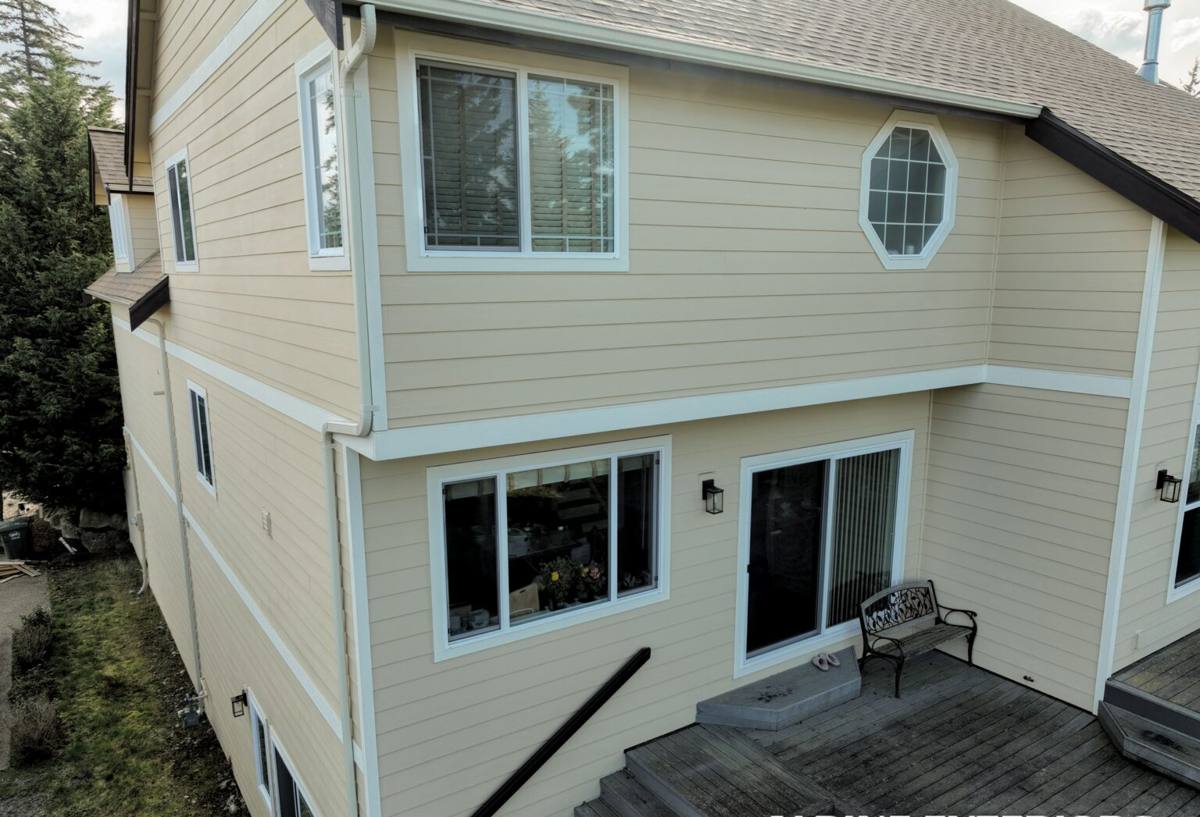
A lot of decks in this area look fine from a distance well past the point where they should have been replaced. Paint or stain can hide graying wood, but it can't hide soft joists, rusted-through hardware, or a ledger board that's been quietly absorbing water for a decade. If your deck is more than 15-20 years old, or you've noticed spongy spots, gaps opening between boards, or fasteners bleeding rust stains, it's worth having someone look at the structure, not just the surface.
What the Coastal Climate Actually Does to a Deck
Salt Air and Metal Fasteners
Standard hardware corrodes faster this close to the water. Nails, screws, and joist hardware that would last decades inland can start rusting within a few years in a salt-exposed spot like Birch Bay. Once a fastener corrodes, it loses holding strength, and that shows up as boards that wiggle, railings that flex, or stair stringers that feel less solid than they used to.
Driving Rain and Water Intrusion
Whatcom County doesn't just get a lot of rain, it gets a lot of wind-driven rain, which pushes water into places a calm rain never would: under flashing, behind ledger boards, into end grain, and through any gap where caulking has failed. Water that gets trapped rather than shed is what actually rots a deck. A deck built without proper flashing at the house connection, or without gapping between boards to let water drain, will trap moisture no matter how good the wood looks on day one.
Moss, Algae, and the Shade Factor
Birch Bay's tree cover and long damp season mean moss and algae aren't occasional problems, they're a seasonal certainty on any deck that doesn't get much direct sun or airflow underneath. Beyond being slippery and unattractive, moss holds moisture against the wood surface far longer than open air would, which accelerates rot in exactly the boards that already get the least sun to dry out.
Signs Your Deck Needs Replacement, Not Repair
- Soft or spongy decking boards, especially near the house or in shaded corners
- Visible rot or dark staining around post bases and the ledger board
- Railings or stair stringers that flex or feel loose when you lean on them
- Rust streaks running down from screws, nails, or joist hangers
- Gaps between boards wider than when the deck was built, or boards that have cupped
- A ledger board attachment that predates current flashing standards
- Persistent moss or algae that comes back within weeks of cleaning
Repair makes sense when the problems are isolated: a few bad boards, a damaged rail section, a post base that needs reinforcement. Full replacement makes sense when the framing itself is compromised, when multiple systems are failing at once, or when the deck was built without the flashing and fastener standards we'd use today. Patching a structurally tired deck usually costs more over five years than replacing it once, correctly.
What a Correct Deck Replacement Involves
Removal and Structural Assessment
We start by pulling the old decking and railings and inspecting everything underneath: joists, beams, posts, footings, and the ledger connection to the house. This is the point where hidden rot or corrosion actually gets found, and it's the reason a proper replacement isn't just "swap the boards."
Ledger Flashing Done Right
The ledger board, where the deck attaches to your house, is the single most common failure point on any deck in a wet climate. Correct flashing directs water away from the house framing instead of letting it wick in behind the ledger. On a coastal replacement, we treat this as non-negotiable, not an upgrade.
Framing and Fasteners Matched to the Environment
Given the salt exposure in Birch Bay, we use corrosion-resistant fasteners and hardware rated for the conditions, not general-purpose hardware that happens to be cheaper. The cost difference is small compared to the labor cost of redoing a deck in ten years because the connectors failed first.
Decking Material Selection
This is where we talk through trade-offs honestly rather than pushing whatever's easiest to install. Every material has a maintenance profile, and what's right depends on how much upkeep you actually want to do.
Decking Material Comparison for a Salt-Air, High-Moss Environment
| Material | Moisture & Salt Behavior | Moss/Algae Resistance | Maintenance |
|---|---|---|---|
| Pressure-treated wood | Good if properly sealed and re-sealed; end grain is a weak point | Low unless cleaned regularly | Annual cleaning, periodic sealing |
| Cedar | Naturally moisture-resistant but still needs sealing near salt air | Moderate; still grows moss in shaded areas | Regular sealing to hold color and resist checking |
| Composite decking | Does not rot or absorb water into the core | Can still grow surface algae/moss; needs periodic washing | Low; occasional cleaning, no sealing |
| PVC/capped composite | Fully sealed surface, best resistance to moisture and salt | Lowest of the group with routine rinsing | Lowest; rinse as needed |
None of these are maintenance-free in a Birch Bay environment. Even the best capped composite will grow some algae in a shaded, damp corner if it's never cleaned. What changes between materials is how much that neglect costs you: a sealed composite surface sheds the problem, while untreated wood lets moisture and organic growth work into the fiber itself.
A Note on Why We Don't Push the Cheapest Wood Option
Standard construction-grade lumber can look like a deal upfront, but in a high-moisture, salt-exposed area it typically needs sealing every one to two years to hold up, and even then the end grain and fastener holes are ongoing weak points. We'll install it if that's what you want, but we'll also tell you honestly what the upkeep looks like so you're not surprised in year three.
Our Process for a Birch Bay Deck Replacement
- On-site assessment of the existing deck, framing, and ledger connection
- Honest conversation about repair versus full replacement, with reasoning explained
- Material discussion based on your budget, sun/shade exposure, and maintenance preference
- Permit handling where required by the county or your jurisdiction
- Demolition and disposal of the old structure
- Framing inspection and correction, including ledger flashing and corrosion-resistant hardware
- Installation of decking, railings, and stairs to code
- Final walkthrough covering care and maintenance specific to the material you chose
Footings, Framing, and What's Under the Boards
A deck is only as good as what's underneath it, and this is the part homeowners rarely see once the project is finished. In Whatcom County's damp soil conditions, footing depth and drainage matter more than they would in a drier climate. Posts sitting in standing water or poorly drained soil will fail years before the visible decking does. Part of a proper replacement is checking that footings are adequate for the deck's size and load, not just reusing whatever was there if it's undersized or deteriorating.
Joist spacing and beam sizing also need to match the actual span and expected load, especially if you're adding features the original deck didn't have, like a hot tub, built-in seating, or a larger footprint. We size framing to today's use, not just to match what was removed.
Railings, Stairs, and Code Requirements
Railings and stairs are where a lot of older decks fall out of compliance with current code, often because they were built or last replaced under older standards. Guardrail height, baluster spacing, and stair rise-and-run requirements exist for real safety reasons, and a full replacement is the natural point to bring these up to current code rather than reproducing an outdated configuration. We'll flag anything on your existing deck that doesn't meet current standards so you know before work starts, not after.
Timing a Deck Replacement Around Bellingham's Weather
Deck replacement can happen most of the year here, but scheduling around the wettest stretches of the Bellingham and Whatcom County calendar makes for a cleaner install and better curing time for any sealants or adhesives used. We plan around the forecast rather than pushing through heavy rain, which matters more for flashing and fastener work than it does for most exterior projects.
Why Hire a Crew That Already Works Birch Bay
A deck built for a dry inland yard and a deck built for a waterfront lot in Birch Bay shouldn't be built the same way. Fastener selection, flashing detail, and even board spacing decisions change when you're accounting for salt air and sustained moisture. A crew that already works this specific stretch of coastline has seen which details actually fail here and which hold up, instead of applying a generic approach and hoping it translates to your conditions.
We're a Bellingham-based crew that works throughout Whatcom County, including the waterfront communities along Birch Bay, and we build decks with this environment in mind from the first framing decision, not as an afterthought.
If your deck is showing its age or you're planning a new one, we're happy to take a look and give you a straightforward assessment. Reach out for a free, no-pressure estimate using the form below.