 Bellingham Siding
 Fiber Cement Siding, Specifically for a Birch Bay House
A siding job in Birch Bay isn't the same job as one a few miles inland. Homes here sit close to the water, which means more salt in the air, more wind pushing rain sideways into walls, and a moss and mildew season that barely lets up for much of the year. Those three conditions together put more sustained stress on a wall assembly than most siding products, and most siding installers, are actually built to handle. This page is narrowly about one thing: what it takes to put fiber cement siding on a Birch Bay home correctly, and why that combination of material and installation discipline matters more here than it does somewhere drier and more sheltered.
We install James Hardie fiber cement siding exclusively. We're not going to use this page to make a general case for siding replacement or list every service we offer — if you're weighing a re-side or new siding for a Birch Bay property specifically, this is the detail that actually applies to your project.
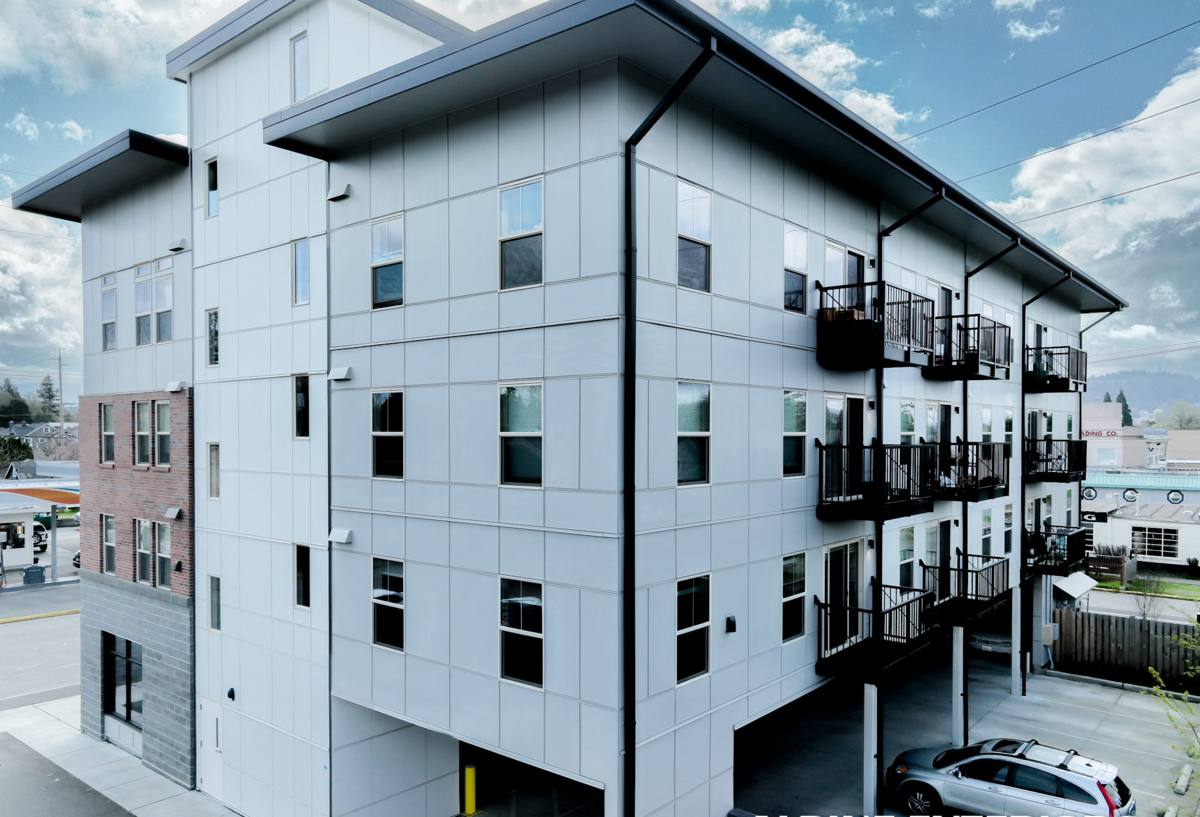
What Birch Bay's Location Does to a Wall
Salt Air Off the Water
Being close to the water means Birch Bay homes take on a steadier dose of salt-laden marine air than properties set back from the shoreline. Salt accelerates corrosion in fasteners, flashing, and trim hardware, and it breaks down lower-grade or field-applied finishes faster than a drier climate would. That's not a cosmetic issue by itself — once a finish starts failing at the surface, the material underneath is exposed to everything else this climate throws at it.
Wind-Driven Rain
Rain near the water rarely falls straight down. Wind picks up over open water and drives rain sideways into lap joints, butt seams, and anywhere a wall assembly has a gap. That matters for siding specifically because most siding failures aren't about water landing on a wall — they're about water finding its way behind one, through a joint that wasn't sealed or lapped correctly. A siding job built for calm, sheltered conditions can come up short here for that exact reason.
A Moss Season That Runs Most of the Year
Mild temperatures, regular Pacific Northwest rain, and shaded walls on many Birch Bay lots add up to a long moss and mildew season across this part of Whatcom County. Siding surfaces that hold moisture at the face, rather than shedding it, stay in that damp window longer and give organic growth more time to establish before the next dry stretch arrives — usually showing up first on north-facing or tree-shaded elevations.
Why Fiber Cement Is the Right Material Here
We used to install a wider range of siding products. What changed our standard was watching, on service calls and tear-offs, which materials actually held up in a salt-air, high-moisture, waterfront setting like Birch Bay — and which ones developed problems within a handful of years no matter how well the job was priced or sold.
- Non-combustible core: Fiber cement's cement-and-cellulose composition doesn't feed a fire the way wood-based siding can.
- Factory-applied ColorPlus finish: The color is baked on under controlled factory conditions instead of brushed on in the field, which holds up longer against salt exposure and repeated wet-dry cycling than site-applied paint.
- HZ5 formulation: Hardie's HZ5 product line is engineered for regions with heavy moisture exposure and freeze-thaw cycling, which is a close match for waterfront Whatcom County.
- Dimensional stability: The inorganic core doesn't swell, cup, or warp the way wood-based products can after repeated wetting near open water.
- Transferable warranty: Hardie backs correctly installed siding with one of the stronger warranty structures in the industry.
We don't install LP SmartSide, vinyl siding, Cemplank, Allura, primed spruce, or cedar. Those products have a legitimate place in the broader market, and plenty of homeowners elsewhere are satisfied with them. On a waterfront lot like the ones in Birch Bay, though, we've made a professional call to install one system we're willing to fully stand behind rather than offer a lower-cost option that shifts long-term maintenance and moisture risk back onto the homeowner.
What a Correct Fiber Cement Installation Actually Involves
Material choice is only half the job. Fiber cement only performs the way it's engineered to when it's installed to Hardie's published specifications, and on a wall that's going to take direct, wind-driven rain, those details carry more weight than they would somewhere sheltered.
Substrate and Moisture Check First
Before any new siding goes up, the wall behind the old material needs an honest look. On older Birch Bay homes especially, years of moisture working behind failing siding can leave sheathing or framing soft or rotted, and that has to be addressed before new siding goes on top of it — not covered up and left to keep failing out of sight.
Fastening, Clearance, and Drainage
Correct fastener type and spacing, proper clearance from grade and roofline, and drainage or rain-screen detailing where the wall assembly calls for it are what actually keep water moving out of a wall instead of sitting against it. On a wind-exposed wall, skipping or shortcutting any of these is one of the more common ways a good material still ends up with a moisture problem within a few years.
Joints, Corners, and Trim
Every lap joint, butt seam, and corner is a potential entry point for wind-driven rain if it isn't lapped, caulked, or flashed correctly. We treat those transition points with the same care as the field of the wall itself, since a single poorly sealed joint on a water-facing elevation can undo the performance of an otherwise well-installed job.
Product Options for a Birch Bay Home
James Hardie's fiber cement line gives homeowners real choices without stepping outside a system engineered for this climate.
- HardiePlank lap siding: The most common choice for a full re-side, available in several plank widths and surface textures, from smooth to a cedar-like woodgrain look.
- HardiePanel vertical siding: Often used for accent sections, gables, or a board-and-batten look paired with lap siding elsewhere on the same home.
- HardieShingle siding: A shingle profile for homes going for a more traditional Pacific Northwest coastal look without using actual cedar shingles.
- HardieTrim boards: Matching trim for corners, window and door surrounds, and fascia, finished to hold up alongside the field siding rather than becoming the weak point of the assembly.
All of these are available with the factory-applied ColorPlus finish in a range of colors suited to a coastal setting, from traditional muted tones to darker, more contemporary options — all baked on rather than field-applied, which matters most on a wall that's going to see regular salt-tinged moisture.
Cost Factors for a Fiber Cement Job in Birch Bay
| Factor | What It Affects | Why It Matters on a Waterfront Lot |
|---|---|---|
| Tear-off vs. install over existing siding | Labor scope and substrate access | Tear-off reveals moisture damage that's common under older siding in a wet, salt-air climate |
| Substrate repair | Cost before new siding goes on | Years of trapped moisture behind failing siding can rot sheathing and framing |
| Panel or plank profile chosen | Material cost per square | Accent panels and shingle profiles typically cost more than standard lap siding |
| Trim and corner detailing | Labor time and material cost | More corners and transitions mean more joints exposed to wind-driven rain |
| Drainage or rain-screen detailing | Labor and materials behind the siding | Direct water-facing walls need more deliberate drainage detailing than a sheltered elevation |
Exact numbers depend on the home's condition and exposure, which is why we walk the property in person before giving a real estimate rather than quoting off a generic price sheet.
Signs Your Current Siding Is Already Struggling
- Visible cupping, warping, or swelling in siding boards, especially on water-facing walls
- Paint or finish that's chalking, peeling, or fading noticeably faster than the rest of the house
- Moss or dark staining that keeps returning to shaded siding runs shortly after cleaning
- Soft spots when you press on siding near the bottom courses or around window and door trim
- Visible rust streaking from fasteners or trim hardware
Any one of these on its own isn't necessarily an emergency, but on a Birch Bay property, they tend to progress faster than the same issues would inland, simply because the wall doesn't get as much of a dry break between weather events.
Why Hiring Locally for This Job Matters
Two homes on the same stretch of Birch Bay can have genuinely different exposure — one sitting with a full wall facing open water, another set back or shaded by trees. A crew that already works this waterfront regularly knows to adjust fastener choice, drainage detailing, and joint treatment wall by wall instead of applying one generic spec to the whole house. That judgment is what separates a fiber cement job that looks good for a season from one that's still performing decades out.
Before You Hire, Ask
- What specific Hardie product line and profile are being quoted, and why that one for your home
- Whether the current Washington contractor license and liability insurance are active
- How they detail drainage and joint sealing on walls that take direct wind-driven rain
- Whether tear-off is included, and how substrate repair is priced if rot turns up underneath
- Whether the installation qualifies for Hardie's transferable warranty as written, not just verbally promised
Our Process for a Birch Bay Fiber Cement Project
We start with an on-site walk of the exterior, paying attention to how exposure varies wall by wall, since a water-facing side of the house and a shaded side on the same Birch Bay home can be dealing with very different moisture loads. From there we put together a clear, written scope covering material, tear-off, substrate repair if needed, and timeline before any work begins. Correct fastening, drainage, and joint detailing are standard practice on every job here, not optional upgrades added to the price later.
If you're weighing a fiber cement siding project for a Birch Bay home, we're glad to walk the exterior with you and give an honest read on what it needs. Reach out below for a free, no-pressure estimate.