 Bellingham Siding
 Why Birch Bay Roofs Wear Differently Than Inland Homes
Birch Bay sits right on the water, and that changes what a roof has to deal with year after year. Homes just a few miles inland in Bellingham or Ferndale don't take the same beating from salt-laden air, steady onshore wind, and driving rain that comes in almost sideways during a winter storm off the Strait of Georgia. Add in the shaded, damp conditions that let moss and algae take hold on north-facing slopes, and you've got a roofing environment that's genuinely tougher than the regional average — even though the regional average in Whatcom County is already demanding by national standards.
None of this means Birch Bay homes need exotic materials or gimmicks. It means the replacement has to be done correctly, with the right underlayment, flashing, and ventilation choices for a coastal microclimate, not a generic inland install. That's the difference between a roof that looks fine for a year or two and one that actually holds up through a decade of Pacific Northwest winters.
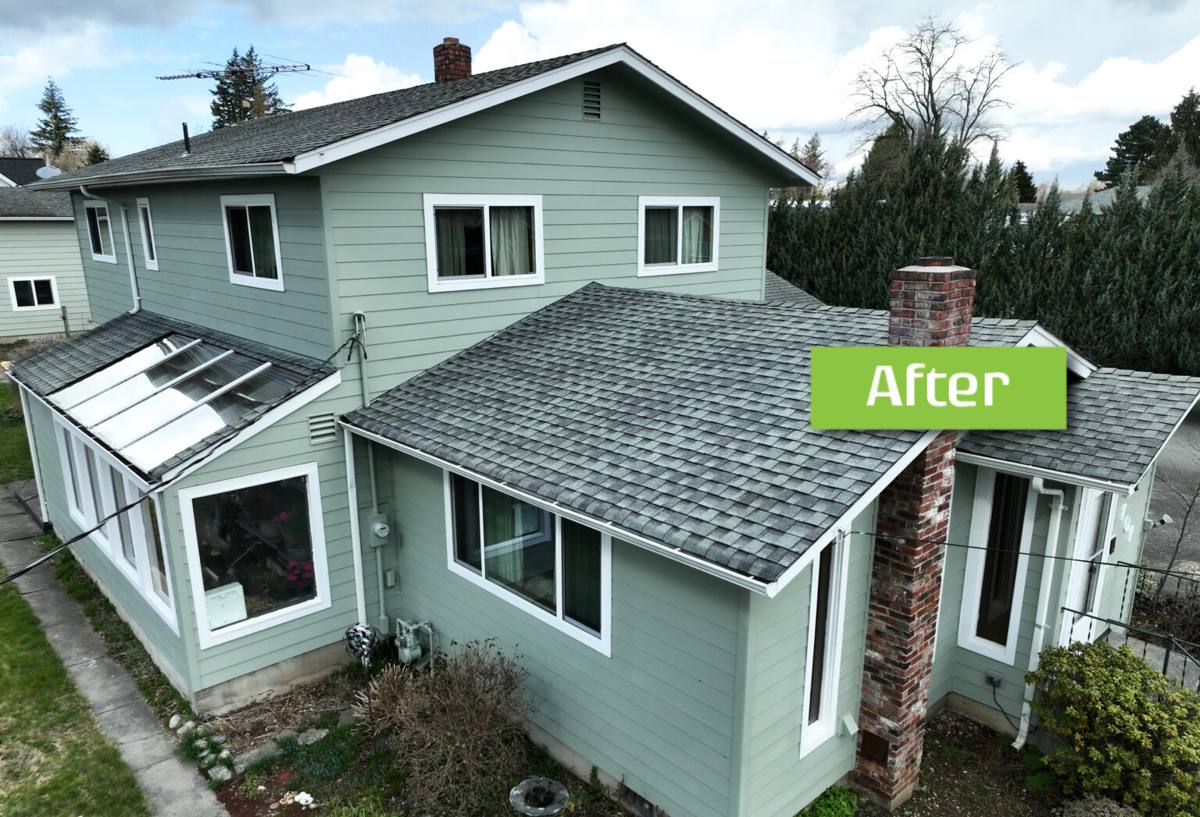
Signs a Birch Bay Roof Needs Replacing, Not Just Repairing
A lot of homeowners call us for a repair and end up learning the roof is past the point where patching makes sense. Coastal exposure tends to age a roof from the edges and valleys inward, so problems often show up at the perimeter before they're obvious from the ground.
- Shingle edges that are curling, cupping, or losing granules faster near roof edges and eaves than in the middle of the field
- Persistent moss or dark algae streaking that keeps coming back within months of cleaning
- Soft or spongy decking felt underfoot in the attic, or daylight visible through the roof boards
- Rust staining, loose fasteners, or gaps at flashing around chimneys, vents, and skylights
- Interior ceiling stains, especially near exterior walls, which often point to wind-driven rain finding a way past aging flashing rather than a simple leak
- A roof that's 20-plus years old, since even a well-maintained asphalt roof in this climate is usually near the end of its useful life by then
If only one or two of these apply and the decking is sound, a targeted repair can be the right call. When several show up together, or the decking itself is compromised, replacement is usually the more honest recommendation — patching a roof that's structurally tired just delays a bigger repair bill.
What a Correct Roof Replacement Actually Involves Here
Tear-Off and Deck Inspection
We don't install new roofing over old shingles. A full tear-off lets us see the actual condition of the roof deck, which is the part that matters most and the part a drive-by estimate can't evaluate. Any water-softened or delaminated sheathing gets replaced before anything new goes down — skipping this step is the single most common shortcut that leads to premature failure on coastal homes.
Underlayment Built for Wind-Driven Rain
Standard felt underlayment is not enough for a site exposed to steady wind off the water. We use synthetic underlayment and self-adhering ice-and-water membrane at eaves, valleys, and roof penetrations — the spots where wind-driven rain is most likely to work its way underneath shingles rather than run off the surface.
Flashing That Accounts for Salt Air
Flashing around chimneys, skylights, and wall intersections takes the brunt of coastal corrosion. We use corrosion-resistant materials and proper step-and-counter flashing details rather than relying on sealant alone, since sealant is a maintenance item, not a permanent fix, and it degrades faster in salt air.
Ventilation That Manages Moisture, Not Just Heat
In many parts of the country, roof ventilation is mostly about heat. Here, it's just as much about moisture control — a poorly ventilated attic traps humid air, which speeds up moss growth on the roof surface and can lead to condensation and rot inside the attic itself. Balanced intake and exhaust ventilation is part of a correct replacement, not an optional upgrade.
Choosing a Roofing Material for Birch Bay's Conditions
There's no single "best" roofing material for every home — the right choice depends on budget, roof pitch, how much moss and algae resistance matters to you, and how long you plan to own the home. Here's how the common options compare for a coastal Whatcom County property.
| Material | Typical Lifespan Here | Moss/Algae Resistance | Considerations for Birch Bay |
|---|---|---|---|
| Architectural asphalt shingle | 20–30 years | Good with algae-resistant granules | Most common choice; cost-effective; look for coastal-rated wind ratings |
| Standard 3-tab asphalt shingle | 15–20 years | Fair | Lower upfront cost but shorter service life in this climate; less wind resistance |
| Standing seam metal | 40–50+ years | Excellent; sheds moss more easily due to smooth surface | Higher upfront cost; performs very well in wind and rain; longer-term value |
| Cedar shake | 20–30 years with upkeep | Requires regular maintenance to resist moss | Traditional look but higher maintenance burden in a damp, shaded coastal setting |
For most Birch Bay homes, we recommend an architectural asphalt shingle with algae-resistant granules and a wind rating suited to coastal exposure — it strikes the best balance of cost, appearance, and durability. Metal is worth serious consideration for homeowners planning to stay long-term or who want to minimize moss maintenance altogether. We'll walk through the honest trade-offs for your specific roof rather than pushing one product across the board.
Our Roof Replacement Process
- On-site inspection and estimate — we walk the roof (weather permitting) and inspect the attic, not just look from the ground, so the estimate reflects the actual condition of your deck and flashing.
- Material selection — we go over shingle or metal options, colors, and warranty structures so you understand what you're buying and why.
- Scheduling around weather — coastal weather windows matter; we plan tear-off and dry-in timing to minimize the number of days your home is exposed.
- Tear-off and deck repair — old roofing removed, deck inspected, any damaged sheathing replaced before new materials go down.
- Underlayment, flashing, and ventilation installation — the layers that actually determine how the roof performs in wind and rain.
- Shingle or roofing material installation — installed to manufacturer specifications, which is what keeps material warranties valid.
- Cleanup and final walkthrough — magnetic sweep for stray fasteners, debris haul-away, and a walkthrough so you can see the finished work and ask questions before we consider the job done.
Moss and Algae: Managing It Long-Term, Not Just at Install
A new roof in Birch Bay will still face the same shade, humidity, and salt air that caused moss on the old one — good materials and ventilation reduce the problem, but they don't eliminate it entirely. Zinc or copper strips near the ridge can help suppress moss growth over time as rain washes trace metal down the roof surface. Keeping gutters clear and trimming back overhanging branches where possible also goes a long way, since trapped moisture and shade are what let moss establish itself in the first place. We're happy to talk through simple maintenance habits that extend the life of your new roof once it's installed.
What Affects the Cost of a Birch Bay Roof Replacement
Every roof is different, and we don't believe in quoting a number before we've actually inspected the property. That said, these are the main factors that move the price up or down on most jobs we do in this area.
| Factor | Why It Matters |
|---|---|
| Roof size and pitch | Steeper roofs require more safety equipment and labor time, and take longer to tear off and install |
| Number of layers to remove | Homes with multiple existing layers of roofing take longer to tear off and may reveal more deck damage |
| Deck condition | Rotted or water-damaged sheathing found during tear-off adds material and labor cost |
| Material choice | Standard asphalt, upgraded architectural shingle, and metal roofing carry significantly different price points |
| Roof complexity | Valleys, dormers, skylights, and chimneys all add flashing work and installation time |
| Access and site conditions | Waterfront lots, steep driveways, or limited staging space can affect labor and equipment logistics |
Rather than guessing, we give you a written estimate after an actual inspection, broken down so you know what you're paying for and why.
What to Ask Before Hiring a Roofing Contractor in Birch Bay
Roofing scams and underinsured "storm chaser" crews target coastal and waterfront communities after bad weather, so it's worth being a little skeptical of anyone going door to door. A few questions will tell you a lot about who you're dealing with.
- Are you licensed and bonded to do roofing work in Washington State, and can you provide proof?
- Do you carry liability insurance and workers' compensation coverage for your crew?
- Will you inspect the attic and deck, not just the roof surface, before giving an estimate?
- What underlayment and flashing details do you use, and why, for a coastal-exposure home?
- What does your workmanship warranty cover, separate from the manufacturer's material warranty?
- Do you have a permanent local address and ongoing presence in Whatcom County, or is this a one-time crew passing through?
A contractor who answers these clearly and without hesitation is generally one worth trusting with a job this significant to your home.
Why Local Experience in Birch Bay Matters
Birch Bay isn't a typical suburban neighborhood — it's a mix of year-round residences and part-time or vacation homes, many sitting close to the water with direct wind exposure. A crew that only works inland jobs doesn't always account for how much harder salt air and coastal wind are on flashing, fasteners, and shingle adhesion. We work throughout Whatcom County, including Bellingham and the waterfront communities along Birch Bay, and we build our replacements around what actually holds up here rather than a one-size-fits-all inland spec. For homeowners who aren't on-site full time, that also means a contractor you can trust to do the job right without needing to look over our shoulder.
If your roof is showing its age or you just want an honest assessment of where it stands, we're glad to take a look. Use the form below to request a free, no-pressure estimate — we'll inspect the roof, answer your questions, and give you a straight answer about repair versus replacement before you decide anything.