 Bellingham Siding
 Cordata's Siding Problem Isn't Like Everywhere Else
Cordata sits in north Bellingham, close enough to Bellingham Bay and the Strait of Georgia that homes here deal with a steady diet of marine air, even on days that feel dry. Add Whatcom County's long wet season, and you get a specific combination of stresses on exterior siding: salt-laden moisture that works into seams and fastener holes, driving rain that hits west and south-facing walls at an angle instead of straight down, and a moss season that can stretch from October through May in shaded, north-facing spots. None of these things alone destroys a wall. Together, over ten or fifteen years, they find every weak point in a siding system that wasn't installed with this climate in mind.
We install siding for homes throughout Cordata and the surrounding north Bellingham area regularly enough to know which parts of a house fail first. It's rarely the field of the wall. It's the transitions — window trim, corner boards, the bottom few inches near grade, and anywhere two pieces of siding meet without proper flashing or gap.
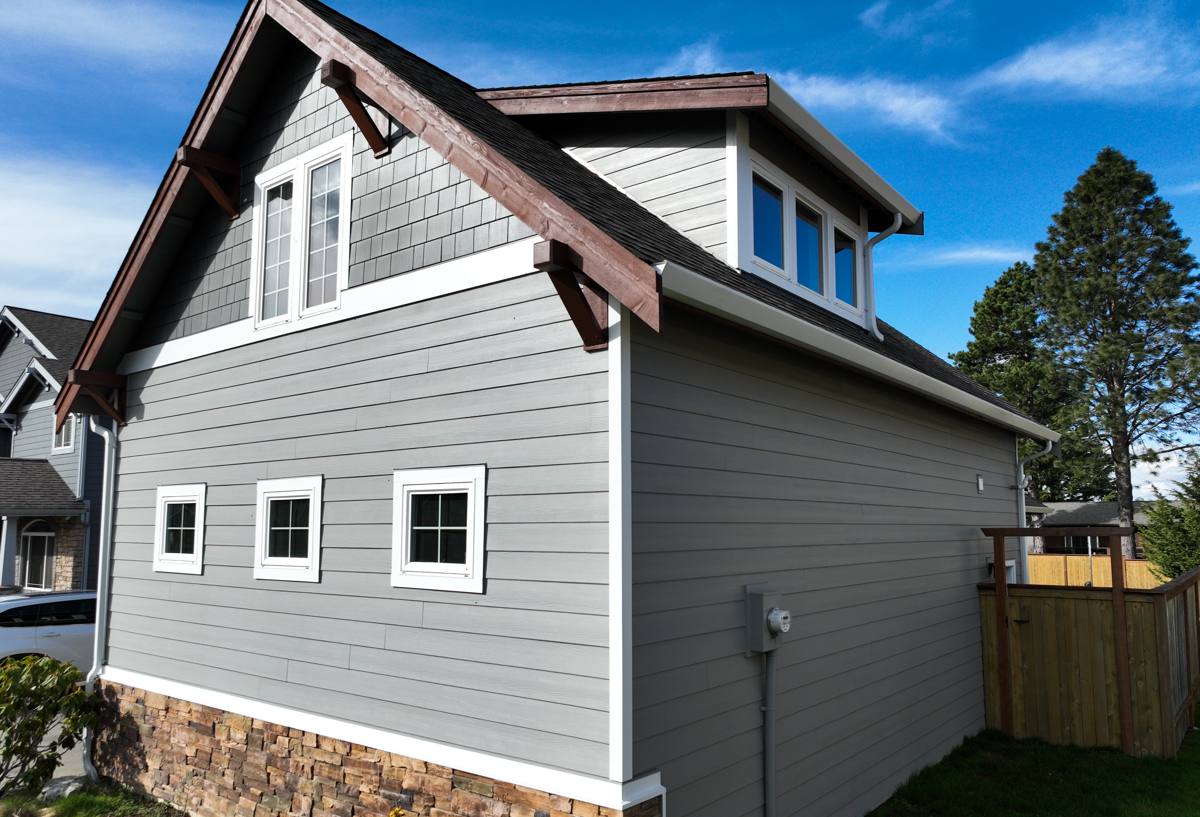
Why We Only Install James Hardie Fiber Cement
We don't install vinyl, LP SmartSide, cedar, primed spruce, or other fiber cement brands like Cemplank or Allura. That's not a marketing line — it's a standard we hold because of what we've seen fail in this specific climate. Wood-based siding products, no matter how well they're primed, are organic material sitting in a region that averages well over 30 inches of annual rainfall with long stretches of high humidity. Vinyl handles moisture fine but moves a lot with temperature swings, chalks and fades under UV over time, and can crack in a hard impact. Fiber cement made without Hardie's specific engineering doesn't always account for regional moisture cycling the same way.
James Hardie makes a fiber cement product specifically engineered for the Pacific Northwest — the HZ5 product line — which accounts for the freeze-thaw and prolonged-moisture conditions common to this region. It's non-combustible, doesn't support rot or insect damage, and comes with a factory-applied ColorPlus finish that's baked on under controlled conditions rather than field-painted, which matters a lot when your painting season is short and unpredictable.
What ColorPlus Actually Buys You
Field-painted siding is only as good as the weather on the day it was painted and the surface prep underneath it. ColorPlus finish is applied and cured in a factory setting, which gives more consistent coverage, better adhesion, and a longer color life than most site-applied paint jobs. It also comes with its own finish warranty separate from the substrate warranty, which is unusual in the industry and worth understanding before you compare bids.
What a Correct Installation Looks Like in Cordata
Fiber cement siding is only as good as the installation underneath it. A rushed or corner-cut install can fail in this climate in half the time a correct one would last. The details that matter most on a Whatcom County home:
- A drainage plane (weather-resistive barrier) installed correctly behind the siding, with proper lapping so water sheds outward instead of behind the cladding
- A rainscreen gap or furring strategy that lets any moisture that does get behind the siding actually dry out, rather than sitting against the sheathing
- Correct fastener placement and spacing per Hardie's published installation instructions — not generic carpentry judgment
- Proper flashing at every horizontal trim board, window head, and roof-to-wall intersection
- A minimum clearance between the bottom of the siding and grade, decks, and roof lines so splash-back and standing moisture don't sit against the board
- Caulked and painted cut ends at every joint, since an unsealed cut edge is the single most common point of moisture intrusion on fiber cement siding
Skip any one of these and you can still end up with a wall that looks right for a few years before it doesn't. This is exactly why installation quality matters as much as the product choice itself.
How We Approach a Cordata Job
1. On-Site Assessment
We walk the exterior and look specifically at the areas that take the most weather exposure — west and south walls, anywhere near grade, and any spot with visible moss growth or staining. We check the current siding and sheathing condition before quoting anything, since what's underneath changes the scope.
2. Tear-Off and Sheathing Check
Old siding comes off and we inspect the sheathing underneath for soft spots, rot, or prior moisture damage. This is often the point where a homeowner learns whether their old siding was actually doing its job — problems hidden behind the old cladding get addressed before anything new goes up, not after.
3. Weather Barrier and Drainage
A new weather-resistive barrier goes on correctly lapped, with a drainage strategy appropriate to the wall assembly, so the new siding has a real chance of shedding the moisture this climate throws at it.
4. Hardie Installation to Spec
Boards, panels, or shingle-style siding go up per manufacturer installation instructions — fastener pattern, gapping, flashing details, and clearances all included, not treated as optional.
5. Final Inspection and Walkthrough
We walk the finished job with the homeowner, point out what was done at the transitions and trim, and cover basic maintenance expectations going forward.
Signs a Cordata Home's Siding Needs Attention
Because damage often starts behind the siding before it's visible on the surface, homeowners usually notice one of these signs first:
- Persistent moss or algae staining that returns within a season or two of cleaning, especially on shaded north walls
- Soft or spongy spots when you press on the siding, particularly near the bottom courses
- Visible cupping, warping, or separation at seams on wood-based or older composite siding
- Paint that's peeling or bubbling rather than just fading evenly
- Rising energy bills that coincide with drafts near exterior walls, which can point to a compromised weather barrier
- Visible gaps or missing caulk at trim boards and window edges
What Drives the Cost
Every Cordata home is different, and a real number only comes from an on-site look, but these are the factors that move a bid up or down:
| Factor | Why It Matters |
|---|---|
| Home size and wall complexity | More corners, dormers, and trim details mean more cutting, flashing, and labor time |
| Current siding removal | Tear-off and disposal of old material adds cost versus a bare-sheathing install |
| Sheathing or framing repair | Moisture damage found during tear-off has to be fixed before new siding goes on |
| Siding profile chosen | Lap siding, shingle-style panels, and board-and-batten each price differently |
| Color and finish | Factory ColorPlus finishes vary in cost by color line compared to primed-for-paint options |
| Access and site conditions | Multi-story walls, tight lot lines, or landscaping close to the house affect labor time |
We'd rather walk your home and give you a number based on what's actually there than quote a rough figure that doesn't hold up once we see the sheathing.
Why Hiring a Crew That Already Works This Neighborhood Matters
Installation instructions are the same on paper wherever you go, but judgment calls on the job site aren't. A crew that regularly works Cordata and the rest of north Bellingham knows which walls in this specific setting take the worst weather exposure, how much clearance to leave given how wet the ground stays through the winter, and what moss and mildew patterns actually look like on a two- or three-year-old install versus a failing one. That familiarity shows up in the small decisions — where to add extra flashing, how tight to run a gap, which trim details need extra sealant — that a generic install doesn't always get right.
It also matters for follow-up. A local crew is easy to reach if a question comes up two years after the job, not a name on an invoice from a company that only worked your street once.
Maintaining Fiber Cement Siding in This Climate
James Hardie siding is low-maintenance compared to wood or vinyl, but "low-maintenance" doesn't mean "no maintenance" in a climate like this one. A basic annual routine keeps it performing the way it should:
- Rinse the exterior yearly, focusing on shaded, moss-prone areas, using a garden hose rather than an aggressive pressure washer that can force water behind the boards
- Inspect caulk lines at trim and window edges each spring and recaulk anywhere it's cracked or pulled away
- Trim back vegetation and landscaping that's grown up against the siding, since constant contact traps moisture
- Check gutters and downspouts before the wet season so overflow isn't running down the wall face
- Address any paint chipping or damage promptly rather than letting a small exposed spot sit through a winter
If your Cordata home's siding is showing its age, or you're planning ahead of a repaint you'd rather not do again in five years, we're glad to take a look. The estimate is free, there's no pressure attached to it, and you'll get a straight answer about what your home actually needs — just fill out the form below.