 Bellingham Siding
 Birch Bay Decks Work Harder Than Most
A deck in Birch Bay lives a different life than one a few miles inland. Sitting right along the water in Whatcom County, homes here take a steady dose of salt-laden air, wind-driven rain, and a moss season that can run half the year. None of that is dramatic on its own, but stacked together over a few winters, it's exactly the combination that ages wood and hardware faster than the manufacturer's spec sheet ever accounts for. If you own a deck out here, you're not imagining it when it seems to need more attention than your neighbor's place in town.
This page is about deck repair specifically for Birch Bay conditions — what actually breaks down first, what a repair should include to hold up here, and how we approach the job as a Bellingham-based crew that already spends regular time working this stretch of coastline.
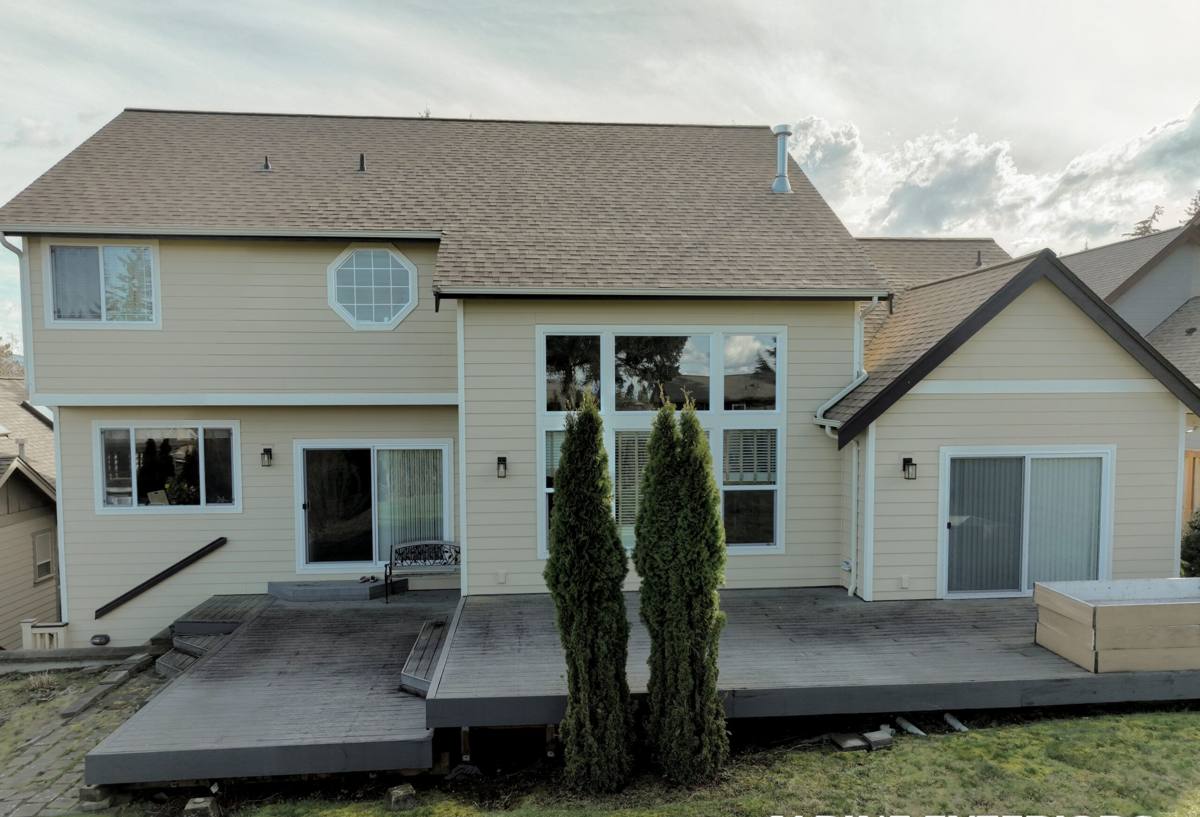
What Salt Air, Rain, and Moss Actually Do to a Deck
Salt Air
Airborne salt from the Salish Sea settles on everything, including fasteners, flashing, and any exposed metal connectors under and around your deck. Over time it accelerates corrosion, especially on hardware that wasn't rated for coastal exposure to begin with. A screw or bracket that would last two decades a few miles inland can start showing rust streaks and weakening well before that near the water.
Driving Rain
Wind off the bay doesn't just drop rain straight down — it drives it sideways, into ledger boards, under railing posts, and into any seam or gap that wouldn't normally see standing water. That means moisture finds its way into places a typical deck design assumes will stay dry, which is where rot usually starts.
Moss and Extended Damp Season
Western Washington's long wet stretch gives moss and algae plenty of time to establish on horizontal surfaces, especially in shaded spots or areas that don't get much direct sun and wind to dry out between rains. Moss holds moisture against the wood surface, which softens fibers and speeds up decay in boards that might otherwise be fine.
Signs Your Deck Needs Repair — And What They Usually Mean
- Soft or spongy decking boards — usually localized rot; often repairable board-by-board if it hasn't spread to the framing.
- Rust streaks below fastener heads — a sign the hardware itself is corroding, which is common in coastal air and worth addressing before it weakens the connection.
- Wobbly or loose railings — often a post-to-frame connection issue, sometimes from water intrusion at the base of the post.
- Gaps or separation where the deck meets the house (the ledger board) — one of the more serious issues to catch early, since this connection carries structural load.
- Persistent green or black film on boards — moss or algae buildup; not urgent by itself, but a sign the surface is staying damp longer than it should.
- Nails backing out or popped fastener heads — common as wood swells and shrinks through wet-dry cycles; easy to fix but worth doing before it leads to a trip hazard or loose board.
What a Correct Repair Actually Involves
Deck repair done right isn't just swapping out the boards that look bad. A repair that actually holds up in this climate starts with figuring out why the damage happened in the first place, not just patching the symptom.
1. Structural Assessment First
Before any boards come off, we check the framing underneath — joists, beams, posts, and especially the ledger board connection to the house. Surface damage is often the visible tip of a moisture problem that's been working on the structure underneath for longer than the homeowner realized.
2. Isolate and Address the Moisture Source
If a section is rotting because water is pooling there, replacing the wood without fixing the drainage or flashing just resets the clock on the same problem. Part of a proper repair is correcting the water path — re-flashing a ledger connection, adjusting board spacing for drainage, or addressing a grading issue that's directing runoff toward the structure.
3. Match or Upgrade Materials Appropriately
Damaged boards, framing members, and hardware get replaced with materials suited to the exposure, not just whatever matches visually. In a lot of Birch Bay repairs, that means upgrading fastener grade even if the original boards are salvageable — it's a small cost difference that pays off over years of salt exposure.
4. Reinspect Connections, Not Just Boards
Railings, stair stringers, and post bases get checked for the same corrosion and moisture issues, even if they weren't the reason you called. It's common to find a second, smaller issue while addressing the main one — better to catch it during the same visit than have it become its own repair call next year.
Repair or Replace? Cost and Condition Factors
Not every deck problem calls for a full rebuild, and not every deck is worth repairing piecemeal forever. Here's how we generally weigh it:
| Factor | Repair Usually Makes Sense | Replacement Usually Makes Sense |
|---|---|---|
| Framing condition | Joists and ledger are structurally sound | Rot has reached multiple framing members |
| Extent of damage | Isolated boards or a single section | Damage spread across most of the deck surface |
| Age of the deck | Under 15-20 years, well-built originally | Original construction is old and undersized by current standards |
| Fastener condition | Corrosion limited to a few visible spots | Widespread rust on structural hardware |
| Design/drainage | Water problem is fixable (flashing, spacing) | Deck design itself traps water against the house |
When we come out for an estimate, we'll give you a straight answer on which category your deck falls into — including telling you when a repair is genuinely the right call, not just upselling a rebuild.
Materials That Actually Hold Up in a Coastal Environment
What goes into a Birch Bay repair matters more than in a lot of inland settings, because the margin for error with moisture and salt exposure is smaller.
Fasteners and Hardware
Stainless steel or hot-dip galvanized fasteners and connectors are worth the upcharge on any deck within reach of salt air. Standard coated screws and brackets can start corroding visibly within a few years out here, while corrosion-resistant hardware is built for exactly this kind of exposure.
Decking Material
Both quality wood and composite decking can perform well in Birch Bay's climate — the tradeoffs are more about maintenance commitment than one being universally "better." Wood decking looks and feels natural but needs regular sealing and cleaning to keep moss and moisture from getting a foothold. Composite decking generally needs less upkeep and resists rot, but it's a bigger material investment upfront and still needs proper spacing and airflow underneath to perform well long-term — it's not maintenance-free, just lower-maintenance.
Flashing and Water Management
At the ledger board and any point where the deck meets the house, proper flashing is non-negotiable in this climate. It's inexpensive relative to the rest of the job and is usually the single most important detail in whether a repair lasts five years or twenty.
How We Approach a Deck Repair Job
- On-site assessment. We walk the deck, check the framing from underneath where accessible, and identify both the visible damage and its likely cause.
- Honest scope and estimate. You get a clear picture of what needs repair now, what to watch, and what it's likely to cost — no inflated scope to pad the job.
- Repair work. Damaged material comes out, the moisture source gets addressed, and replacement material goes in with hardware suited to the exposure.
- Final check. We walk the deck again before calling it done, including railings and stairs, so you're not left with a second issue we noticed but didn't mention.
Keeping a Repaired Deck in Good Shape
A good repair buys you years, but a little seasonal attention buys you more. This is the basic checklist we give Birch Bay homeowners after a repair:
- Sweep or rinse off standing debris and moss regularly, especially in shaded areas that don't dry out on their own.
- Check fastener heads once or twice a year for early rust staining, particularly on railings and stair hardware.
- Keep gutters and downspouts clear so runoff isn't draining directly onto or under the deck.
- Reseal or refinish wood decking on the manufacturer's recommended schedule — salt air conditions often call for more frequent attention than the label assumes.
- Look underneath the deck once a year if you can access it — problems at the framing level are almost always easier to catch early than after they show up on the surface.
- Address small issues (a loose board, a popped fastener) as they appear rather than waiting for the next big storm season.
Why It Matters to Hire a Crew That Already Works Birch Bay
A lot of general contractors can frame a deck repair. Fewer have spent enough time on this specific stretch of Whatcom County coastline to know, without guessing, which fastener grade actually holds up here, which corners of a deck tend to rot first given the prevailing wind and rain direction, and which repairs are quick fixes versus which ones are a symptom of a bigger drainage problem. We're based out of Bellingham and work Birch Bay regularly, which means we're not learning the local climate on your project — we're applying what we've already seen work and not work on decks in this exact environment.
It also means we're a known, reachable local crew if a repair needs a follow-up visit down the line, not a company that did one job in the area and moved on.
Get a Free, No-Pressure Estimate
If your Birch Bay deck has soft spots, rusting hardware, a wobbly railing, or you're just not sure whether it needs a repair or something more, we're happy to take a look. Fill out the form below for a free estimate — no pressure, just a straight assessment of what your deck actually needs.