 Bellingham Siding
 Decking in Sehome Has to Handle a Specific Kind of Weather
Sehome sits close enough to Bellingham Bay that salt-laden air is a real factor in how outdoor materials age, not just a coastal cliché. Add in Whatcom County's long wet season, weeks of low sun angle that keep shaded areas damp for days after a storm, and a moss season that can run from fall through spring, and you have a climate that is unusually hard on exterior wood surfaces. A deck built the same way you'd build one in a dry inland climate will show problems here faster: soft spots, black staining in the grain, moss creeping into board gaps, and fasteners that corrode before the wood around them even shows wear.
Composite decking exists specifically to resist most of that, but "composite" is not a single product with one set of behaviors. Some composite boards handle constant moisture and shade well. Others were designed with drier climates in mind and will still trap moisture, grow algae, or fade unevenly if they're installed without the right details underneath. The material choice matters, but so does the install — and that's where most of the difference between a deck that looks good in year eight and one that doesn't shows up.
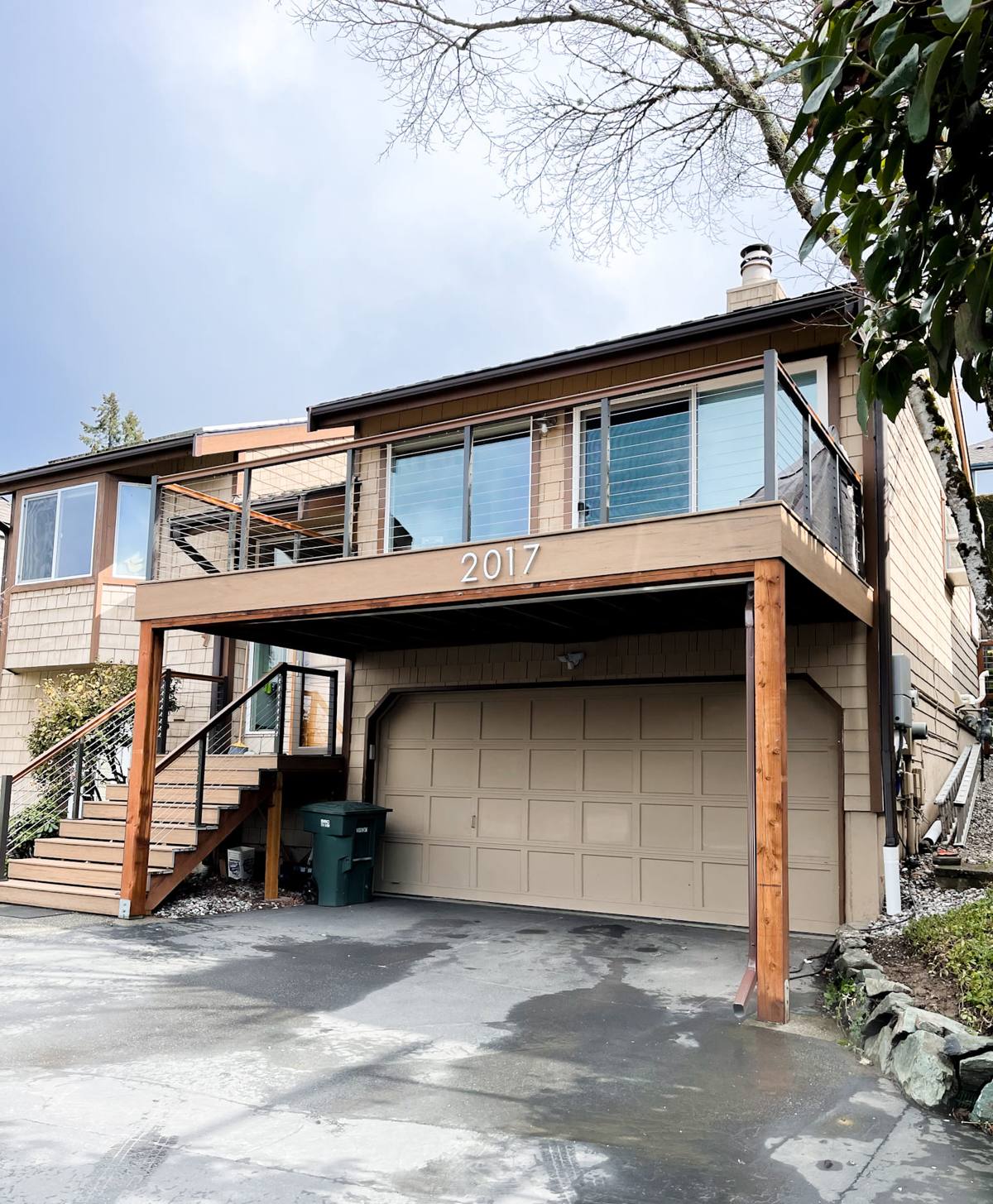
What Composite Decking Needs to Do Differently Here Than Elsewhere
In a dry climate, a composite deck mostly needs to resist UV fading and handle foot traffic. In Bellingham, and specifically in a neighborhood like Sehome with mature tree cover and proximity to the water, the deck also needs to:
- Shed water fast enough that boards don't sit damp for days at a time
- Resist moss and algae growth in shaded, north-facing, or tree-covered sections
- Tolerate salt-influenced moisture in the air without accelerated fastener corrosion
- Handle repeated freeze-thaw-style swelling in the substructure during cold, wet stretches
- Stay slip-resistant when wet — moss and algae film make smooth composite surfaces genuinely dangerous underfoot
None of these are exotic requirements, but they only get addressed if the crew is thinking about them from the start — at the framing and fastener stage, not just the board selection stage.
Capped vs. Uncapped Composite: Why It Matters More Here
Composite boards fall into two broad categories, and the difference is not cosmetic — it changes how the board behaves in a wet, shaded environment like parts of Sehome.
| Type | How It Handles Moisture | Moss/Algae Resistance | Long-Term Maintenance |
|---|---|---|---|
| Capped composite (polymer shell around a wood-plastic core) | Shell blocks water absorption into the core | Smooth cap resists organic growth better; still needs periodic cleaning | Low — occasional wash |
| Uncapped composite (exposed wood-plastic blend) | Can absorb some surface moisture over time | More prone to staining and moss in shaded, damp spots | Moderate — more frequent cleaning, some boards need periodic sealing |
| Traditional wood (for comparison) | Absorbs and releases moisture constantly | Most prone to moss, rot, and splintering in this climate | High — annual sealing/staining and rot inspection |
Our professional standard is to recommend capped composite for anything in Sehome that sits under tree cover, faces north, or is within reach of salt-influenced air off the bay. It costs more upfront than uncapped composite, but the maintenance burden and moisture behavior make it the more honest long-term choice for this specific climate. We'll still install uncapped composite where a homeowner has a sunny, well-drained site and wants to manage the cost trade-off — that's a legitimate call, and we'll walk through it honestly rather than push one product line.
Color and Surface Texture Choices That Actually Help
Darker composite colors show less staining from tannin runoff and airborne debris but run hotter in direct sun. Lighter colors stay cooler but show moss and algae discoloration more visibly if the deck isn't cleaned regularly. A grooved or heavily textured surface grips better when wet but can hold more debris in shaded corners than a smoother finish. None of these are wrong choices — they're trade-offs worth discussing against where the deck sits on your property and how much upkeep you want to do.
What Correct Substructure Work Looks Like Under a Composite Deck
The composite boards on top get the attention, but the framing underneath is what actually determines whether the deck stays solid through repeated Whatcom County wet seasons. A correct build includes:
- Pressure-treated or naturally rot-resistant framing lumber, rated for ground or moisture contact where applicable
- Joist tape or a flashing membrane over the top of every joist, so fasteners don't create a direct path for water into the wood
- Proper joist spacing for the specific composite board being used — composite has different span ratings than wood, and manufacturer spec sheets vary by product
- Ledger board flashing that correctly directs water away from the house band joist, a detail that causes hidden rot when skipped
- Corrosion-resistant fasteners and hardware rated for the moisture and salt exposure typical this close to the water
- Airflow underneath the deck — blocked or fully enclosed skirting without vents traps humidity against the framing
This is the part of the job that isn't visible once the deck is finished, which is exactly why it's the part most likely to get shortcut on a low bid. A deck can look identical on day one whether the ledger flashing was done right or skipped entirely — the difference shows up three or four wet seasons later.
Our Process for a Sehome Composite Deck Project
- On-site assessment — we look at sun exposure, tree cover, drainage slope, and proximity to salt air influence to understand what that specific spot in Sehome will demand of the materials.
- Material walkthrough — we go over capped vs. uncapped options, color and texture trade-offs, and hardware choices based on what we saw on-site, not a generic recommendation.
- Framing and drainage plan — we plan joist layout, flashing, and ventilation before a single composite board goes down.
- Installation — substructure first, then decking, railing, and any stairs, following the manufacturer's fastening and spacing specs for the chosen product.
- Final walkthrough — we go over basic maintenance expectations for the specific board installed, since capped and uncapped products aren't cared for identically.
Maintenance Reality: Composite Still Needs Some Care Here
Composite decking is often marketed as "no maintenance," which oversells it — especially in a climate with a real moss season. What composite actually needs in this area is far less than wood, but it isn't zero:
- A seasonal wash (a garden hose and stiff-bristle brush handle most buildup) to clear pollen, debris, and early moss growth before it takes hold
- Keeping gutters and nearby drainage clear so runoff doesn't pool against the deck or run directly onto shaded boards
- Trimming back overhanging branches where practical, to cut down on the shade and debris that feed moss growth
- Checking railing and fastener points once a year for movement or corrosion, particularly on decks closer to the water
Skipping this doesn't cause sudden failure the way it might with untreated wood, but moss and organic buildup left unaddressed for years will stain even capped composite and make the surface genuinely slippery.
Cost Factors Homeowners Should Understand
| Factor | Why It Moves the Price |
|---|---|
| Capped vs. uncapped board choice | Capped composite costs more per square foot but reduces long-term maintenance and moisture-related repair risk |
| Substructure condition | Existing framing that's rotted or under-built needs replacement before decking goes on, adding labor and material cost |
| Deck size and layout complexity | Multiple levels, curves, or built-in features (benches, planters) add labor beyond a simple rectangular deck |
| Railing and stair requirements | Code-required railing height and baluster spacing, plus stair complexity, affect both material and labor |
| Site access and tree cover | Limited access or heavy tree cover near the build site can add time for material staging and protective measures during construction |
We give honest, itemized estimates rather than a single flat number, so you can see exactly where the cost comes from and where there's room to adjust scope if needed.
Why Hiring a Crew That Already Works in Sehome Matters
A crew that regularly works this neighborhood already understands which yards get heavy shade off mature trees, which sections of the area feel the salt influence off the bay most, and how drainage typically behaves on the area's terrain during Whatcom County's wetter months. That's not a substitute for a proper site assessment, but it means fewer surprises and fewer assumptions carried over from jobs done somewhere with a completely different climate. It also means we're a known, findable local business if a warranty question or maintenance question comes up years down the road — not a crew that worked one job in the area and moved on.
A Quick Checklist Before You Hire Anyone for a Composite Deck
- Ask whether they're recommending capped or uncapped composite for your specific site, and why
- Ask what flashing and ventilation details they include under the decking — get it in writing, not just verbally
- Ask what fastener and hardware grade they use, especially if you're close to the water
- Ask for an itemized estimate, not a single lump-sum number
- Ask how they handle drainage and slope on your particular lot
If you're weighing a new composite deck or a replacement for an aging wood deck in Sehome, we're glad to walk the site with you and put together a straightforward, no-pressure estimate — just fill out the form below to get started.