 Bellingham Siding
 Windows Built for Sehome's Weather, Not Just Any Weather
Sehome sits on a hillside above downtown Bellingham, close enough to the Bay that salt-laden air and wind-driven rain are part of daily life for most of the year. Add Whatcom County's long, damp shoulder seasons and the moss and algae growth that comes with them, and you've got a climate that is genuinely hard on window systems — especially older ones installed before better flashing and drainage details were standard practice. When we install windows in Sehome, we're not just swapping glass; we're building an assembly that has to shed water, resist wind pressure, and keep moisture from working its way behind the trim year after year.
A lot of window problems we find in this neighborhood aren't really window problems — they're installation problems. The unit itself is fine, but the flashing was skipped, the sill pan was missing, or the gap around the frame was packed with the wrong material. In a marine climate like Bellingham's, those shortcuts show up faster than they would somewhere dry, which is exactly why installation quality matters more here than in most parts of the country.
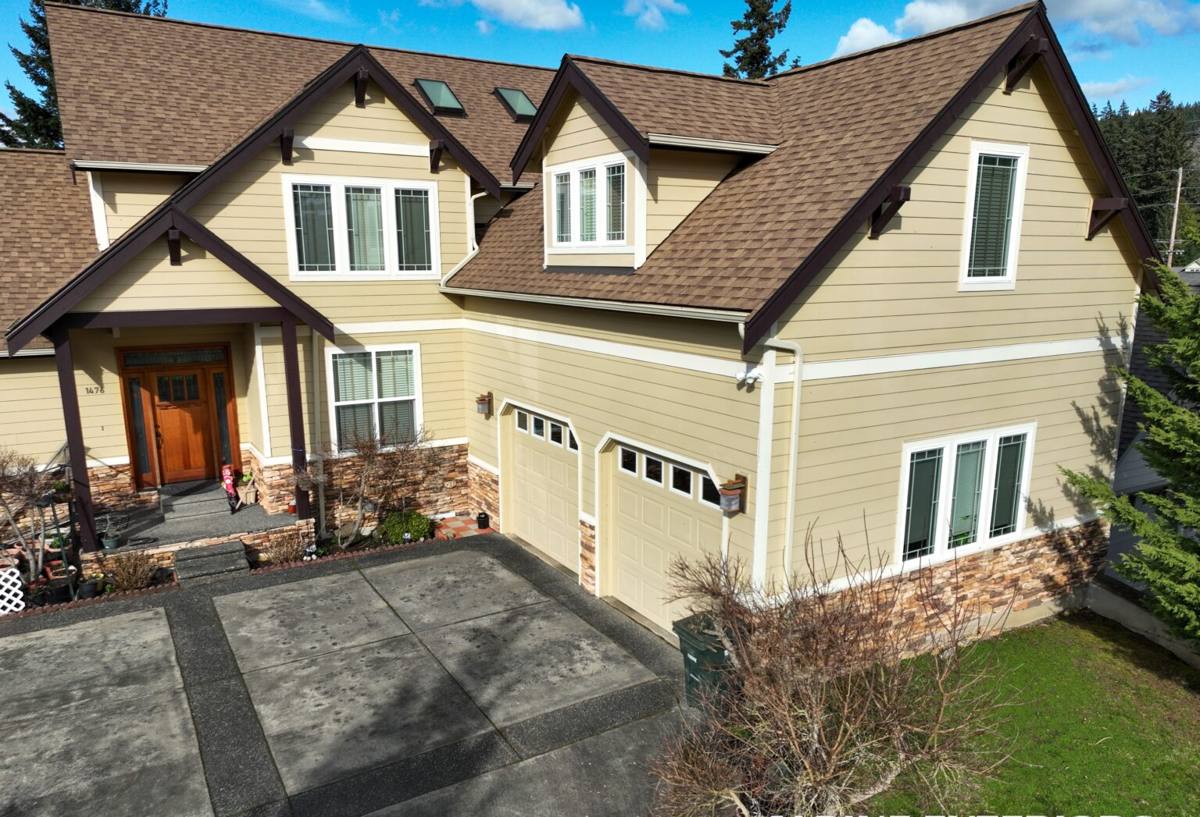
What Sehome's Climate Actually Does to Windows
Salt Air and Metal Fatigue
Proximity to Bellingham Bay means airborne salt settles on everything, including window hardware. Cheaper aluminum components and unprotected fasteners corrode faster here than they would inland. Over years, that corrosion can seize locks, pit hinges, and weaken the seal around operable sashes.
Driving Rain and Wind Pressure
Storms coming off the water don't just drop rain straight down — they push it sideways into the wall assembly. A window that's caulked well but not properly flashed will often hold up fine in a light shower and still leak in a wind-driven storm, because the water is being forced up and under the trim rather than running down the face of the wall.
Moss, Algae, and Prolonged Dampness
Bellingham's long wet season keeps north- and shade-facing walls damp for weeks at a stretch. That moisture supports moss and algae growth on siding and trim, which holds even more water against the window opening. If there's already a weak point in the flashing or sealant, that sustained dampness is what eventually turns a small gap into a rot problem in the framing around the window.
Temperature Swings and Condensation
Whatcom County doesn't get extreme heat, but the daily swing between cool, moist air and heated interior air is enough to cause condensation on poorly insulated or single-pane windows — which shows up as fogging, drips on the sill, and eventually soft spots in the surrounding wood.
Signs a Sehome Home Needs Window Installation, Not Just Repair
- Visible gaps, soft or discolored trim, or paint that keeps bubbling around the frame
- Windows that are hard to open, won't stay up, or don't latch flush anymore
- Persistent fogging between panes, which means the seal on a double-pane unit has failed
- Drafts you can feel by hand along the frame edge, especially during wind events
- Visible moss or dark staining on the siding directly below a window — a sign water has been running down from above
- Single-pane or original-to-the-house windows on a home built before the 1990s
Any one of these can sometimes be handled with a repair. Two or more together, especially on the same window, usually means the frame or flashing has failed and a repair would just be patching a bigger problem.
What a Correct Installation Actually Involves
Window installation done right in this climate isn't complicated, but it's not something to rush either. The steps that actually protect the house are mostly invisible once the trim goes back on:
- Remove the old unit carefully and inspect the rough opening for rot, soft framing, or existing water damage before anything new goes in.
- Repair or replace damaged framing — installing a new window into a compromised opening just hides the problem behind new trim.
- Install a sloped sill pan so any water that does get past the window drains back outside instead of pooling on the sill.
- Integrate flashing with the house wrap in the correct shingle-lap order (sides, then head, then weave into the weather-resistive barrier) so water is directed down and out, never trapped behind the siding.
- Set the window level, plumb, and square, shimmed at the manufacturer's specified points — an out-of-square unit puts stress on the frame and can cause premature seal failure.
- Insulate the gap with a low-expansion foam or backer rod rated for windows, not construction-grade foam that can bow the frame.
- Seal and trim using exterior-grade sealant rated for our climate, with attention to leaving the bottom of the sill able to drain rather than sealing it shut.
Skip the sill pan or get the flashing lap order backwards, and the window can look perfect for a year or two before water starts finding its way in.
Frame Material Options for Bellingham's Marine Climate
| Material | How It Handles Salt Air & Moisture | Maintenance | Typical Fit for Sehome Homes |
|---|---|---|---|
| Vinyl | Won't corrode or rot; performs well in coastal air | Low — occasional cleaning | Good all-around choice for most homes, budget-friendly |
| Fiberglass | Very stable in temperature swings and moisture; resists warping | Low | Strong option for exposed, weather-facing walls |
| Wood-Clad | Good looks, but the exterior cladding is what protects the wood core from our rain — any breach in the cladding lets moisture reach wood | Higher — cladding seams and any exposed wood need monitoring | Best reserved for homes prioritizing a historic or traditional look, with realistic upkeep expectations |
| Aluminum | Prone to corrosion and condensation in coastal, wet climates unless thermally broken | Moderate to high | We generally steer homeowners away from it here unless it's a thermally-broken commercial-grade product |
We don't push one brand or material on every job — the right choice depends on your home's exposure, your budget, and how much upkeep you actually want to do. What we won't do is install a product into a wall assembly where it's set up to fail early; that's a disservice to the homeowner regardless of what's on sale.
Our Process for a Sehome Window Installation
1. On-Site Assessment
We look at the existing openings, not just the windows — checking for rot, prior water damage, and how each wall is exposed to weather (a window on the wind- and rain-facing side of the house often needs more attention to flashing than a sheltered one).
2. Accurate Measurement and Product Selection
We measure each opening individually — older Sehome homes are rarely perfectly uniform — and go over frame material, glass package, and grille options based on your home's exposure and your goals, whether that's energy performance, noise reduction, or simply stopping a leak.
3. Installation Day
We work efficiently but don't skip steps to save time. Openings are protected from weather during the swap, old units and debris are hauled off, and each window is checked for proper operation and a square, weathertight fit before we call it done.
4. Walkthrough and Warranty Paperwork
We show you how the new hardware operates, register manufacturer warranties where applicable, and stand behind our own installation work separately from the product warranty.
Why a Crew That Already Works Sehome Matters
Sehome's mix of early-1900s houses and newer hillside builds means rough openings, siding types, and trim details vary a lot from block to block. A crew that regularly works this specific part of Bellingham has already dealt with the quirks that come with that mix — older non-standard opening sizes, layered siding from past remodels, and the hillside drainage patterns that affect how water moves around a house here. That experience shows up in fewer surprises mid-installation and fewer callbacks after the fact.
Local crews are also more realistic about scheduling around Whatcom County's wet stretches. Window installation involves an open wall for a period of time, and timing that work around dry windows in the forecast — rather than pushing through a storm to hit a deadline — is part of doing it right in this climate.
What Affects the Cost of Window Installation
| Factor | Why It Matters |
|---|---|
| Number and size of windows | More units and larger openings mean more material and labor time |
| Frame material | Vinyl is typically the most budget-friendly; fiberglass and wood-clad cost more |
| Condition of the rough opening | Rotted or damaged framing found during removal adds repair time before the new window goes in |
| Glass package | Upgraded low-E coatings or laminated glass for noise/security cost more than standard double-pane |
| Access and site conditions | Sehome's hillside lots can mean more setup time for upper-floor or steep-approach windows |
| Trim and finish work | Matching existing exterior trim details, especially on older homes, can add finish labor |
We give firm, itemized numbers after seeing the actual openings — broad estimates before that are honest but rarely precise enough to plan a budget around.
A Quick Checklist Before You Call Anyone
- Note which windows are drafty, foggy, hard to operate, or visibly damaged
- Check the siding and trim below each problem window for staining, soft spots, or moss buildup
- Decide whether you're chasing energy savings, stopping leaks, or both — it changes the product recommendation
- Ask any contractor how they handle sill pans and flashing integration, not just what brand of window they sell
- Get the scope in writing, including what happens if rot is found once the old window comes out
If you're dealing with drafty, foggy, or leaking windows anywhere in Sehome, we're happy to take a look and walk you through what we're seeing — no pressure, no hard sell. Fill out the form below for a free estimate.