 Bellingham Siding
 Sehome's Climate Is Hard on Roofs
Sehome sits close enough to Bellingham Bay that salt-laden air reaches every roof in the neighborhood, whether the home is on the hill or down near the flats. Combine that with the driving rain that blows in off the water most of the year, plus the shaded, moisture-holding conditions that come with mature trees and a long Pacific Northwest moss season, and you have a roof environment that is genuinely tougher than what a lot of manufacturers design for on paper. A roof that would last three decades in a dry inland climate often shows real wear here well before that, especially if it wasn't installed with this specific combination of exposures in mind.
That's the starting point for any honest conversation about roof replacement in Sehome: the climate isn't a footnote, it's the main factor that should drive material choice, ventilation design, and flashing detail. A roof replacement done without that context in mind is a roof replacement that will need attention again sooner than it should.
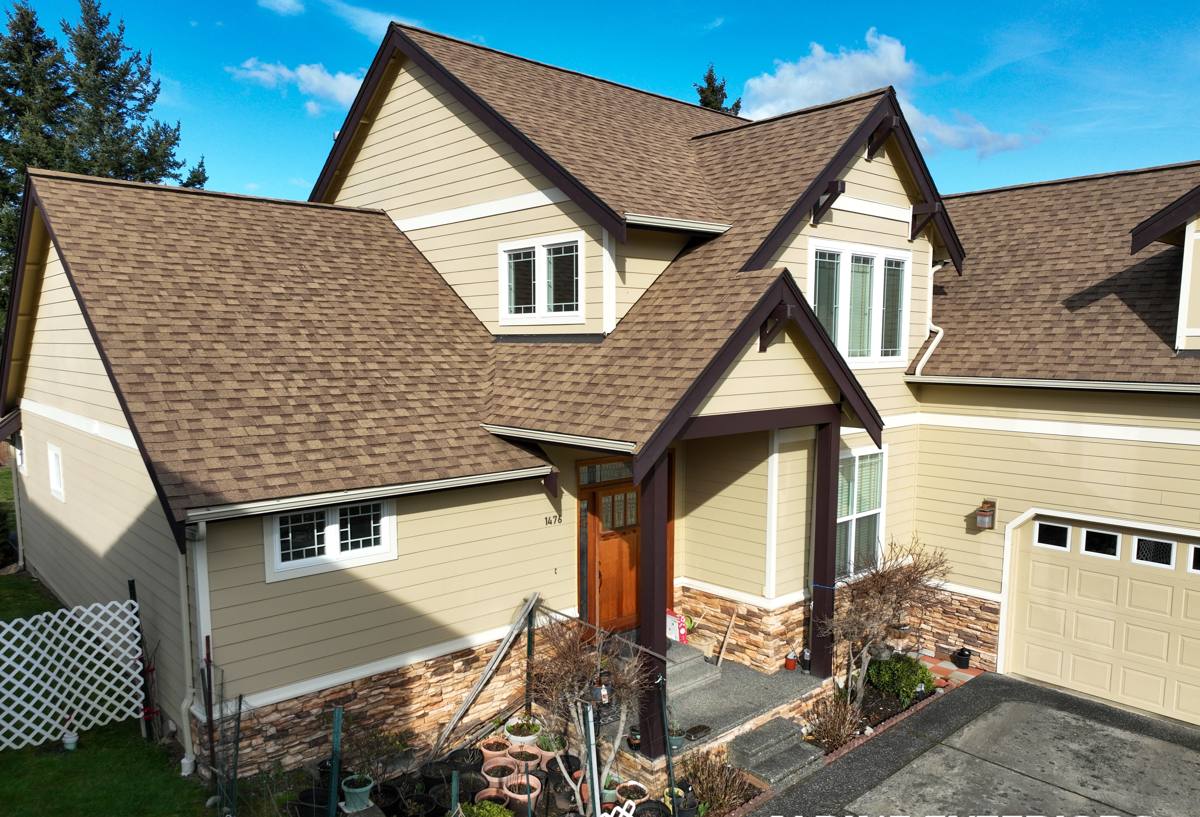
Signs a Sehome Roof Needs Replacement, Not Just Repair
Age and Material Life Expectancy
Standard three-tab asphalt shingles in Whatcom County's wet, mossy conditions often start showing granule loss and edge curling in the 15-20 year range, sooner if the roof has poor ventilation or heavy shade. Architectural laminate shingles typically hold up longer, but even those benefit from a full evaluation once they pass the 20-year mark. If your roof is approaching or past its expected service life and you're already calling for repairs more than once a year, replacement is usually the more cost-effective path.
Visible Damage From the Ground
Curling, cupping, or missing shingles; dark streaking that doesn't wash off; thick moss growth along the ridge and in shaded valleys; and sagging in the roof plane are all signs worth taking seriously. A roof that looks tired from the sidewalk is usually further along than it looks.
Signs Inside the Attic or Ceiling
Water stains on ceiling drywall, daylight visible through the roof deck, damp or matted attic insulation, and a musty smell in the attic space all point to moisture getting past the roofing system. By the time you can see these signs indoors, the deck itself may already need repair, not just the shingles above it.
What a Correct Roof Replacement Actually Involves
Tear-Off and Deck Inspection
A proper replacement starts with a full tear-off down to the sheathing, not a layover on top of old shingles. This is the only way to actually see the deck condition — soft spots, rot, or delamination from years of moisture intrusion aren't visible from above, and covering them up just locks in a problem. Any damaged sheathing gets cut out and replaced before anything new goes down.
Underlayment and Water Barrier
Given how much rain this region sees, underlayment choice matters more here than in drier climates. Self-adhered ice-and-water barrier belongs at eaves, valleys, and around penetrations, with synthetic underlayment across the rest of the deck for a consistent secondary water barrier under the shingles or panels.
Flashing Details
Most roof leaks trace back to flashing, not the field material. Step flashing at wall intersections, properly lapped valley flashing, and correctly sized flashing around chimneys, skylights, and vent pipes are what actually keep driving rain out of a home — and they're the details that get rushed on a low-bid job.
Ventilation
Balanced intake and exhaust ventilation keeps the attic dry and temperature-regulated, which protects the deck from the underside and helps prevent the kind of trapped moisture that accelerates moss growth and shingle deterioration from below.
Roofing Materials That Hold Up in Bellingham's Climate
There's no single "best" roofing material for every Sehome home — the right choice depends on your roof's slope, shade exposure, budget, and how the home's architecture reads with the material. Here's how the common options compare for this specific climate.
| Material | Typical Lifespan | Moss & Algae Resistance | Maintenance |
|---|---|---|---|
| Standard 3-tab asphalt | 15-20 years | Low without added algae-resistant granules | Regular moss removal recommended |
| Architectural laminate shingles | 25-30 years | Moderate to good with algae-resistant options | Periodic inspection and moss treatment |
| Standing seam metal | 40-50+ years | Very good — sheds moss more easily due to smooth surface | Low; occasional gutter and fastener check |
| Cedar shake | 20-30 years with upkeep | Requires active maintenance to resist moss and rot | High; regular treatment and inspection |
For most Sehome homes, algae-resistant architectural shingles offer the best balance of cost, appearance, and durability against this area's moss and moisture pressure. Metal roofing costs more upfront but is worth discussing on homes with heavy tree shade or steep, hard-to-maintain slopes where moss removal is a recurring headache.
What Affects the Cost of a Sehome Roof Replacement
Every roof is different, and a real number only comes from an on-site inspection, but these are the factors that move the price most:
| Factor | Why It Matters |
|---|---|
| Roof size and number of planes | More squares and more complex geometry mean more material and labor time |
| Pitch and access | Steep or hard-to-access roofs (common on Sehome's hillside lots) take longer and require more safety setup |
| Deck condition | Rotted or soft sheathing found during tear-off adds material and labor to replace it correctly |
| Material choice | Asphalt, architectural shingle, and metal roofing carry different material and installation costs |
| Layers of existing roofing | Removing multiple layers of old roofing adds tear-off time and disposal cost |
| Ventilation and flashing upgrades | Bringing an older roof's ventilation and flashing up to current standards adds value but also cost |
Broadly, homeowners in this area should expect a wide range depending on these factors — asphalt shingle replacements tend to land at the lower end, metal and premium materials at the higher end. A written, itemized estimate after an actual roof inspection is the only way to know where your specific project falls.
Our Roof Replacement Process
- On-site inspection and estimate. We walk the roof, check the attic where accessible, and give you a clear, written scope and price — no guessing from the driveway.
- Material selection. We go over the tradeoffs for your specific roof, shade exposure, and budget so you choose with full information, not sales pressure.
- Scheduling and permitting. We handle the permit process and schedule around Bellingham's weather windows to reduce the chance of a job getting stretched out by rain delays.
- Tear-off and deck repair. Full removal of old roofing, deck inspection, and replacement of any damaged sheathing before anything new goes down.
- Underlayment, flashing, and installation. Ice-and-water barrier, synthetic underlayment, properly detailed flashing, and correct material installation per manufacturer specification.
- Ventilation check. We confirm intake and exhaust ventilation is balanced for the new roofing system, not just left as-is from the old one.
- Cleanup and walkthrough. Full site cleanup, including a magnetic sweep for nails, followed by a walkthrough so you can see the finished work before we consider the job done.
- Warranty documentation. You get manufacturer and workmanship warranty paperwork in writing, not just a verbal promise.
Keeping Moss, Algae, and Salt Air From Shortening Your New Roof's Life
A correctly installed roof still needs some ongoing attention in this climate. A little maintenance goes a long way toward getting the full expected lifespan out of your investment.
- Have moss and debris cleared from the roof and gutters at least once a year, more often on heavily shaded sections
- Keep gutters and downspouts clear so driving rain has somewhere to go instead of backing up under shingles
- Trim back overhanging branches to reduce shade, debris buildup, and physical damage to the roofing surface
- Check and clean any zinc or copper moss-control strips if your roof has them installed
- Inspect flashing around chimneys, skylights, and vents annually for lifting or sealant wear
- Address small leaks or lifted shingles promptly — small problems left through a wet winter rarely stay small
Permits, Codes, and Insurance Considerations in Whatcom County
Roof replacement in Bellingham and unincorporated Whatcom County generally requires a permit, and inspections confirm the work meets current building code, including underlayment and ventilation requirements. A contractor who pulls the permit and schedules the required inspections is protecting you, not just checking a box — it's what makes the work verifiable if you ever sell the home or file an insurance claim related to roof damage. It's also worth confirming with your homeowner's insurance provider how they want roof age and material documented, since some carriers ask for this after a replacement.
Why Hire a Roofing Crew That Already Works in Sehome
Sehome's mix of home ages, hillside lots, and mature tree cover means no two roofs here have quite the same set of problems. A crew that already works this neighborhood has seen how these specific conditions — the shade patterns, the moss buildup on north-facing slopes, the way salt air and driving rain wear on flashing near the bay — actually play out over time, not just in a training manual. That local pattern recognition shows up in small but important decisions: which valleys need extra ice-and-water protection, which roof shapes are prone to trapped moisture, and where a quick repair versus a full replacement is the more honest recommendation.
It also means faster response when something needs a second look, familiarity with local permitting, and a crew that's building a reputation in the same neighborhood they're working in — which tends to keep the work honest.
If your Sehome roof is showing its age or you just want a straight answer about repair versus replacement, we're happy to take a look. Fill out the form below for a free, no-pressure estimate.