 Bellingham Siding
 Why Sehome's Climate Is Hard on Siding
Sehome sits close enough to Bellingham Bay to catch salt-laden air off the water, and close enough to Sehome Hill's tree canopy to stay shaded and damp for long stretches of the year. That combination is tougher on exterior siding than either factor alone. Salt air accelerates corrosion on fasteners and metal trim, while the shade and moisture from mature tree cover slow drying time after every storm. Homes lower on the slope near downtown Bellingham get more direct exposure to wind-driven rain off the bay; homes tucked closer to the arboretum deal more with moss, algae, and slow-drying north walls. Either way, siding here has to handle repeated wet-dry cycles for most of the year, not just an occasional rainstorm.
Driving Rain and Wind Exposure
Storms moving in off the Salish Sea don't just fall straight down — they push rain sideways into walls, seams, and trim. Siding and flashing details that would be fine in a drier climate can let water track behind the cladding here if they're not built with that wind-driven moisture in mind.
Moss Season
Whatcom County's long, cool, wet stretch from fall through spring is prime moss and algae growth season, especially on shaded siding that stays damp longer than sun-exposed walls. Once moss and algae establish themselves on a porous or poorly finished surface, they hold moisture against the substrate and accelerate whatever damage is already underway.
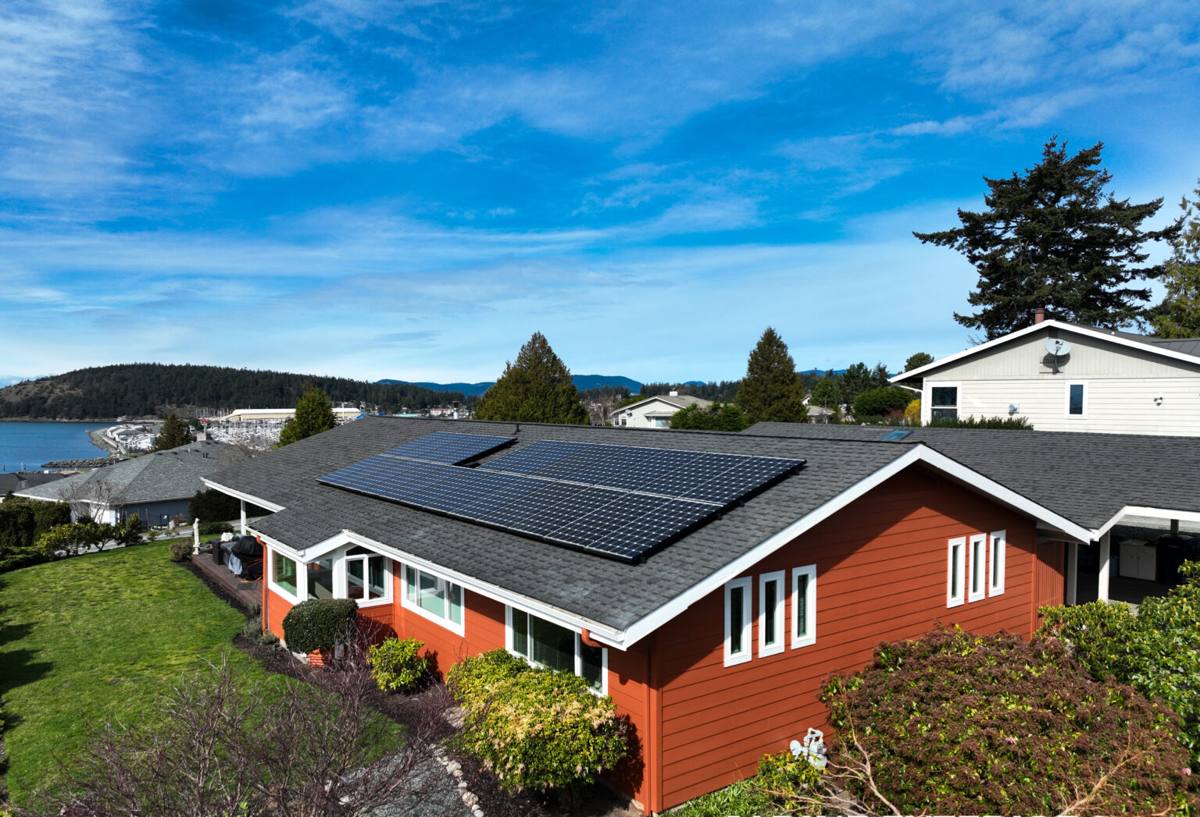
Why Fiber Cement Outperforms the Alternatives Here
We install James Hardie fiber cement siding exclusively. We don't put up vinyl, LP SmartSide, primed spruce, cedar, or other fiber cement brands like Allura or Cemplank. That's not a marketing position — it's a standard we set based on how these products actually perform under Bellingham's specific mix of salt air, sustained rain, and shade-driven moss growth.
| Factor | Vinyl Siding | Wood / Cedar | James Hardie Fiber Cement |
|---|---|---|---|
| Moisture behavior | Can warp or bow; seams are a common water path | Absorbs moisture, prone to rot without diligent upkeep | Engineered to resist moisture damage when installed with proper clearances |
| Moss and algae resistance | Textured surface can trap growth | Porous surface feeds growth readily | Dense, factory-finished surface resists growth better; still needs periodic cleaning |
| Salt air / coastal exposure | Can become brittle and discolor over time | Fasteners and finish both vulnerable to salt corrosion | Non-combustible cement composition holds up well; correct fastener choice matters |
| Maintenance burden | Low, but limited repair options when damaged | High — regular painting, sealing, and rot checks | Low with ColorPlus factory finish; repaint cycle stretched well beyond wood |
| Fire performance | Combustible | Combustible | Non-combustible cement composition |
None of these materials are without trade-offs, and we're upfront that fiber cement costs more upfront than vinyl and requires a more careful installation than either alternative. But for a neighborhood dealing with this specific climate combination, the long-term performance case is straightforward.
The James Hardie Product Lines We Use
James Hardie engineers its siding by climate zone, and Bellingham falls into the HZ5 zone — built for regions with sustained moisture, moderate temperature swings, and freeze-thaw cycles rather than extreme heat. That matters more than most homeowners realize, because a product engineered for a hot, dry climate zone behaves differently under Whatcom County conditions than one engineered for ours.
Plank, Panel, and Trim Options
For Sehome homes we most commonly install HardiePlank lap siding for the field, HardiePanel for accent areas or modern facades, and HardieTrim for corners, fascia, and window surrounds. The right mix depends on the home's existing architecture — a craftsman-era bungalow near the university typically calls for a different plank exposure and trim profile than a newer build.
ColorPlus Factory Finish
Most Sehome projects use ColorPlus prefinished siding rather than field-painted planks. The finish is baked on at the factory under controlled conditions, which gives more consistent color coverage and better adhesion than a field-applied paint job — a real advantage in a climate where wet weather limits the number of good painting days per year anyway.
What a Correct Installation Involves
Fiber cement siding is only as good as the installation behind it. Most siding failures we see on inspection aren't a product problem — they're an installation shortcut that let water get behind the cladding. In Sehome's climate, a few details matter more than usual.
- Rainscreen gap: a drainage channel behind the siding lets any moisture that does get behind the cladding drain and dry instead of sitting against the sheathing.
- Flashing at every penetration: windows, doors, hose bibs, and light fixtures all need properly lapped flashing so wind-driven rain can't track backward into the wall assembly.
- Correct fastener spacing and type: James Hardie specifies fastener placement and material for a reason — salt air exposure makes fastener choice especially important here.
- Proper clearance at grade and roofline: siding installed too close to the ground, a deck, or a roof line traps moisture and invites the rot and moss growth that shortcuts are supposed to avoid.
- Caulking only where Hardie specifies it: over-caulking joints that are designed to allow drainage can trap water instead of shedding it.
Our Process From Estimate to Finished Job
Every Sehome project starts with an on-site look at the home's specific exposure — how much direct rain and wind it takes, how much shade and tree cover surrounds it, and what condition the existing wall assembly is in underneath the current siding.
- Free on-site estimate and exposure assessment, including a look at existing moisture damage, moss buildup, and trim condition.
- Detailed scope and product selection — plank profile, color, and trim package matched to the home's style and exposure.
- Removal of existing siding with an inspection of the sheathing and framing underneath before anything new goes up.
- Installation of a proper water-resistive barrier and rainscreen gap, then flashing at every penetration.
- Installation of James Hardie siding and trim to manufacturer fastening and clearance specifications.
- Final walkthrough covering care and maintenance specific to the home's site conditions.
Maintenance in a Moss-Prone, Salt-Air Neighborhood
Fiber cement is low-maintenance compared to wood, but "low-maintenance" doesn't mean "no maintenance" — especially with Sehome's tree cover and bay-adjacent air. A simple seasonal routine keeps siding performing the way it's designed to.
- Rinse siding gently once or twice a year, more often on shaded north- and west-facing walls where moss and algae build up fastest.
- Keep gutters clear so overflow doesn't run down and soak the siding repeatedly in the same spot.
- Trim back tree limbs and shrubs that keep a wall damp and shaded longer than it needs to be.
- Watch caulk lines at trim and window edges for cracking or separation, and have them addressed before wet season sets in.
- Have a contractor check fastener and flashing condition periodically, since these are the components most exposed to salt air corrosion.
Why Hiring a Crew That Already Works Sehome Matters
A lot of siding problems in this neighborhood trace back to installation decisions that would be fine somewhere drier or farther from the water. A crew that regularly works in Bellingham and Whatcom County already knows to size the rainscreen gap correctly for this rainfall pattern, choose fasteners rated for salt air exposure, and account for the shade and drainage conditions common to hillside lots near Sehome Hill. That local pattern recognition is hard to substitute with a generic installation approach, no matter how good the underlying product is. It also means fewer surprises with local permitting and inspection expectations, since the crew has already been through that process on nearby homes.
Cost Factors for Sehome Fiber Cement Siding Projects
We don't publish flat prices because every home's scope is different, but the factors that move a project's cost up or down are consistent across the neighborhood.
| Factor | Why It Matters |
|---|---|
| Home size and wall complexity | More corners, gables, and trim detail mean more labor and cutting |
| Condition of existing sheathing | Rot or moisture damage found during removal adds repair scope before new siding goes up |
| Plank profile and trim package | Wider reveals, specialty trim, and accent panels cost more than a standard lap profile |
| Color and finish choice | ColorPlus factory finishes vary by color; custom field-painted finishes add labor |
| Site access | Tight lots, slopes, and mature landscaping near the house can add setup and protection time |
If your Sehome home's siding is showing moss buildup, cracked caulk lines, or soft spots near the trim, it's worth having it looked at before another wet season adds to the damage. We offer a free, no-pressure estimate — walk us through what you're seeing and we'll tell you honestly what the job actually involves.