 Bellingham Siding
 Siding Installation in Sehome
Sehome sits close to Bellingham Bay and Western Washington University, with a housing stock that spans older craftsman and mid-century homes alongside newer infill construction. That mix matters when it comes to siding. An older Sehome home may still have its original wall sheathing and outdated (or missing) weather-resistive barrier behind whatever siding is currently on it, while a newer home may have been built to a different code era with its own quirks. A correct siding installation has to account for what's actually underneath the existing cladding, not just what goes on top of it.
This page is specifically about siding installation as a service for Sehome — what the neighborhood's exposure to Bellingham Bay's climate demands, what a correctly installed system looks like, and why the installation itself (not just the product) determines whether new siding lasts fifteen years or fifty.
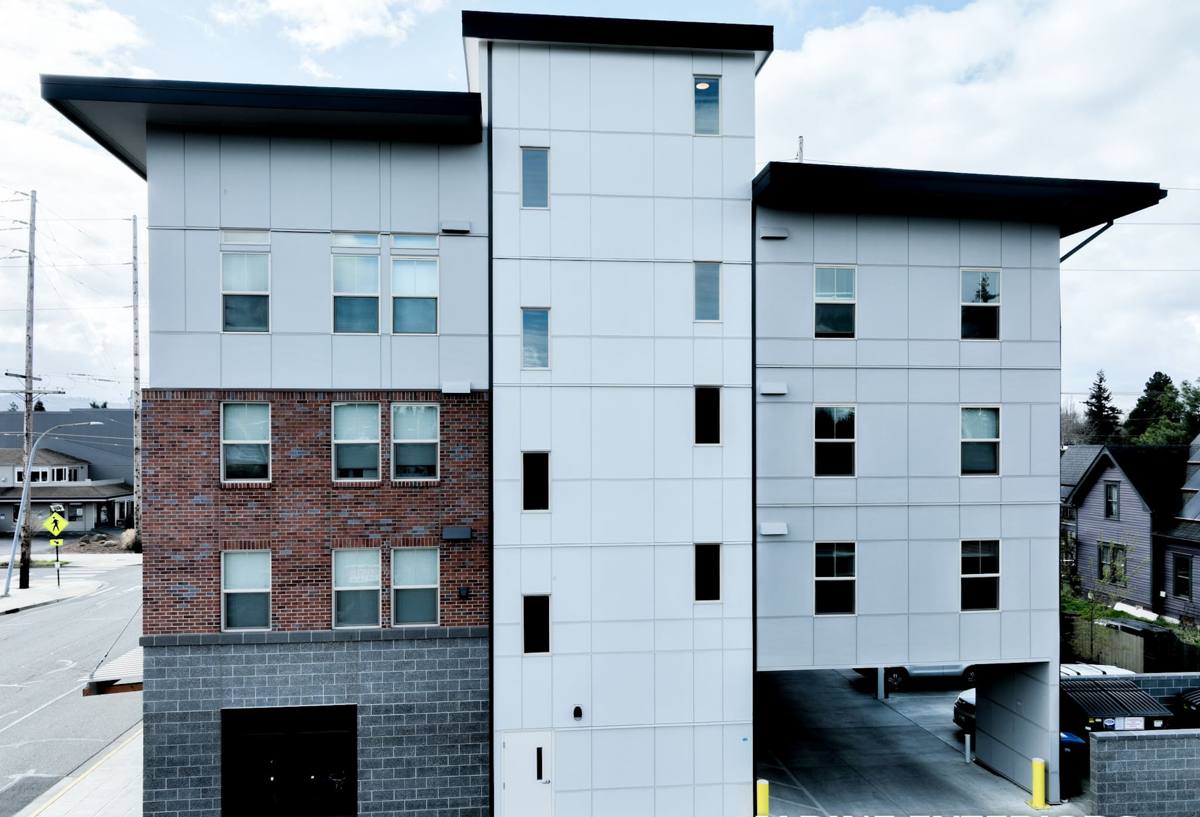
What Bellingham Bay's Climate Does to Siding in Sehome
Sehome's proximity to the water means homes here deal with a combination of salt-laden air, driving wind-driven rain, and a moss season that can run most of the year in Whatcom County's marine climate. Each of these stresses siding differently, and each one exposes weak installation work faster than it would in a drier inland climate.
Salt Air
Airborne salt from Bellingham Bay accelerates corrosion on any exposed metal fastener, trim flashing, or hardware. Siding installed with the wrong fastener type, or with fasteners left exposed instead of properly countersunk and sealed, will show rust streaks and failure points years before a correctly fastened system would.
Driving Rain
Wind off the bay pushes rain sideways into wall assemblies, not just straight down. Siding that relies on caulk alone to keep water out — rather than proper flashing, house wrap laps, and drainage gaps — eventually lets moisture behind the cladding. Once water gets behind siding in a marine climate, it doesn't dry out quickly, and that's when sheathing rot starts.
Moss and Algae
Constant moisture and shade from mature trees common in older Bellingham neighborhoods create ideal conditions for moss and algae growth on siding surfaces, especially on north-facing walls and anywhere siding sits close to landscaping. Moss holds moisture against the siding surface and, on products that aren't engineered to resist it, can accelerate surface degradation over time.
Why Installation Quality Matters More Than the Neighborhood's Age Suggests
Because Sehome has a real mix of home ages, we don't assume every project is the same. An older home may need sheathing repair or replacement discovered only after tear-off. A newer home may have a weather-resistive barrier that's still sound but was never properly integrated with window and door flashing. Either way, the installation crew has to actually inspect the wall assembly before siding goes up — not just measure the exterior and order material.
This is also where Whatcom County's building code intersects with real-world performance. Local code sets minimum standards for weather-resistive barriers, flashing, and clearances, but code minimums and best practice aren't always the same thing in a climate this wet. We install to the manufacturer's specifications and to what actually performs on the ground here, which is often a step beyond the bare code requirement.
What Correct Siding Installation Actually Involves
Tear-Off and Sheathing Inspection
Removing the existing siding is the only reliable way to see what's really behind it. We check sheathing for soft spots, rot, or prior water damage before anything new goes up. Any compromised sheathing gets replaced — covering it over with new siding just hides a problem that will keep growing behind the wall.
Weather-Resistive Barrier and Flashing
A new weather-resistive barrier is installed with proper overlaps and integrated with window, door, and penetration flashing so water is directed out and down, never trapped. This is the layer that does the actual work of keeping bulk water out of the wall — the siding itself is the second line of defense, not the first.
Fastening to Manufacturer Spec
Fastener type, spacing, and depth all matter, especially in a coastal-influenced climate where corrosion resistance is non-negotiable. Fasteners driven too deep or too shallow, or spaced incorrectly, compromise both the wind resistance and the water-shedding performance of the whole system.
Clearances and Drainage
Siding needs proper clearance from grade, roof lines, decks, and hardscaping so water can drain away instead of wicking up into the bottom edge of the boards. This is a common failure point on older homes where grade has been built up over the years, and it's something we check and correct during installation rather than ignore.
Joints, Caulking, and Trim
Butt joints, corners, and trim transitions are where most premature siding failures start. We follow manufacturer joint treatment guidance rather than relying on caulk to cover for a rushed installation — caulk is a maintenance item, not a substitute for correct detailing.
Why We Install Only James Hardie Fiber Cement
We standardized on James Hardie fiber cement siding and don't install vinyl, LP SmartSide, Cemplank, Allura, or unprimed wood siding. That's a deliberate decision, not a brand preference, and it matters specifically in a climate like Sehome's.
James Hardie's HZ5 product line is engineered for cold, wet, freeze-prone climates like the Pacific Northwest, with a formulation built to resist moisture-related damage better than standard fiber cement blends. The factory-applied ColorPlus finish is baked on under controlled conditions, which holds up better against UV and moisture than field-applied paint and reduces how often the siding needs repainting. Fiber cement is also non-combustible, which matters given the wildfire smoke seasons the region has seen in recent summers, and it doesn't rot, delaminate in high humidity, or provide a food source for the kind of moss and algae growth this climate encourages.
None of that replaces good installation — even the best product fails if it's put on wrong — but it gives Sehome homeowners a real advantage against salt air, driving rain, and moss that vinyl and untreated wood products don't offer to the same degree.
Comparing Siding Options for a Marine Climate
| Factor | James Hardie Fiber Cement | Vinyl | Wood / LP SmartSide |
|---|---|---|---|
| Moisture resilience | Engineered for wet climates (HZ5 line) | Doesn't rot, but can trap moisture behind panels | Vulnerable to swelling and rot if compromised |
| Moss/algae resistance | Dense, factory-finished surface resists buildup | Prone to algae staining, especially shaded walls | Absorbent surface, higher moss/algae risk |
| Fire resistance | Non-combustible | Combustible, can melt/warp near heat sources | Combustible |
| Finish durability | Factory-baked ColorPlus finish | Color molded through, can fade and chalk | Field-applied paint, needs recoating over time |
| Typical maintenance | Periodic washing, caulk checks | Low, but cracks/warps in impact or heat | Regular repainting/sealing required |
Our Siding Installation Process
- On-site assessment — we walk the exterior, note wall condition, exposure, and any visible problem areas before quoting.
- Tear-off — existing siding is removed and sheathing is inspected for hidden damage.
- Repairs — any compromised sheathing or framing is repaired or replaced before moving forward.
- Weather barrier and flashing — new house wrap and flashing are installed and integrated at every window, door, and penetration.
- James Hardie installation — siding is installed to manufacturer spec for fastening, clearance, and joint treatment.
- Trim and detail work — corners, trim boards, and transitions are finished to shed water correctly.
- Final walkthrough — we review the finished work with the homeowner before calling the job complete.
Cost Factors for a Sehome Siding Project
Every home is different, and we don't quote prices without seeing the job, but the main factors that drive cost on a typical Sehome siding installation are:
- Total square footage of exterior wall area
- Number of stories and roof/wall complexity (dormers, gables, multiple planes)
- Condition of the existing sheathing once tear-off begins
- Amount of trim, corner, and detail work involved
- Access — tight lot lines, mature landscaping, or limited staging space common in older Sehome lots
- Siding profile and color selection within the James Hardie lineup
Signs Your Sehome Home May Need New Siding
- Visible moss or algae staining that keeps returning after cleaning
- Soft or spongy spots when you press on the siding
- Peeling, bubbling, or chalky paint that won't hold a fresh coat
- Cracked, warped, or separating boards or panels
- Rust streaking near fasteners or trim
- Rising energy bills with no other clear explanation
- Visible gaps at corners, joints, or around windows and doors
Why Local Installation Experience Matters
A crew that regularly works in Sehome and the surrounding Bellingham neighborhoods knows what this specific stretch of coastline does to a wall assembly over time — where moss tends to build up, how driving rain off the bay hits certain wall orientations harder, and what condition to expect behind siding on homes of a given age. That familiarity shows up in the details: flashing choices, fastener selection, and where extra attention goes during tear-off. It's the difference between a crew following a generic checklist and one that's actually accounting for Whatcom County's marine climate on every job.
If you're considering new siding for a home in Sehome, we're happy to take a look and walk you through what we find — no pressure, no obligation. Request a free estimate below and we'll get back to you with a straightforward assessment of your home's siding needs.