 Bellingham Siding
 What "New-Construction Windows" Actually Means
In the window trade, "new-construction" doesn't just mean a brand-new house. It refers to a specific type of window and installation method — one with a nailing fin (sometimes called a flange) around the perimeter of the frame that gets fastened directly to the sheathing, then integrated into the wall's water-resistive barrier (WRB) before siding goes on. This is different from a "pocket" or "insert" replacement window, which slides into an existing frame with the old exterior trim left in place. New-construction windows are the right call any time the wall is open — a true new build, an addition, a room bump-out, or a renovation where you're already down to the studs and sheathing.
For homeowners in Sehome planning an addition, a second story, or a full remodel that opens up exterior walls, this is the window scope you're dealing with. It's a bigger, more exacting job than swapping out an old double-hung, and it only gets done right once — after the siding and trim close it in, mistakes are hidden until they show up as a stain on drywall or a soft spot in the sill two winters later.
New-Construction vs. Retrofit — Why It Matters Here
A retrofit window relies partly on the existing wall assembly to keep water out. A new-construction window is installed into a bare opening, so the window itself and the flashing detail around it are the entire water management system at that opening. That's a lot of responsibility riding on flashing tape, sill pans, and fastener patterns most homeowners never see. Get it wrong and you don't find out for a season or two — usually right when Whatcom County's fall rains start testing every seam in the building envelope.
Why Sehome's Climate Is Tougher on Windows Than It Looks
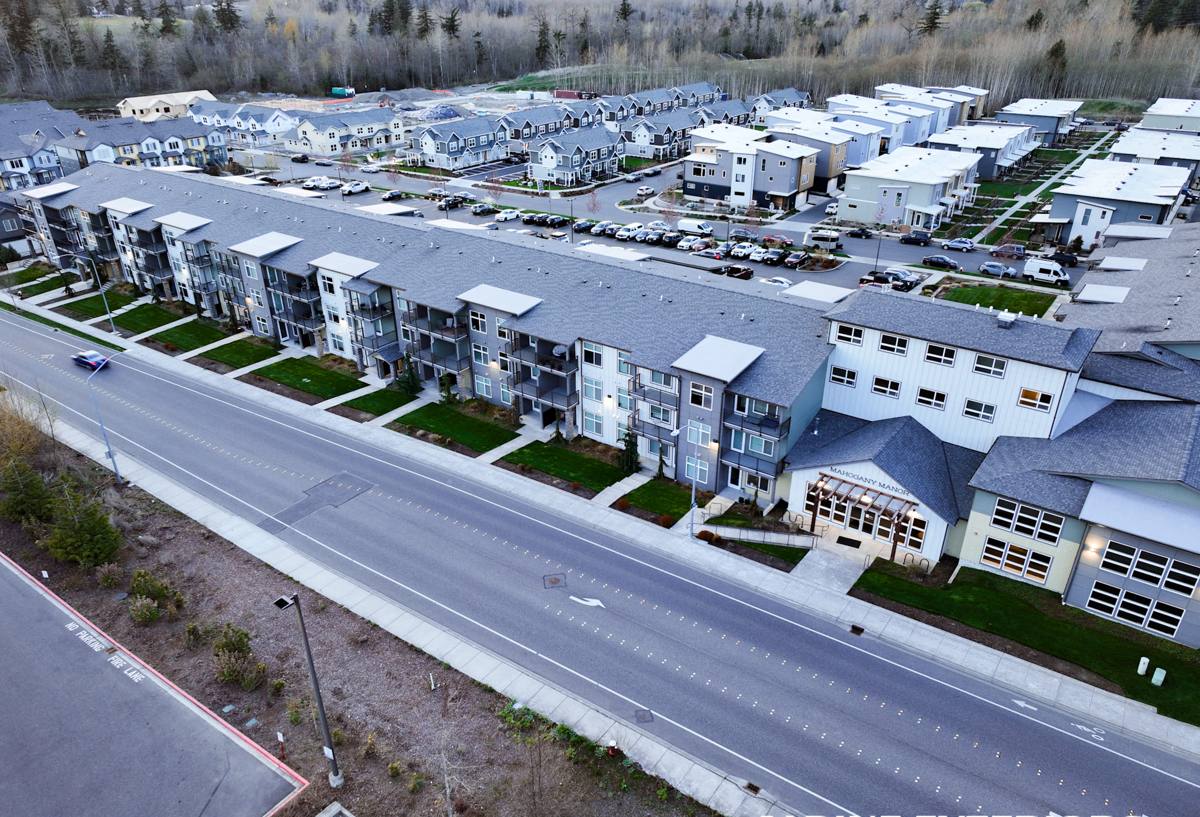
Sehome sits close enough to Bellingham Bay that homes here deal with a mix of moisture sources most inland Washington towns don't: salt-laden air off the water, long stretches of driving rain pushed in by Pacific storm systems, and a moss and mildew season that can run most of the year on shaded elevations. None of that is dramatic on any given day, but it's relentless, and relentless is what actually wears down a window installation over time.
- Salt air accelerates corrosion on unprotected fasteners, low-grade hardware, and cheap flashing metals — small details that are easy to skip on a new-construction install and expensive to fix once siding is on.
- Driving, wind-pushed rain tests the flashing and sealant details at the head, jambs, and sill far harder than a straight-down rain would. This is exactly the condition new-construction window flashing is designed to handle — if it's done correctly.
- Extended damp seasons mean any water that does get behind a window has less chance to dry out between storms, so small flashing errors compound instead of self-correcting.
- Whatcom County's temperature swings, while mild compared to inland climates, still put annual expansion and contraction stress on sealant joints and frame materials.
None of this means Sehome is a uniquely hostile place to build — it means the margin for error on flashing and water management is smaller than in a drier region, and it's why we treat every new-construction window opening here as a water-management detail first and a window-fit detail second.
What a Correct New-Construction Window Install Involves
The Flashing and Water Management Sequence
The order of operations at a rough opening matters more than almost anything else in this scope of work. Done correctly, water that reaches the wall is directed out and down, never inward, at every layer:
- Inspect and prep the rough opening — square, correctly sized, sheathing sound and dry.
- Install a sloped sill pan so any water that gets past the window has a built-in path back outside.
- Apply jamb and head flashing tape in the correct shingle-lap order — sill first, then jambs, then head — so every layer overlaps the one below it, the same way siding courses work.
- Set the window plumb, level, and square, then fasten through the nailing fin per the manufacturer's schedule.
- Integrate the window flange into the WRB (housewrap or building paper) with the same shingle-lap logic, and seal per the window manufacturer's written instructions.
- Air-seal and insulate the interior gap around the frame — a step that affects comfort and condensation resistance, not just energy bills.
Every one of those steps is inspectable before siding goes on and invisible after. That's the entire reason this work needs a crew that treats the sequence as non-negotiable rather than something to speed through.
Nailing Fin, Fasteners, and Sealant Choices
In a salt-air environment, fastener and flashing material choice isn't cosmetic. We use corrosion-resistant fasteners at the nailing fin and flashing metals rated for coastal exposure, and we match sealants to both the window frame material and the WRB — mismatched sealant chemistry is a common, avoidable cause of adhesion failure a few years down the road. It's a small line item on an estimate and one of the cheapest ways to add years to an installation.
Choosing Frame Material and Glass for This Climate
There's no single "best" window for every Sehome home — it depends on budget, the home's style, and how much sun/rain exposure a given elevation gets. Here's how the common options actually compare for this climate, honestly:
| Frame Material | How It Handles This Climate | Trade-Offs |
|---|---|---|
| Vinyl | Good moisture and salt-air resistance, no painting required | Fewer color/profile options; can flex on very large openings |
| Fiberglass | Excellent dimensional stability through wet/dry and temperature cycles; strong long-term option near the water | Higher upfront cost than vinyl |
| Wood-clad | Classic look for period and craftsman-style Sehome homes; clad exterior protects the wood from direct weather | Interior wood still needs periodic finish maintenance; more installation-sensitive at the cladding seams |
| Aluminum | Strong and slim sightlines | Poor thermal performance and prone to condensation unless thermally broken — we're selective about where we recommend it here |
For glass, we typically spec dual-pane, low-E glazing as the baseline for new-construction openings in this area — it's the right balance of energy performance and condensation resistance for our winters. Homes with heavy west or south afternoon sun, or rooms prone to glare, sometimes benefit from a different low-E coating tuned for solar control rather than heat retention. We'll talk through which makes sense room by room rather than specifying one glass package for the whole house by default.
Our Process for Sehome New-Construction Projects
Whether we're framing new openings on an addition or working alongside a builder on ground-up new construction, the process stays consistent:
- Site walk and rough-opening review — we check sizing, squareness, and sheathing condition before ordering windows, not after.
- Product selection — matched to the home's style, sun exposure, and budget, with honest trade-offs explained up front.
- Flashing and install per manufacturer spec — the sequence above, documented and photographed at each stage since it's covered up by siding.
- WRB and siding coordination — if we're also doing the siding, the transition is one continuous water-management plan instead of two contractors' work meeting in the middle. If another crew handles siding, we coordinate the WRB handoff directly with them.
- Final walk-through — operation, seals, and trim checked with you before we call it done.
Mistakes We See on Other Jobs — and Build Our Process Around Avoiding
Most window callbacks we get asked to fix in Bellingham trace back to a handful of repeatable errors, not bad luck: flashing tape applied in the wrong lap order, sill pans skipped or improvised, fasteners that aren't rated for coastal exposure, sealant used to substitute for correct flashing rather than backing it up, or window openings that were never properly squared before the window went in. Every one of these is avoidable with a disciplined sequence and isn't visible again until there's a problem. We build our checklist specifically around the failure points that show up most in this climate, not a generic national install guide.
What Affects Cost on a New-Construction Window Project
| Factor | Why It Moves the Price |
|---|---|
| Number and size of openings | More openings and larger units mean more material, flashing, and labor hours |
| Frame material | Vinyl, fiberglass, and wood-clad carry different material costs, as shown above |
| Glass package | Standard low-E vs. solar-control or upgraded acoustic glazing |
| Access and elevation | Second-story or hillside openings on sloped Sehome lots take longer and may need staging |
| Coordination with siding/framing | Working alongside your builder or as a standalone window install changes scheduling and prep work |
We don't quote a job without seeing the openings, but as a general range, expect new-construction window projects in this area to run from a few thousand dollars for a handful of standard openings up to a much larger figure for a full addition or whole-house new build with premium frame materials — the site walk is what turns that range into a real number.
Care After Installation
A correctly installed new-construction window is close to maintenance-free, but a little seasonal attention goes a long way in this climate:
- Rinse salt residue and moss/algae buildup off frames and sills a couple of times a year, especially on north- and west-facing elevations.
- Check exterior sealant joints annually for cracking or separation — sealant is a wear item, not a lifetime feature.
- Keep weep holes on operable units clear of debris so water has somewhere to go.
- Watch for soft spots or discoloration on interior sills or nearby drywall, which can be an early sign of a flashing issue worth addressing quickly rather than waiting.
Why It Matters to Hire a Crew That Already Works in Sehome
New-construction window installation is unforgiving work — the flashing sequence has to be right the first time because it's buried under siding and trim for the life of the house. A crew that regularly works Whatcom County openings already knows how driving rain off the water behaves against a wall, which elevations take the worst weather, and which fastener and flashing choices actually hold up here rather than just meeting a generic building-code minimum. That local pattern recognition is what turns a correct-on-paper installation into one that's still watertight a decade from now.
If you're planning an addition, remodel, or new build in Sehome and want windows installed the way this climate actually requires, we're happy to walk the site and put together a straightforward, no-pressure estimate using the form below.