 Bellingham Siding
 Why Sehome Homes Need Windows Built for This Climate
Sehome sits close enough to Bellingham Bay that salt-laden air is a real factor in how building materials age, and it shares the same weather pattern as the rest of Whatcom County: long stretches of driving rain from fall through spring, short daylight hours in winter, and a moss and algae season that can run eight months or more. Windows take a beating in this environment in ways that homeowners moving from drier climates often don't expect. Wood sashes hold moisture longer than they should. Aluminum frames sweat and corrode. Old glazing putty dries out and cracks, letting wind-driven rain track behind the trim. None of this is dramatic on its own, but it adds up over a decade or two into higher heating bills, soft spots in the sill, and windows that are simply uncomfortable to sit near in January.
An energy-efficient window isn't just about the glass. In this part of Whatcom County, it's about the whole assembly — frame material, glazing package, and installation detail — working together to keep water out and heat in, year after year of Pacific Northwest weather.
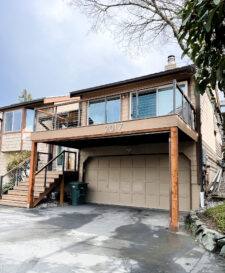
What "Energy-Efficient" Actually Means Here
Manufacturers rate windows using numbers set by the National Fenestration Rating Council (NFRC), and two of those numbers matter most for a Bellingham house:
- U-factor — how much heat escapes through the window. Lower is better. This is the number that most directly affects your winter heating bill.
- Solar Heat Gain Coefficient (SHGC) — how much solar heat passes through the glass. In our climate, moderate SHGC is usually the right call: enough to pick up some free warmth on clear winter days without overheating south- and west-facing rooms in July.
ENERGY STAR sets separate performance thresholds for the Northern climate zone, which covers Whatcom County, and it's worth asking any contractor whether the specific product they're quoting actually meets that Northern-zone standard — not just the national baseline. Low-E coatings (a microscopically thin metallic layer on the glass) and argon or krypton gas fill between panes are what get a window into that range; double-pane with a good Low-E coating and gas fill covers most homes here, and triple-pane is worth discussing for exposed elevations that take the brunt of the weather off the bay.
Condensation Is a Symptom, Not the Problem
A lot of calls we get start with "my windows are fogging up." Fogging between the panes means a seal has failed and the gas fill has escaped — that's a glass unit that needs replacing, not just a caulking fix. Fogging or heavy condensation on the inside of the glass, on the other hand, usually points to poor U-factor performance combined with indoor humidity, which is common in tighter, well-insulated homes. Knowing which one you're looking at changes the fix, and it's the first thing we check on a service call.
Common Window Issues We See in Sehome
Sehome has a mix of housing ages, from older homes with original wood windows to newer construction and replacement vinyl installed at various points over the last few decades. A few patterns show up repeatedly:
Older Wood-Frame Windows
Original single-pane wood windows can still look fine from the curb while performing poorly. Glazing compound shrinks and separates from the glass over years of rain and UV exposure, sash cords and weatherstripping wear out, and moisture works into the wood at the bottom rail where water sits longest. These windows can sometimes be restored rather than replaced, but that decision depends on how far the rot has progressed — something we assess honestly rather than defaulting to "replace everything."
Failed Seals on Older Replacement Vinyl
Vinyl windows installed 15–25 years ago used insulated glass units with a shorter expected seal life than what's manufactured today. Once that seal fails, the argon gas is gone and the U-factor drops back toward single-pane performance, even though the window still looks new.
Draft Points at the Frame, Not the Glass
Sometimes the glass itself is fine and the problem is at the perimeter — old insulation settled or missing behind the trim, a rough opening that was never properly air-sealed, or exterior caulking that's cracked and let rain behind the siding. This is why we look at the whole opening, not just the sash.
Choosing the Right Window for a Whatcom County Home
Frame material is where cost, maintenance, and long-term performance diverge the most. Here's how the common options stack up for a marine climate like ours:
| Frame Material | Moisture Tolerance | Maintenance | Typical Lifespan | Notes for This Climate |
|---|---|---|---|---|
| Vinyl | Good | Low | 20–30 years | Won't rot; quality varies a lot between manufacturers, so the glass package and hardware matter as much as the frame itself |
| Fiberglass | Very good | Low | 30–40+ years | Expands and contracts less than vinyl across temperature swings; higher upfront cost, strong long-term value |
| Wood-clad (wood interior, aluminum or vinyl exterior) | Good if detailed correctly | Moderate | 25–35 years | Warm interior look with an exterior shell that handles rain; installation detail at the cladding seams is critical |
| Aluminum | Poor without thermal break | Moderate | 20–30 years | Conducts cold and can condense heavily in our winters unless it's a modern thermally-broken product |
| Solid wood (uncladded) | Requires ongoing care | High | Varies widely with maintenance | Traditional look but needs repainting and sealant checks on a regular cycle to hold up against driving rain |
We don't push one material as the universal answer. A fiberglass or good-quality vinyl window with a strong glazing package is the right call for most Sehome homes; wood-clad makes sense where the interior look matters and someone's committed to the upkeep. What we steer people away from is uncladded aluminum on exposed elevations near the bay — not because it's a bad product everywhere, but because the maintenance and condensation trade-offs are a poor match for this specific climate.
What a Correct Installation Actually Involves
The window itself is maybe half the equation. The other half is how it's tied into the wall assembly, and this is where a lot of long-term problems get built in — or avoided.
Flashing and Water Management
Every opening needs flashing that sheds water down and out, layered correctly with the house wrap or building paper so water is directed away from the framing, not trapped behind it. In a climate with as much driving rain as we get here, a window that's air-sealed but poorly flashed will eventually leak — it's just a matter of time and wind direction.
Sealant, Not Just Caulk
Interior and exterior sealant joints use different products for different jobs: exterior sealants need to flex with temperature and moisture cycling without cracking, while interior air-sealing (often low-expansion foam or backer rod and sealant) controls drafts without bowing the frame.
Integration With Siding
Where the window meets the siding is a common failure point on older installs. Trim needs to be back-caulked, kerfed, or flashed depending on the siding type, so water runs over the joint instead of into it. If your siding is due for attention at the same time as your windows, doing both together avoids opening the same wall twice.
Our Process
- On-site assessment — we check glass, frames, sills, and the surrounding wall for moisture damage before recommending anything.
- Honest recommendation — repair where it makes sense, replace where it doesn't; we'll tell you which is which and why.
- Product selection — matched to the specific exposure of that wall (a north wall and a bay-facing wall don't always need the same spec).
- Installation — proper flashing, sealing, and insulation at every opening, not just dropping in a new sash.
- Walkthrough and cleanup — operation check on every window, debris removed, and a look at manufacturer warranty registration.
What Affects the Cost
Every quote is different, but the same handful of factors drive most of the variation between homes:
- Number of openings and their size — a full-house replacement prices very differently than a handful of problem windows
- Frame material and glazing package chosen
- Condition of the framing behind the existing window — rot repair adds time and material
- Whether trim or siding needs to be opened up and rebuilt around the new window
- Access — second-story or hard-to-reach openings take more time to stage and install safely
- Custom sizes or shapes versus standard manufacturer sizing
We'd rather walk your specific windows and give you real numbers than quote a range that doesn't mean much until we've seen the house.
Why It Matters to Hire a Crew That Already Works in Sehome
A contractor who regularly works this part of Bellingham has already seen how the local housing stock ages under this specific weather — which older homes tend to have hidden sill rot, which replacement-window brands from years past are prone to early seal failure, and how wind off the bay hits certain exposures harder than others. That's not something you can fully substitute with a general contractor unfamiliar with Whatcom County conditions. It also means knowing the permitting expectations for the City of Bellingham and having a track record of installs that have already been through several winters in this exact climate, not a showroom in a different region.
Signs It's Worth Getting Your Windows Looked At
- Visible fog or moisture trapped between the panes
- Cold air noticeable near the frame even when the window is fully closed
- Paint or wood finish failing faster on certain windows than others on the same wall
- Difficulty opening, closing, or locking a window that used to operate smoothly
- Soft or discolored trim, siding, or drywall near a window opening
- A noticeable jump in heating costs without any other explanation
- Visible daylight or a draft you can feel with your hand along the frame edge
If any of that sounds familiar, or you're simply ready to stop losing heat through old glass, we're happy to take a look and give you a straightforward, no-pressure estimate — just fill out the form below and we'll get in touch.