 Bellingham Siding
 Siding That Actually Holds Up in Sehome
Sehome sits close enough to Bellingham Bay to catch salt-laden air off the water, and its tree-covered slopes and older residential streets mean a lot of homes here live in partial shade for much of the year. That combination — salt exposure, driving rain off the Sound, and shade that keeps siding damp longer than it should be — is exactly the kind of environment that separates siding that lasts thirty years from siding that starts failing in eight or ten. We install James Hardie fiber cement siding exclusively, and Sehome is a neighborhood where that choice matters more than most.
This page is about one job in one place: putting James Hardie siding on a home in Sehome, done the way it's supposed to be done for Whatcom County's climate, not a generic overview of siding in general.
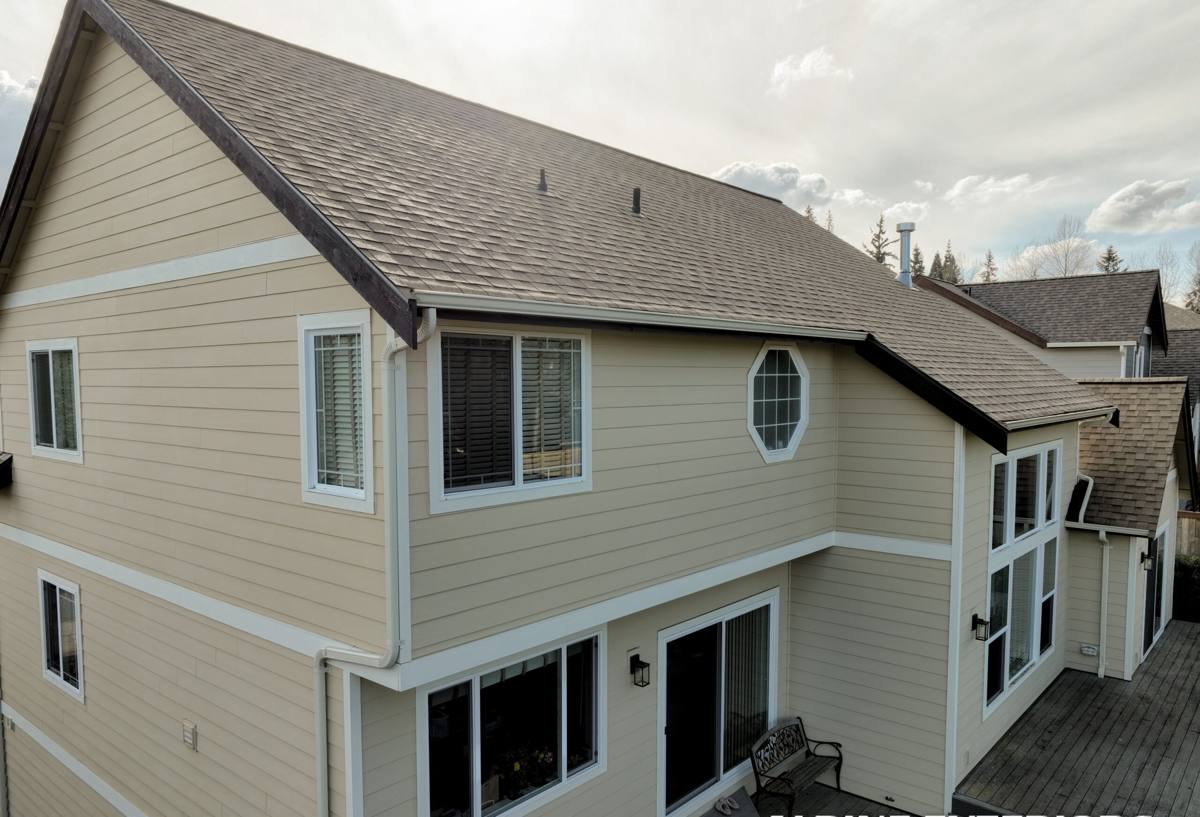
What Whatcom County's Climate Does to Siding
Bellingham's weather isn't dramatic, but it's relentless. Long, wet stretches from fall through spring keep exterior surfaces damp for days at a time. Add in the salt air that drifts inland from the bay, and you get a slow, steady chemical and moisture load on anything covering a wall. Wood-based sidings swell, cup, and eventually rot at seams and end grain. Vinyl can hold up structurally but does nothing to stop moisture from working its way behind it at poorly sealed joints, and it doesn't handle the freeze-thaw swings we get in the colder months without becoming brittle over time.
Then there's moss. Whatcom County's growing season for moss and algae runs long — realistically most of the year on any surface that doesn't get regular direct sun. Sehome's mature tree canopy and hillside lots mean plenty of north- and east-facing walls stay shaded and damp well into the afternoon. Moss doesn't just look bad; it holds moisture against the siding surface, and on materials that aren't dimensionally stable or properly finished, that constant dampness accelerates rot, paint failure, and caulk breakdown at the seams.
Why This Pushes Us Toward Fiber Cement
James Hardie siding is manufactured from cement, sand, and cellulose fibers — it doesn't absorb water the way wood does, it won't rot, and it's non-combustible. It's also engineered in regional formulations (the HZ5 product line is built for the Pacific Northwest's wet, moderate climate) rather than a one-size-fits-all product. That's the baseline reason we standardized on it for every home we side, including the ones up on Sehome's slopes.
What a Correct Job Looks Like Here
"James Hardie siding" isn't a single outcome — the same product installed two different ways can perform completely differently over ten years. In a neighborhood like Sehome, with shaded lots and consistent moisture exposure, the installation details matter as much as the material itself.
- Weather-resistive barrier and flashing first. Housewrap, window and door flashing, and kickout flashing at roof-wall intersections go in before a single piece of siding is hung. This is where most water intrusion problems actually start, not at the siding itself.
- Correct clearances. Hardie's specifications call for minimum gaps between siding and roofing, decks, and grade — usually 1 to 2 inches depending on the surface. Skipping this is one of the most common shortcuts we see on older installs, and it's a direct cause of moisture wicking into the bottom edge of the boards.
- Proper fastening pattern. Hardie specifies fastener type, spacing, and placement relative to the board edge. Nailing too close to an edge or through both layers of an overlap can crack the board or create a path for water.
- Sealed and caulked joints at the right places — and left open at others. Butt joints, trim intersections, and penetrations need sealant; some manufacturer details call for a gap with no caulk at all, using flashing instead, specifically to let any moisture that does get in drain back out.
- Rain screen or drainage gap on shaded, moisture-heavy elevations. On walls that stay damp longer — common on Sehome's north-facing and tree-shaded sides — a furring strip or engineered drainage mat behind the siding gives incidental moisture somewhere to go instead of sitting against the wall assembly.
ColorPlus Finish and Living With Moss Season
Most of the homes we side in this area get James Hardie's ColorPlus finish — a factory-applied, baked-on finish that resists fading and chipping far better than field-applied paint. It matters here for a practical reason: touch-up painting on a shaded, damp wall is a losing battle, because the surface rarely gets dry enough for paint to cure properly. A factory finish sidesteps that problem entirely.
ColorPlus siding still needs periodic washing in a neighborhood like Sehome — moss and mildew will grow on any exterior surface if it's shaded and never gets scrubbed — but the difference is that washing is all it needs. There's no repainting cycle, and no risk of water getting under peeling paint and sitting against the substrate the way it can with wood siding.
Our Process, Start to Finish
1. On-Site Assessment
We walk the home, check the condition of the existing siding and sheathing, note shaded and moisture-prone elevations, and look at roof lines, decks, and grade clearances that will affect the install. This is also when we flag anything that needs repair before new siding goes up — soft sheathing, damaged flashing, or trim that's already failed.
2. Tear-Off and Sheathing Check
Old siding comes off and the sheathing underneath gets inspected. This is the point where hidden water damage — often from years of an undersized gap at the foundation or a missing kickout flashing — actually gets found and fixed, rather than covered back up.
3. Weather Barrier and Flashing Install
Housewrap and all flashing details go in to Hardie's and code specifications, with particular attention to window heads, deck ledgers, and roof-wall transitions — the spots most likely to leak on an older home.
4. Siding Installation
James Hardie boards, panels, or trim go up per the manufacturer's fastening and clearance specs, with drainage detailing added on elevations that need it.
5. Final Inspection and Walkthrough
We check clearances, caulking, fastening, and trim details, then walk the finished job with the homeowner.
What Drives Cost on a Sehome Job
Every home is different, so we don't quote off a flat per-square-foot number without seeing the site. These are the factors that actually move the price up or down on jobs in this neighborhood.
| Factor | Why It Matters in Sehome |
|---|---|
| Home age and current siding | Older homes may have hidden sheathing damage under existing siding, which adds repair scope once tear-off starts |
| Site access and lot slope | Hillside lots and narrow side yards common in this neighborhood can require extra staging, scaffolding, or hand-carrying material |
| Elevation exposure | Shaded, moisture-heavy walls may need added drainage detailing that sun-exposed walls don't require |
| Trim and architectural detail | Older craftsman and multi-story homes often have more window, corner, and trim work than a simple ranch footprint |
| Product line and profile | HardiePlank lap siding, panel siding, and shingle-style products all carry different material and labor costs |
Why a Crew That Already Works This Neighborhood Matters
Sehome's mix of older homes near the university and steeper residential streets creates real, practical install challenges: tighter lot access, mature landscaping to work around, and older construction where the sheathing and framing underneath don't always match modern assumptions. A crew that's already worked in the neighborhood knows to check for those conditions up front instead of discovering them mid-job. It also means familiarity with City of Bellingham permitting requirements and inspection expectations, so the paperwork side doesn't slow down the install.
Just as important is manufacturer accountability. James Hardie's stronger warranty coverage depends on installation meeting their published specifications — a crew that treats those specs as the standard, not a suggestion, is what actually protects that warranty if a problem ever comes up.
What to Check Before You Hire Anyone for a Hardie Install
- Ask whether they install to James Hardie's published fastening, clearance, and flashing specifications — not just "James Hardie siding" as a general claim
- Confirm they'll inspect and repair sheathing issues found during tear-off, not just cover them back up
- Ask how they handle shaded or moisture-prone elevations specifically
- Get written scope on flashing, kickout flashing, and drainage details — not just "siding installed"
- Confirm licensing, insurance, and who is actually on the crew doing the work
A Straightforward Recommendation
We don't install LP SmartSide, vinyl, Cemplank, Allura, or bare cedar or spruce siding — not because those products have no merit, but because we've standardized on James Hardie for the moisture load, salt exposure, and moss season that homes in this part of Whatcom County deal with every year, and we'd rather do one product exceptionally well than several products adequately. For a Sehome home, that means non-combustible fiber cement, a factory finish that doesn't need repainting, and installation detailing built around shaded, damp conditions rather than a generic dry-climate install.
If you're weighing a siding replacement in Sehome, we're happy to walk your property, look at what your current siding and sheathing are actually dealing with, and put together a straightforward estimate — no pressure, no hard sell. The form below is the easiest way to get that started.