 Bellingham Siding
 Bellingham Weather Asks More of a Roof Than Most Places
Columbia is one of Bellingham's older, established neighborhoods, with a good mix of home ages and plenty of mature tree cover. That combination of age and shade is exactly what makes roofs here wear differently than roofs inland. Salt-laden air off Bellingham Bay slowly works on metal fasteners, flashing, and exposed hardware. Driving rain — the kind that comes in sideways during a winter system — finds every weak seam instead of just running off a slope. And the long, wet moss season that Whatcom County is known for gives organic growth months at a time to take hold on shaded roof planes.
None of this means a roof in Columbia is doomed to fail early. It means the roof has to be built and maintained with those specific stresses in mind, from the underlayment up through the ventilation. A roof replacement done with a generic, one-size-fits-all approach may look fine for a few years and then show its shortcuts right where the weather is toughest — north-facing slopes, valleys, and anywhere water is forced to move sideways instead of straight down.
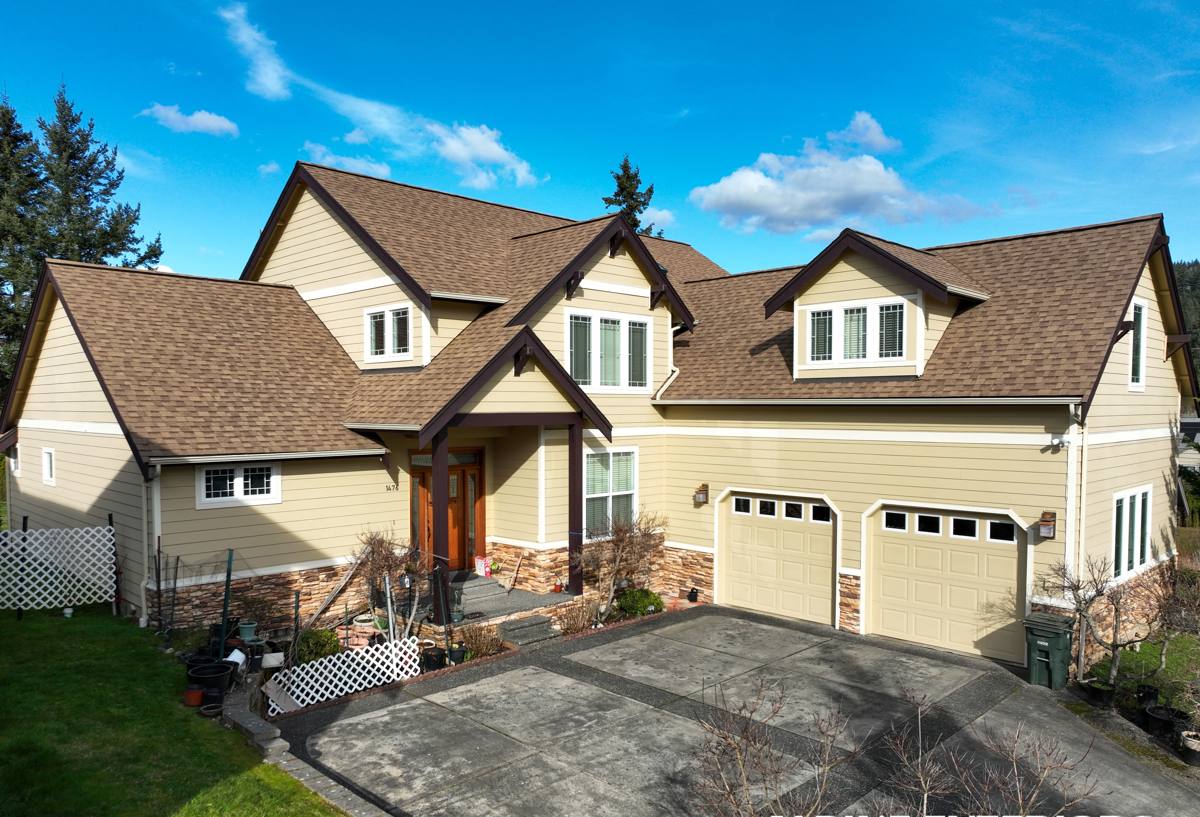
Signs a Columbia Home Needs Replacement, Not Just a Repair
A lot of roofs get patched two or three times before anyone steps back and asks whether patching still makes sense. Here's what usually tips the answer toward full replacement rather than another repair:
- Heavy moss or lichen colonies covering more than isolated patches of the roof, especially on shaded, north-facing slopes
- Shingles that are curling, cupping, or losing granules in handfuls when touched
- Soft, spongy spots underfoot on the roof deck, or visible sagging between rafters
- Daylight visible through the roof boards from inside the attic
- Ceiling or wall stains that appear only after wind-driven rain, not steady vertical rain
- A roof that's 20-plus years old on asphalt shingles, or showing widespread wear rather than one bad section
- Rusted, lifted, or missing flashing around chimneys, skylights, and roof-to-wall transitions
- Repairs that keep failing in the same spot every winter
If you're seeing two or more of these at once, it's usually a sign the underlying materials — not just the surface layer — have reached the end of their useful life.
What a Correct Roof Replacement Actually Involves
Tear-Off and Deck Inspection
A proper replacement starts with a full tear-off down to the roof deck, not a layer installed over old shingles. That's the only way to actually see the plywood or plank decking underneath and find soft, rotted, or delaminated sections before they're covered up again. Any bad decking gets replaced before anything new goes down — skipping this step is one of the most common shortcuts in the trade, and it's invisible until the new roof starts to fail from underneath.
Underlayment and Water Protection
Given how much driving rain this area sees, the underlayment matters as much as the shingle itself. Self-adhering ice-and-water membrane belongs at eaves, valleys, and around every penetration, with synthetic underlayment across the rest of the field to give the roof a second line of defense if wind ever drives water up under the shingle tabs.
Flashing Details
Flashing around chimneys, skylights, dormers, and sidewalls is where most leaks actually start, not in the open field of shingles. Salt air accelerates corrosion on thin or poorly finished metal, so flashing needs to be sized, lapped, and fastened correctly rather than caulked as an afterthought. Caulk is a maintenance item, not a substitute for proper metal work.
Ventilation
Balanced intake and exhaust ventilation keeps the attic close to outdoor temperature and moisture levels, which protects the new decking and shingles from the inside out. This gets its own full section below because it's the part of a roof replacement homeowners hear about least — and the part that determines how long everything else actually lasts.
Choosing Materials for Whatcom County Conditions
There's no single "best" roofing material for every home, but some hold up more predictably than others under salt air, sustained rain, and heavy shade. Here's how the common options compare for this climate specifically:
| Material | Typical Lifespan | Moss & Algae Resistance | Salt Air / Wind-Driven Rain | Maintenance |
|---|---|---|---|---|
| Architectural asphalt shingle | 25–30 years | Good with algae-resistant granules; still needs periodic cleaning | Solid when properly nailed and flashed; wind rating varies by product line | Low to moderate — occasional moss treatment |
| Standard three-tab shingle | 15–20 years | Fair — thinner profile shows wear and growth sooner | Lower wind rating than architectural lines | Moderate — shorter service life overall |
| Standing seam metal | 40–50+ years | Very good — smooth surface sheds moss more easily | Excellent once properly coated and fastened; higher upfront investment | Low |
| Synthetic / composite shingle | 30–50 years | Good to very good depending on product | Strong wind and impact resistance | Low to moderate |
We don't push one product line as the answer for every roof. A steep, shaded roof in Columbia with heavy tree cover benefits from a material that sheds moss easily and won't hold moisture in its texture. A more exposed roof catching direct wind off the water needs a strong wind rating and secure fastening pattern more than it needs moss resistance. The right call depends on the specific roof, not a sales script.
What Actually Drives the Cost
Two roofs of similar square footage can price out very differently once the details are accounted for. The honest cost drivers are:
- Roof size, pitch, and number of planes — steep or complex roofs take longer and require more safety setup
- Number of existing layers to remove — some older homes have two layers of shingles already
- Decking condition — rot or soft spots found during tear-off mean added repair, not a padded estimate
- Number of penetrations — chimneys, skylights, plumbing vents, and dormers each need individual flashing work
- Material choice — asphalt, synthetic, and metal sit at different price points, as shown above
- Access and staging — steep lots, tight driveways, or limited crane/lift access add labor time
Anyone quoting a price without walking the roof and checking these factors is guessing. A real estimate accounts for what's actually there.
Our Process, Start to Finish
Inspection and Estimate
We walk the roof and the attic, not just the ground-level view. That means checking current ventilation, moisture staining, decking condition where accessible, and flashing details before writing a number.
Material Selection
We go over the realistic options for your specific roof — pitch, exposure, shade, and budget — rather than defaulting to whatever's easiest to install. Any manufacturer warranty terms and what they actually cover are explained plainly before you sign anything.
Tear-Off and Installation
Full tear-off to the deck, replacement of any compromised decking, correct underlayment and flashing, then the finish material. Job-site protection for landscaping and gutters is standard, not an upcharge.
Final Walkthrough and Cleanup
We walk the finished roof and the property with you, including a magnetic sweep for stray nails and a review of ventilation and any warranty paperwork before we consider the job done.
Ventilation and Moss Prevention After the New Roof Is On
A new roof doesn't end the moss conversation — it changes what you're managing. Balanced attic ventilation keeps the underside of the decking dry, which slows moss and algae growth from below while the shingle's own algae-resistant granules handle the surface. On shaded slopes, zinc or copper strips near the ridge can help suppress regrowth over time as rain washes trace metal down the roof. Keeping gutters and valleys clear of needles and leaf litter matters just as much, since trapped debris holds moisture exactly where moss likes to start. None of this is a one-time fix — it's ongoing maintenance that a correctly built roof makes much easier to keep up with.
Why a Crew That Already Works in Columbia Matters
Roofing in Bellingham isn't the same job as roofing in a dry inland climate, and a crew that works this area regularly already knows which details can't be shortcut here — flashing that has to hold up to salt air, underlayment that has to handle sideways rain, and ventilation sized for a long, damp moss season rather than a short one. Working in Columbia specifically also means we're familiar with the kind of housing stock in the neighborhood — the mix of older homes with original framing and newer builds — and what each tends to need once the old roof comes off. Being local also means we're around for warranty service and follow-up, not a crew that's moved on to the next region by the time a question comes up.
If your roof in Columbia is showing its age or you just want an honest read on where it stands, we're happy to take a look. There's no pressure and no cost to get a straight answer — use the form below to request a free estimate.