 Bellingham Siding
 Storm Damage Roof Repair for Columbia Homes
The Columbia neighborhood sits close enough to Bellingham Bay that its roofs take a different kind of beating than homes further inland in Whatcom County. Salt-laden air off the water accelerates corrosion on fasteners and flashing, winter windstorms come off the Strait of Georgia with real force, and the long gray stretch from October through April keeps roof surfaces wet and shaded for weeks at a time. That combination is exactly what drives most of the storm-related roof calls we get from this part of town: wind-lifted shingles, saturated underlayment, and moss that's worked its way under the roof covering rather than just sitting on top of it.
This page covers what storm damage roof repair actually looks like for a Columbia home — what to check after a storm, how a proper repair is done, and why a crew that already knows this neighborhood's roofs tends to get it right the first time.
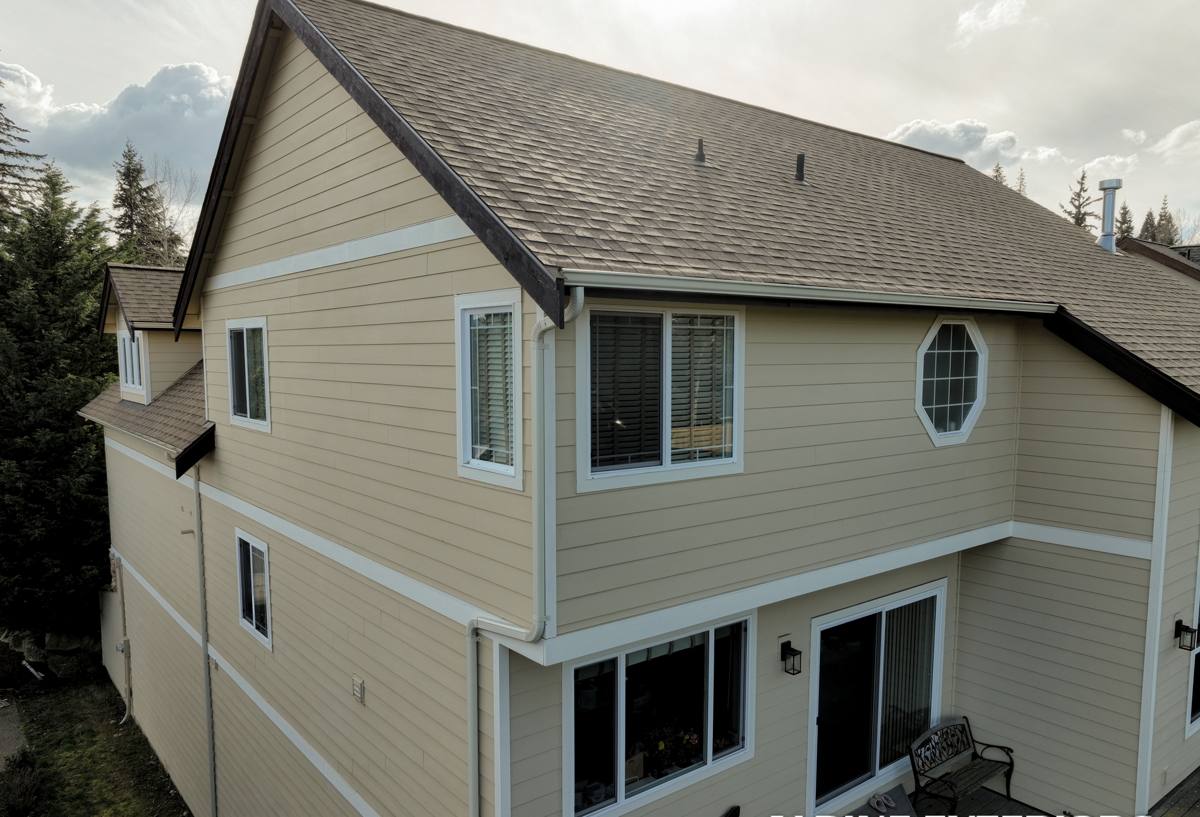
Why Columbia's Roofs Take Different Damage
Salt Air and Metal Fatigue
Homes within a mile or two of Bellingham Bay see faster corrosion on exposed metal — nail heads, flashing seams, gutter hangers, and any exposed roofing screws. Corroded fasteners lose their grip on shingles and panels well before the roofing material itself is worn out, which means a roof that "still looks fine" from the ground can already have loose points that wind will exploit. This is one of the most common root causes we find when a Columbia roof loses shingles in a storm that a drier, inland roof of the same age would have shrugged off.
Wind Exposure
Storms tracking through the Strait and down into Bellingham Bay can hit exposed and elevated lots hard, especially roofs with larger unbroken shingle fields, taller ridge lines, or trees close enough to drop limbs. Wind damage on asphalt shingle roofs usually shows up first at the edges — rakes, eaves, and ridge caps — where uplift pressure is highest.
Extended Moss Season
Whatcom County's wet season runs long, and Columbia's tree cover and proximity to the water keep roof surfaces damp and shaded even when it isn't actively raining. Moss doesn't just sit on shingles — over time it lifts the shingle tabs, holds moisture against the roof deck, and creates channels for wind-driven rain to get underneath. A storm that would have been a non-event on a clean roof can turn into a leak on a moss-compromised one, because the moss has already broken the seal.
Signs Your Columbia Roof Has Storm Damage
Not all storm damage is obvious from the ground. Some of it only shows up once water has already gotten past the roof covering. After any significant wind or rain event, it's worth checking for the following:
- Shingles that are creased, curled, cracked, or missing entirely, especially along ridges, edges, and valleys
- Granules collecting in gutters or at downspout outlets — a sign of shingle wear accelerated by wind abrasion
- Lifted or bent flashing around chimneys, skylights, vents, or roof-to-wall transitions
- New or worsening water stains on interior ceilings, especially near exterior walls or after a specific storm
- Sagging or soft-feeling sections of roof deck, which can indicate sustained moisture intrusion
- Moss buildup at shingle edges or in valleys, particularly on north-facing or shaded slopes
- Debris — branches, needles, leaf mats — packed into valleys or against roof-wall intersections where water should be draining freely
A roof can have several of these at once without any single one looking urgent. That's part of why storm damage gets missed until it's a full leak — the individual signs look minor in isolation.
What a Correct Storm Damage Repair Involves
A proper storm repair isn't just replacing the shingles that are visibly gone. It's tracing the damage back to its cause and repairing everything water could have reached.
1. Full Roof Assessment, Not Just the Obvious Spot
We walk the whole roof, not just the area a homeowner points to. Wind damage often has a pattern — one damaged section usually means the surrounding fasteners and shingle tabs took stress too, even if they haven't failed yet. Missing that context means fixing today's leak and leaving next storm's leak already loosened.
2. Deck Inspection Where Water Got Through
Any spot with a confirmed leak gets a look at the roof deck itself. Plywood or OSB that's stayed wet can delaminate or soften, and shingles installed over a compromised deck won't hold properly no matter how well they're nailed. This is a step that's easy to skip if a repair is rushed, and it's the difference between a repair that lasts and one that reopens with the next hard rain.
3. Matching Underlayment and Flashing Repair
Storm repairs on an older roof mean working with materials that have already weathered for years. We match underlayment and flashing details to what's already on the roof where possible, and upgrade materials at the repair point where the existing detail was clearly a weak spot — for example, replacing corroded step flashing with new metal rather than resealing it in place.
4. Shingle Replacement and Tie-In
New shingles get woven into the surrounding field so the repair doesn't stand out as an obvious patch and so water sheds correctly across the transition. Sealing lifted tabs that are otherwise sound is sometimes the right call instead of replacing them outright — replacing more than necessary just adds cost without adding protection.
5. Moss and Debris Clearing as Part of the Job
Given how much moss contributes to storm vulnerability in this area, we clear moss and debris from the repair area and surrounding roof planes as part of the visit, not as a separate upsell. A repaired section next to an untouched moss mat just moves the next leak a few feet over.
Repair vs. Replacement: How We Make That Call
| Factor | Points Toward Repair | Points Toward Replacement |
|---|---|---|
| Roof age | Under 15 years, shingles otherwise sound | Nearing or past manufacturer lifespan |
| Damage extent | Isolated to one or two areas | Spread across multiple slopes or widespread granule loss |
| Deck condition | Dry, solid under damaged area | Soft, delaminated, or repeatedly wet |
| Moss/algae history | Minor, cleared and controlled | Heavy, recurring, embedded under shingle tabs broadly |
| Storm frequency | First significant damage event | Repeat storm damage on the same roof within a few years |
We'll always tell you honestly which side of this table your roof is on. A repair that's clearly a stopgap on a roof that needs replacing isn't a favor to the homeowner — it just delays a decision and adds cost to the eventual replacement.
Insurance and Storm Damage Documentation
Wind and storm damage is frequently covered under homeowner's insurance, but claims move faster and more smoothly when the damage is documented promptly and clearly. When we assess storm damage, we document what we find — location, extent, and likely cause — in a way that's useful whether you're filing a claim or just want a clear record of the repair for your own files. We don't handle the claim itself, but we'll give you straightforward information about what we're seeing so you can make that call with your insurer.
Our Process on a Columbia Storm Repair
- Contact and scheduling — especially after a widespread storm, we prioritize active leaks and safety hazards first
- On-site assessment — full roof walk, not just the reported problem area, including a look at flashing, valleys, and deck condition where accessible
- Written scope and estimate — what we found, what we recommend, and why, before any work starts
- Repair work — deck repair if needed, flashing and underlayment work, shingle replacement and tie-in, moss and debris clearing
- Cleanup and final check — site cleaned of old material and debris, repair area checked for proper seal and drainage
What to Do Right After a Storm
If you suspect storm damage, a few simple steps protect the roof and your home until a professional can get out to look at it:
- Check ceilings and attic spaces (if safely accessible) for new water stains or moisture
- Note the date and general nature of the storm — wind speed, duration, any known tree or debris impact
- Avoid getting on the roof yourself, especially on wet or moss-covered surfaces — this is where most storm-related injuries happen, not the storm itself
- Clear obvious debris from gutters and downspouts at ground level if it's safe to reach
- Photograph any visible exterior damage from the ground for your records
- Call for an assessment before the next rain, since even a small opening in the roof covering gets worse with every additional storm
Why a Local Crew Matters for Storm Repairs
Storm damage repair rewards familiarity with how a specific area's roofs age. A crew that regularly works Columbia and the surrounding Bellingham neighborhoods has already seen how salt air affects fastener life in this zone, which roof orientations in this part of town hold moss the longest, and which storm tracks tend to hit this stretch of Whatcom County hardest. That background means less time spent diagnosing and more time spent fixing the actual problem — and it means the repair accounts for what's likely to happen to this roof next winter, not just what already happened.
If a recent storm has you wondering about your roof, we're glad to take a look and give you a straightforward, no-pressure estimate — fill out the form below and we'll get in touch to schedule a time that works.