 Bellingham Siding
 Windows Built for Columbia's Weather, Not Just the Showroom
Columbia is one of Bellingham's older, established neighborhoods, and that shows up in its housing stock — a mix of early-to-mid-century homes with original or long-since-replaced windows, sitting close enough to Bellingham Bay to catch salt-laden air on top of everything else Whatcom County weather throws at a house. Windows here don't fail because of one bad storm. They fail slowly, from repeated exposure: driving rain that finds its way past worn weatherstripping, salt air that accelerates corrosion on hardware and fasteners, and a moss season that runs long enough to keep wood sills and sashes damp for months at a stretch. An energy-efficient window replacement in this neighborhood has to solve for comfort and heating bills, but it also has to hold up physically to conditions that are harder on a window than most manufacturers' spec sheets assume.
We install windows across Bellingham and greater Whatcom County, but Columbia's combination of older framing, mature landscaping that holds moisture against the house, and proximity to the water means we treat it as its own case, not a copy-paste of a job somewhere else.
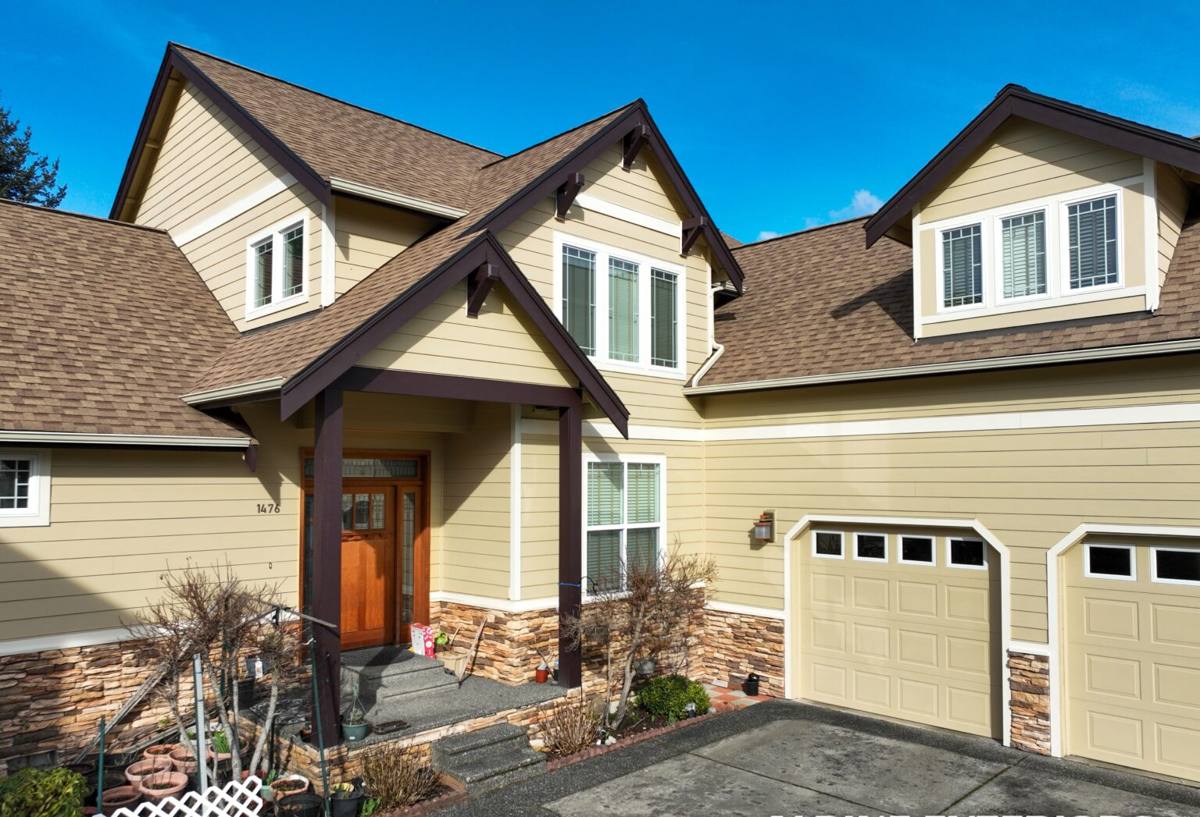
Signs Your Windows Are Already Costing You Money
Most homeowners don't replace windows because they woke up wanting new windows — they replace them because the old ones are actively working against the house. Before we ever talk about product options, we walk the exterior and interior and look for these:
- Visible condensation or fogging between the panes of a double-pane unit (a sign the seal has failed and the insulating gas is gone)
- Soft, spongy, or discolored wood at the sill or bottom corners of the frame
- Drafts you can feel with a hand near the frame on a windy day
- Paint or finish that's bubbling, peeling, or chalky on the exterior side
- Windows that are hard to open, close, or lock — often a sign the frame has swelled or warped from moisture
- Noticeably colder rooms near windows in winter, or rooms that overheat with afternoon sun
- Visible gaps or old caulk that's cracked and pulling away from the siding
Any one of these on its own might just need a repair. Several of them together, especially on a home with original windows, usually means the glass, seals, and frame have all reached the end of their useful life at roughly the same time.
What "Energy-Efficient" Actually Means Here
"Energy-efficient" gets used loosely in this industry, so it's worth being specific about what actually matters for a house in this climate. The two numbers we pay the most attention to are U-factor (how well the window resists heat loss — lower is better) and Solar Heat Gain Coefficient, or SHGC (how much solar heat passes through the glass). Every legitimate window sold in the U.S. carries an NFRC label with both figures, and it's worth asking to see it rather than taking a salesperson's word for a product's performance.
For Whatcom County's marine climate — mild but consistently overcast and wet more months than not — we generally steer homeowners toward a lower U-factor over an aggressively low SHGC. We get far more heating-degree days than cooling-degree days here, so keeping heat inside the house matters more than blocking solar gain. That said, west- and south-facing rooms that run hot in July can still benefit from a moderate SHGC, so orientation matters room by room, not just as a blanket spec for the whole house.
| Feature | What it does | Why it matters in Bellingham |
|---|---|---|
| Double-pane, argon-filled | Two panes of glass with insulating gas between them | Solid baseline performance for our climate at a moderate price point |
| Triple-pane | Three panes, better U-factor, added sound dampening | Worth it on street-facing or exposed elevations; less payback on sheltered walls |
| Low-E coating | Microscopically thin coating that reflects radiant heat | Keeps interior heat in during our long heating season |
| Warm-edge spacer | Non-metal spacer between panes | Reduces condensation risk at the glass edge — relevant with our humidity |
| Multi-point locking hardware | Compresses the sash evenly against weatherstripping | Better seal against wind-driven rain than a single center latch |
Why Installation Quality Outweighs the Glass Package
We say this to every homeowner who asks about upgrading glass specs: the best-rated window on paper will still leak, draft, and rot the surrounding framing if it's installed wrong. Flashing, sealant, and how the window ties into the existing wall assembly matter as much as the U-factor printed on the label — arguably more, given how much rain this area sees.
How We Handle a Columbia Window Installation
- Site walk and assessment. We look at every window being replaced, note frame condition, check for hidden rot or moisture damage behind the trim, and measure for the correct fit — new construction or retrofit/pocket, depending on the wall condition.
- Product selection. We walk through frame material, glass package, and grille or finish options based on the home's age, exposure, and your budget — not a one-size push toward the most expensive option.
- Removal. Old sashes and frames come out carefully, especially on older homes where we're often finding out what's actually behind the trim for the first time.
- Rot and substrate repair. Any soft framing, damaged sheathing, or compromised sill gets repaired before a new window goes in. Installing a new window into a rotten opening just hides the problem for a few years.
- Flashing and weather barrier. This is the step that actually keeps driving rain out — proper flashing tape, sill pan, and integration with the house wrap or building paper, sequenced so water sheds outward and down, never inward.
- Setting and shimming. The window gets set plumb, level, and square, and shimmed correctly so it operates smoothly and seals evenly for the long run.
- Insulation and sealing. Low-expansion foam or backer rod and sealant around the frame — enough to seal air gaps without bowing the frame.
- Exterior trim and finish. Trim, caulk, and paint or capping matched to the home so the new window looks original to the house, not bolted on.
- Final walkthrough. We test every unit for smooth operation and a tight seal before we call the job done.
Frame Materials: What Holds Up in This Environment
Frame material is where a lot of homeowners get steered by whatever a particular showroom sells, rather than what fits their house and its exposure. Here's how the common options actually compare for a home in this part of Whatcom County:
| Frame Material | Moisture & Salt Air Behavior | Maintenance | Best Fit |
|---|---|---|---|
| Vinyl | Won't rot or corrode; performs well in coastal air | Low — occasional cleaning | Budget-conscious replacements, most house styles |
| Fiberglass | Excellent moisture and corrosion resistance; very stable dimensionally | Low | Homes wanting a narrower sightline or a paintable finish, higher exposure areas |
| Wood | Handsome but vulnerable to prolonged damp and needs an intact exterior finish to resist our moss-season moisture | High — regular refinishing | Historic-character homes where matching original detailing matters most |
| Aluminum-clad wood | Wood interior warmth with a low-maintenance exterior shell; clad seams need to be watched for salt-air corrosion over time | Moderate | Homeowners wanting wood interior trim without full wood exterior upkeep |
For most Columbia homes we recommend vinyl or fiberglass for the exterior-facing performance and low upkeep, reserving wood or wood-clad for cases where matching an older home's original character is the priority and the owner is comfortable with the added maintenance that comes with it. There's no universally "correct" answer here — it's a trade-off between upfront cost, maintenance tolerance, and how much the home's original look matters to you.
Cost Factors Worth Understanding Before You Get a Quote
Window pricing varies a lot based on size, quantity, and site conditions, so we won't throw out a number that doesn't mean anything without seeing the house. What we can tell you is what actually moves the price:
| Factor | How It Affects Cost |
|---|---|
| Frame material | Vinyl is typically the most affordable; fiberglass and wood-clad cost more upfront |
| Glass package | Triple-pane and specialty coatings add cost but can be targeted to specific rooms instead of the whole house |
| Retrofit vs. full-frame | Retrofitting into a sound existing frame is generally less involved than full removal and reframing |
| Hidden rot or damage | Framing repair discovered during removal adds labor and material not visible during an initial estimate |
| Window size and quantity | Larger openings and whole-house replacements benefit from per-unit efficiencies vs. one-off replacements |
| Access and site conditions | Second-story or tight-access windows take longer to stage and install safely |
Why Hiring a Crew That Already Works Columbia Matters
A window installer who mostly works other neighborhoods or other parts of the county isn't necessarily doing anything wrong, but there's real value in a crew that already understands the housing stock in this specific area — the era of construction common here, how those homes were typically framed, and what's usually hiding behind original trim once you open a wall up. We also know how to sequence work around this area's weather pattern: driving rain doesn't wait for a convenient install day, so we plan and stage jobs to minimize how long an opening sits exposed, and we don't start a full-frame replacement without a realistic weather window to close it up properly.
If your home is older or has any character features worth preserving, we'll talk through how to keep the exterior looking right — matching trim profiles and finishes rather than installing whatever's fastest — so the new windows read as part of the house, not an obvious retrofit.
Living With Salt Air and Moss Season After Installation
Even a well-installed, high-quality window benefits from a little seasonal attention in this climate. A few habits go a long way:
- Rinse exterior frames and hardware periodically, especially on sides of the house facing the bay, to clear salt residue before it can work on hardware and finishes
- Keep gutters and downspouts clear so water isn't sheeting down across window heads during heavy rain
- Trim back vegetation that holds moisture against the wall near window openings
- Check and clean weep holes on vinyl and fiberglass frames so water drains out instead of pooling
- Wipe down interior sills after extended wet, cold stretches when condensation is more likely
None of this is heavy maintenance — it's the kind of basic upkeep that lets a properly installed, quality window actually reach its expected lifespan instead of fighting the same moisture problems the old ones eventually lost to.
Get an Honest Look at Your Windows
If you're dealing with drafts, fogged glass, or windows that just don't feel right anymore, we're happy to come take a look and give you a straight answer about what's actually going on — no pressure, no inflated scope. Fill out the form below and we'll set up a free estimate for your Columbia home.