 Bellingham Siding
 Siding Repair Built for Columbia's Climate
The Columbia neighborhood sits close enough to Bellingham Bay and Whatcom Falls that its homes take on a particular kind of weather punishment. Salt-laden air off the water works into seams and fasteners. Driving rain off the Sound and the Cascade foothills finds every gap in a wall system that isn't detailed correctly. And for a good chunk of the year, shaded lots and tree cover mean moss and algae have plenty of time to settle in and hold moisture against the siding. None of this is unusual for Whatcom County, but it means siding repair here has to account for more than just the visible damage — it has to address what let the damage happen in the first place.
A lot of siding repair in this region gets done as a patch job: match the color, nail up a new piece, move on. That approach might look fine for a season or two, but if the underlying cause — a failed flashing detail, a gap in the water-resistive barrier, trapped moisture behind a moss-covered panel — isn't corrected, the same spot fails again within a year or two. We treat every repair call in Columbia as a diagnosis first and a patch second.
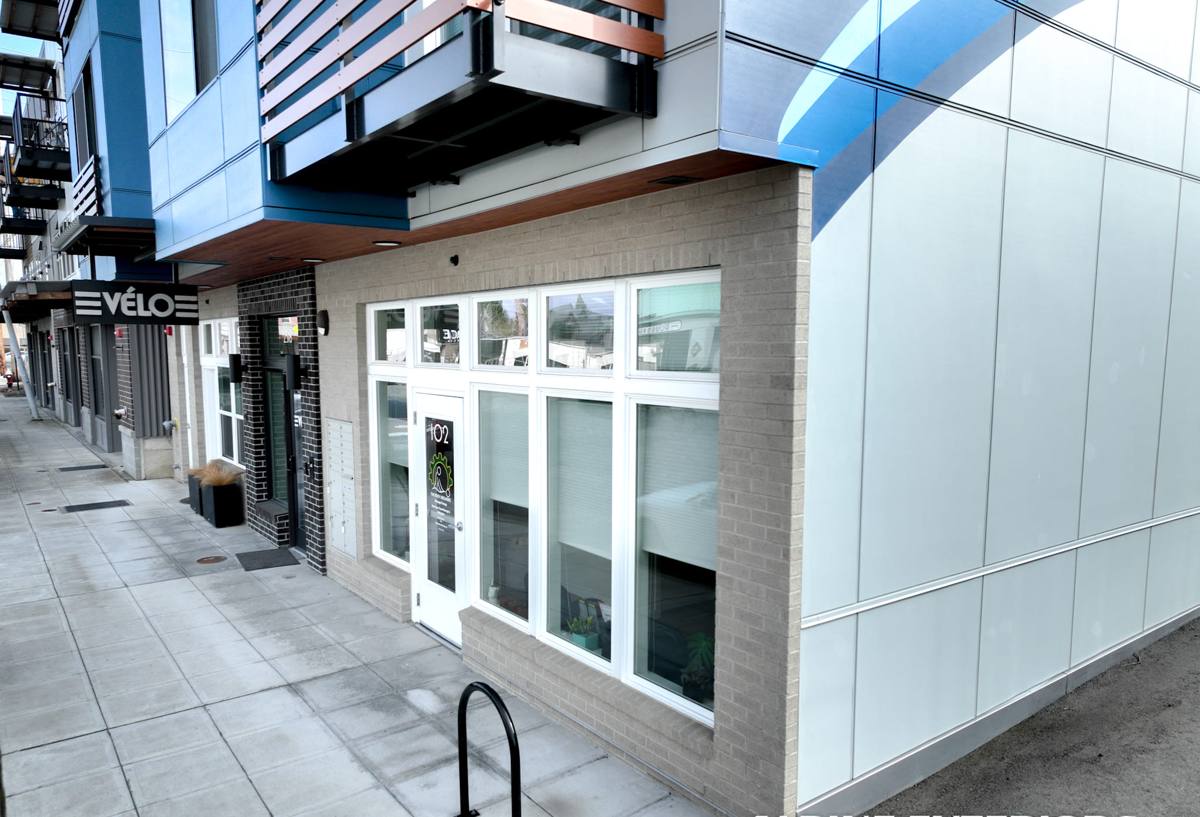
Common Siding Problems We See in This Neighborhood
Older and mixed-vintage housing stock in and around Columbia means we run into a wide range of siding conditions. Some of the most frequent issues include:
- Cracked or split boards where wood or fiber cement wasn't properly primed on cut edges, letting water wick in
- Soft or delaminating spots on wood-based siding products where moisture has been sitting under moss or organic buildup
- Buckled or bowed panels caused by trapped moisture with nowhere to escape
- Failed caulking and sealant joints around windows, trim, and corners that let driving rain behind the siding
- Rust streaking or corrosion at fastener heads, more common closer to the bay where salt air accelerates metal fatigue
- Moss and algae staining that's cosmetic on the surface but signals a spot holding moisture longer than it should
Some of these are simple fixes. Others are a visible symptom of a bigger problem behind the wall — and knowing which is which is most of the job.
What a Correct Repair Actually Involves
Diagnosing the Cause, Not Just the Symptom
Before any siding comes off, we look at what's around the damaged area: the flashing above windows and doors, the caulk lines, the grade and drainage at the base of the wall, and whether the water-resistive barrier behind the siding is intact. Damaged siding is often the last thing to fail, not the first. If we replace a board without fixing what let water in behind it, the repair is temporary no matter how good it looks.
Matching Material and Reveal
Siding repair only looks right if the new material matches the existing reveal, texture, and profile. This gets harder on older homes where the original product has been discontinued or has weathered to a different shade than what's available new. We're honest with homeowners up front about when a seamless match is realistic and when a small color or texture difference should be expected, rather than promising a perfect match we can't deliver.
Flashing and Water Management
Every repair is an opportunity to correct flashing details that were missed or done wrong the first time. That means proper head flashing over openings, correct lap and shingle-style overlap between courses, and sealant used only where it belongs — not as a substitute for proper flashing, which is a shortcut that fails quietly for years before it's noticed.
Fastening Correctly
Fiber cement siding has specific fastening requirements — nail placement, embedment depth, and corrosion-resistant fasteners all matter, especially this close to the bay where salt air is harder on standard fasteners. Over- or under-driven nails are one of the most common causes of repeat siding failure we find on repair calls, and it's a fast thing to get wrong if a crew isn't used to installing fiber cement specifically.
Repair or Replace? How We Help You Decide
Not every damaged section needs a full re-side, but not every "repair" is worth doing either. The table below outlines how we typically walk homeowners through that decision.
| Situation | Usually a Repair | Usually Replacement |
|---|---|---|
| Damage is isolated to one or two boards or a small section | Yes, if the underlying wall is sound | No |
| Siding material is still manufactured or closely matched | Yes | Not necessary |
| Moisture damage is widespread across multiple walls | Rarely a lasting fix | Yes |
| Existing siding is an older wood, LP-style, or vinyl product nearing the end of its service life | Short-term only | Yes, worth planning for |
| Home is due for repainting or refinishing anyway | Repair first if isolated | Consider bundling with a re-side |
When damage is limited and the rest of the siding is performing well, a targeted repair is the right call — it's less disruptive and less expensive, and there's no reason to replace sound material. When we find moisture damage spreading behind multiple sections, or the existing product is simply past its practical lifespan, we'll say so plainly rather than stringing along a series of repairs that won't hold.
Our Process for Columbia Siding Repairs
- On-site inspection. We look at the damaged area and its surroundings — flashing, grade, drainage, and adjacent siding condition — not just the obvious spot.
- Honest scope and estimate. You get a clear explanation of what's causing the damage, what the repair involves, and what it will cost, before any work starts.
- Removal and inspection behind the siding. Once panels come off, we check the sheathing and water-resistive barrier underneath for hidden rot or moisture damage.
- Correct the root cause. Flashing, sealant, and drainage details get fixed as part of the repair, not left for next time.
- Install matched or upgraded material. We fasten and finish to manufacturer specification, not just "close enough."
- Final walkthrough. We show you what was found and what was done, so there are no surprises later.
Why We Only Install James Hardie
When a repair calls for new material — whether it's a few replacement boards or a homeowner decides it's time to re-side a wall — we install James Hardie fiber cement exclusively. We don't install LP SmartSide, vinyl, Cemplank, Allura, primed spruce, or cedar, and that's a standard we hold to on repair work as much as full installs.
The reason comes back to what we see on repair calls throughout Whatcom County: wood-based and engineered wood products are more sensitive to the moisture cycling that this climate produces, and vinyl can warp or crack in ways that are difficult to patch invisibly. James Hardie's fiber cement is non-combustible, holds up to sustained damp conditions without swelling or softening, and its ColorPlus factory finish resists the fading and touch-up mismatch that makes patch repairs on painted siding so noticeable. Hardie's HZ product lines are also engineered for specific climate zones, which matters in a region that cycles between heavy rain and long damp stretches. When we do need to source a small quantity of matching material for a repair, sticking to one manufacturer's system also means fewer compatibility surprises with fasteners, trim, and finish.
We won't tell a homeowner their wood or vinyl siding is garbage — plenty of it is installed correctly and holds up reasonably well. But when we're the ones doing the work, we've seen enough repeat repair calls on other materials in this climate to know what we're willing to put our name on.
Why a Local Crew Matters for This Neighborhood
Siding repair done by a crew that already works in and around Bellingham has a real advantage: we know what Columbia's mix of housing stock, tree cover, and proximity to the bay tends to do to a wall system over time. That's not something you can fully diagnose from a stock inspection checklist written for a different climate. A crew that regularly works Whatcom County jobs also knows which flashing and drainage details tend to get skipped on production-built homes in this area, because we've opened up enough walls to see the pattern repeat.
There's also a practical side to hiring locally: a company based here has a reason to stand behind the work, because chances are we'll be back in the neighborhood.
Signs It's Time to Call for a Siding Repair Estimate
- Visible cracks, splits, or holes in siding boards or panels
- Soft spots you can press in with light hand pressure
- Paint that's bubbling, peeling, or failing in one concentrated area
- Persistent moss or algae growth that doesn't clean off and comes back quickly
- Staining or discoloration on interior walls near an exterior wall
- Gaps opening up at trim, corners, or window and door edges
- Fastener heads showing rust streaks or backing out of the wall
Catching these early keeps a repair a repair, instead of letting hidden moisture turn a small job into a much larger one.
Get a Straightforward Repair Estimate
If you're seeing damage on a Columbia-area home, we're glad to come take a look, tell you honestly whether it's a repair or something bigger, and give you a clear estimate with no pressure to do more than the job calls for. Use the form below to request a free estimate.