 Bellingham Siding
 Fiber Cement Siding for Columbia Homes
Columbia is one of Bellingham's older, established neighborhoods, and that means a lot of its homes are wearing their original siding, or a replacement job from decades ago that was never built for what Whatcom County weather actually does to a house. We install James Hardie fiber cement siding on homes in Columbia because it's the one product we trust to hold up to this specific combination of conditions year after year, without turning into a maintenance project for the homeowner.
This page is about that one job, done right, in this one part of Bellingham. We're not going to give you a generic rundown of what fiber cement is everywhere in the country. We're going to talk about what your siding is up against here, what a correct installation actually involves, and how our process works from first look to final walk-through.
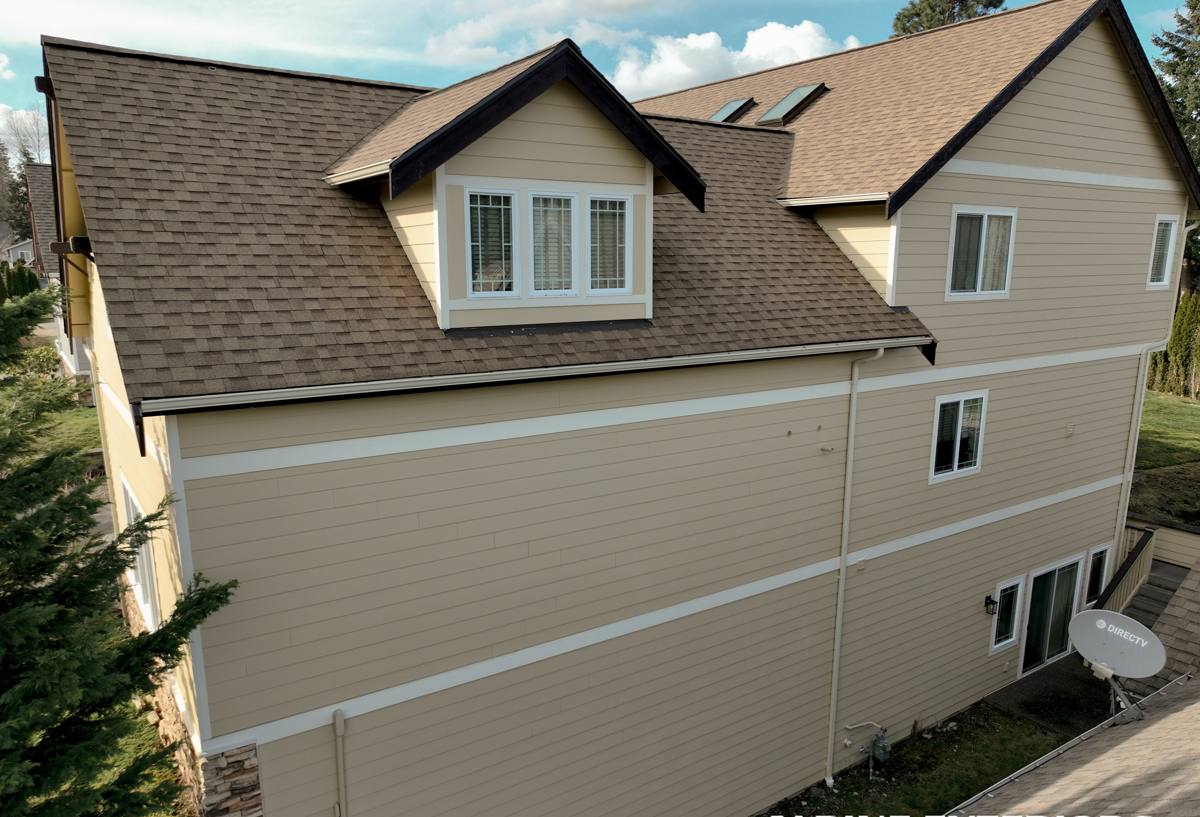
What Columbia's Climate Does to Siding
Bellingham sits close enough to salt water that airborne salt is a real factor for exterior materials, and Columbia's mix of mature tree canopy and close-set older lots adds shade, moisture retention, and organic debris to the mix. Put those together with the region's long, wet winters and you get three things that wreck cheap or poorly installed siding faster than almost anywhere else in the state:
- Salt air: accelerates corrosion on exposed metal fasteners, flashing, and trim, and it degrades some paint and coating systems faster than inland climates.
- Driving rain: wind-driven rain off the Sound doesn't just fall straight down — it gets pushed sideways into laps, seams, and butt joints, which is exactly where bad installations fail first.
- Moss and algae season: Bellingham's damp, shaded conditions mean moss and algae growth on north- and east-facing walls for much of the year, which holds moisture against the siding surface longer than a sunnier climate would allow.
None of that is unique to Columbia specifically, but the neighborhood's tree cover and older housing stock make it a place where these forces show up early and hard. We see it in the siding failures we get called out to inspect: moisture trapped behind panels with no drainage path, rusted-through fasteners, and moss buildup that's been left to sit against wood or composite siding until it started rotting the substrate underneath.
Why We Install Only James Hardie Fiber Cement
We standardized on James Hardie because it's engineered specifically for climates like this one. Hardie's HZ5 product line is formulated for the Pacific Northwest's moisture and moss-prone conditions, the fiber cement core itself doesn't absorb water and swell the way wood or wood-composite products can, and it's non-combustible, which matters as wildfire smoke seasons have become a more regular part of Pacific Northwest summers even here in Whatcom County.
The factory-applied ColorPlus finish is a meaningful part of that equation too. It's baked on in a controlled environment rather than field-applied with a brush or sprayer on a Bellingham job site where humidity and temperature swing throughout the year, and it comes with its own finish warranty separate from the substrate warranty. That combination — a water-resistant core plus a factory finish built for exactly this weather — is why we don't install vinyl, LP SmartSide, or unfinished wood siding anymore. Each of those products has legitimate strengths, but none of them hold up to salt air, driving rain, and moss season the way correctly installed Hardie does.
What a Correct Installation Actually Involves
Fiber cement siding is only as good as the installation behind it. Hardie's own warranty can be voided by installation errors, and in a climate like Columbia's, those errors surface fast. A correct job includes:
Drainage and Moisture Management
A proper rain screen or drainage gap behind the siding, so any moisture that does get past the surface has somewhere to go instead of sitting against the wall assembly. This is non-negotiable in a climate that sees driving rain as often as ours does.
Flashing at Every Penetration
Windows, doors, hose bibs, light fixtures, and any other penetration in the wall need proper flashing and integration with a weather-resistive barrier underneath the siding. This is where we most often find corners cut on older installs — a bead of caulk substituted for actual flashing, which fails within a few years.
Correct Fastening
Hardie specifies fastener type, placement, and spacing for a reason, especially in a coastal-influenced, salt-air environment where the wrong fastener corrodes and stains the siding face or loses its grip entirely. We use fasteners rated for this environment, not whatever's cheapest.
Proper Gaps and Caulking
Fiber cement needs specific clearances at butt joints, trim, and ground level, with the right sealant used sparingly and correctly — not as a substitute for good flashing and drainage design.
Ventilation and Clearance from Grade
Keeping siding clear of soil, mulch, and hardscaping, and making sure the wall assembly can dry, matters more in a shaded, damp neighborhood like Columbia than it does in a drier climate where mistakes have more room to self-correct.
Our Process on Columbia Homes
We approach every Columbia project the same methodical way:
- On-site assessment: We look at your home's exposure — how much shade and tree cover it gets, which walls take the worst of the wind-driven rain, and what condition the existing siding, trim, and sheathing are in.
- Substrate check: Before any new siding goes up, we check for water damage or rot behind the old material. Covering up a compromised wall with new siding just hides the problem — we fix what's underneath first.
- Drainage plane and flashing install: This is the step that determines whether your siding lasts 10 years or 40. We install the weather-resistive barrier, drainage gap, and flashing details before a single piece of Hardie board goes up.
- Siding installation: Panels, planks, or shingles installed to Hardie's fastening and clearance specifications, matched to the product line and profile that fits your home.
- Trim, caulking, and detail work: The finish details that keep water out of corners, joints, and penetrations.
- Final walk-through: We go over the completed job with you before we consider it done.
Choosing the Right Hardie Product for Your Home
Not every Columbia home needs the same siding profile. The table below outlines how the main factors typically play out for this neighborhood's housing mix.
| Factor | What to Consider in Columbia |
|---|---|
| Sun/shade exposure | Heavily shaded, tree-covered lots benefit from HZ5 formulation and extra attention to drainage and moss resistance |
| Home age | Older homes often need sheathing or substrate repair discovered only once old siding is removed |
| Wall exposure to weather | West- and south-facing walls typically take the worst of driving rain and need extra care at flashing details |
| Existing siding material | Wood, older composite, or vinyl removal timelines and prep work differ; we scope this during assessment |
| Architectural style | Plank, shingle, and panel profiles are chosen to match the home's existing character, not a one-size-fits-all default |
Why Hiring a Crew That Knows This Area Matters
A siding crew that mostly works drier, sunnier parts of the state won't necessarily think about drainage planes, moss-prone shaded walls, or salt-air fastener corrosion the way a crew that works Whatcom County day in and day out will. We've seen the failure patterns specific to this region — the north wall that never dries out, the flashing detail that works fine in Spokane but fails in three years here, the fastener that corrodes because it wasn't rated for coastal-influenced air. That local pattern recognition is part of what you're paying for when you hire a crew that already works neighborhoods like Columbia, not just a general framework of "install siding per manufacturer spec."
Signs Your Columbia Home May Need New Siding
- Persistent moss or algae staining that comes back within months of cleaning
- Soft spots, bubbling, or visible warping, especially on shaded walls
- Paint that's failing faster than it should, or bare wood showing through
- Visible gaps, cracked caulk, or separated joints at corners and trim
- Rust streaking from fasteners or metal flashing
- Rising energy bills that may point to a compromised wall assembly
Any one of these on its own might not mean full replacement, but a few of them together, especially on an older home, are usually a sign the wall assembly behind the siding needs a closer look.
What This Means for Your Project
Every Columbia siding job we take on gets the same standard: correct drainage, correct flashing, correct fastening, and a product engineered for exactly the weather your home faces. We won't cut corners to hit a lower price with a lesser product, and we won't install something we know won't hold up here just because it's what a homeowner has seen elsewhere. If your current siding is failing, or you're planning ahead for a home you intend to keep for decades, we're glad to come take a look, tell you honestly what we see, and put together a straightforward estimate — no pressure, no hard sell. Use the form below to get started.