 Bellingham Siding
 Siding Replacement in Columbia: What Bellingham's Climate Demands
Columbia sits close enough to the water that its homes take a different kind of weathering than siding further inland in Whatcom County. Salt-tinged air off Bellingham Bay, driving rain that comes in sideways more often than straight down, and a moss season that can stretch across most of the year all work on exterior siding at the same time. Individually, none of these is unusual for the Pacific Northwest. Together, on a home that's had the same siding for a couple of decades, they add up to premature failure that a homeowner in a drier climate wouldn't see for another ten or fifteen years.
This page is about one job done right in one neighborhood: full siding replacement for houses in and around Columbia. Not a patch, not a re-side over existing problems — a proper tear-off, inspection, and reinstall using a product built to actually hold up here.
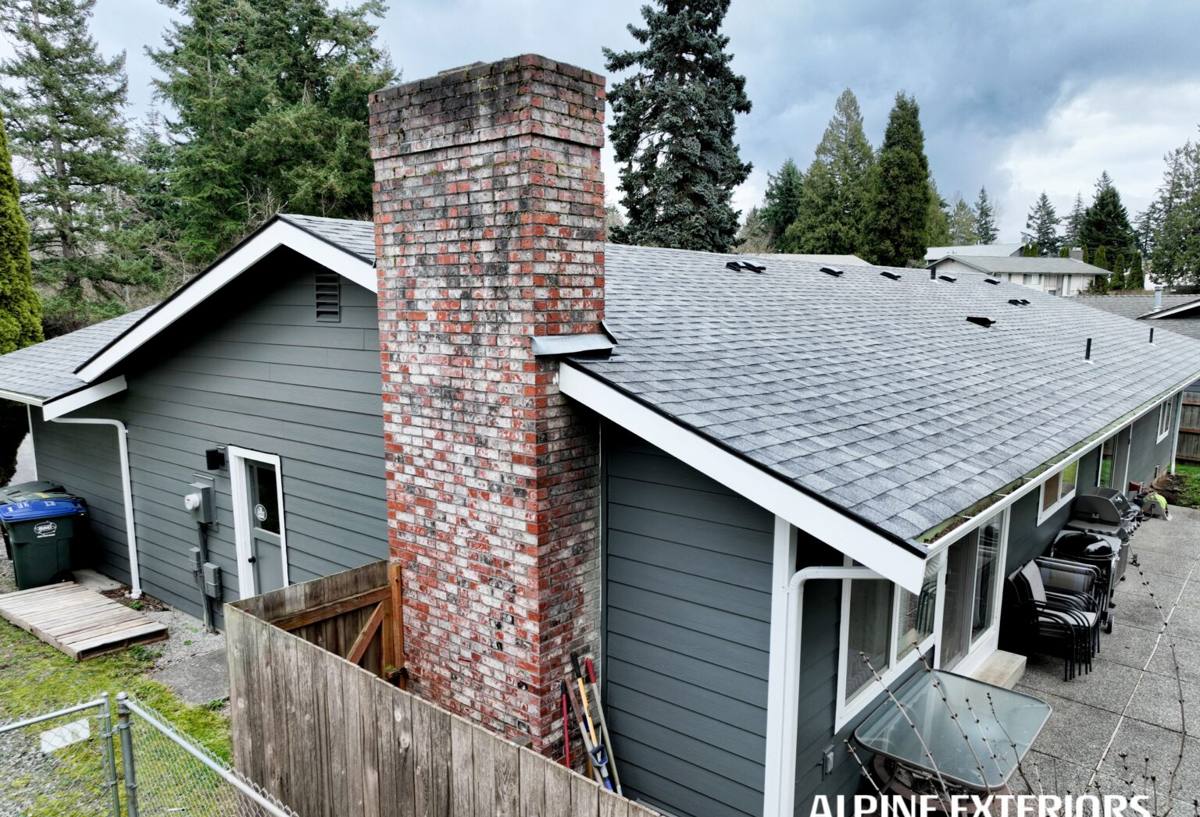
Signs a Columbia Home Needs Siding Replacement, Not Another Repair
Repair makes sense when the damage is isolated and the material underneath is sound. Replacement becomes the honest recommendation when the problems are spread across the house or when what's underneath the siding has already started to fail. Homeowners usually notice one or more of the following well before they call a contractor:
- Boards or panels that are cupping, bowing, or visibly separating from the wall
- Paint that won't hold anymore, no matter how recently it was applied
- Soft or spongy spots when you press on the siding, especially near the bottom courses
- Persistent moss or algae streaking that comes back within a season of cleaning
- Visible gaps at seams, corners, or around windows and doors
- Higher heating bills that track with drafts felt near exterior walls
- Siding that's simply reached the end of its expected service life for its material type
If several of these show up at once, it's a sign the whole wall system — not just the visible surface — needs a fresh look before anything new goes up.
Why Whatcom County's Weather Is Hard on Siding
Salt Air and Coastal Exposure
Proximity to the bay means airborne salt settles on exterior surfaces even on days without rain. Over years, that salt exposure accelerates the breakdown of paint films and speeds corrosion of fasteners and trim if they weren't rated for it. Wood-based sidings are particularly vulnerable because salt holds moisture against the surface longer than it would on a drier material.
Driving Rain and Wind-Driven Moisture
Bellingham's storms don't always fall straight down. Wind-driven rain gets pushed sideways into seams, laps, and fastener penetrations that were never designed to shed water from that angle. This is where installation detail matters as much as the product itself — flashing, house wrap, and proper lap sequencing either stop that water or let it in behind the siding, where it causes damage nobody sees until the wall is opened up.
The Long Moss Season
Shade, humidity, and cool temperatures give moss and algae a long runway to establish themselves on north-facing walls and anywhere airflow is limited. Moss holds moisture against the siding surface for extended periods, which is a slow but steady way to degrade paint, caulking, and the substrate underneath — especially on materials that weren't engineered to resist sustained moisture contact.
What a Correct Siding Replacement Actually Involves
Tear-Off and Inspection
A real replacement starts with removing the old siding down to the sheathing, not covering it over. That's the only way to actually see what's happening underneath — rot, insect damage, missing or degraded house wrap, and any framing issues that need to be addressed before new siding goes on. Skipping this step just buries existing problems under new material.
Moisture Management Before the First Panel Goes Up
Once the sheathing is exposed, the weather-resistive barrier gets inspected or replaced, and flashing is installed at every penetration, window, door, and horizontal transition. This is the layer that actually keeps wind-driven rain out of the wall assembly — the siding on top of it is the second line of defense, not the first.
Installing to Manufacturer Spec
Correct fastener type, placement, and spacing; proper starter strips; correct clearances at grade, roofline, and trim; and factory-recommended caulking practices all matter. Fiber cement siding installed off-spec can fail years early even though the product itself is sound — installation quality is often the real difference between a job that lasts decades and one that doesn't.
Why We Install Only James Hardie Fiber Cement
We don't install vinyl, LP SmartSide, cedar, or primed spruce siding. That's a deliberate standard, not a lack of options. Fiber cement resists the specific stresses that define this climate: it doesn't absorb moisture and swell the way wood-based products can, it isn't vulnerable to the sustained damp conditions that moss season creates, and it's non-combustible. James Hardie's ColorPlus factory finish is baked on under controlled conditions rather than field-applied, which matters directly for a coastal, high-moisture area like Columbia where paint adhesion and UV/salt exposure are constant pressures on lesser finishes. Hardie also engineers specific product lines (HZ5, HZ10) for different climate zones, and backs installations with a strong transferable warranty when the work is done to spec. We stand behind the installation because we trust the product underneath it.
How Siding Materials Compare for a Columbia Home
| Factor | James Hardie Fiber Cement | Vinyl | Cedar / Wood |
|---|---|---|---|
| Moisture behavior | Does not absorb or swell | Doesn't absorb, but seams/gaps can trap water behind panels | Absorbs moisture; prone to swelling and rot over time |
| Salt air / coastal durability | Engineered for coastal exposure (HZ lines) | Can become brittle with UV and temperature swings | Salt accelerates finish breakdown and decay |
| Moss/algae resistance | Factory finish holds up well; surface doesn't feed growth | Resistant to rot but moss still adheres to the surface | Moss retains moisture against wood, speeding decay |
| Fire resistance | Non-combustible | Combustible, can melt/deform | Combustible |
| Maintenance | Occasional wash; factory finish reduces repainting | Low maintenance but can crack/fade | Regular painting/staining and moisture monitoring required |
| Typical service life | Multiple decades when installed to spec | Decades, but seams and fading limit long-term appearance | Shorter without diligent upkeep |
No product is maintenance-free, and every material has a trade-off. What matters is matching the product to what this specific climate does to a house over time — and for Columbia's combination of salt air, wind-driven rain, and moss, fiber cement's moisture behavior and factory finish are the deciding factors for us.
Our Process, Start to Finish
Every project follows the same sequence, whether it's a full house or a single elevation:
- On-site assessment of existing siding, trim, and any visible moisture or damage issues
- Written estimate covering material, labor, and any substrate repairs identified
- Full tear-off and inspection of sheathing and framing before anything new is installed
- Repair of any rot, damaged sheathing, or compromised framing found during tear-off
- Installation of weather-resistive barrier and flashing at all penetrations and transitions
- James Hardie siding installed to manufacturer specifications, including fastening and clearances
- Final walkthrough and cleanup, including haul-away of all old materials
Is It Time? A Quick Checklist
- Siding is 20+ years old, especially if it's wood-based or unpainted for several years
- You've had it power-washed or moss-treated more than once in the last few years with limited results
- You can see or feel soft spots, especially at the base of walls or under windows
- Interior walls near the exterior show staining, peeling paint, or a musty smell
- Energy bills feel high relative to the size and age of the home
- You're planning other exterior work (roofing, windows, trim) and want it coordinated
Why Hire a Crew That Already Works in Columbia
A contractor who regularly works this part of Bellingham already knows what to expect before the tear-off starts — which walls in this neighborhood typically take the worst of the wind-driven rain, where moss tends to establish first, and how salt exposure tends to show up on older siding here compared to homes further inland. That familiarity doesn't replace a proper inspection, but it does mean fewer surprises and a crew that isn't guessing at how Whatcom County's weather interacts with a specific product. It also means a crew that's used to navigating local permitting and knows what inspectors in this area expect to see.
If your Columbia home's siding is showing its age, we're happy to take a look and give you a straightforward, no-pressure estimate — just fill out the form below.