 Bellingham Siding
 Roofing in Columbia Means Building for Bellingham's Weather, Not Around It
The Columbia neighborhood sits in a part of Bellingham where the roofing challenges are cumulative rather than dramatic. There's rarely a single catastrophic storm that takes a roof down. Instead, it's the steady combination of Puget Sound-driven salt air, wind-blown rain that gets pushed sideways under poorly lapped shingles, and a moss season that can run eight or nine months out of the year under Whatcom County's tree cover. An asphalt shingle roof that's built correctly for this environment can go the distance. One that's installed with shortcuts — thin underlayment, skipped ice and water shield, mismatched ventilation — tends to show its age early, usually starting with soft spots near valleys and edges.
This page is about one job in one place: replacing or installing an asphalt shingle roof on a home in Columbia. Not a general overview of roofing everywhere — the specifics of what this climate does to a roof, and what a correctly built one needs to hold up against it.
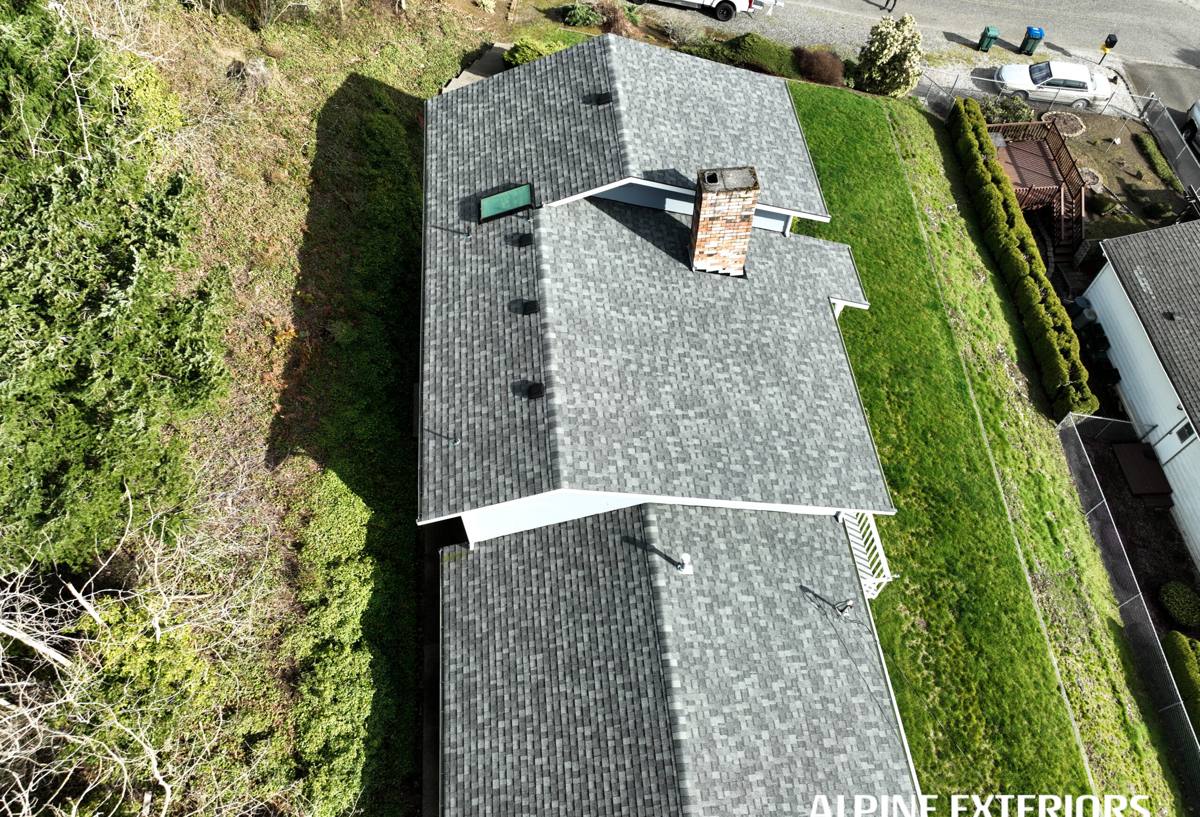
What Columbia's Housing Stock Needs From a Shingle Roof
Columbia has a mix of older bungalows and craftsman-era homes alongside newer infill construction, which means roofers here regularly deal with a range of roof decks, pitches, and past repair histories. Older homes may have layered roofs from prior owners, undersized or blocked attic ventilation, and roof decking that needs closer inspection once the old shingles come off. Newer homes are usually more straightforward, but builder-grade shingle jobs aren't always installed with this specific climate in mind — sometimes the underlayment and ventilation spec is generic rather than built for a wet, moss-prone, tree-covered lot.
Whatcom County's tree canopy is a real factor here. Overhanging limbs keep sections of a roof shaded and damp longer after rain, which is exactly the condition moss and algae need to take hold. A shingle roof in a shaded, tree-lined lot works harder than the same roof out in the open, and it should be specified and maintained accordingly.
What a Correctly Installed Asphalt Shingle Roof Actually Involves
"Asphalt shingle roof" covers a wide range of installation quality. The shingles themselves are only one layer of a system that has to work together. Here's what we consider non-negotiable on a Columbia home.
Full Tear-Off, Not a Layer-Over
Installing new shingles over old ones is faster and cheaper, but it traps moisture, hides deck damage, and voids most manufacturer warranties. A proper job strips the roof to the deck so we can actually see what's underneath — soft plywood, old fastener holes, or signs of long-term leaks — before anything new goes down.
Underlayment and Ice-and-Water Shield
Given how much wind-driven rain this area sees, we treat synthetic underlayment as the baseline, not an upgrade. Ice-and-water shield membrane goes at eaves, valleys, and around every penetration — chimneys, vent pipes, skylights — because those are the spots where driving rain finds its way under shingles that look fine from the ground.
Ventilation Balance
Intake at the soffits and exhaust at the ridge have to be balanced, not just present. Unbalanced ventilation traps moist attic air against the underside of the deck, which accelerates rot from the inside and can shorten shingle life from beneath, regardless of what's happening on the surface.
Flashing at Every Transition
Chimneys, wall-to-roof transitions, dormers, and valleys all need step flashing or valley metal installed correctly — not just caulked and hoped for. Caulk is a maintenance item, not a waterproofing strategy, and it's one of the first things we check on an older Columbia roof during inspection.
Nailing Pattern and Ridge Caps
Shingles installed with the wrong nail count, placement, or gun pressure lose most of their wind rating no matter what the product is rated for on the wrapper. Ridge caps need to be a matched or purpose-built product, correctly overlapped, since the ridge line takes the brunt of wind uplift in exposed Whatcom County weather.
Choosing an Asphalt Shingle for This Climate
Not every shingle product is a good fit for a shaded, damp, salt-air-adjacent lot. The table below is a general comparison to help frame the conversation — exact pricing depends on your roof's size, pitch, and condition, which we'll walk through during an on-site estimate.
| Shingle Type | Typical Lifespan | Best Fit For | Trade-Offs |
|---|---|---|---|
| 3-Tab Asphalt | 15–20 years | Budget-conscious re-roofs, simple roof lines | Lower wind rating, less algae resistance, flatter look |
| Architectural / Dimensional | 25–30+ years | Most Columbia homes; the current standard install | Higher upfront cost, but far better wind and moisture performance |
| Algae-Resistant (Class A) Architectural | 25–30+ years | Shaded lots, north-facing slopes, heavy tree cover | Modest price premium; pays off in reduced moss/algae staining |
| Impact-Resistant (Class 4) | 30+ years | Homes wanting maximum durability and possible insurance discounts | Highest material cost of the group |
For most Columbia homes, we steer the conversation toward architectural shingles with algae resistance built in. The upfront difference over 3-tab is real, but so is the difference in how the roof looks and performs after five wet Whatcom County winters.
Moss, Algae, and Salt Air: Prevention Built Into the Install, Not Bolted On After
A lot of moss treatment happens after the fact — chemical washes, manual scraping, zinc strips added years later. We'd rather build the prevention in from the start. That means algae-resistant shingle products where the lot calls for it, correctly balanced ventilation so the roof deck isn't feeding moisture into the shingles from below, and metal flashing details that shed water instead of holding it in seams and valleys where moss loves to establish.
Salt air off the Sound is a slower-acting factor, but it accelerates corrosion on exposed metal — flashing, fasteners, vent caps. We use fastener and flashing materials rated for coastal exposure rather than the cheapest option on the truck, because replacing corroded flashing on a roof that's otherwise fine is an avoidable expense.
Our Process, Start to Finish
The process is the same whether it's a full replacement or a targeted section repair — the scope changes, the steps don't.
- On-site inspection. We walk the roof (not just look from the ground), check the attic for ventilation and moisture signs, and document the deck condition where visible.
- Written estimate. A clear scope of work and price before anything is scheduled — no verbal-only quotes.
- Tear-off and deck check. Old material comes off, the deck gets inspected and any damaged sections are replaced before underlayment goes down.
- Underlayment, flashing, and shingle install. Built in the order described above — moisture barrier, flashing, then shingles, with the nailing pattern matched to the product spec.
- Cleanup and magnetic sweep. Debris and stray fasteners removed from the yard and driveway, not just piled at the curb.
- Walkthrough. We go over the finished roof and the warranty coverage with you directly.
Signs a Columbia Roof Needs Attention
Most roof failures give warning signs well before there's an active leak inside the house. Worth checking for, especially heading into the wet season:
- Granules collecting in gutters or at the base of downspouts
- Shingles that look curled, cupped, or are missing entirely after a windstorm
- Dark streaking or thick moss growth, particularly on shaded or north-facing slopes
- Soft or spongy spots when walking the roof (we check this, not something to test yourself)
- Daylight or water stains visible in the attic near the ridge or around penetrations
- Sagging along the ridge line or roof edges
- Flashing around chimneys or vents that's visibly rusted, lifted, or over-caulked
Any one of these on its own isn't necessarily an emergency, but it's worth having looked at before the next stretch of driving rain finds the weak point for you.
Why It Matters to Hire a Crew That Already Works in Columbia
A roofing crew that works this specific area regularly knows what tends to fail on Columbia's mix of older and newer homes, understands how tree cover on a given lot affects moss and ventilation needs, and is familiar with Bellingham's permitting requirements so a re-roof doesn't stall on paperwork. That local pattern recognition is the difference between a roof that's simply installed and one that's installed correctly for the conditions it will actually face here — not a generic climate, but this one.
If you're weighing a repair versus a full replacement, or just want an honest read on how much life is left in your current roof, we're happy to take a look. Reach out for a free, no-pressure estimate — someone will get back to you to schedule a time that works, using the form below.