 Bellingham Siding
 Building Decks for Columbia's Marine Climate
Columbia sits close enough to the water and to Bellingham Bay's weather patterns that a deck here takes a different kind of beating than one built inland or in a drier part of the state. Salt-laden air, long stretches of driving rain, and a moss season that can run from fall through spring all work against wood and hardware in ways that a lot of standard deck-building practice simply doesn't account for. A deck built to a generic spec sheet might look fine for the first year or two, then start showing soft spots, rust streaks, or a slick green film that never fully goes away.
We build decks specifically for this kind of exposure. That means paying attention to details that don't matter much in a dry climate but matter a great deal in Whatcom County — flashing, fastener grade, air gaps under the decking, drainage slope, and the finish schedule the homeowner is willing to keep up with. This page covers what a Columbia deck actually needs, what a correct build looks like, and how we approach the job from first visit to final walkthrough.
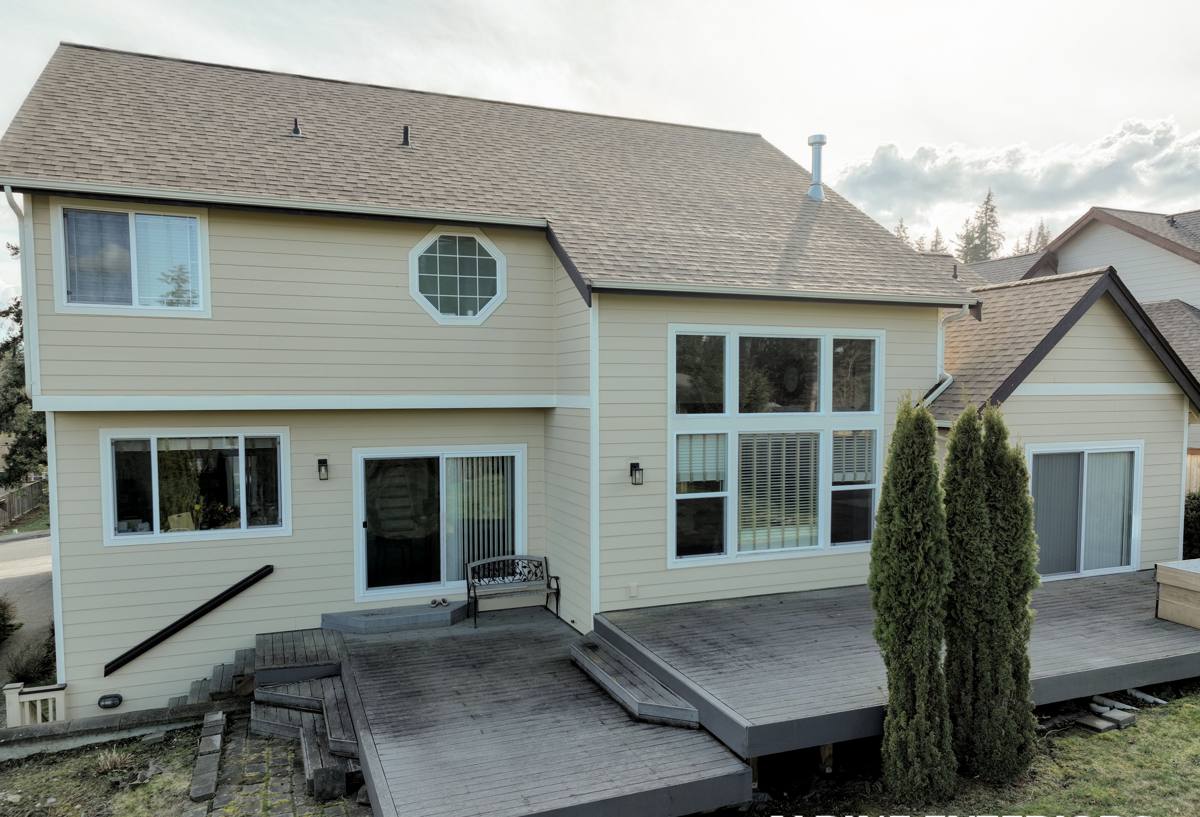
What Bellingham's Wet Season Does to a Deck Over Time
Most deck failures we see in this area aren't dramatic — they're slow. Moisture gets into places it shouldn't, stays there because the air doesn't dry things out quickly, and the damage builds year over year until it's obvious.
- Ledger board rot — where the deck attaches to the house, if flashing wasn't installed correctly, water tracks behind the ledger and rots both the ledger and the rim joist behind it.
- Fastener corrosion — salt air accelerates corrosion on screws, joist hangers, and bolts that aren't rated for coastal exposure, leading to rust streaks and, eventually, weakened connections.
- Moss and algae buildup — shaded or low-airflow deck surfaces stay damp long after a storm passes, giving moss a foothold that makes boards slippery and holds moisture against the wood.
- Joist and post decay — end grain that isn't sealed or protected soaks up water like a straw, rotting from the inside even when the surface looks fine.
- Trapped moisture under decking — boards installed without proper spacing or airflow underneath stay wet for days after rain, which shortens the life of almost any material.
None of this is unique to Columbia, but the frequency and duration of wet weather here means these problems show up faster than they would in a drier climate, and they compound if the original build didn't account for them.
Choosing the Right Decking Material for This Climate
There's no single "best" decking material for every homeowner — it depends on budget, maintenance tolerance, and how the deck will be used. What matters is understanding the real trade-offs for a wet, salt-air environment rather than picking based on price alone.
| Material | How It Handles Local Weather | Maintenance | Typical Lifespan |
|---|---|---|---|
| Pressure-treated lumber | Resists rot when properly sealed and maintained; end cuts and fasteners are the weak points | Needs re-staining or sealing every 1-2 years | 15-20 years with upkeep |
| Cedar | Naturally rot- and insect-resistant, but still needs sealing to fight moss and graying from constant moisture | Annual cleaning, periodic oiling or staining | 15-25 years with upkeep |
| Composite decking | Doesn't rot or soak up water like wood; still needs airflow underneath to prevent moss on the surface | Periodic washing, no staining or sealing | 25-30+ years |
| PVC/capped polymer | Fully moisture-resistant surface, best option where shade and standing water are a constant issue | Occasional washing | 25-30+ years |
For Columbia homes with a lot of tree cover or north-facing exposure — both common in this area — composite or capped polymer decking tends to hold up better against moss and staining than natural wood, simply because it doesn't provide organic material for moss to root into. That said, a well-built and well-maintained wood deck can still perform for decades here; the material choice matters less than the build quality underneath it.
Framing Material
Regardless of what decking surface goes on top, we frame with pressure-treated lumber rated for ground contact where posts meet grade, and we treat or seal all field cuts before assembly — an untreated cut end is one of the fastest paths to hidden rot.
Framing and Structural Details That Matter Here
The parts of a deck nobody sees are the parts that determine how long it lasts. In a climate like Bellingham's, we're especially deliberate about a few structural details:
Ledger Flashing
Where the deck attaches to the house, we install proper flashing that directs water away from the ledger board and the house's wall assembly. This is the single most common point of failure we find when replacing older decks in this area, and it's not a step that can be shortcut.
Joist Protection
We use joist tape or an equivalent moisture barrier on top of framing lumber before decking goes on, so fastener penetrations don't become entry points for water. Top-of-joist rot is slow to spot from above and expensive to fix once it sets in.
Post Bases
Posts sit on elevated metal bases rather than buried in or resting directly on concrete, keeping the end grain away from standing water at ground level — a common problem on lower decks and patio-level structures.
Fasteners and Hardware for Salt Air Exposure
Bellingham's proximity to the water means salt air reaches further inland than people expect, and it's hard on standard hardware. We use stainless steel or coated fasteners and connectors rated for coastal or high-moisture exposure — not because it's required everywhere, but because it's cheap insurance against the rust streaking and weakened joints we see on decks built with mismatched or bargain-grade hardware.
Railings get the same attention. Aluminum and properly coated steel hold up well; uncoated or poorly finished metal components are often the first thing on a deck to show visible wear, usually within the first couple of wet seasons.
Drainage, Slope, and Moss Control
A deck that doesn't shed water is a deck that grows moss. We build in a slight slope away from the house on the decking surface, make sure gaps between boards allow water through rather than pooling, and where a deck sits under trees or in a shaded yard — common in Columbia's more wooded lots — we talk with homeowners about spacing and orientation choices that improve airflow underneath.
Underneath the deck, grading and drainage matter just as much. If water collects and sits under a low deck, it keeps the framing damp long after a storm has passed, which is exactly the condition moss and rot both need to take hold.
Our Deck Building Process in Columbia
- On-site assessment — we walk the property, check grade, drainage, sun/shade exposure, and how the deck will tie into the house.
- Material and design conversation — we go over decking options, railing styles, and layout based on how the space will actually be used and the homeowner's maintenance preferences.
- Permitting — we handle the permit process for the project based on local requirements for the deck's size, height, and attachment to the structure.
- Framing and flashing — the structural work, including ledger flashing, joist protection, and post bases, is done first and inspected before decking goes on.
- Decking, railing, and finish work — surface materials and railings are installed, and any staining or sealing is completed.
- Final walkthrough — we go over the finished deck with the homeowner, including what maintenance it will need going forward.
Permits and Local Considerations
Deck projects in and around Bellingham typically require a permit depending on height, size, and attachment method, and Whatcom County's setback and structural rules apply based on the specific property. Rather than guess at what a given lot requires, we handle the permitting conversation as part of the project so homeowners aren't left navigating it alone.
Keeping a Columbia Deck in Good Shape
Even a well-built deck needs some ongoing attention in this climate. Here's what we recommend to homeowners after a build:
- Sweep leaves and debris off the deck regularly, especially in fall — trapped organic material holds moisture and feeds moss growth.
- Rinse or lightly scrub the surface a couple of times a year to keep moss and algae from establishing, especially on shaded sections.
- Check railings, stairs, and hardware annually for early signs of rust or loosening, particularly after the wettest months.
- Re-seal or re-stain wood decking on the schedule appropriate to the product — waiting too long lets moisture back into the wood.
- Keep gutters and downspouts near the deck clear so runoff isn't dumping extra water onto or under the structure.
- Trim back overhanging branches where possible to improve sun exposure and airflow across the deck surface.
If you're planning a new deck or replacing one that's showing its age, we're happy to take a look and put together a straightforward, no-pressure estimate for your Columbia property. Use the form below to get started.