 Bellingham Siding
 Windows in Birchwood Work Harder Than People Think
Birchwood sits close enough to the water and the weather patterns that roll off it that windows here take a different kind of beating than windows a hundred miles inland. It's not one dramatic storm that does the damage — it's the accumulation. Salt-laden air corrodes hardware and finishes faster than dry-climate manufacturers ever tested for. Driving rain, often pushed sideways by wind off the Salish Sea, finds every gap in flashing and caulk that a calmer climate would never expose. And Bellingham's long moss season keeps humidity sitting against exterior walls and window frames for months at a time, which is exactly the environment wood rot and seal failure need to get started.
None of this means Birchwood homes need exotic products. It means the replacement has to be done with this specific climate in mind — the right materials, the right flashing detail, and installers who've actually seen what five or ten Whatcom County winters do to a window that was installed without those details in mind.
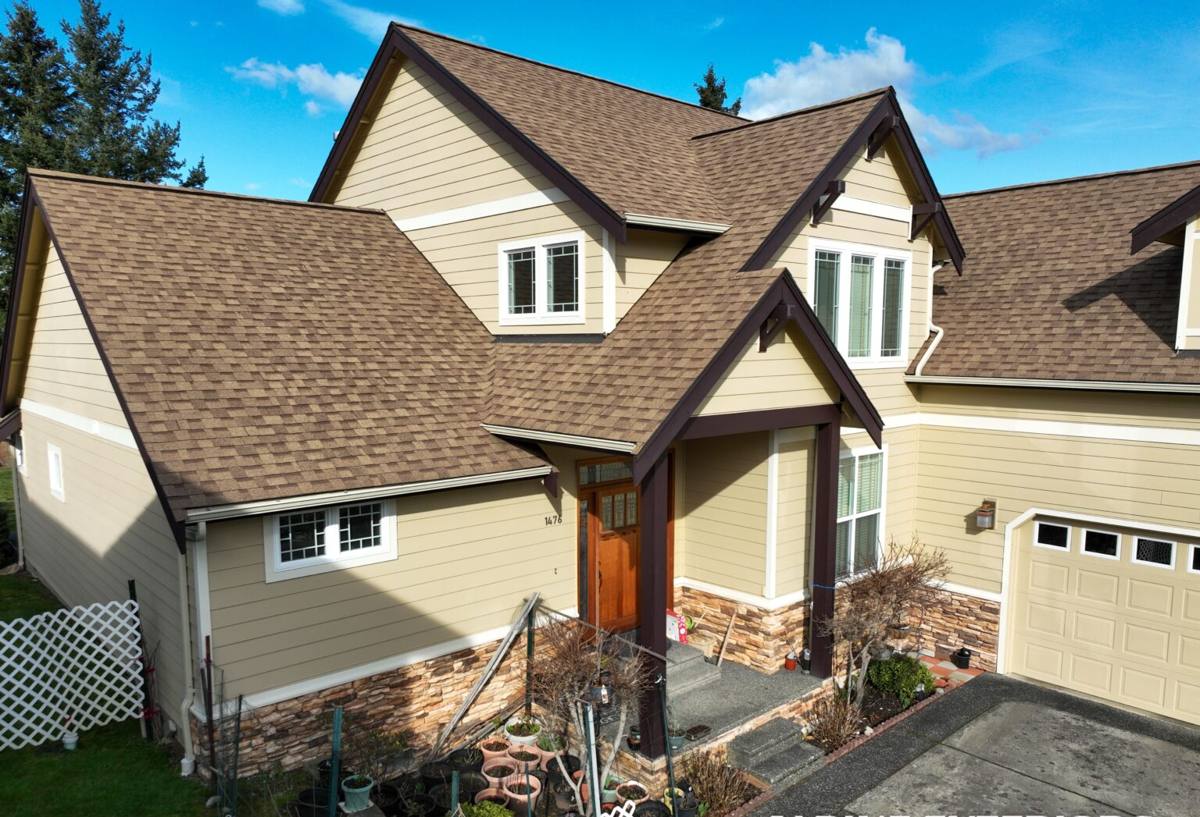
Signs a Birchwood Home's Windows Are Due for Replacement
Window failure in this climate is usually gradual, which is why a lot of homeowners live with a problem for a year or two before addressing it. Here's what we tell Birchwood homeowners to watch for:
- Fogging or a permanent haze between panes — the sign a sealed unit's gas fill and seal have failed
- Visible black staining, soft spots, or bubbling paint on the wood trim around a window
- Drafts you can feel with a hand near the frame on a windy day, even with the window latched
- Windows that are difficult to open, close, or lock — often a sign the frame has swollen or shifted
- Moss or dark green growth building up in the corners of the frame or sill
- A noticeable jump in heating costs without any other explanation
- Condensation forming on the inside of the glass regularly, not just on the coldest mornings
Any one of these on its own might not mean full replacement is urgent. Several of them together, especially on a home's north or west-facing walls where wind-driven rain hits hardest, usually means the window assembly has been compromised and repair is just delaying the inevitable.
What a Correct Window Replacement Actually Involves
Removal and Inspection
Every replacement starts with pulling the old unit out carefully enough to see what's behind it. This is the step that gets rushed on cheap installs, and it's the one that matters most in a wet climate. If there's hidden rot in the sheathing or framing, it needs to be found and dealt with before a new window goes in — not covered up and left to keep spreading behind a fresh frame.
Flashing and Water Management
This is the single most important part of the job for a house in this region. Proper flashing — installed in the correct shingle-lap order so water is always directed outward and down, never trapped behind the siding — is what actually keeps driving rain out over the next fifteen or twenty years. A window can be expensive and well-made and still fail early if the flashing behind it was done wrong.
Insulation and Air Sealing
The gap between the new window frame and the rough opening needs to be filled with the right low-expansion foam or backer rod and sealant — not stuffed with excess fiberglass insulation, which does little to stop air movement and nothing to stop moisture.
Final Fit and Finish
The window should operate smoothly, sit level and square in the opening, and have exterior trim and caulking that's sealed against wind-driven rain from day one. We check operation and weather sealing before we consider a window finished, not just whether it looks good from the curb.
Choosing the Right Window Material for This Climate
There's no single "best" window material for every home — it depends on budget, the home's age and style, and how much upkeep an owner wants to take on. What matters is understanding the honest trade-offs for a coastal Whatcom County setting.
| Frame Material | Moisture & Salt Air Resistance | Maintenance | Typical Lifespan |
|---|---|---|---|
| Vinyl | Very good — won't rot or corrode | Low; occasional cleaning | 20–30 years |
| Fiberglass | Excellent; very stable in wet, swinging temperatures | Low | 30–40+ years |
| Wood-clad | Good on the exterior clad face; interior wood needs protection from condensation | Moderate to high | 20–30 years with upkeep |
| Aluminum | Poor without thermal breaks; prone to condensation and corrosion near salt air | Moderate | 15–25 years |
For most Birchwood homes we recommend vinyl or fiberglass frames precisely because they don't give salt air or standing moisture anything to work on. We don't rule out wood-clad windows — plenty of homeowners want that interior look — but we're upfront that it comes with a real maintenance commitment in a climate this wet, and we'll walk through what that looks like before anyone commits to it.
Glass Package Matters Too
Double-pane with a low-E coating and argon fill is the standard baseline for this region and performs well against both heat loss and condensation. Triple-pane adds another layer of insulation and sound dampening, which some homeowners value on busier streets or exposed lots, but it comes at added cost and weight. Neither choice is wrong — it's a question of budget versus how much extra performance a specific home actually needs.
Our Process, Start to Finish
- On-site assessment: We look at the actual condition behind the trim where possible, not just the glass, and talk through what we find in plain terms.
- Measurement and material selection: Every window opening is measured individually — older homes are rarely perfectly square, and assuming they are is how gaps and drafts happen.
- Installation: Careful removal, inspection of the opening, correct flashing sequence, air sealing, and a level, square set of the new unit.
- Final walkthrough: We test every window's operation and locking hardware with the homeowner before we consider the job done.
- Cleanup: Old windows, packaging, and debris hauled off — we don't leave a work site looking worse than we found it.
What Affects the Cost of Window Replacement in Birchwood
We won't quote a number without seeing the home, but these are the factors that actually move the price up or down:
| Factor | Why It Matters |
|---|---|
| Number of windows | Per-window cost drops somewhat with larger batches due to shared setup and crew time |
| Window size and type | Large picture windows, bay windows, and custom shapes cost more than standard double-hungs |
| Frame material | Fiberglass generally costs more upfront than vinyl but needs less long-term upkeep |
| Existing damage | Rot or water damage found behind the old window adds repair work before the new one goes in |
| Access and height | Second-story or hard-to-reach windows take more time and sometimes special equipment |
| Trim and finish work | Matching existing interior or exterior trim adds labor beyond a straight swap |
Why a Crew That Already Works in Birchwood Makes a Difference
A window installed correctly in a dry, mild climate can still fail fast in Bellingham if it's installed the same way. Crews who work this area regularly know which flashing details actually hold up against wind-driven rain here, understand how moss and standing moisture behave against a wall over a wet winter, and aren't guessing at how a home in this neighborhood is likely built based on its age. That local pattern recognition is what separates a window that looks fine for the first year from one that's still performing in year fifteen.
Working regularly in and around Bellingham and greater Whatcom County also means fewer surprises with scheduling, permitting, and sourcing materials that actually hold up to Pacific Northwest weather — not just materials rated for a national average climate that doesn't reflect what a house here actually deals with.
Keeping New Windows Performing Through the Wet Season
A correctly installed window needs very little from a homeowner, but a few habits extend its life:
- Wipe sills and tracks clear of standing water and debris after heavy rain
- Check and clear moss or algae buildup on exterior sills before it holds moisture against the frame
- Inspect exterior caulking once a year and touch up any cracked or peeling sections
- Make sure gutters and downspouts near windows are clear so runoff isn't sheeting directly across the glass and frame
- Operate each window a few times through the year so hardware doesn't seize up from disuse
If your Birchwood home has windows showing any of the wear signs above, or you're simply ready to stop fighting drafts and fogged glass through another wet season, we're happy to take a look. Fill out the form below for a free, no-pressure estimate — we'll tell you honestly what we see and what your options are.