 Bellingham Siding
 Storm Damage Roof Repair for Birchwood Homes
Birchwood is a settled, tree-lined residential area on the north side of Bellingham, and like most neighborhoods in this part of Whatcom County, its roofs take a beating from a very specific combination of weather. It isn't just one big storm a year that causes trouble — it's the steady grind of wet windstorms rolling off the Salish Sea, salt-laden air working into fasteners and flashing, and a moss season that can run eight months or longer. A roof that looks fine from the driveway can be quietly failing underneath, and after a hard blow, the difference between a small repair and a much bigger problem often comes down to how quickly and how correctly the damage gets addressed.
This page is specifically about storm damage roof repair for homes in Birchwood — what causes it, what a proper repair actually involves, and why local experience matters more here than a generic roofing checklist would suggest.
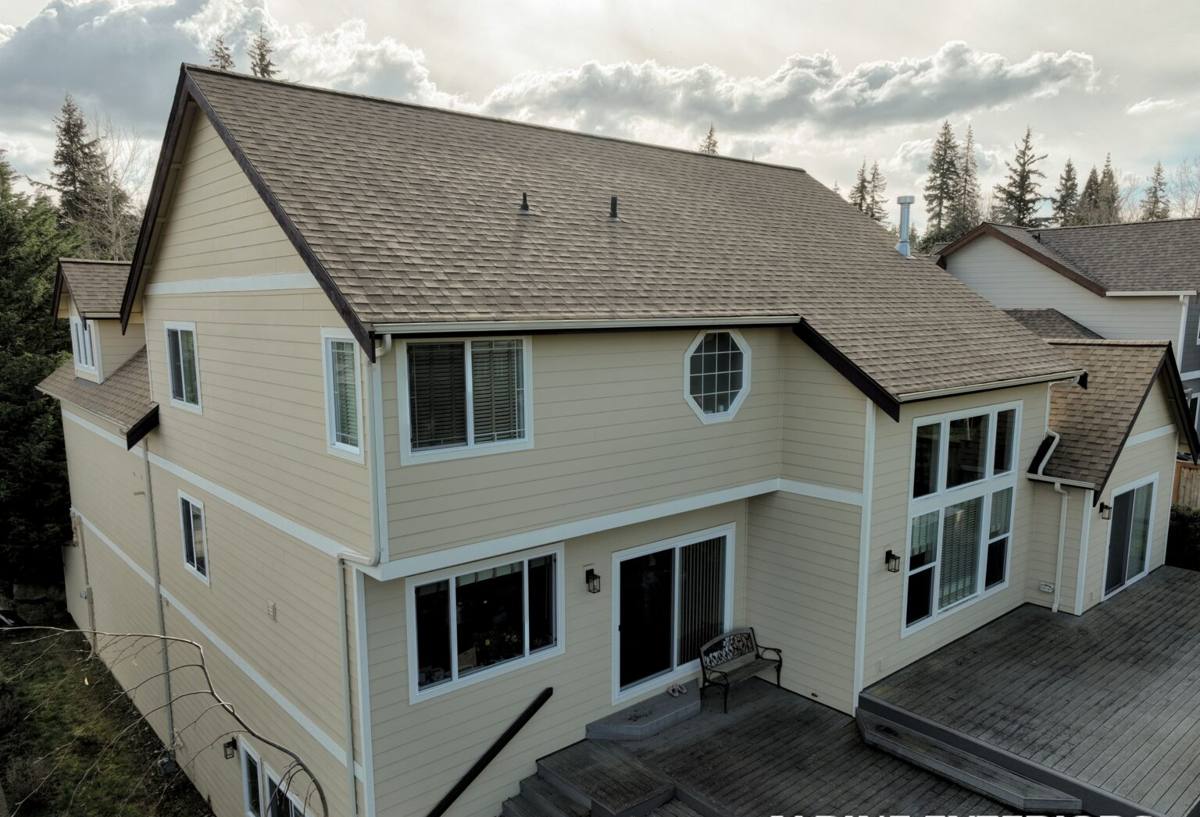
What Bellingham Storms Actually Do to a Roof
Whatcom County doesn't usually get the kind of catastrophic hail or tornado damage you see in other parts of the country. Our storm damage is more subtle, and that's part of what makes it dangerous — it's easy to underestimate.
Wind and Driving Rain
Bellingham storms tend to bring sustained wind combined with rain driven almost sideways off the water. That combination pushes water uphill under shingles and shakes, past flashing that was only ever designed to shed water moving downward. Wind gusts can lift shingle tabs, crack ridge caps, and loosen fasteners without ever tearing a whole section off — so the roof still looks intact after the storm passes, even though its water resistance is compromised.
Salt Air
Being close to Bellingham Bay means homes in and around Birchwood are exposed to a low but constant level of salt in the air. Over years, that accelerates corrosion on exposed metal — nail heads, flashing, gutter fasteners, and vent boots — well before the shingles themselves would otherwise need attention. Corroded metal fails quietly, which is exactly why storm damage often shows up as a leak long after the wind event that actually caused it.
Moss and Moisture
Our long, mild, wet season means moss has months to establish itself on north-facing slopes and shaded areas, which describes a lot of roofs under Birchwood's mature tree cover. Moss holds moisture against the roofing material, lifts shingle edges as it grows, and adds weight. A storm that would be a non-event on a clean, dry roof can be enough to dislodge material that moss has already been prying loose for months.
Signs Your Birchwood Roof May Have Storm Damage
Some damage is obvious. A lot of it isn't. After any significant wind or rain event, it's worth checking for the following:
- Granules collecting in gutters or at the base of downspouts
- Shingle tabs that look lifted, curled, or missing entirely
- Bent, creased, or missing flashing around chimneys, skylights, and vent pipes
- Dented or dislodged gutters and downspouts
- New or worsening moss growth along shingle edges and in valleys
- Water stains on interior ceilings, especially near exterior walls or after a storm
- Daylight visible through the roof deck from inside an attic
- Debris (branches, needles, moss clumps) piled in valleys where water should flow freely
None of these by themselves always means a major problem, but any of them is a reason to get a proper inspection rather than wait and see.
What a Correct Storm Damage Repair Actually Involves
Storm damage repair gets done badly more often than most homeowners realize, usually because it's rushed or treated as a cosmetic patch instead of a water-management problem. A correct repair addresses the whole path water could take, not just the spot where it's currently visible.
Diagnosis Before Repair
The visible damage — a missing shingle, a dented vent cap — is often just the entry point. Water travels. A leak showing up on a ceiling can originate several feet away, higher up the slope, at a flashing detail that failed first. A repair that only addresses the visible symptom without tracing the actual path of the water tends to fail again in the next storm.
Matching Materials and Method
Replacement shingles, flashing, and fasteners need to match the existing roofing in type, profile, and where possible, wear so the repair doesn't stand out or create a new weak point at the seam between old and new material. Flashing should be replaced, not just re-sealed with caulk or roofing cement — sealant is a short-term patch, not a long-term fix, especially in a climate this wet.
Decking and Underlayment
If water has been getting under the roofing for any length of time, the wood decking underneath may be softened or delaminating, and the underlayment may no longer be doing its job. A repair that reshingles over damaged decking or saturated underlayment is covering up a problem, not fixing it. Any competent repair includes checking what's underneath once the damaged section is opened up.
Full Repair vs. Section Replacement
Not every storm-damaged roof needs full replacement, and not every repair should be a small patch. The right scope depends on the roof's age, how widespread the damage is, and what condition the rest of the roofing is in.
| Situation | Typical Approach | Key Factor |
|---|---|---|
| Isolated wind damage, roof under 10–12 years old | Targeted shingle and flashing repair | Surrounding material still has useful life left |
| Repeated leaks at the same flashing detail | Full flashing replacement at that detail, not re-sealing | Sealant-only fixes tend to recur |
| Widespread granule loss, moss damage, or roof near end of expected life | Roof replacement rather than repeated repairs | Repair cost starts to approach replacement cost |
| Damaged decking discovered during repair | Deck board replacement before re-roofing that section | Shingles over soft decking will fail again quickly |
| Storm damage plus existing moss/moisture issues | Repair plus moss treatment and gutter/ventilation check | Addresses the cause, not just the symptom |
Our Process for Birchwood Storm Damage Calls
When we get a storm damage call in Birchwood, we follow the same sequence every time, because skipping steps is how re-repairs happen:
- Inspection. We walk the roof (or use a lift or drone when access or pitch makes that safer) and check the attic from the inside where possible, since interior signs often tell us more than what's visible from a ladder.
- Documentation. We photograph the damage clearly, which matters if you plan to file an insurance claim — adjusters respond better to thorough documentation taken close to the time of the storm.
- Honest scope. We tell you plainly whether this is a repair, a partial re-roof, or something bigger, and why, including what we found once we opened things up.
- Repair. We replace what's damaged with matching materials, correct any underlying flashing, underlayment, or decking issues we find, and don't just cover the problem back up.
- Cleanup and check. We clear debris, check gutters and downspouts are flowing, and make sure nothing was left that could cause a secondary leak.
Insurance Claims: What to Know Before You Call
Many storm damage repairs in Whatcom County are at least partially covered by homeowner's insurance, but coverage depends entirely on your specific policy, so we won't make promises about what will or won't be paid. What we can tell you from experience: get an inspection and documentation soon after a storm event, before further weather makes it harder to tell what caused what. A repair estimate that clearly separates storm-related damage from pre-existing wear (like general moss buildup or age-related granule loss) tends to move through the claims process more smoothly than a vague one.
Why Local Experience in Birchwood Matters
Storm damage roof repair isn't a one-size-fits-all trade, and a crew that regularly works in and around Bellingham brings a few real advantages over one that doesn't:
- Familiarity with how Bellingham Bay-driven wind and rain patterns typically damage roofs, versus generic storm damage assumptions
- An eye trained on moss and moisture issues specific to Whatcom County's wet, mild climate
- Faster response after a widespread storm, because we're not driving in from outside the area
- Familiarity with the roofing materials and roof styles common in established neighborhoods like Birchwood
- Straight talk about what's genuinely urgent versus what can be scheduled, instead of storm-chasing urgency tactics
After any significant storm, roofing crews from outside the area sometimes come through offering fast, cheap repairs. We'd encourage some caution there — a repair that isn't tied to flashing detail, decking condition, and long-term moisture behavior specific to this climate often needs to be redone within a year or two, which ends up costing more than doing it right the first time.
Get a Straight Answer About Your Roof
If a recent storm has you wondering whether your Birchwood home has damage, or you've noticed one of the warning signs above, it's worth getting a professional look before it turns into an interior leak or a bigger repair. We offer a free, no-pressure estimate — use the form below to get in touch and we'll come take a look.