 Bellingham Siding
 Deck Repair in Birchwood: What Bellingham Weather Actually Does to a Deck
Birchwood sits inland from Bellingham Bay, but it still gets the same weather pattern that shapes every deck in Whatcom County: long stretches of driving rain, salt-carrying air off the water, and a moss season that can run from early fall well into spring. A deck takes this abuse differently than siding does. Siding is vertical and sheds water; a deck is a horizontal surface that has to shed water while people, furniture, and grills sit directly on top of it. Water doesn't just run off a deck — it sits in board gaps, pools against the house at the ledger board, and wicks into end grain and fastener holes where it can linger for days after a storm has passed.
Over a few wet seasons, that moisture pattern is what turns a solid deck into a soft one. Add in the fine, near-constant mist and shade common to established Birchwood yards, and you get the ingredients for moss and algae growth on top of the moisture problem underneath. We repair a lot of decks in this neighborhood, and the failures we see are rarely random — they follow the same handful of patterns tied directly to how this climate treats exposed wood and hardware.
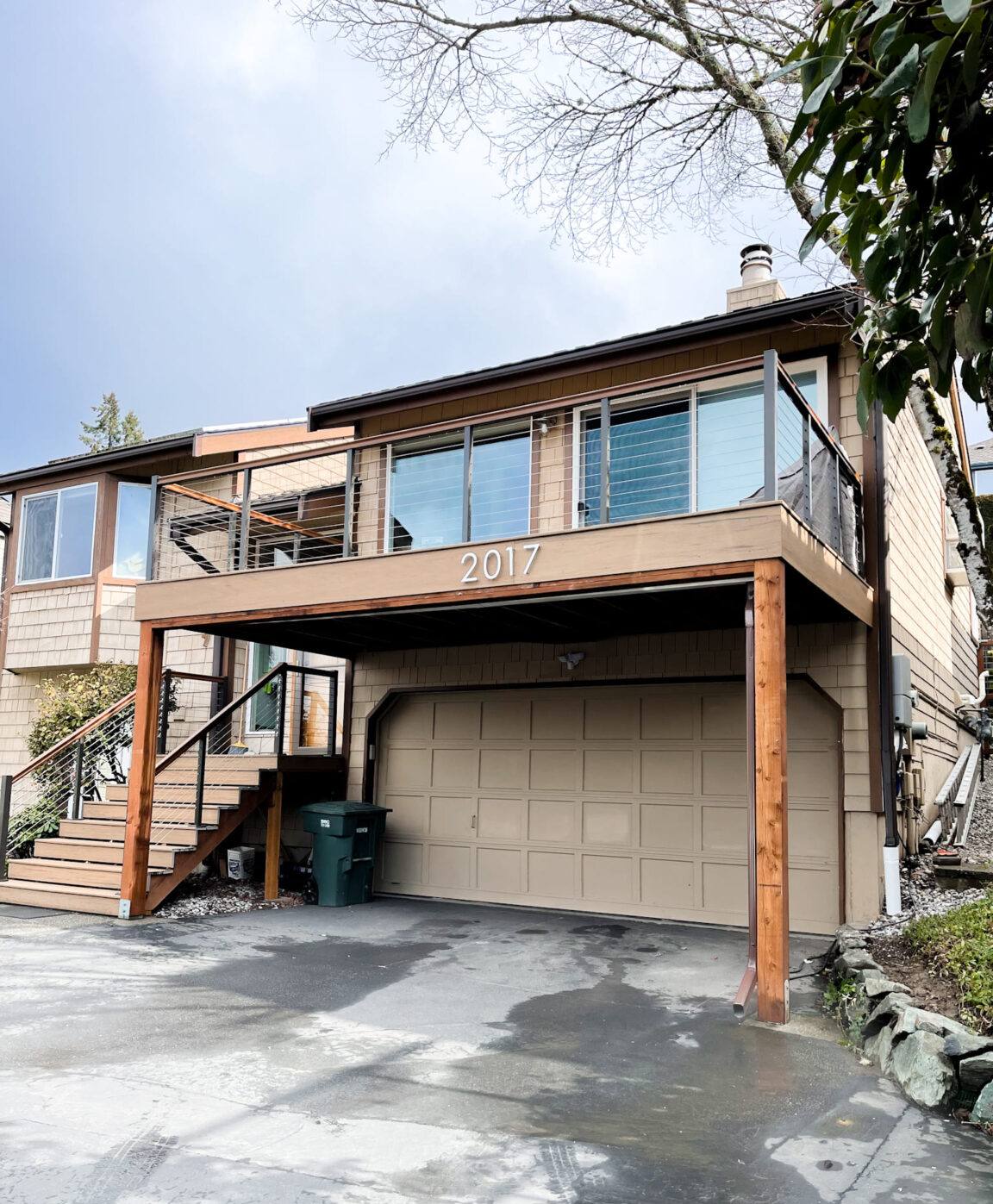
Signs Your Birchwood Deck Needs Repair
Most deck problems don't announce themselves with a dramatic failure. They show up as small changes that are easy to write off until they aren't. Walk your deck and look for these:
- Boards that feel soft, spongy, or slightly bouncy underfoot, especially near the house or stair landings
- Gaps between boards that have visibly widened or narrowed unevenly
- Screws or nail heads backing out, or dark rust streaks bleeding from fastener holes
- Green or black staining and moss buildup that comes back within weeks of cleaning
- Railings or posts that flex or wobble when you lean on them
- A visible gap or dark staining where the deck meets the house at the ledger board
- Water that pools and stays instead of draining off within an hour or two of rain
- Stair stringers that feel springy or steps that have started to sag at the edges
Any one of these on its own might be minor. Two or three together, especially near the ledger board or stairs, usually means the structure underneath the deck surface needs a closer look.
Common Deck Problems We Find in This Neighborhood
Ledger Board and Rim Joist Rot
The ledger board — the piece that bolts the deck to the house — is the single most important structural connection on most decks, and it's also the one most exposed to trapped moisture. If flashing was installed poorly, or wasn't installed at all, water runs behind the deck and down the house's rim joist every time it rains. In a climate that sees rain across most months of the year, that adds up fast. This is the repair we treat as highest priority, because a failed ledger connection is a safety issue, not just a cosmetic one.
Post Base and Footing Rot
Deck posts that sit in or near standing water, or that were never lifted off grade with a proper post base bracket, rot from the bottom up. It's common for the visible part of a post to look fine while the buried or ground-contact section underneath has softened. We check this with a probe, not just a visual look, because surface appearance is often misleading.
Cupped, Split, or Delaminating Decking Boards
Wood decking that repeatedly absorbs rain and then dries out cups, splits along the grain, and eventually starts to delaminate at the surface. Composite boards can suffer their own version of this if moisture gets trapped underneath from poor airflow or clogged gaps — swelling at cut ends or fastener points is the composite equivalent of rot.
Moss, Algae, and Slick Surfaces
Shaded yards, filtered light, and near-constant dampness make parts of Whatcom County close to ideal moss habitat. Beyond looking bad, moss and algae hold moisture against the board surface and make stairs and low-traffic areas genuinely slippery — a real fall hazard, especially on stair treads and shaded landings.
Corroded Fasteners and Hardware
Salt air moving inland from Bellingham Bay accelerates corrosion on any fastener or bracket that isn't rated for it. Standard coated screws and joist hangers that would last decades in a dry inland climate can start rusting, staining the wood around them, and losing holding strength years earlier here. We see this most on decks built or repaired with whatever fasteners were on hand rather than ones matched to the coastal environment.
Repair or Replace? How We Make That Call
Not every problem area needs a full rebuild, and not every deck is worth patching. We look at each component separately rather than making a blanket call for the whole structure.
| Component | Usually Repairable | Usually Needs Replacement |
|---|---|---|
| Ledger board / flashing | Flashing missing or damaged but wood behind it is sound | Wood is soft, spongy, or dark with rot at the connection |
| Deck posts | Surface weathering, minor checking, base bracket needs upgrading | Probe sinks into wood, visible crumbling at grade line |
| Joists and framing | Isolated fastener corrosion, minor surface wear | Multiple joists soft or spanning areas with sustained sagging |
| Decking boards | A handful of boards cupped, split, or stained | Widespread cupping, splitting, or soft spots across most of the deck |
| Railings and stairs | Loose connections, wobble that tightens with new hardware | Rotted posts, stringers that flex under normal weight |
A deck where the framing underneath is still sound is almost always a good repair candidate, even if the surface boards look rough. A deck where the ledger connection, posts, or multiple joists have failed is often more cost-effective to rebuild than to patch piece by piece, since chasing rot through connected framing tends to cost more in labor than starting clean.
Our Deck Repair Process
- Full structural inspection. We check the ledger connection, posts, joists, and stair stringers, probing for soft wood rather than judging by appearance alone.
- Moisture and flashing check at the house connection. Since this is where the most serious failures start, we confirm whether water is getting behind the deck and into the rim joist.
- Written scope before any work starts. You get a clear list of what's structural, what's cosmetic, and what we recommend prioritizing, so there are no surprises mid-project.
- Structural repairs first. Ledger flashing, post bases, and joist sistering or replacement happen before any surface work, since fixing boards over a compromised frame just hides the real problem.
- Board and railing replacement. Damaged decking, railings, or stair components are replaced with material matched to the rest of the deck as closely as possible.
- Fastener and hardware upgrade. We use corrosion-resistant fasteners and connectors suited to a coastal climate, not just whatever matches the existing screw pattern.
- Cleanup and site walkthrough. We walk the finished repair with you and point out anything worth watching going forward.
Materials We Use and Why
Material choice matters more here than in a drier inland climate, because the failure modes we're guarding against — trapped moisture and corrosion — are constant rather than occasional.
| Material | Strengths | Trade-Offs |
|---|---|---|
| Pressure-treated lumber | Cost-effective, widely available, good structural strength for framing | Needs regular sealing to perform well long-term in this rainfall pattern |
| Cedar | Naturally rot-resistant, attractive grain, common on older Birchwood decks | Softer surface, requires consistent maintenance to keep that resistance intact |
| Composite decking | Low maintenance, resists splitting and cupping, doesn't need sealing | Higher upfront cost; still needs proper airflow underneath to avoid trapped moisture |
| Stainless or coated coastal-rated fasteners | Resists the corrosion that salt air accelerates | Costs more than standard fasteners, but far cheaper than a repeat repair |
We don't push one decking material as universally best — each has a legitimate place depending on your budget, how much upkeep you want to do, and what the rest of the deck is built from. What we won't do is mix in undersized or mismatched hardware just to save a few dollars on a repair, since that's exactly the kind of shortcut that shows up again as a callback in two or three years.
Keeping a Repaired Deck Ahead of Moss Season
A well-executed repair still needs some seasonal attention to hold up through Whatcom County's wet months. A little upkeep goes a long way toward protecting the work:
- Clean the deck surface and clear board gaps of debris before moss season sets in each fall
- Check that gutters and downspouts near the deck are directing water away, not onto it
- Reseal wood decking on the schedule appropriate to the product — don't wait for visible graying to crack
- Trim back overhanging branches and vegetation to let air and light reach shaded sections
- Sweep standing water off the surface after heavy rain rather than letting it sit
Why a Crew That Already Works Birchwood Matters
Deck repair done right depends on understanding how a specific structure has actually weathered, not just applying a generic checklist. Working regularly in Birchwood and the surrounding Bellingham area means we've seen how shaded, tree-covered lots hold moisture differently than open ones, how much faster fasteners corrode within a mile or two of the bay, and which framing details tend to fail first on decks of a given age around here. That local pattern recognition shortens the inspection, sharpens the estimate, and means we're not guessing at what Whatcom County's climate will do to a repair a few years down the line.
If your deck has soft spots, stubborn moss, loose railings, or you're just not sure whether it needs a repair or a rebuild, we're happy to take a look. Reach out for a free, no-pressure estimate using the form below and we'll give you a straight answer about what's actually going on underneath.