 Bellingham Siding
 Metal Roofing in Birchwood: A Different Job Than It Looks Like on Paper
Birchwood sits close enough to Bellingham Bay that salt-laden air is a real factor in how a roof ages, and far enough into Whatcom County's marine weather pattern that driving rain, long wet winters, and a genuine moss season are just part of owning a home here. Metal roofing can handle all of that better than most materials, but only if the material, fasteners, and detailing are chosen for this specific climate. A metal roof spec'd for a dry inland market and installed the same way here will show its weaknesses fast — streaking, fastener corrosion, and moss creeping into panel seams within a few seasons.
This page is about what a metal roof actually needs to hold up on a Birchwood home, and how we approach that job differently than a generic re-roof.
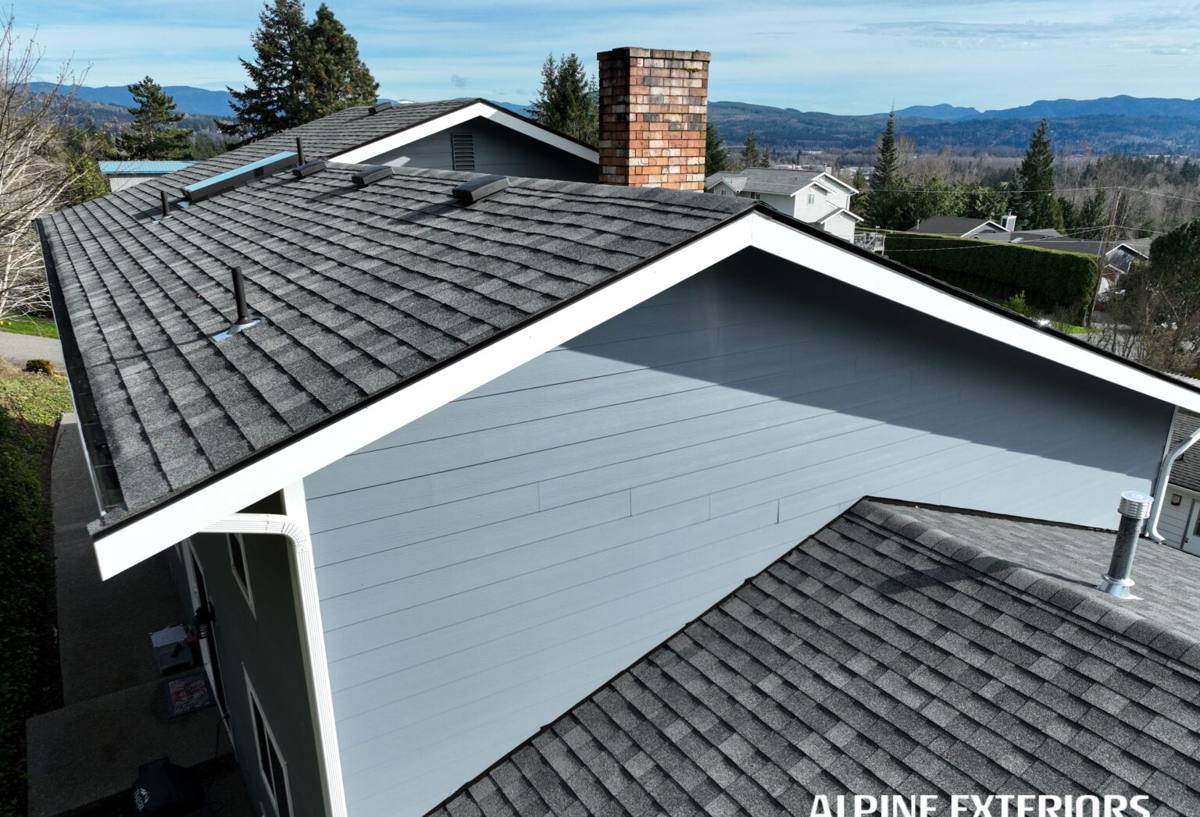
What Salt Air and Driving Rain Do to a Roof Over Time
Coastal proximity doesn't mean your roof is sitting in ocean spray, but it does mean airborne salt is present in the air and settles on exposed metal, fasteners, and flashing over years of exposure. Combined with Whatcom County's rainfall — much of it wind-driven rather than falling straight down — a few things happen on roofs that weren't detailed for it:
- Exposed fasteners corrode faster than the panels around them, leading to rust streaking and eventual leaks at the screw head
- Wind-driven rain pushes water sideways and upward at laps, valleys, and wall transitions, which is where most "unexplained" leaks actually start
- Dissimilar metals in contact with each other (galvanic corrosion) accelerate breakdown when moisture and salt are both present
- Standing water and trapped moisture in poorly ventilated valleys or low-slope sections invite moss and algae growth even on metal, which holds moisture against the panel finish
None of this is a reason to avoid metal roofing — it's the opposite. Metal, installed correctly, resists all of this far better than composition shingle or wood shake. But "installed correctly" is doing a lot of work in that sentence, and it's the part that separates a roof that looks good in photos from one that performs for thirty-plus years.
Choosing the Right Metal for a Coastal Whatcom County Home
Steel vs. Aluminum
Galvanized and Galvalume steel are the most common metal roofing substrates and work well in most of Bellingham. Closer to the bay, where salt exposure is higher, aluminum is worth serious consideration — it doesn't rust in the traditional sense, since it forms its own oxide layer rather than corroding the way steel does. Aluminum costs more up front but removes rust as a long-term concern entirely, which matters more the closer a home sits to open water or gets consistent onshore wind.
Coatings and Finish
The paint or coating system on a metal panel does most of the work protecting it from UV and moisture. A quality PVDF (Kynar-type) finish holds color and resists chalking far longer than a basic polyester coating, especially with the amount of overcast, wet weather Bellingham sees for much of the year. We don't recommend cutting corners here — a cheaper coating is the first thing to fail, and it fails visibly, with fading and streaking that shows up in five to eight years instead of twenty-plus.
Fasteners and Flashing
Exposed-fastener panels need fasteners matched to the panel metal to avoid galvanic reaction, with a quality EPDM washer that won't crack and let water track down the screw shaft. All flashing — valleys, wall transitions, chimney and vent penetrations — should be metal matched or properly isolated from the panel material, not just caulked and hoped for. Caulk is a backup seal, not a primary one; if a detail only holds because of caulk, it wasn't detailed correctly.
Standing Seam vs. Exposed-Fastener Panels
These are the two main paths for a residential metal roof, and the right choice depends on your roof's slope, budget, and how long you want to go before any maintenance is needed.
| Factor | Standing Seam | Exposed-Fastener |
|---|---|---|
| Fasteners | Concealed under the seam, no exposed penetrations | Visible screws through the panel face |
| Long-term maintenance | Minimal — no fasteners to inspect or replace | Fasteners and washers should be checked periodically and may need replacement over time |
| Performance in driving rain | Excellent — interlocking seam sheds wind-driven water well | Good, if fastener spacing and washer quality are correct |
| Typical cost | Higher material and labor cost | More budget-friendly |
| Best fit | Low-slope sections, homes near the water, long-term owners | Steeper roofs, garages/outbuildings, budget-conscious re-roofs |
For homes closer to the bay or with lower-slope roof sections where water sits longer before draining, we generally steer clients toward standing seam. For steeper, simpler roof planes further from direct salt exposure, a well-installed exposed-fastener system is a legitimate, more affordable option — the key word being "well-installed."
Moss, Valleys, and the Details That Actually Leak
Metal roofing resists moss far better than shake or shingle because there's no organic material for it to root into. But moss and algae can still colonize dirt and debris that collects in valleys, behind chimneys, and on north-facing slopes that stay shaded and damp most of the year — which describes a lot of roof planes in this area given how much of the year is overcast and wet. Left alone, that buildup holds moisture against the panel finish and can accelerate coating breakdown at those spots even if the rest of the roof stays clean.
The fix isn't a heavier roof — it's better detailing and a bit of homeowner awareness:
- Valleys wide enough and properly flashed to actually shed debris instead of trapping it
- Panel layout that avoids creating flat or low-flow spots where water and organic matter can pool
- Keeping overhanging branches trimmed back so leaf and needle litter doesn't accumulate in valleys and behind chimneys
- An occasional gentle rinse or soft-bristle brush-off of debris in shaded valleys, especially heading into fall
This is also where hiring a crew unfamiliar with this climate shows up years later. A roof detailed the way it would be in a drier region tends to skip the extra valley width, drip edge sizing, and underlayment overlap that this much rain actually calls for.
Ventilation and Moisture Management
A metal roof's exterior performance only matters if the attic underneath is managed correctly. Metal panels don't breathe the way some other materials do, so proper intake and exhaust ventilation keeps moist interior air from condensing against the underside of the deck — a problem that shows up as rot and mold long before it shows up as a visible roof issue. On a re-roof, this is the point to correct undersized or blocked soffit vents, add ridge venting where the roof design allows it, and confirm bath and kitchen exhaust fans actually vent outside rather than dumping moisture into the attic.
We also install synthetic underlayment with proper overlap and self-adhered membrane at eaves, valleys, and any low-slope transitions, which acts as the roof's backup layer if wind ever drives rain past the panel seams themselves.
Our Process on a Birchwood Metal Roof
- On-site assessment — we look at slope, existing decking condition, ventilation, valley layout, and how exposed the roof is to wind and salt-bearing air before recommending a panel type or metal.
- Tear-off or overlay decision — most metal re-roofs go over a tear-off to a sound deck; we'll walk you through when an overlay is or isn't appropriate for your existing roof.
- Deck repair — any soft or water-damaged decking gets replaced before anything goes down, not patched around.
- Underlayment and flashing — synthetic underlayment plus self-adhered membrane at vulnerable transitions, with all flashing metal-matched to the panel system.
- Panel installation — correct fastener spacing and torque (for exposed-fastener systems) or properly engaged seams (for standing seam), with attention to thermal expansion so panels aren't installed too tight.
- Ventilation check — intake and exhaust venting confirmed or corrected as part of the job, not treated as a separate project.
- Final walkthrough — we go over the completed roof with you, including what maintenance (if any) it needs going forward.
What Metal Roofing Costs in This Area — and What Actually Drives It
| Cost Factor | Why It Matters Here |
|---|---|
| Panel type | Standing seam runs higher than exposed-fastener due to material and labor |
| Metal substrate | Aluminum costs more than steel but removes rust as a concern near the bay |
| Roof complexity | Valleys, dormers, and multiple roof planes add labor and flashing detail |
| Existing deck condition | Rot from past leaks means deck repair before panels go down |
| Ventilation upgrades | Correcting undersized or blocked venting adds scope but protects the deck long-term |
| Access and site conditions | Steep slopes, tree cover, or tight access affect labor time |
We won't quote a per-square-foot number here without seeing your roof — anyone who does is guessing or lowballing. What we can tell you honestly is that metal roofing costs more up front than composition shingle and typically outlasts it by decades, which changes the real cost comparison once you factor in one shingle replacement (or two) over the life of a metal roof.
Maintenance: What a Metal Roof Actually Needs
One of the real advantages of metal roofing is how little ongoing maintenance it needs compared to shingle or shake — but "little" isn't "none," especially in this climate.
- Clear debris from valleys and behind chimneys once or twice a year, particularly before the wet season ramps up
- Keep gutters clear so water isn't backing up under the drip edge
- Trim back tree limbs that overhang the roof to reduce debris buildup and abrasion
- On exposed-fastener systems, have fasteners and washers checked every few years and replaced if they show wear
- Rinse off any moss or algae growth in shaded areas with a gentle wash — never a pressure washer directly on panel seams or fastener heads
- After any major windstorm, a quick visual check for lifted flashing or displaced panels is good practice
Why a Crew That Already Works in Birchwood Matters
Metal roofing done right is a details game — fastener choice, flashing metal compatibility, valley width, underlayment overlap, ventilation. Every one of those decisions should be informed by the actual conditions the roof will face, and in Birchwood that means salt-bearing air off the bay, sustained wet-season rainfall, and shaded roof planes that hold moisture longer than they would further inland. A crew that works this specific area regularly has already seen which details hold up over years in these conditions and which ones cause callbacks. That's not something you can fully substitute with a generic install crew working from a national spec sheet, no matter how good their materials are.
If you're weighing metal roofing for a home in Birchwood, we're happy to take a look and give you a straightforward read on your roof, no pressure and no obligation. Fill out the form below to schedule a free estimate.