 Bellingham Siding
 Siding in Birchwood Has a Different Job to Do
Birchwood sits close enough to Bellingham Bay and the Nooksack lowlands that its houses take on a specific mix of weather stress: salt-tinged air moving in off the water, long stretches of driving rain through fall and winter, and a moss season that can run eight months or more under the tree cover common to the neighborhood's older lots. None of that is unusual for Whatcom County. But it adds up differently on a wall than it does on a roof, and it adds up differently on siding than it does on trim or decking. A product that looks fine going up in July can start showing its weaknesses by the second or third winter if it wasn't matched to this climate in the first place.
This page is about one thing specifically: what fiber cement siding needs to do right in Birchwood, and what it takes to install it so it actually holds up here — not in a showroom, not in a dry climate brochure, but on a house two miles from tidal water with fir trees dropping shade and debris on the north wall.
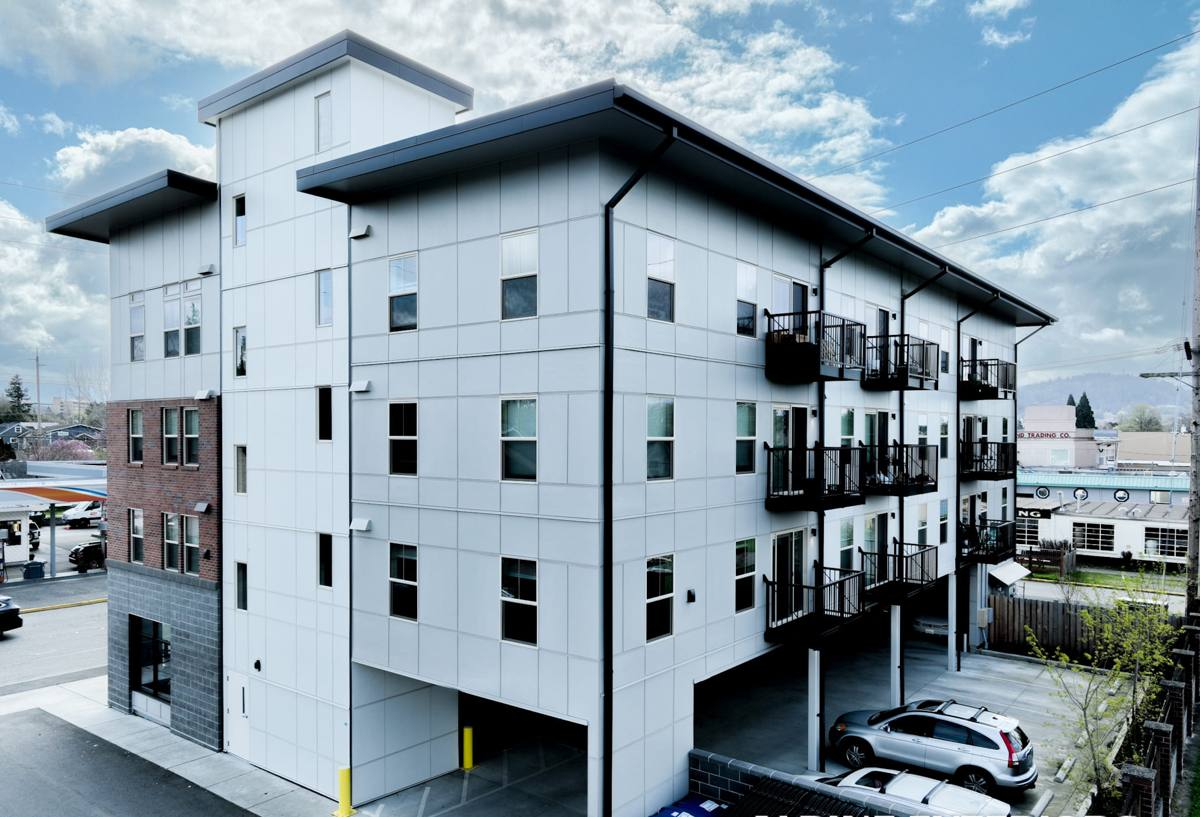
What Salt Air, Rain, and Moss Actually Do to a Wall
Salt Air and Metal Fasteners
Homes within a few miles of Bellingham Bay get low-level salt exposure carried on the wind, especially on west- and south-facing walls that catch the prevailing weather. Salt air doesn't rot siding directly, but it accelerates corrosion on anything metal — nail heads, flashing, trim fasteners — and corroding fasteners are one of the most common reasons siding starts to fail early, well before the siding material itself would have given out. This is a fastener and flashing detail as much as it is a "siding" detail.
Driving Rain and Wind-Loaded Water
Whatcom County doesn't just get a lot of rain — a meaningful share of it arrives sideways, pushed by wind off the Strait. That matters because siding isn't just shedding water that falls on it vertically; it's resisting water being forced up and under laps, around penetrations, and into any gap where the installer cut a corner. A siding system rated for a dry climate, or installed with minimal-code clearances, gets tested harder here than the spec sheet assumed.
Moss, Algae, and Shade
Birchwood's tree canopy and the region's long damp season together create ideal conditions for moss and algae growth on north-facing and shaded walls. This is mostly a cosmetic and maintenance issue rather than a structural one, but it's a real factor in choosing a siding product — some materials hold moisture and organic growth in their surface texture in a way that's hard to reverse without damaging the finish, while others shed it more easily and clean up without much drama.
Why Fiber Cement Is the Right Material Here
Fiber cement is cement, sand, and cellulose fiber, and it doesn't rot, doesn't feed insects, and doesn't swell and shrink with moisture the way wood-based sidings do. That's the baseline reason it holds up better than wood composite products in a wet coastal climate. But not all fiber cement is finished or engineered the same way, and the finish is where a lot of the real-world performance difference shows up in a place like Birchwood.
We install James Hardie exclusively — not as a brand preference, but because Hardie is the fiber cement manufacturer that engineers its products by climate zone and backs the factory finish with a real warranty. We don't install LP SmartSide, vinyl, Cemplank, Allura, or primed wood siding, and we're upfront with homeowners about why: those products each have honest trade-offs — moisture sensitivity, field-applied paint that fails faster than factory finish, thinner warranty coverage, or installation tolerances that are easy to get wrong — that we're not willing to put our name behind on a coastal Whatcom County home.
What ColorPlus Finish Does for a Salt-Air, Moss-Prone Wall
Hardie's ColorPlus finish is baked on in a factory under controlled conditions, which gives it more even coverage and better adhesion than field-applied paint, and a longer color life before it needs repainting. On a wall that's dealing with salt air and repeated wet-dry cycling, a finish that isn't peeling or chalking early is the difference between a wall that stays low-maintenance and one that needs attention every few years.
Choosing the Right Hardie Product Line for the Site
Hardie makes several siding profiles and engineers its boards in climate-specific "HZ" formulations. For Whatcom County, that generally means the HZ5 formulation, engineered for wetter, more freeze-variable climates than the HZ10 line built for the Southeast. Beyond the climate engineering, the right profile depends on the house and the specific wall exposure:
| Product | Best fit | Why it matters in Birchwood |
|---|---|---|
| HardiePlank lap siding | Most home styles, most exposures | Traditional look, wide color range, the most field-proven option in wet coastal conditions |
| HardiePanel vertical siding | Accent walls, modern facades, gable ends | Fewer horizontal laps means fewer water-entry points on high-exposure walls |
| HardieShingle siding | Craftsman and cottage-style homes | Detailed look without the maintenance burden of real cedar shingle in a damp climate |
| HardieTrim boards | Corners, window and door trim, fascia | Matches the wall system so trim doesn't become the weak point in the envelope |
On a shaded, moss-prone north wall, we'll also talk through color selection — lighter, low-sheen ColorPlus tones tend to show algae staining less than very dark colors, though no exterior finish is immune to it if the wall never gets sun or airflow.
What a Correct Installation Actually Involves
Fiber cement performs the way it's supposed to only when it's installed to spec, and in a climate like this, the installation details matter more than the material choice. A few things we treat as non-negotiable on every Birchwood job:
- Correct fastener type and spacing — stainless or hot-dip galvanized fasteners, driven per Hardie's specification, not just "close enough," given how salt air accelerates corrosion on the wrong metal
- Proper clearances at grade, roofline, and deck ledgers — Hardie requires minimum gaps to keep siding out of standing water and splash-back, which is easy to shortcut and expensive to ignore
- Correct lap and joint flashing at every horizontal seam and butt joint, not just at windows and doors
- A functioning weather-resistive barrier and rainscreen gap behind the siding, so any water that does get past the surface has somewhere to drain and dry
- Caulking only where Hardie's install guide calls for it — over-caulking traps moisture just as often as under-caulking lets it in
- Painted or factory-finished cut edges, since a raw cut edge is the fastest path for moisture into the board
Every one of these is a place where a rushed or unfamiliar crew can technically "get siding on the wall" while quietly building in a callback for three years later.
How the Process Works
1. On-Site Assessment
We walk the house, look at wall exposures relative to prevailing wind and sun, check the current siding and sheathing condition where visible, and identify any moisture damage that needs to be dealt with before new siding goes up — no new siding should ever go over an existing moisture problem.
2. Product and Color Selection
We go through profile options, HZ5-engineered boards, and ColorPlus color selection with the exposure and shading of each wall in mind, not just the front elevation.
3. Prep and Weather Barrier
Removal of old siding, sheathing repair as needed, and installation of the weather-resistive barrier and rainscreen system that gives the wall a drainage path behind the new siding.
4. Installation to Manufacturer Spec
Boards, fasteners, flashing, and clearances installed to Hardie's published specifications — this is what keeps the manufacturer's warranty intact and what actually determines how the wall performs in Whatcom County's weather.
5. Trim, Caulk, and Touch-Up
Final trim work, factory-finish touch-up on any field-cut edges, and a walkthrough so the homeowner knows what maintenance, if any, to expect.
What Drives Cost on a Birchwood Job
Every house is different, but a few factors consistently move the price on fiber cement siding jobs in this area:
| Factor | Why it affects cost |
|---|---|
| Existing siding removal and disposal | Tear-off labor and disposal fees add time and cost before install even starts |
| Sheathing or moisture damage found underneath | Rot repair behind old siding is common on older Birchwood homes and has to be fixed before re-siding |
| Wall complexity | Dormers, multiple gables, and cut-up facades take more labor per square foot than a simple rectangular wall |
| Profile choice | Lap, panel, and shingle siding differ in material and labor cost |
| Trim and accent detail | Custom trim packages and accent-wall treatments add scope beyond base siding |
| Access and site conditions | Steep lots, mature trees close to the house, and tight setbacks affect staging and labor time |
We give honest, itemized estimates rather than a single "per square foot" number pulled out of the air, because the range on any of these factors can be significant.
Why It Matters That the Crew Already Works Birchwood
A crew that installs siding across a range of climates tends to fall back on generic, code-minimum details. A crew that regularly works Birchwood and the surrounding Bellingham neighborhoods already knows which walls in this kind of setting take the worst of the wind-driven rain, where moss problems show up first, and how the salt air off the bay factors into fastener and flashing choices. That's not a marketing point — it shows up directly in how few callbacks a house needs five and ten years out.
Caring for Fiber Cement Siding After It's Installed
One of the real advantages of a correctly installed Hardie system is how little upkeep it asks for compared to wood or wood-composite siding. That said, a few habits go a long way in this climate:
- Rinse shaded, moss-prone walls with a garden hose once or twice a year rather than letting growth build up over multiple seasons
- Keep gutters clear so overflow isn't running down the wall face repeatedly
- Trim back vegetation and tree limbs that keep a wall shaded and damp longer than it needs to be
- Avoid pressure washing directly into laps and joints — a soft wash is enough and won't force water behind the siding
- Have caulking and flashing spot-checked every few years, especially after major storms
If you're weighing a siding replacement on a Birchwood home and want a straight answer about what your walls actually need given their exposure, we're glad to take a look. The estimate is free, there's no pressure, and you'll get a clear explanation of what we'd recommend and why — just fill out the form below.