 Bellingham Siding
 Siding Repair in Birchwood: A Different Job Than It Looks Like
From the street, a siding repair in Birchwood usually looks simple: a cracked board here, a soft spot near a downspout there, a patch of paint that won't stop peeling. But in this part of Whatcom County, what's visible on the surface is rarely the whole story. Bellingham's marine climate — salt-laden air off the bay, long stretches of driving rain, and a moss season that can run most of the year on shaded north walls — works on siding from both sides at once. A repair that only addresses the visible damage without checking what's happening behind the cladding tends to fail again within a year or two.
This page is about doing that job right, specifically for Birchwood homes, and specifically as a repair — not a sales pitch to replace siding you don't need to replace yet.
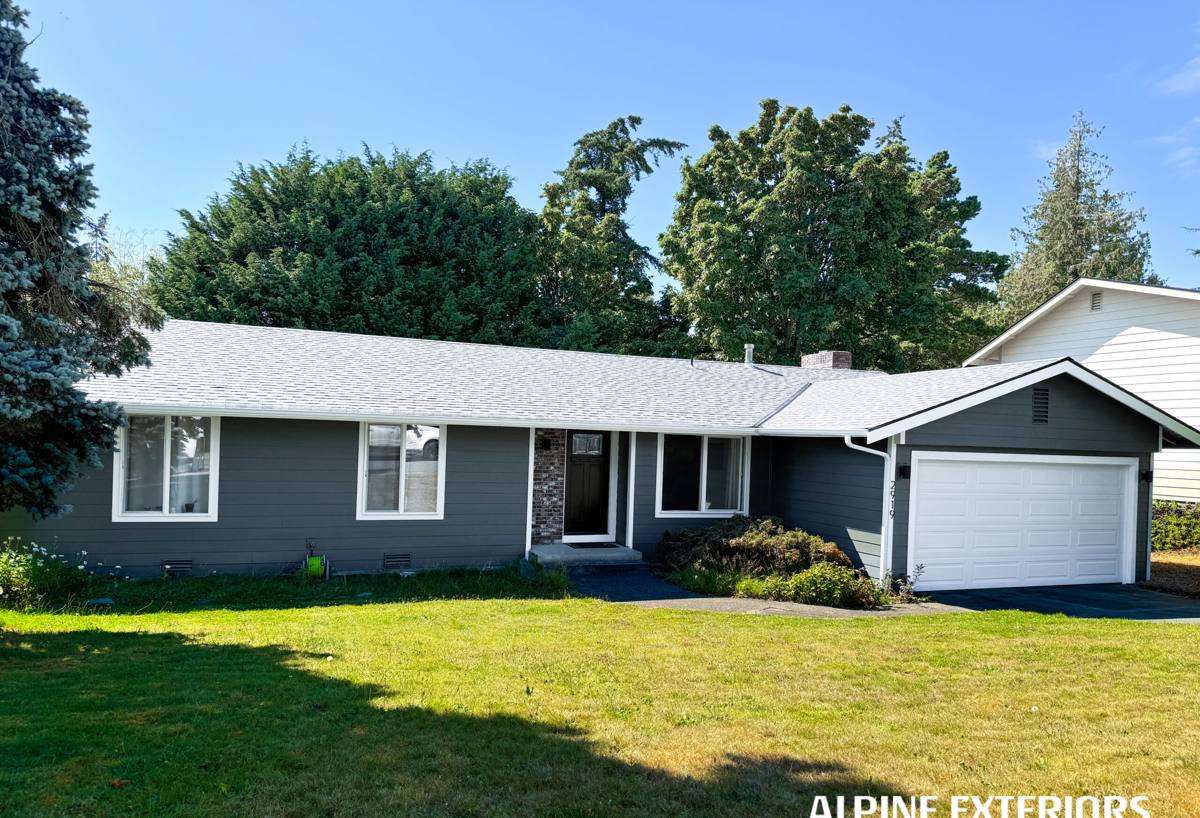
What Bellingham's Climate Actually Does to Siding
Salt Air and Corrosion
Homes closer to Bellingham Bay pick up airborne salt that settles on exterior surfaces and accelerates the breakdown of fasteners, flashing, and unprotected wood fiber. It doesn't just affect metal — salt film holds moisture against the siding surface longer than plain rainwater would, which slows drying time after every storm.
Driving Rain and Wind-Driven Water
Whatcom County storms often come with enough wind to push rain sideways into laps, seams, and trim joints instead of letting it run straight down. Siding systems are designed to shed water moving vertically; wind-driven rain finds the gaps in that design, especially around windows, corner boards, and anywhere caulk has aged past its service life.
Moss, Shade, and Prolonged Dampness
North- and west-facing walls under tree cover in Birchwood can stay damp for days after a rain event. Moss and algae take hold in that environment, and once established they hold water directly against the siding surface around the clock. On wood-based products, that constant dampness is what starts rot; on any product, it's what causes premature coating failure and staining.
None of this means Birchwood is a bad place to own a house with siding — it means siding here needs to be repaired by someone who understands why it failed, not just someone willing to swap a board.
Signs a Birchwood Home Needs a Siding Repair
Some of these are obvious from the ground; a few only show up once you know what to look for.
- Soft, spongy, or crumbling siding when pressed near the bottom edge of boards or below windows
- Paint that's bubbling, peeling, or alligatoring in one localized area rather than across the whole wall
- Visible gaps opening up at butt joints, corner boards, or trim where caulking has shrunk and cracked
- Persistent moss or dark streaking on the same section of wall after every cleaning
- Warping, buckling, or boards that no longer sit flat against the wall plane
- Interior signs — a musty smell, peeling interior paint, or a soft spot on an exterior wall — that point to moisture getting past the siding entirely
- Fastener heads showing rust streaks or starting to back out of the siding face
One or two of these on an otherwise sound wall is usually a straightforward repair. Several of them clustered in the same area, or damage that shows up in more than one spot on the house, is worth a full inspection before anyone starts patching.
What a Correct Siding Repair Actually Involves
A repair that lasts starts before any siding comes off, and it doesn't end when the new piece goes up.
1. Find the Moisture Source First
Damaged siding is a symptom. If water is getting in around a window, through a failed kick-out flashing, or through a gap at a roof-to-wall intersection, replacing the siding without fixing that entry point just buys a year or two before the same spot fails again. We check flashing, caulking, grading, and gutter performance around any damaged area before deciding what the repair actually needs to include.
2. Remove Only What's Compromised — But Check Further
Damaged boards come off, and the sheathing and weather-resistive barrier (the house wrap or building paper behind the siding) get inspected while it's exposed. This is the point where a repair either gets done right or gets done fast. Soft sheathing, saturated insulation, or a torn weather barrier need to be addressed now — covering them back up with new siding doesn't fix them.
3. Match the Material and the Finish
For repairs on homes already sided in James Hardie fiber cement, we match the exact profile and reorder factory-finished ColorPlus boards so the patch doesn't read as a patch. Fiber cement doesn't warp or shrink the way wood-based products can, so a properly matched repair blends in and ages at the same rate as the surrounding wall.
4. Reinstall to Spec, Not Just to "Look Fixed"
Correct fastener spacing, proper clearance at the bottom edge, correctly lapped house wrap, and sealed penetrations all matter more than they look like they do from the ground. A repair that's nailed up quickly without those details will move, gap, or take on water again — usually in the same spot.
5. Finish and Blend
Caulking, touch-up paint or factory-matched ColorPlus finish, and a final check that the repaired section sheds water the same way the rest of the wall does.
Repair or Replace? How We Actually Decide
Homeowners in Birchwood often assume any siding damage means the whole house needs new siding. Sometimes that's true — but often it isn't, and an honest contractor should be willing to tell you when a repair is the right call.
| Factor | Points Toward Repair | Points Toward Full Replacement |
|---|---|---|
| Extent of damage | Isolated to one or two areas | Recurring across multiple walls or elevations |
| Underlying sheathing | Dry and sound once exposed | Soft, rotted, or saturated in several spots |
| Age of existing siding | Mid-life, otherwise performing well | Near or past its expected service life |
| Cause of damage | Single identifiable event or flashing failure, now correctable | Systemic moisture intrusion tied to the original installation |
| Material match | Discontinued or mismatched product not a concern | Existing siding can't be reasonably matched or is a product we don't stand behind |
If a full inspection turns up moisture problems in more than a couple of areas, we'll say so — a series of one-off repairs on a wall that's failing systemically usually costs more over a few years than doing the replacement once, correctly.
Why We Repair With James Hardie, Not Whatever's Cheapest
We install and repair exclusively with James Hardie fiber cement siding. We don't install vinyl, LP SmartSide, Cemplank, Allura, or primed wood products, and that standard carries into repair work too. On a Hardie-sided home, repairs use matched factory ColorPlus boards, so the patch is dimensionally and visually consistent with the rest of the house and carries the same non-combustible, moisture- and pest-resistant performance as the original installation.
If your Birchwood home currently has a different siding product and needs a patch repair, we'll still take an honest look and tell you what a same-product patch versus a partial Hardie conversion would involve — including the visual seam that comes with mixing materials — so you can decide with real information instead of guesswork.
How Our Process Works in Birchwood
- Inspection: We walk the exterior, check moisture levels with a meter where damage is suspected, and look behind at least one damaged board before quoting anything.
- Written scope: You get a clear explanation of what's damaged, why, and what the repair includes — not just a price.
- Scheduling around weather: Repair work here has to work around Whatcom County's rain patterns; we plan installation windows to keep exposed sheathing covered and dry.
- The repair itself: Removal, underlying inspection, correction of the moisture source, reinstallation to manufacturer spec, and finish matching.
- Final walkthrough: We show you what was found and what was done before we call it complete.
Why It Matters That We Already Work in Birchwood
A crew that's worked other homes in this part of Bellingham already knows which wall orientations tend to hold moss longest, which older homes in the area were sided with products that are difficult to source replacement pieces for, and how the local building department handles permitting for exterior repair versus full re-siding. That's not marketing — it's the difference between a first guess and knowing what to check first. It also means a faster response when a repair needs to happen before the next round of rain moves through, rather than waiting on a crew that has to drive in from outside the county.
Keeping Repaired Siding in Good Shape Afterward
- Rinse siding annually, and more often on shaded walls, to keep moss and algae from re-establishing
- Keep gutters clear so overflow doesn't run down the wall face repeatedly in the same spot
- Trim back vegetation that keeps a wall section shaded and slow to dry
- Re-caulk joints and trim as needed rather than waiting for a gap to become a leak
- Walk the exterior after major windstorms and check for anything that shifted or came loose
A correctly done repair on Hardie siding shouldn't need attention again for years, but a five-minute seasonal check costs nothing and catches small problems before they become another repair call.
If you're seeing damage, staining, or soft spots on your Birchwood home's siding, we're glad to take a look and give you a straight answer about what it needs — repair or otherwise. Fill out the form below for a free, no-pressure estimate.