 Bellingham Siding
 Metal Roofing for Cordata's Wet, Salt-Touched Climate
Cordata sits far enough from Puget Sound and Bellingham Bay that most homeowners don't think about salt air until they see it — chalky white residue on siding, rust bleeding from fasteners, gutters that corrode faster than they should. Add Whatcom County's driving rain and a moss season that can run eight months out of the year, and a roof here works harder than one almost anywhere else in the state. Metal roofing, installed correctly, is one of the few roofing systems that stands up to all three of those conditions at once instead of just one.
This page covers what metal roofing actually involves for a Cordata home: how the climate shapes the right materials and detailing, what our installation process looks like start to finish, and why local experience on this specific roof type matters as much as the panels themselves.
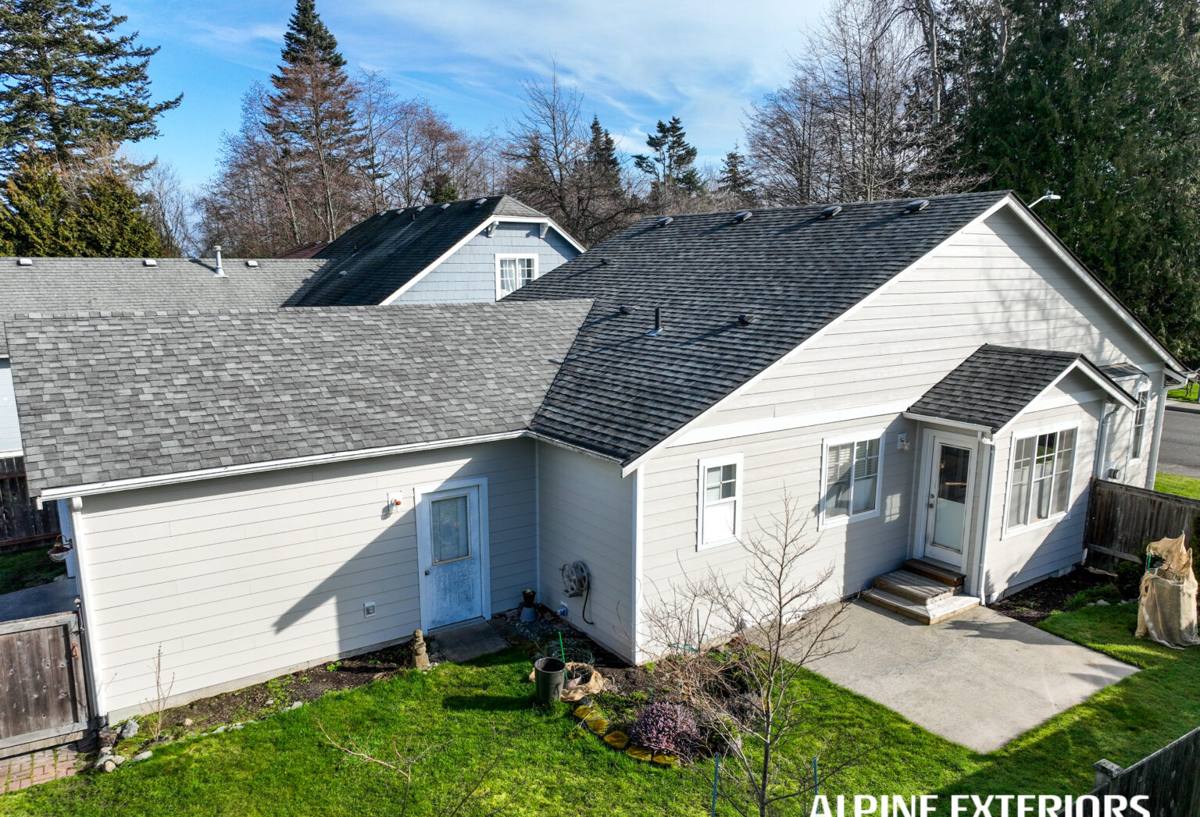
What Bellingham-Area Weather Does to a Roof
Three climate factors drive almost every roofing decision we make in this neighborhood:
Salt Air
Cordata isn't waterfront, but Whatcom County's marine air still carries salt inland, especially on windy days off the Sound. Salt accelerates corrosion on any exposed metal — fasteners, flashing, gutters — long before it visibly damages the main roofing material. This is why fastener choice and coating quality matter more here than in inland Washington.
Driving Rain
Storms in this part of the county rarely fall straight down. Wind-driven rain gets pushed sideways under poorly lapped flashing, around undersized drip edges, and into any gap a standard installation might leave unsealed. A roof that sheds water fine in a calm rain can still leak during a windstorm if the underlayment and flashing details weren't built for lateral water movement.
Moss Season
Bellingham's long wet season, mild temperatures, and tree cover give moss and algae months to establish themselves on any roof surface that stays damp and shaded. On asphalt shingles, moss lifts tabs and traps moisture against the roof deck. Metal roofing doesn't give moss the same foothold, but valleys, low-slope sections, and areas under overhanging trees still need to be detailed to shed water and stay clear.
Why Metal Roofing Fits This Climate
Metal roofing isn't the right fit for every home or every budget, but for Cordata's conditions it solves several problems at once:
- Steel and aluminum panels don't absorb water, so they don't provide the damp surface moss and algae need to take hold the way organic shingle granules do
- A properly coated panel resists the corrosion that salt air causes to lesser metals and exposed fasteners
- Standing seam profiles shed wind-driven rain more reliably than lapped systems because the water path never crosses an exposed seam
- Steep-slope and low-slope sections both perform well when the panel type and underlayment are matched to the pitch
- A correctly installed metal roof typically outlasts asphalt shingles by decades, which matters given how much this climate shortens the life of lower-grade materials
None of that happens automatically just because the material is metal. The installation details below are what actually determine whether a metal roof performs the way it's supposed to.
Panel Types We Install
Not every metal roofing system is built the same way, and the right choice depends on your roof's pitch, the look you want, and your budget. The two systems we install most often in this area:
| Panel Type | How It's Fastened | Best For | Trade-Offs |
|---|---|---|---|
| Standing Seam | Concealed clips, no exposed fasteners on the field of the panel | Main roofs, homes prioritizing longevity and a cleaner look | Higher material and labor cost; requires experienced installation |
| Exposed-Fastener (Ag-Panel) | Screws driven through the panel face into the deck or purlins | Outbuildings, shops, lower-budget projects | Fasteners and washers age faster in salt air and need periodic inspection |
For most primary residences in Cordata, we recommend standing seam because it removes the weak point exposed fasteners create over a 20- or 30-year lifespan in this climate. Exposed-fastener panels are a reasonable choice for a detached garage or shop where budget matters more than a multi-decade maintenance-free finish.
What a Correct Installation Actually Involves
The panels get the attention, but most metal roof failures we're called to inspect trace back to what's underneath or around them, not the panels themselves.
Underlayment
We use a high-temperature synthetic or self-adhered underlayment rated for the wind-driven rain this area sees, not a builder-grade felt that degrades under a metal roof's temperature swings.
Flashing and Water Management
Valleys, chimneys, skylights, and wall transitions are where roofs actually leak. Every one of these details gets step flashing, counterflashing, or a formed valley pan sized for real rain volume, not caulk asked to do a metal panel's job.
Fastener and Clip Selection
Fasteners and clips need to be corrosion-resistant and compatible with the panel metal itself — mixing incompatible metals causes galvanic corrosion that can eat through a panel from the inside of a fastener hole outward. This is a detail that's easy to get wrong and expensive to fix later.
Ventilation
Metal roofs still need a ventilated attic or roof assembly underneath to manage condensation. Skipping proper ridge and intake ventilation can trap moisture against the underside of the deck, which causes rot even though the roof surface itself never leaked.
Our Process
- Inspection and measurement — we walk the roof, check the deck condition, and note pitch, valleys, and any existing damage or moss buildup
- Written estimate — panel type, underlayment, flashing plan, and total cost laid out before any work starts
- Tear-off or overlay decision — some roofs can accept metal panels over existing shingles if the deck is sound; most Cordata re-roofs call for a full tear-off given deck moisture history in this climate
- Deck repair — any soft or rotted decking gets replaced before underlayment goes down, not covered up
- Underlayment and flashing installation — the waterproofing layer and all transition details go in first
- Panel installation — panels are run, seamed or fastened, and trimmed to the roof's actual geometry
- Final walkthrough — we review the finished roof with you and confirm gutters, vents, and penetrations are properly sealed and flashed
Cost Factors for a Cordata Metal Roof
Every roof is different, so exact pricing depends on your home's size, pitch, and condition. These are the factors that move the number most:
| Factor | Why It Matters |
|---|---|
| Panel type | Standing seam costs more upfront than exposed-fastener panels but needs less long-term maintenance |
| Roof pitch and complexity | Steep pitches, multiple valleys, and dormers add labor time and flashing work |
| Tear-off vs. overlay | Removing old roofing and repairing the deck adds cost but avoids covering hidden damage |
| Coating and finish | Higher-grade coatings resist salt-air corrosion longer but cost more per panel |
| Access and site conditions | Steep lots, mature trees, or limited driveway access can affect staging and labor time |
We'll walk through these factors specific to your home during the estimate so you know what's driving the number, not just what the final total is.
Permits and Inspections in Whatcom County
Most re-roofing projects within Bellingham city limits and unincorporated Whatcom County require a building permit, and the work typically gets inspected at specific stages before it's signed off. Requirements can vary depending on the scope of the project and where your property sits, so we handle the permitting process as part of the job rather than leaving you to sort it out. That includes pulling the permit, scheduling any required inspections, and making sure the finished roof meets code for wind and weather exposure in this area.
Skipping this step, or hiring a crew that does, can leave you without a paper trail if you ever need it for insurance or resale. It's a detail that's easy to overlook when comparing bids, but it protects you long after the roof is installed.
Maintenance Through Moss Season
A metal roof needs far less upkeep than shingles, but "none" isn't accurate for this climate. A short annual routine keeps a metal roof performing the way it should:
- Clear leaves and debris from valleys and gutter lines before the fall rains start
- Check for moss or algae buildup in shaded, low-slope sections and remove it gently — no pressure washing directly at seams
- Inspect fasteners and flashing on exposed-fastener panels for early rust or backed-out screws
- Trim back tree limbs that keep sections of the roof shaded and damp longer than the rest
- Confirm gutters and downspouts are directing water away from the foundation, not just off the roof edge
Why Local Experience in Cordata Matters
A crew that already works this neighborhood knows the practical realities that don't show up in a spec sheet: how the tree cover on certain lots keeps roofs shaded longer, how wind off the Sound tends to drive rain from a particular direction during winter storms, and what Whatcom County's permitting and inspection process actually requires for a re-roof. That local knowledge shows up in decisions like flashing depth, underlayment choice, and where extra attention goes on a given roof — not in anything a homeowner would notice until it either does or doesn't hold up through a wet Bellingham winter.
It also means we're not learning this climate on your roof. We've seen what fails here and why, and we build accordingly.
Signs Your Current Roof May Need Attention
If any of the following apply to your home, it's worth having a roof looked at before the next major storm season:
- Heavy moss growth that keeps returning after cleaning
- Rust streaks running down siding or gutters from roof fasteners or flashing
- Visible sagging along the roofline or in valleys
- Granule buildup in gutters from aging asphalt shingles
- Interior water stains that appear or worsen during wind-driven storms specifically
If you're weighing metal roofing for your Cordata home, we're happy to take a look and walk you through what your specific roof needs — no pressure, no obligation. Fill out the form below to schedule a free estimate.