 Bellingham Siding
 Siding Installation in Cordata: What the Job Actually Involves
Cordata is one of the newer growth areas of Bellingham, with a housing mix that runs from recent subdivisions and townhomes to older established homes on larger lots. That range matters for siding installation, because a house built in the last decade and a house built forty years ago need different things from a new siding job even when they're a few blocks apart. What doesn't change block to block is the climate. Whatcom County's marine weather, salt-tinged air drifting in from the Sound, driving rain that doesn't fall straight down, and a moss season that runs most of the year, works on every wall in Cordata the same way it works on walls closer to the water. A siding installation that ignores that reality is starting behind before the first board goes up.
This page is specifically about installation, the actual process of getting new siding onto a Cordata home correctly, not just material selection. Picking the right product is one decision. Getting it installed to spec, with the flashing, fastening, and water management details done right, is what actually determines whether that product performs for the next thirty or forty years or starts failing in five.
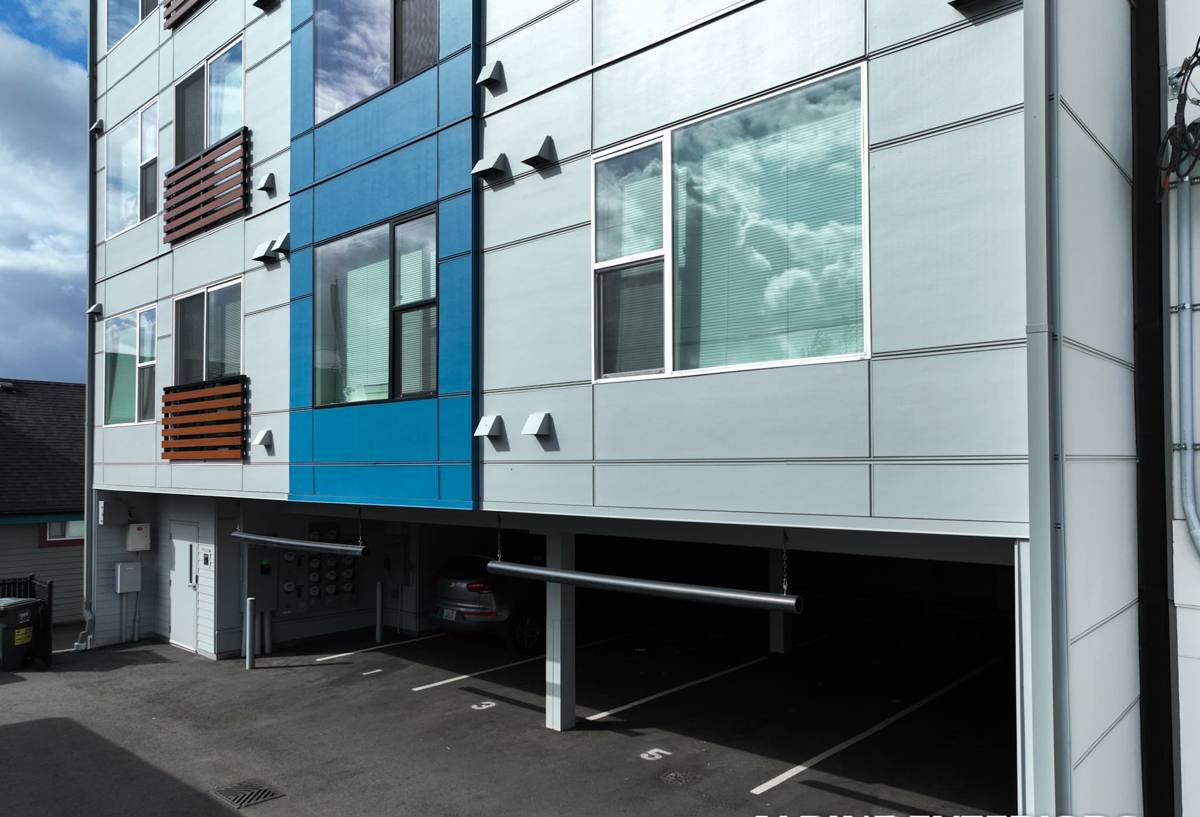
Why Installation Quality Matters More Than the Brand Name on the Box
Most siding failures we get called out to inspect in Whatcom County aren't material failures. The board itself is usually fine. What failed is a flashing detail, a fastening pattern, a gap left where two pieces of trim should have been sealed, or house wrap that wasn't lapped correctly behind a window. Those are installation problems, not product problems, and they show up regardless of what brand is on the wall. A premium siding product installed poorly will fail faster than a mid-grade product installed correctly. That's the reason we treat installation as its own discipline, not an afterthought to picking a color and a plank width.
What Wind-Driven Rain Exposes
Straight-down rain is forgiving. It hits a wall, runs down, and sheds off at the bottom. Wind-driven rain, the kind Cordata gets regularly off passing fronts, pushes water sideways and upward into laps, seams, and trim joints that were never meant to see water from that angle. An installation crew that doesn't account for that ends up with a wall that looks fine on a dry day and takes on moisture every time the wind picks up during a storm.
What a Long Moss Season Does to a New Installation
Moss doesn't cause siding failure on its own, but it's a symptom of a wall that isn't drying out between rain events, and a long moss season means Whatcom County walls get fewer dry stretches than most parts of the country. That makes drainage behind the siding, not just on the surface, one of the details that separates an installation that lasts from one that doesn't. A rainscreen gap, correct weep points, and house wrap that actually functions as a drainage plane are what let a wall dry out even during a wet stretch that runs for weeks.
What a Correct James Hardie Installation Involves, Step by Step
We install James Hardie fiber cement siding exclusively, and the installation sequence below is specific to how that product is engineered to perform. Skipping or rushing any of these steps is where a good product starts to underperform its rating.
1. Substrate Inspection and Repair
Before any new siding goes up, the sheathing underneath gets inspected for rot, soft spots, or moisture damage from the old siding system. On homes where the existing siding has been failing quietly for years, this is often where hidden problems surface. New siding over damaged sheathing just hides the problem for a while longer.
2. House Wrap and Weather-Resistive Barrier
A properly lapped, correctly taped weather-resistive barrier is the layer that actually keeps bulk water out of the wall assembly if anything gets past the siding itself. This step is invisible once the job is done, which is exactly why it's one of the most commonly rushed steps on a poor installation.
3. Flashing at Every Penetration
Windows, doors, hose bibs, vents, and any other wall penetration need flashing that directs water back out and away from the wall, not just a bead of caulk. Caulk fails over time; correctly installed flashing doesn't rely on a sealant staying intact for decades to keep water out.
4. Rainscreen Gap Where Called For
A small gap between the back of the siding and the house wrap lets water that does get behind the panel drain and lets the wall breathe and dry out between storms. In a climate with as many wet stretches as Whatcom County gets, this drainage gap matters more than it does in drier regions.
5. Fastening to Manufacturer Spec
James Hardie siding has specific fastener type, spacing, and placement requirements. Fasteners driven too close to an edge, at the wrong depth, or with the wrong spacing can cause cracking, blow-outs, or reduced wind resistance, none of which show up as a problem on install day but all of which shorten the siding's real service life.
6. Lapped and Sealed Joints
Every horizontal and vertical joint needs to be lapped in the right direction and sealed with a product compatible with the ColorPlus finish. Joints are where wind-driven rain does its worst work, and they're one of the fastest places to spot a rushed installation if you know what to look for.
7. Trim, Caulking, and Final Detail Work
Trim boards, corner details, and touch-up caulking are the last step, and they're also where a lot of the visual quality of the finished job comes from. Clean trim lines and consistent reveals aren't just cosmetic, they're a sign the crew paid attention to the details that matter structurally too.
Our Process for a Cordata Siding Installation
- On-site walkthrough: We look at the whole exterior, not just the siding, sun exposure, drainage patterns, existing trim and roofline details, and any signs of past moisture problems.
- Written scope and estimate: You get a clear breakdown of what's included, from tear-off through final trim, not just a square-footage number.
- Tear-off and substrate check: Old siding comes off and the sheathing gets inspected before anything new goes up.
- Water management first: House wrap, flashing, and any needed rainscreen detail go in before a single piece of visible siding is installed.
- Hardie installation to spec: Fastening, lapping, and joint sealing follow James Hardie's published installation requirements, not shortcuts.
- Final walkthrough: We go over the finished job with you before calling it done.
Why We Only Install James Hardie
We don't offer a menu of siding brands and let price do the deciding. We install James Hardie fiber cement, and only James Hardie, based on what we consistently see on tear-offs and repair calls in this exact climate.
- Non-combustible core: Fiber cement doesn't feed a fire the way wood-based siding can, which matters for household safety and can matter to insurers as well.
- Factory-applied ColorPlus finish: Cured under controlled conditions at the factory, not brushed on at the job site, which gives it real resistance to fading, chalking, and moisture intrusion over time.
- Climate-engineered HZ product lines: Hardie's HZ5 formulation is built for regions with heavy sustained moisture and freeze-thaw cycling, a closer match to Whatcom County than a generic national product.
- Dimensional stability: Fiber cement doesn't swell, cup, or warp the way engineered wood can after repeated wet-season moisture cycles.
- Strong transferable warranty: Backed by one of the more substantial warranty structures in the industry, provided the installation follows spec.
We don't install LP SmartSide, vinyl, Cemplank, Allura, primed spruce, or cedar. Those are legitimate products and plenty of contractors install them well. We made a professional call that in a climate this consistently wet, standing behind one system we know inside and out serves Cordata homeowners better than offering a cheaper option that quietly shifts maintenance risk onto them later.
New Construction vs. Re-Siding: Different Installation Considerations
Cordata's mix of newer subdivision homes and older established houses means we do both new-construction-style installations on homes with intact, modern sheathing and full re-siding jobs on older homes where the existing wall assembly needs closer inspection. The core installation standards don't change, but the sequence does.
| Situation | What's Different | What to Expect |
|---|---|---|
| Newer home, first re-side or original siding upgrade | Sheathing and framing are usually sound | Faster tear-off, installation is the main focus |
| Older home, aging siding being replaced | Higher chance of hidden moisture damage under old siding | Substrate repair may add time and cost before new siding goes on |
| Home with a history of past leaks or repairs | Flashing and window integration need closer inspection | We flag and address problem areas before closing the wall back up |
| Home with mature landscaping or heavy shade | Slower-drying wall sections | Extra attention to drainage and rainscreen detail on shaded elevations |
Signs Your Cordata Home's Siding Needs Attention
- Moss or dark staining that comes back quickly after cleaning, especially on shaded or north-facing walls
- Soft or spongy siding, particularly near the bottom of the wall or around windows and doors
- Paint that's peeling, bubbling, or chalking on siding boards or trim
- Visible gaps at seams, corners, or trim joints
- Cracked, chipped, or missing siding sections after wind events
- Rust staining around fasteners, an early sign of sustained moisture and air exposure
- Rooms that feel drafty or harder to heat than they used to, which can point to a wall assembly that's no longer sealing properly
What to Ask Before Hiring a Siding Installer
- Confirm an active Washington state contractor license and current insurance
- Ask exactly which siding brand and product line they install, and why they chose it
- Ask how they handle hidden substrate damage found during tear-off
- Ask them to walk you through their flashing and house wrap sequence, not just "we install siding"
- Get a written scope of work, not a verbal estimate
- Ask whether the crew installing your siding is direct employees or subcontracted out
Why a Crew That Already Works in Cordata Matters
A crew that installs siding regularly in and around Cordata has already seen how this specific stretch of Whatcom County's climate behaves on real walls over a full year, not just what a spec sheet says. That translates into practical decisions on installation day: which wall orientations stay damp longest, where extra flashing attention actually pays off, and which details are worth the extra time so you're not looking at a callback two winters from now. Local installation experience is also what lets us give you an honest answer about your specific house instead of a generic script, because we've likely already worked on something similar nearby.
If you're planning a new siding installation in Cordata, or you just want an honest opinion on whether your current siding is holding up the way it should, we're glad to take a look. Reach out using the form below to schedule a free, no-pressure estimate.