 Bellingham Siding
 Deck Repair Built for Cordata's Wet, Shaded Lots
Cordata sits in north Bellingham, a mix of newer subdivisions and mature landscaping that gives a lot of homes here something in common: decks that spend a good part of the year damp and shaded. Between Whatcom County's long rainy season, the salt-tinged air drifting in off Bellingham Bay, and yards with enough tree cover to keep moisture sitting on wood surfaces for days at a time, decks in this neighborhood age differently than decks in drier parts of the state. We repair decks in Cordata regularly, and the damage we see follows a pattern — it's rarely random.
This page covers what deck repair actually means when it's done right for this area, what we look for on an inspection, and how to tell the difference between a deck that needs a repair and one that's telling you it's done.
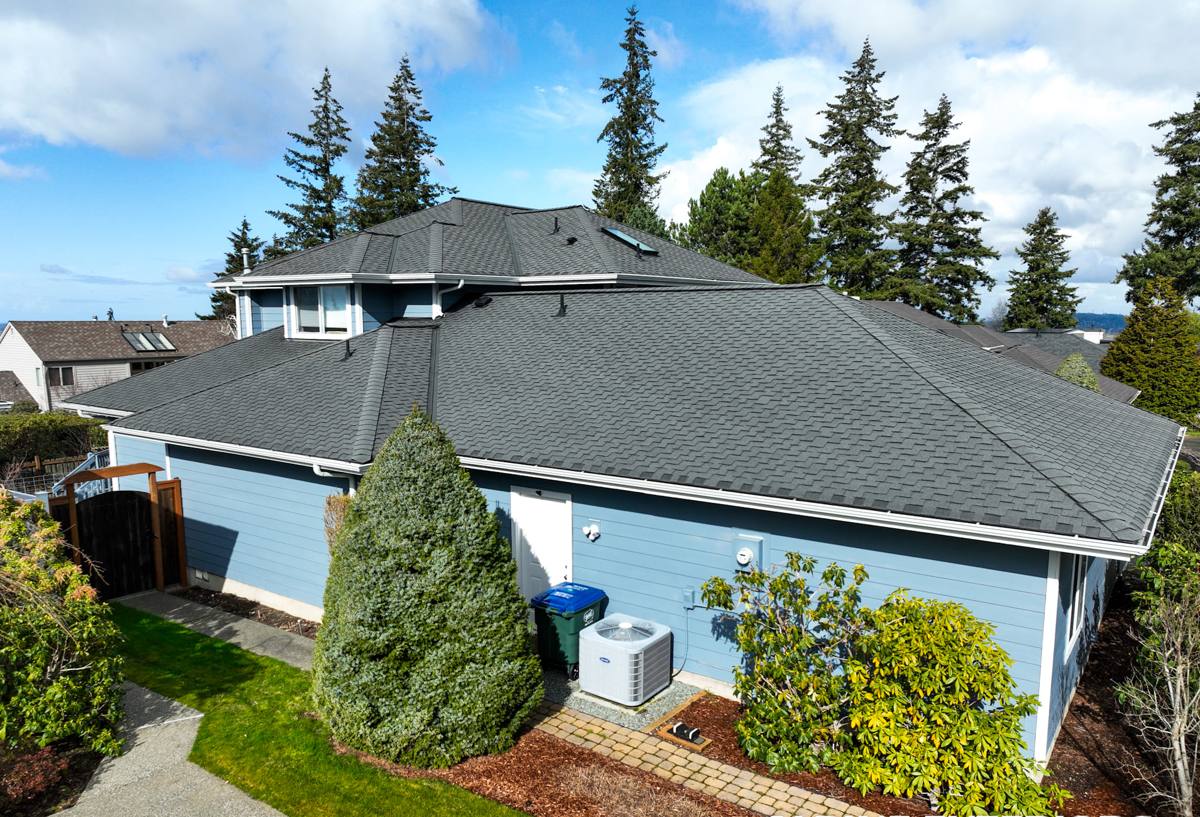
What the Local Climate Does to a Deck
A deck doesn't fail because a few years pass. It fails because water gets somewhere it shouldn't and stays there. In Cordata, three conditions drive almost every repair call we get:
Driving rain and standing moisture
Whatcom County doesn't just get rain — it gets long stretches of steady, wind-driven rain that finds gaps in flashing, works into end grain, and pools in spots with poor drainage. A deck board that's slightly cupped or a ledger board with failed flashing will hold water long after the rain stops, and that's exactly where rot starts.
A long moss season
Shaded lots, tree cover, and mild temperatures mean moss and algae have a much longer growing window here than in most of the country. Moss on a deck isn't just cosmetic — it holds moisture against the wood surface, keeps boards from drying between rain events, and accelerates rot underneath a surface that can still look mostly fine from a few feet away.
Salt air and fastener corrosion
Proximity to Bellingham Bay means a steady trace of salt in the air, even well inland. Over time this speeds up corrosion in nails, screws, and joist hangers that weren't rated for exterior or coastal-adjacent use. Once fasteners start corroding, they lose holding strength long before the wood around them looks like a problem — which is why so many "surprise" structural issues show up on decks that otherwise looked sound.
Signs a Deck Needs Repair
Most homeowners catch the obvious stuff — a soft board, a wobbly railing. The issues that matter most are often less obvious. Here's what we check for on every inspection:
- Soft, spongy, or spring-like feel underfoot, especially near the house or stair landing
- Green or black staining on boards, posts, or the ledger board where it meets the house
- Gaps opening up between the ledger board and the house siding or trim
- Rust streaks below joist hangers, screw heads, or bolt connections
- Railing posts that flex or rock when pushed sideways
- Stair stringers that feel uneven or bounce under weight
- Persistent moss or algae that regrows within weeks of cleaning
- Visible daylight or gaps where deck boards have shrunk, cupped, or separated
Any one of these can be a minor fix. Two or three together, especially near the ledger board or stairs, usually means the framing underneath needs a real look before anyone touches the surface boards.
What a Correct Repair Actually Involves
A lot of deck "repairs" amount to swapping a bad board and calling it done. That works for a single damaged board with no underlying cause. It doesn't work when the damage is a symptom of a moisture or fastener problem — which, in Cordata, it usually is.
Start with the structure, not the surface
Before we touch decking boards, we check the ledger board connection, the flashing above it, the joists, and the fasteners holding it all together. A deck that looks fine on top can have a ledger board that's slowly separating from the house, or joist hangers that have lost most of their holding capacity to corrosion. Replacing decking over a compromised frame just hides the problem for another season.
Match fasteners and hardware to the environment
Given the salt air and moisture here, we use fasteners and joist hangers rated for exterior and coastal-adjacent exposure — not standard interior-grade hardware that corrodes early. This is one of the most common shortcuts we find on older repairs done by others, and it's usually the reason a "repaired" deck fails again within a few years.
Fix the drainage, not just the symptom
If a deck holds water because of poor slope, missing gaps between boards, or blocked drainage at the ledger flashing, replacing the wood without addressing drainage just resets the clock on the same failure. Part of a correct repair is making sure water has somewhere to go.
Repair or Replace? What Actually Drives That Decision
Homeowners often assume any rot means a full rebuild. That's not always true — but it's also not always a simple board swap. The honest answer depends on where the damage is and how far it's spread.
| Factor | Usually a Repair | Usually a Replacement |
|---|---|---|
| Location of rot | Isolated to a few boards or one section | Spread through ledger board, multiple joists, or main beams |
| Age of the deck | Under 15 years, built to a decent original spec | Older structure nearing the end of its service life |
| Fastener condition | Localized corrosion, easily replaced | Widespread corrosion across hangers and connectors |
| Framing size and code | Meets current spacing and span requirements | Undersized joists or spacing that doesn't meet current code |
| Moisture source | Identifiable and fixable (flashing, drainage, board gaps) | Chronic, structural, or tied to grading/drainage issues |
We'll tell you honestly which side of that table your deck falls on. There's no benefit to us talking you into a full rebuild when a targeted repair will hold up — but there's also no point patching a frame that's already lost its structural margin.
Material Choices When Repairing
When we're replacing boards, framing, or railing components, the material decision matters more here than in drier climates.
Wood repairs
Pressure-treated framing lumber is standard for structural repairs, but the cut ends and any field-drilled holes need to be sealed with an appropriate treatment — untreated cut ends are a common spot where rot restarts within a year or two. For visible decking, cedar is a common local choice for its natural moisture resistance, but it still needs periodic maintenance in a climate this wet.
Composite and PVC decking
For surface boards, composite or PVC decking holds up well against the moss and moisture cycle here because it doesn't absorb water the way wood does, which cuts down on both rot risk and moss adhesion. The trade-off is upfront cost and the fact that it still needs the framing underneath to be sound — composite boards on a rotten frame just delay the same structural problem.
Hardware and connectors
Regardless of what's used for the visible surface, we standardize on corrosion-resistant fasteners and structural connectors throughout the repair, since that's the piece most likely to fail early in this environment if it's not upgraded.
Our Repair Process
We keep this straightforward because deck repair doesn't need to be complicated to be done right:
- Inspection — we check the ledger connection, framing, fasteners, and surface boards, and probe any soft or stained areas to see how far damage extends.
- Written scope and estimate — you get a clear explanation of what's failing, why, and what it will take to fix it, with repair and (if relevant) replacement options laid out honestly.
- Repair — we address the structural issues first, then surface boards, railings, and stairs, using fasteners and materials suited to this climate.
- Cleanup and check — the site is cleaned up and the repaired areas are walked through with you before we call it done.
Why Local Experience in Cordata Matters
A lot of Cordata's housing went in during similar building waves, which means a lot of decks in the neighborhood share the same original construction details — and the same weak points. A crew that already works in this area recognizes those patterns quickly: which ledger flashing details tend to fail first, which shaded lots need extra attention to moss and drainage, and which original fastener choices are due for an upgrade regardless of how the wood looks. That familiarity means a faster, more accurate inspection and fewer surprises once the work starts, instead of learning the neighborhood's quirks on your project.
It also means we're not guessing at what the climate does to a deck over time here — we're repairing the same conditions on a regular basis, on decks a few streets over from yours.
After the Repair: Keeping Moss and Moisture From Coming Back
A repair holds up longer with a little upkeep, especially in a climate with a moss season this long:
- Keep the deck surface swept and clear of leaves and debris where moisture can collect
- Rinse off moss and algae growth before it has time to establish and hold moisture against the wood
- Check the ledger flashing and any board gaps once a year for early signs of water intrusion
- Reseal or restain wood decking on the schedule appropriate for the product used
- Trim back overhanging branches where practical to cut down on shade and debris buildup
If your deck in Cordata has soft spots, persistent moss, rust staining, or just feels less solid than it used to, it's worth having it looked at before those small issues turn into a bigger structural repair. We're happy to come out, take an honest look, and give you a free, no-pressure estimate — use the form below to get started.