 Bellingham Siding
 Building Decks That Hold Up in Cordata's Climate
Cordata sits on the north side of Bellingham, close enough to Bellingham Bay to catch salt-tinged air and close enough to the tree cover common across Whatcom County to stay shaded and damp for long stretches of the year. That combination is tough on outdoor structures, and it's especially tough on decks. A deck here isn't just fighting rain — it's fighting rain that doesn't fully dry between storms, moss and algae that thrive in the shade, and salt-laden moisture that speeds up corrosion on fasteners and hardware. A deck built without that climate in mind will show it within a few seasons: soft boards, a slick green film underfoot, rust streaks bleeding from screw heads, and railings that start to wobble.
We build decks for homeowners throughout Bellingham and Whatcom County, and Cordata's mix of mature tree canopy, damp low-lying yards, and coastal moisture means we approach these projects a little differently than we would a deck in a drier, more open part of town. This page covers what that actually looks like — the materials, the structure, the process, and the maintenance that keeps a Cordata deck solid for decades instead of years.
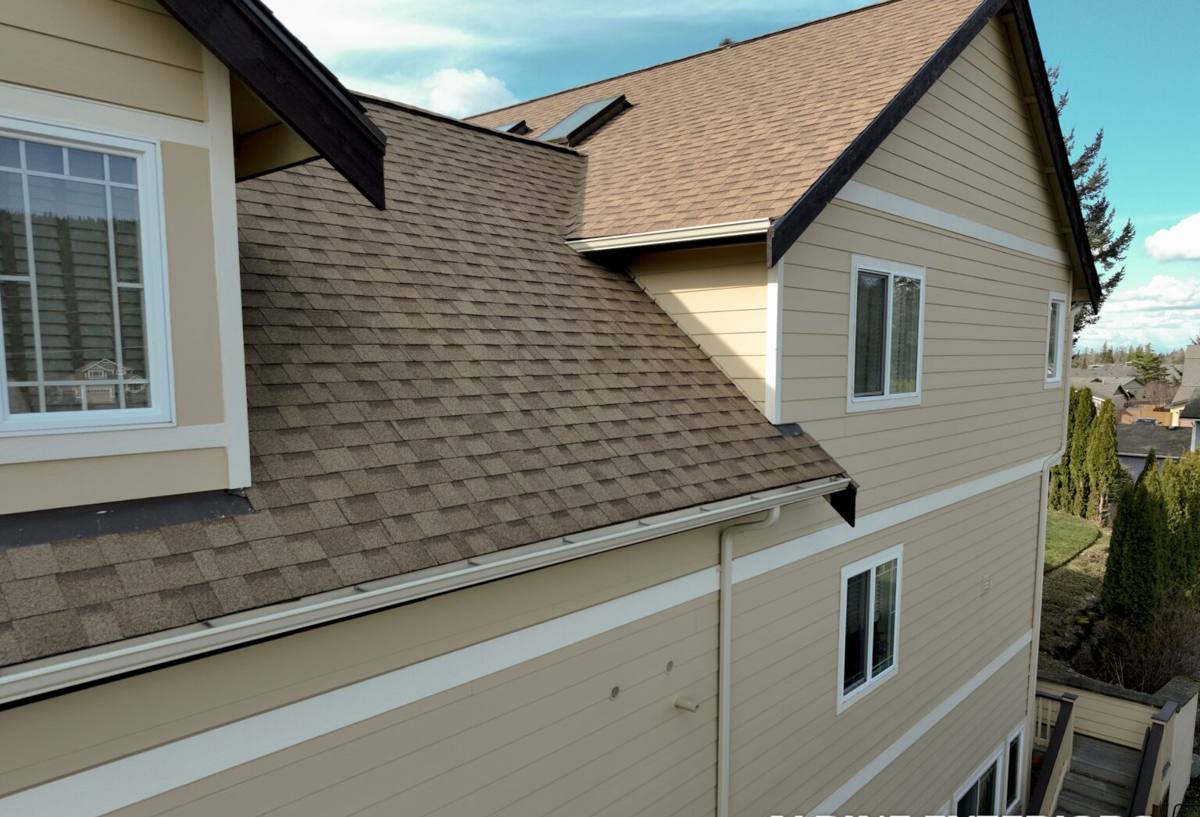
What Cordata Homes Need From a Deck Built to Last
Moss and Algae Are a Design Problem, Not Just a Cleaning Problem
Moss doesn't show up because a deck is dirty. It shows up because moisture sits somewhere long enough to let spores take hold — in the gaps between boards, in shaded corners that never see direct sun, in end grain that wicks water. You can scrub moss off every spring, but if the deck's design traps moisture in the first place, it will always come back. Board spacing, airflow underneath the deck, and how much shade the site gets all matter more than any cleaning product.
Drainage Has to Be Planned, Not Assumed
A lot of Cordata lots have gentle slopes, mature landscaping, and soil that stays saturated for days after a heavy rain. If a deck's footings and structure aren't planned around where that water actually goes, you end up with standing water under the deck, saturated ground around the posts, and a structure that's constantly wet from below even when the top surface has dried. Good drainage planning — grading, gaps at the ledger, and clearance under the frame — is part of the job, not an afterthought.
Choosing Decking Material for a Whatcom County Climate
There's no single "best" decking material — it depends on how much upkeep you want to do and how the site is shaded. Here's how the common options actually perform in a wet, moss-prone yard like the ones common in Cordata:
| Material | Moisture Behavior | Maintenance | Typical Lifespan |
|---|---|---|---|
| Pressure-treated wood | Resists rot when properly sealed, but absorbs water at cuts and fastener holes if not maintained | Annual cleaning and resealing recommended | 15–20 years with upkeep |
| Cedar | Naturally moisture- and insect-resistant, but the surface still needs protection from prolonged wet shade | Cleaning and refinishing every 1–2 years | 20–25 years with upkeep |
| Capped composite | Doesn't absorb moisture into the core; performs well in shaded, damp conditions | Occasional washing, no sealing or staining | 25–30+ years |
| Uncapped composite | More moisture-resistant than wood, but the exposed surface can still hold algae film in heavy shade | Periodic scrubbing to prevent surface staining | 20–25 years |
For heavily shaded Cordata lots where moss is a recurring issue, capped composite tends to be the lowest-maintenance choice. For homeowners who want the look and feel of real wood and are willing to stay on top of yearly cleaning and sealing, cedar or quality pressure-treated lumber are solid, honest choices — they just require more consistent care in this climate than they would in a drier region.
Framing, Fasteners, and Footings: Where Cheap Decks Fail First
The decking boards are the part everyone sees, but the framing underneath is what determines whether a deck lasts. In a wet climate, the details that get skipped on a rushed job are exactly the ones that cause the earliest failures:
- Ledger board flashing — the connection where the deck meets the house is the single most common source of hidden rot if it isn't properly flashed and sealed against the siding.
- Joist protection — uncapped joists sitting in standing moisture will rot from the top down, often invisibly, long before the decking surface shows any problem.
- Corrosion-resistant fasteners — coastal air and constant moisture accelerate rust; using the wrong-grade screws or hangers is a slow, guaranteed failure.
- Footing depth — footings need to be set below the frost line and sized for the soil conditions on site, not just poured to a minimum spec.
- Airflow under the deck — low clearance traps moisture against the framing; height and grading both affect how quickly the underside actually dries.
None of this is visible once the deck is finished, which is exactly why it matters. A deck that looks great for the first year but was framed with shortcuts will start showing problems — soft spots, movement, staining on the underside — well before it should.
Permits and Code Basics in Bellingham and Whatcom County
Most new deck construction and significant deck rebuilds in Bellingham require a building permit, and inspections typically cover footings, framing, and guardrails before the project is signed off. Guardrail height, baluster spacing, and stair requirements are governed by code and aren't optional details — they exist because they prevent real injuries. Footing depth also has to account for local frost depth and soil conditions rather than a one-size-fits-all number.
Homeowners sometimes assume permits are just paperwork, but they're also a second set of eyes on the structural work — footings and framing get inspected before the decking goes down, when problems are still easy to fix. We handle the permitting process as part of the job, so you're not the one tracking down inspections or code requirements.
Our Deck Building Process
- Site visit and design — we walk the yard, check drainage, sun and shade patterns, and existing structures, then talk through material and layout options.
- Material selection — based on your budget, how much shade the site gets, and how much maintenance you want to take on long-term.
- Permitting — we prepare and submit what's needed for the City of Bellingham or the county, depending on the property.
- Footings and framing — footings poured below frost depth, ledger flashed and sealed, joists protected, all fasteners rated for the exposure.
- Decking and railing — boards and rail systems installed per your material choice, with attention to spacing and airflow.
- Final walkthrough — we go over the finished deck together, including what maintenance it will need going forward.
Maintaining a Deck Through Bellingham's Moss Season
Even a well-built deck needs some seasonal attention in this climate. A little regular upkeep prevents the slick, green buildup that makes decks unsafe and prevents small moisture issues from becoming structural ones.
- Sweep leaves and debris out of board gaps regularly — trapped organic matter holds moisture and feeds moss growth.
- Clean with an oxygen-bleach based deck cleaner rather than aggressive pressure washing, which can damage wood fibers and force water into the boards.
- Check and reseal wood decking annually, ideally before the fall rains start.
- Inspect fasteners and hardware yearly for rust or corrosion, especially near the coast.
- Trim back overhanging vegetation to let in more light and improve airflow across shaded sections.
- Check the underside of the deck once a year for standing water, soft framing, or signs of rot near the ledger.
Cost Factors for a Cordata Deck Project
Every deck is priced around its own site conditions, so exact numbers depend on your project, but these are the main factors that move the cost up or down:
| Factor | Why It Affects Cost |
|---|---|
| Size and shape | Larger decks and multi-level or curved designs require more material and labor |
| Material choice | Composite generally costs more upfront than wood but less in long-term maintenance |
| Height and railing | Elevated decks need taller posts, additional bracing, and code-required guardrails |
| Site access and slope | Sloped or hard-to-access lots increase excavation, footing, and labor time |
| Permit complexity | Larger or elevated structures may require engineering review, adding time and cost |
As a general range, homeowners in this area typically see deck projects priced somewhere between roughly $35 and $70 per square foot, depending on material and complexity — but the only way to know what your project will cost is a site visit.
Why Hire a Crew That Already Works in Cordata
A deck built for a dry, open lot in another part of the country doesn't automatically hold up in a shaded, damp Whatcom County yard. Crews who regularly work in and around Cordata know which sites tend to stay wet longest, how much shade a given tree canopy actually produces through the seasons, and where moss and drainage problems tend to show up first. That local pattern recognition shapes real decisions — footing placement, board spacing, material recommendations — before problems ever start.
It also means fewer surprises during permitting and inspection, since we're already familiar with how the City of Bellingham and Whatcom County process these projects. You're not paying for us to learn the local conditions on your job.
If you're planning a new deck or replacing one that's showing its age, we're happy to walk the site with you and talk through honest options for your budget and your yard. There's no pressure and no obligation — just fill out the form below to schedule a free estimate.