 Bellingham Siding
 Roofing in Cordata: A Different Set of Conditions Than People Assume
Cordata sits far enough from downtown Bellingham that homeowners sometimes think their roofs are shielded from the coastal weather that batters properties closer to Bellingham Bay. That's only partly true. Whatcom County's marine climate doesn't stop at the water's edge — salt-laden air still drifts inland on prevailing winds, driving rain still comes in sideways off the Sound during winter storms, and the tree cover that makes Cordata's neighborhoods pleasant to live in also means more shade, more moisture retention, and a longer moss season on north-facing roof slopes. If you're planning a new roof installation here, the job needs to account for all of that, not just meet the minimum code requirements.
A roof that's correctly built for Cordata isn't dramatically different in materials from a roof anywhere else in Whatcom County — but the details of how it's installed, ventilated, and flashed matter more here than they would in a drier climate. Get those details wrong and you're not looking at a failure in twenty years; you're looking at moss colonies, soft decking, and leaks inside of five to eight years.
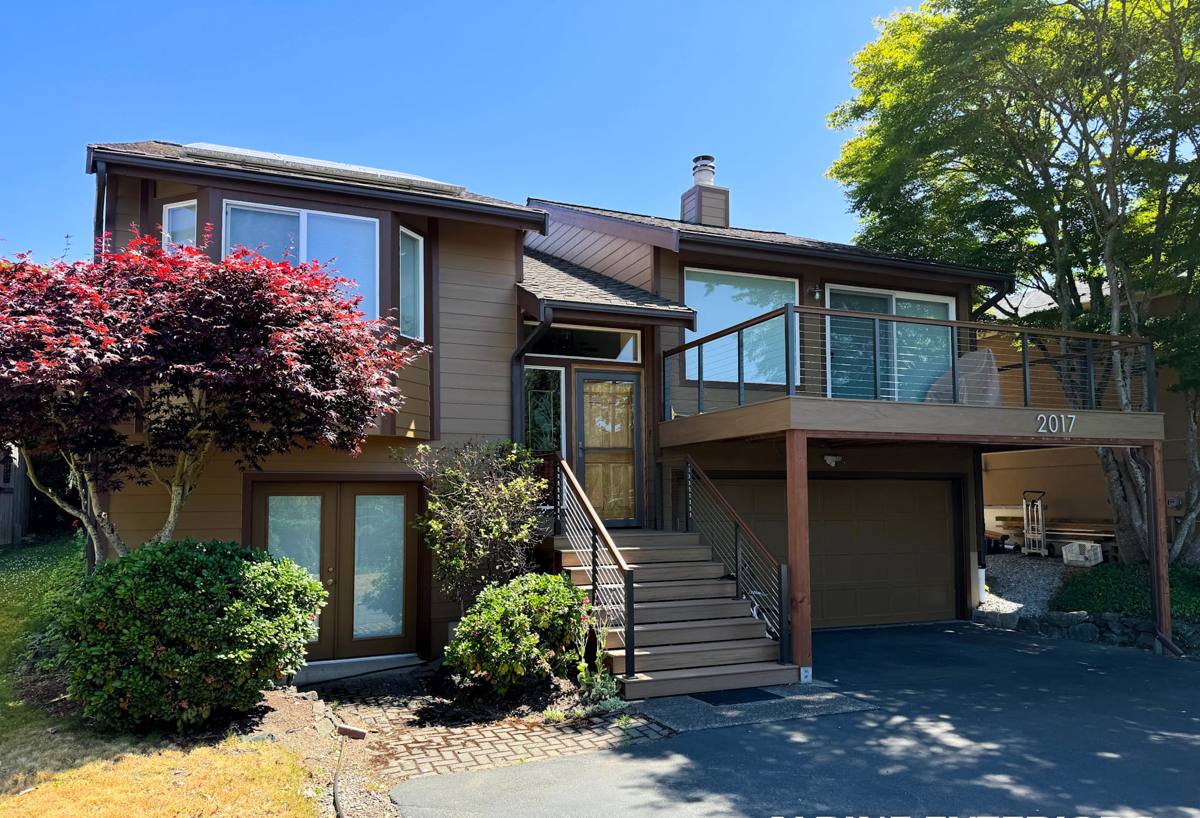
What Cordata's Climate Actually Does to a Roof
Salt Air and Metal Components
Even set back from the water, homes in this part of Bellingham see enough airborne salt to accelerate corrosion on unprotected metal — flashing, fasteners, vent stacks, and gutter hardware. Standard electro-galvanized fasteners can start showing rust streaks well before the shingles themselves are due for replacement. This is a fastener and flashing-grade decision, not a shingle-brand decision, and it's one of the first things that gets skipped by crews pricing a job to the bone.
Driving Rain
Storms coming off the Strait of Georgia and Puget Sound don't always fall straight down. Wind-driven rain pushes water sideways and upward under shingle tabs, around chimney flashing, and into any gap in the underlayment. A roof built for a calmer climate might get away with minimal underlayment coverage and basic step flashing. A roof built for Cordata's weather needs full synthetic underlayment coverage, properly lapped and sealed valleys, and ice-and-water shield membrane at the eaves, valleys, and any roof-to-wall transition — not just where code technically requires it.
Moss and Moisture Retention
Tree cover and cooler, shaded roof planes in this area mean moss gets a longer growing season than it would on an open, sun-exposed roof. Moss isn't just cosmetic — it holds moisture against the roofing material, works its way under shingle edges, and over time lifts and degrades the surface it's growing on. Roof design choices — slope, ventilation, and the type of roofing material used on shaded sections — all affect how much moss pressure a roof will face over its life.
What a Correctly Installed Roof Includes
A new roof installation done right for this area covers several layers working together, not just the visible shingle or panel on top:
- Full tear-off and deck inspection — replacing any soft, delaminated, or water-stained sheathing before anything new goes down
- Synthetic underlayment across the full roof, not just spot coverage
- Ice-and-water shield membrane at eaves, valleys, skylights, and roof-to-wall intersections
- Corrosion-resistant flashing and fasteners suited to a coastal-adjacent climate
- Balanced intake and exhaust ventilation sized to the attic volume, not guessed at
- Proper valley and step flashing, sealed and lapped in the correct shingle-over-flashing sequence
- Drip edge at all eaves and rakes
- Manufacturer-compliant nailing pattern and exposure for wind and warranty performance
Skip any one of these and the roof may still look fine from the street for a few years. The problems show up later, underneath, where they're expensive to trace and repair.
Ventilation: The Step Most Often Shortchanged
Attic ventilation gets less attention than shingle color, but it does more to determine how long a roof lasts in a climate like Cordata's. Poor ventilation traps warm, moist air in the attic, which condenses against the underside of the roof deck — especially during the long, wet stretches typical of a Whatcom County winter. Over time that trapped moisture rots sheathing from below, independent of anything happening on the outer surface. It also raises deck temperature in summer, which shortens shingle life from the inside.
A correct installation balances intake ventilation (typically at the soffits) with exhaust ventilation (ridge vents, box vents, or power vents, depending on the roof design) so air actually moves through the attic space instead of stagnating in pockets. This is calculated based on square footage and roof geometry, not applied as a one-size-fits-all vent count.
Choosing Roofing Materials for This Area
Most homes in Cordata are well served by architectural (dimensional) asphalt shingles rated for high wind exposure, paired with the underlayment and flashing package described above. Metal roofing is a solid option for homeowners who want a longer service life and better shedding of moss and moisture on shaded slopes, at a higher upfront cost. The table below breaks down the practical trade-offs for this specific climate.
| Factor | Architectural Asphalt Shingle | Standing Seam Metal |
|---|---|---|
| Typical service life | 25–30 years with proper install | 40–50+ years |
| Moss resistance | Moderate — benefits from good airflow and periodic cleaning | High — smooth surface sheds moisture and debris more readily |
| Wind-driven rain performance | Good, if underlayment and flashing are done correctly | Very good — fewer seams and penetrations |
| Coastal air / corrosion exposure | Low risk if fasteners and flashing are corrosion-rated | Requires quality coated panels and fasteners; otherwise similar risk |
| Upfront cost | Lower | Higher |
| Maintenance | Occasional moss treatment on shaded slopes | Minimal |
Neither option is wrong. The decision usually comes down to how much roof shade a specific property has, how long the homeowner plans to stay, and budget. We'll walk through the honest trade-offs for your roof specifically rather than pushing one product across every job.
What Our Process Looks Like
1. On-Site Assessment
We inspect the existing roof, attic ventilation, and any visible trouble spots — moss buildup, soft decking, sagging areas, or flashing damage — before quoting anything. This also tells us whether tree cover or roof orientation on your particular lot is creating shade patterns that will affect material choice or moss pressure.
2. Written Scope and Estimate
You get a clear breakdown of tear-off, decking repair allowance, underlayment type, flashing details, ventilation plan, and material — not a one-line "reroof" quote. If something on your roof needs attention beyond a standard reroof, we flag it before the crew shows up, not after the tear-off is already underway.
3. Tear-Off and Deck Inspection
Old roofing comes off down to the deck, and every section of sheathing gets checked. Any deteriorated wood is replaced before new underlayment goes down — this is the point where hidden moisture damage, if any, gets found and fixed rather than covered over.
4. Installation
Underlayment, ice-and-water membrane, flashing, ventilation components, and roofing material go down in the correct sequence, following manufacturer specifications so the warranty stays valid. Crews working regularly in Cordata and the surrounding Bellingham neighborhoods already know which details this climate punishes if they're rushed.
5. Final Walkthrough
We walk the site with you, confirm cleanup, and go over what maintenance — if any — the new roof will need going forward.
Why Local Experience in This Neighborhood Matters
A roofing crew that already works in Cordata and the surrounding Bellingham area isn't guessing at underlayment coverage or flashing grade — they've seen what happens on roofs here that were built to a lower standard, and they've seen what holds up. That includes knowing which streets sit under heavier tree canopy and need extra attention to ventilation and moss-resistant detailing, and which sections of the neighborhood catch more direct wind-driven rain during winter storms off the Sound. It also means faster response if a warranty question or minor issue comes up after the job is done — you're not waiting on a crew that has to drive in from out of the area.
Signs Your Cordata Home May Need a New Roof Soon
- Granule loss showing up in gutters or at downspout outlets
- Moss established on shaded slopes, not just light surface growth
- Curling, cracking, or missing shingles, especially after a windstorm
- Soft spots or noticeable sagging when walking the roof or viewed from a ladder
- Water stains on interior ceilings or in the attic near roof penetrations
- A roof approaching or past 20–25 years old, regardless of visible condition
If you're seeing more than one of these, it's worth getting an honest inspection before committing to a repair-only approach that may just delay the inevitable.
Get a Straight Answer for Your Roof
Every roof in Cordata carries its own combination of tree shade, slope, and sun exposure, so the right approach for your home is something we can only tell you after actually looking at it. If you'd like a free, no-pressure estimate on a new roof installation, fill out the form below and we'll get back to you with a straightforward assessment — no upsell, no guesswork.