 Bellingham Siding
 Board & Batten in Cordata: A Look That Needs to Work as Hard as It Looks Good
Board and batten has become one of the most requested siding profiles in Cordata, and it's easy to see why. The vertical lines read as clean and modern on newer builds, but the same profile also complements the more traditional homes scattered through the neighborhood. It's a versatile look — which is exactly why so many homeowners ask for it. The problem is that board and batten is also one of the least forgiving siding profiles when it's installed wrong, and Cordata's location in Whatcom County gives that profile very little margin for error.
This page is about doing board and batten correctly for this specific part of Bellingham — not a generic rundown of the style. If you're comparing bids for a board and batten project in Cordata, the details below are what actually separate a siding job that looks good for two years from one that looks good for thirty.
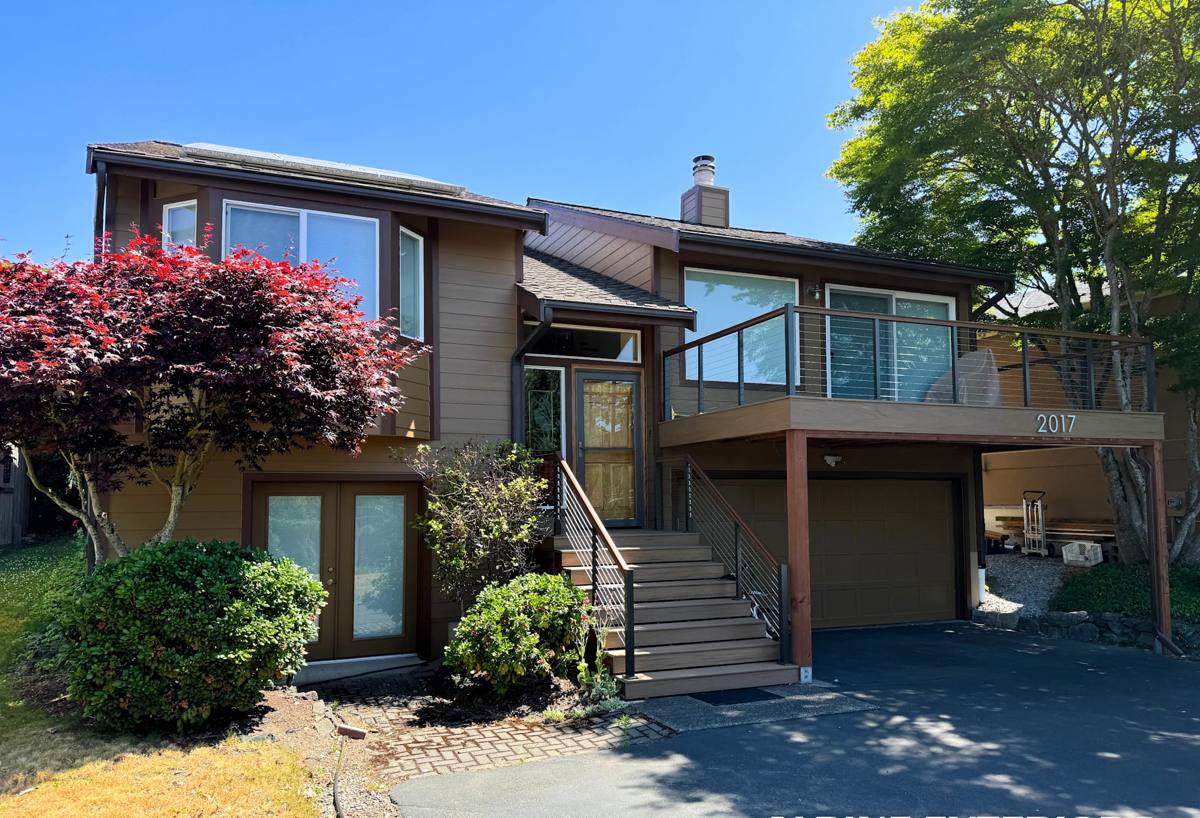
What Cordata's Climate Actually Does to Vertical Siding
Cordata sits close enough to Bellingham Bay and the Salish Sea that salt-laden air is a real factor here, not a coastal talking point. Combine that with Whatcom County's long stretch of driving rain each fall and winter, plus a moss season that can run the better part of the year in shaded, north-facing spots, and you've got three separate stressors working on your siding at once.
- Salt air accelerates corrosion on fasteners, flashing, and any exposed metal trim — a slow, invisible process until paint starts lifting at the fastener heads.
- Driving rain doesn't just wet the surface of the siding; wind-driven rain gets pushed sideways and upward, testing every seam, joint, and batten edge for a real drainage path.
- Moss and organic growth hold moisture against the siding surface far longer than the plain-old "it's just wet outside" scenario. On a vertical batten profile, moss loves the horizontal ledges that bad installation work creates at the base of each batten.
None of these are exotic problems — every siding contractor in Bellingham deals with the same climate. What separates a durable board and batten installation from one that fails early is whether the crew actually built the assembly to manage water and airflow, rather than just fastening boards to a wall in a pattern that looks right from the street.
Why Board and Batten Is Riskier Than Lap Siding If It's Rushed
Traditional horizontal lap siding is inherently self-shedding — gravity does a lot of the work moving water down and off the wall. Board and batten runs vertically, which means every horizontal edge, every top cap, and every point where a batten meets a window or door head is a place where water can be pushed sideways by wind or driving rain instead of just falling away.
That's not a reason to avoid the style. It's a reason the installation details matter more here than almost anywhere else on the house. A correctly built board and batten wall in Cordata needs:
A Real Drainage Plane
Behind the siding, not decorative on top of it. A weather-resistive barrier with a drainage gap lets any moisture that gets past the outer layer find its way back out instead of sitting against the sheathing.
Proper Flashing at Every Transition
Windows, doors, rooflines, and deck ledgers are where board and batten installations most commonly fail. Flashing has to be layered correctly — installed in the right order, lapped the right direction — so water is directed out and away rather than trapped behind the panel.
Fastener Placement That Respects the Material
Battens and panels need to be fastened according to the manufacturer's engineering, not "wherever looks even." Over-driven or misplaced fasteners create entry points for moisture that show up as staining or soft spots years later.
Consistent Batten Reveal and Spacing
Beyond the visual consistency homeowners notice immediately, correct spacing affects how the assembly expands, contracts, and sheds water across seasons.
James Hardie: The Only System We Put on Board and Batten Walls
We install James Hardie fiber cement exclusively — no vinyl, no LP SmartSide, no primed spruce or cedar board and batten. That's a deliberate standard, not a preference, and it matters even more on a vertical profile in a wet, salt-influenced climate like Whatcom County's.
For board and batten specifically, we use Hardie's vertical panel and batten systems, factory-finished with ColorPlus technology and engineered in the HZ5 formulation built for the Pacific Northwest's wet climate zone. A few reasons this matters for a Cordata project:
- Non-combustible material that doesn't rely on paint film alone to keep water out — fiber cement is dimensionally stable in a way wood-based products aren't.
- Factory-cured ColorPlus finish that resists the fading and peeling driving rain and UV cycling cause on field-painted wood or engineered wood siding.
- Moisture resistance that holds up against the kind of prolonged dampness moss season creates, without the swelling or delamination risk that comes with wood-based composite panels.
- A strong, transferable manufacturer warranty backing both the substrate and the finish — worth asking about specifically if you're comparing bids, since warranty terms vary a lot between siding materials.
We won't install board and batten in engineered wood, primed wood, or vinyl because we don't think those products give a Cordata home the moisture performance this climate demands over the long run. That's our standard, and we're upfront about it with every homeowner we quote.
Comparing Board and Batten Materials for This Climate
| Material | Moisture Performance in Driving Rain | Moss / Salt Air Resistance | Finish Durability | Typical Warranty Structure |
|---|---|---|---|---|
| James Hardie Fiber Cement | Strong — dimensionally stable, doesn't swell or rot | High — non-organic substrate, factory finish resists staining | Factory-cured ColorPlus, resists fade and peel | Long-term, transferable |
| Primed Wood / Cedar | Moderate — natural material, prone to swelling and checking | Lower — organic material, more susceptible to moss and rot | Field-applied paint, needs regular recoating | Limited, often material-only |
| Engineered Wood (LP-type) | Moderate — edge-swelling risk if seams aren't sealed correctly | Moderate — engineered but still wood-based | Factory finish, but substrate is moisture-sensitive | Varies, often installation-dependent |
| Vinyl | Weak on vertical profiles — relies heavily on trim details | Low — can trap moisture behind panels, prone to visible warping | Color molded in, but fades and becomes brittle over time | Prorated, decreasing over time |
This isn't a knock on every use case for these materials — it's specific to board and batten in a wet, coastal-influenced climate like Cordata's, where the vertical profile puts more demand on moisture management than a standard horizontal lap job.
Our Process for a Cordata Board and Batten Project
- On-site assessment — we look at your home's exposure, drainage patterns, existing moisture damage, and how sun and shade hit different walls, since a north wall in Cordata weathers very differently than a south-facing one.
- Tear-off and substrate check — old siding comes off and we inspect the sheathing underneath for rot or water damage before anything new goes up.
- Weather-resistive barrier and drainage gap installation — this is the layer most homeowners never see and most corner-cutting crews skip or rush.
- Flashing at every window, door, and roofline transition — done in the correct sequence, not just caulked over gaps.
- Hardie panel and batten installation — fastened to manufacturer spec, with consistent reveal and spacing.
- Final trim, caulking, and touch-up — using products rated for this climate, not generic hardware-store caulk that fails after one wet season.
- Walkthrough — we go over the finished work with you before we consider the job done.
Signs Your Current Board and Batten Siding Is Already Failing
- Dark streaking or green growth concentrated at the base of individual battens
- Soft or spongy spots when you press on the siding near the bottom of walls or below windows
- Visible gaps or warping where battens meet horizontal trim
- Peeling or bubbling paint concentrated around fastener heads
- Staining on interior walls that lines up with an exterior corner or window
- Siding that feels noticeably cooler or damp to the touch compared to the rest of the wall
Any one of these on its own isn't necessarily an emergency, but they're worth having looked at before another wet Whatcom County winter works on the damage further.
Why Local Experience in Cordata Specifically Matters
Bellingham isn't a uniform climate zone from block to block. A wall that sits in near-constant shade collects moss faster than one that gets afternoon sun. A home closer to open exposure catches more wind-driven rain than one tucked behind mature trees or other structures. Crews who work Cordata regularly build an instinct for which walls need extra attention to flashing and drainage detail, and which combinations of sun, shade, and wind exposure tend to cause problems down the road. That local pattern recognition doesn't show up in a spec sheet — it comes from doing the work here, on this kind of housing stock, in this specific climate, over and over.
What Correct Installation Buys You Long-Term
Board and batten done right on a Hardie system, installed to spec, is genuinely low-maintenance siding for a Cordata home. You're not repainting every few years, you're not chasing moisture stains after every wet season, and you're not replacing sections of siding that swelled or rotted from a detail that got rushed the first time around. The upfront cost of doing it correctly — proper drainage plane, correct flashing sequence, factory-finished fiber cement — pays for itself in the years you don't spend fixing it.
If you're planning a board and batten project in Cordata, we're happy to take a look at your home and walk you through what it would actually involve — no pressure, no generic estimate pulled from a national average. Fill out the form below and we'll get you a real answer based on your home and your walls.