 Bellingham Siding
 Siding Replacement in Cordata: What This North Bellingham Neighborhood Needs
Cordata sits in north Bellingham, close enough to I-5 and Bellingham Bay that homes here take on the full range of what Whatcom County weather can throw at a house. That means siding doing double duty: keeping out wind-driven rain for months at a stretch, and standing up to the salt-tinged air that drifts in off the Sound. Add a moss season that can run from fall through spring, and you have a climate that is genuinely hard on exterior materials — harder than most homeowners realize until they're dealing with soft trim boards or streaked, algae-stained panels.
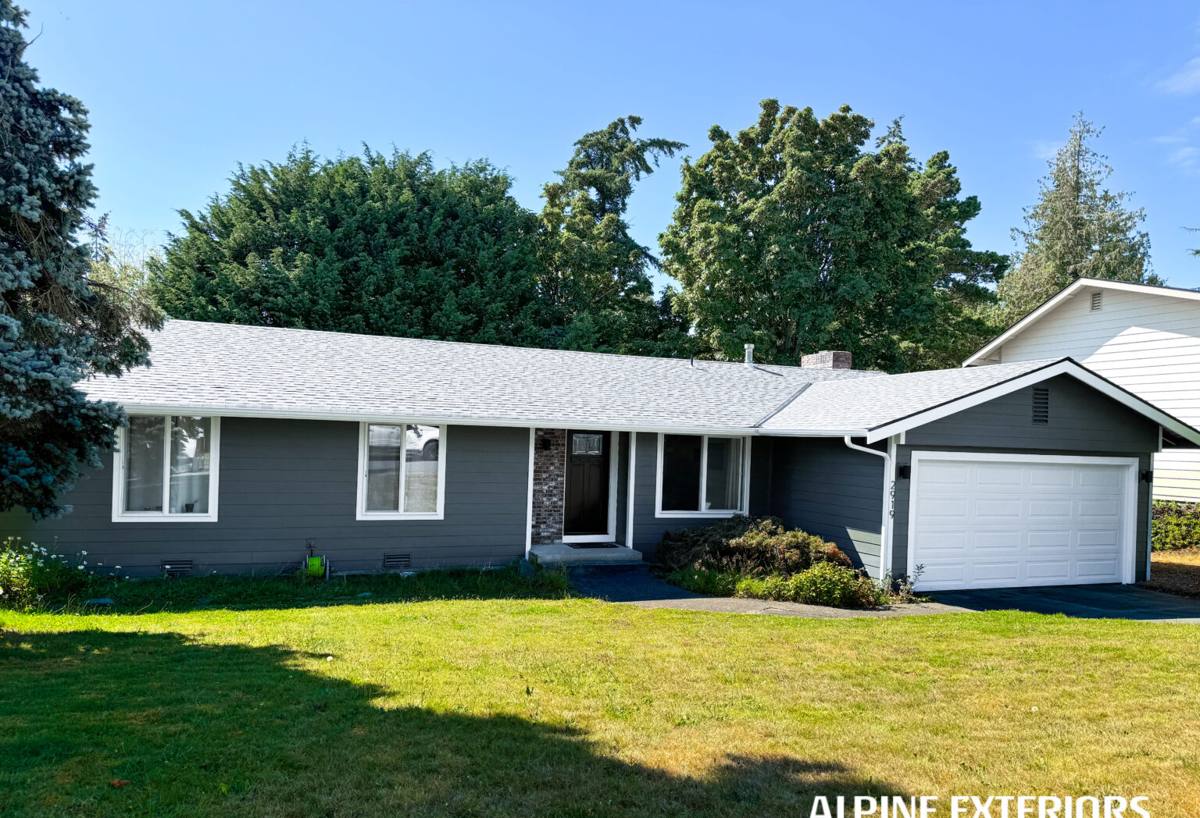
We install siding replacement projects across Bellingham and Whatcom County, and Cordata's mix of housing stock — from older single-family homes to newer subdivisions built out over the last two to three decades — gives us a good cross-section of how different siding materials actually hold up here, not just how they perform on a spec sheet. This page focuses specifically on what a correct siding replacement looks like for a Cordata home, and why we install only James Hardie fiber cement to do it.
Why Bellingham's Climate Is Harder on Siding Than It Looks
Salt Air and Slow Corrosion
Homes anywhere near Bellingham Bay deal with airborne salt that settles on exterior surfaces and accelerates the breakdown of fasteners, caulking, and lower-quality siding finishes. It's a slow process — you won't see damage in the first year — but over a decade it shows up as chalking paint, pitted metal trim, and siding that fades unevenly on the side of the house facing the water.
Driving Rain, Not Just Rain
Whatcom County doesn't just get a lot of rain — it gets a lot of wind-driven rain, pushed sideways into wall assemblies during fall and winter storms. Siding systems that rely on face-sealed joints or that aren't rated for this kind of exposure tend to let moisture find its way behind the panel over time, which is where real damage (rot, mold, sheathing failure) actually starts.
A Long Moss and Algae Season
Shaded north-facing walls, mature tree cover, and near-constant dampness for much of the year give moss and algae a long runway. Porous or textured siding surfaces give these organisms something to grip. Once established, moss holds moisture against the siding surface, which speeds up whatever deterioration is already happening underneath.
What Correct Siding Replacement Involves
A siding replacement job is only as good as what happens before the new panels go up. For Cordata homes, we treat the following as non-negotiable:
- Full tear-off and inspection of the sheathing underneath — not just a look, but a real check for soft spots, water staining, or rot that needs to be cut out and replaced before anything new goes on
- Installation of a code-compliant weather-resistive barrier (house wrap) with correctly lapped and taped seams
- Proper flashing at every window, door, and roofline intersection — this is where the majority of hidden leaks originate, far more often than through the siding field itself
- Rain screen or drainage gap detailing appropriate for the wall assembly, so any moisture that does get behind the cladding has a way out
- Correct fastening pattern and nail placement per manufacturer specification — over-driven or under-driven fasteners are one of the most common causes of early siding failure we see on re-inspections
- Factory-finished panels wherever possible, to avoid relying on field-applied paint for long-term weather protection
Skipping any one of these steps doesn't usually cause an immediate problem. It causes a problem in year six or year ten, which is exactly why so many "resided" homes in this region end up needing real repair work well before the siding's rated lifespan is up.
Why We Install Only James Hardie Fiber Cement
We don't install vinyl, LP SmartSide, cedar, primed spruce, or other fiber cement brands like Cemplank or Allura. That's a deliberate standard, not a lack of options, and it comes down to how these materials actually perform in a climate like ours over the long haul rather than how they're marketed.
Where the Alternatives Fall Short Here
Vinyl siding is affordable and low-maintenance in mild, dry climates, but it expands and contracts significantly with temperature swings, can become brittle in cold snaps, and its seams are a natural place for wind-driven rain to find a way in over time. Engineered wood products like LP SmartSide use wood fiber with a resin binder — a real improvement over old-style hardboard, but still wood-based, which means edge swelling and moisture sensitivity are ongoing risks in a climate this wet, especially at cut ends and butt joints if field-sealing isn't kept up. Cedar and primed spruce are genuinely attractive materials, but they demand a maintenance commitment — regular refinishing, vigilant caulk inspection, moss treatment — that most homeowners underestimate until they're several years in.
Why Hardie Fits Bellingham
James Hardie fiber cement is non-combustible, dimensionally stable across temperature and moisture swings, and doesn't provide the organic material that moss and algae feed on the way wood-based products can. The ColorPlus factory finish is baked on under controlled conditions, which gives it more consistent, longer-lasting color retention than field-applied paint — a real advantage against salt air and UV exposure. Hardie's HZ product lines are climate-engineered for wet regions specifically, which matters in a county that sees this much annual rainfall. It also carries a strong transferable warranty, which protects the investment if the home changes hands.
Material Comparison for Cordata's Climate
| Material | Moisture Behavior | Moss/Algae Resistance | Maintenance Burden |
|---|---|---|---|
| James Hardie Fiber Cement | Dimensionally stable, engineered for wet climates | Non-organic surface, less hospitable to growth | Low — occasional wash |
| Vinyl | Seam-dependent, can allow water intrusion at joints | Moderate — smooth surface but seams collect debris | Low, but limited repair options if damaged |
| LP SmartSide / Engineered Wood | Sensitive at cut ends and joints if not sealed | Moderate — resin-treated but still wood-based | Moderate — needs sealed edges maintained |
| Cedar / Primed Spruce | Absorbs moisture, prone to swelling and rot over time | Higher — organic surface feeds growth | High — regular refinishing and inspection |
How Our Process Works
Every siding replacement starts with an on-site assessment, not a phone estimate. We look at your home's exposure — which walls take the most wind-driven rain, which sides stay shaded and damp longest, where the existing siding is already showing stress — and use that to plan flashing details and drainage before we ever talk product colors.
- Initial walkthrough and exterior assessment, including a look at trim, flashing, and any visible moisture damage
- Written estimate covering full scope: tear-off, sheathing repair allowance, weather barrier, flashing, and Hardie panel installation
- Scheduling built around Whatcom County's weather windows — we plan tear-off in stretches where we can get the wall assembly dried in before the next system rolls through
- Installation to manufacturer specification, with attention to fastening, joint treatment, and rain screen detailing
- Final walkthrough so you understand what was done and what to expect from the new siding going forward
Why Local Experience Matters for This Job
A crew that installs siding all over the country will get the panels up. A crew that works Bellingham and Whatcom County regularly knows which walls in a Cordata home are going to take the brunt of a winter storm, how long moss actually takes to establish on a shaded north wall here, and where the salt-air exposure from the Bay tends to matter most for fastener and trim choices. Those are the details that don't show up in a generic install — they show up ten years later, in the difference between a wall that's still tight and one that isn't.
Signs Your Cordata Home May Need Siding Replacement
- Visible moss or algae staining that returns quickly after cleaning
- Soft or spongy siding, especially near the bottom courses or around windows
- Paint that's chalking, peeling, or fading unevenly, particularly on walls facing prevailing wind and rain
- Visible gaps or separation at seams, corners, or trim joints
- Interior signs — musty smells, staining on interior walls near exterior corners — that suggest moisture is already getting through
If you're seeing any of these, it's worth having someone take a real look before the underlying structure is affected, not just the surface.
Get a Straight Answer About Your Siding
If you're weighing a siding replacement for a Cordata home, we're happy to take a look and give you an honest assessment — what your current siding's condition actually tells us, what a correct James Hardie installation would involve, and a straightforward estimate. There's no pressure and no obligation. Fill out the form below to schedule a free estimate.