 Bellingham Siding
 Window Replacement Built for Cordata's Climate
Cordata sits in north Bellingham, part of Whatcom County, where the weather doesn't do homeowners any favors. Windows here take a beating year-round: driving rain pushed sideways by wind off the Sound, damp salt air that never fully dries out, and a moss season that can run from fall through spring. None of that is dramatic on its own, but it adds up. Wood sashes swell and stick. Aluminum frames pit and corrode. Seals fail early. Sills stay wet long enough for rot to set in before anyone notices.
A window that's rated fine for a dry inland climate isn't automatically fine for a home in Cordata. The frame material, the flashing detail, and the sealant all matter more here than they would somewhere with a shorter wet season. This page covers what that actually means for a window replacement job done right in this neighborhood.
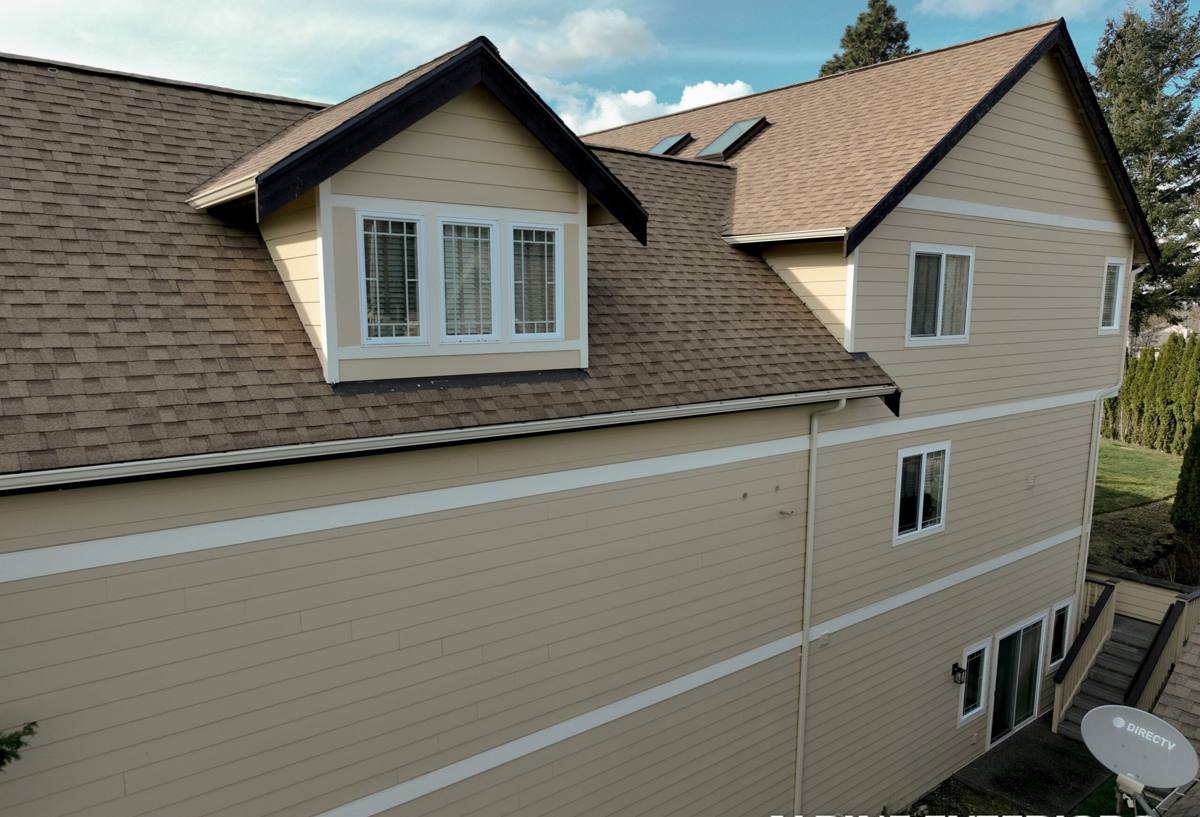
Signs a Cordata Home Needs New Windows
Windows rarely fail all at once. They give warning signs first, and in a climate this wet, those signs usually show up around the frame and sill before the glass itself is the problem.
- Condensation building up between panes, or persistent fogging that doesn't clear — a sign the seal has failed
- Soft, spongy, or discolored wood at the sill or bottom corners of the frame
- Windows that stick, won't stay open, or need force to latch
- Visible gaps around the frame, or daylight showing at the corners
- Drafts near the window even when it's fully closed and locked
- A noticeable rise in heating costs with no other explanation
- Paint that keeps peeling or bubbling on the interior frame, often a sign of trapped moisture
- Moss or dark streaking building up on the exterior sill or trim faster than the rest of the siding
Any one of these can be minor. Two or three together, especially on windows facing the prevailing weather, usually means the assembly is past patching.
What a Correct Window Replacement Job Actually Involves
It's Not Just Swapping the Sash
A lot of window problems in this climate trace back to installation, not the window itself. A quality unit installed with a poor moisture plan will fail early anyway. The parts that matter most are the ones you never see once the trim is back on:
- Flashing sequence — the sill pan, side flashing, and head flashing need to overlap correctly so water is directed out and down, never trapped behind the frame
- Integration with the water-resistive barrier — the window's flashing has to tie into the house wrap or building paper properly, not just get taped over it
- Sealant, not just caulk — the right sealant in the right location, with backer rod where gaps are too wide for sealant alone
- Shimming and squaring — a window that's out of square binds, doesn't seal evenly, and wears out its hardware faster
- Insulation at the rough opening — low-expansion foam or backer rod, not stuffed fiberglass that leaves voids
Skip any one of these and the window can look fine for a year or two before water finds the weak point. In a place with as much sustained wet weather as Whatcom County, that weak point gets tested constantly.
Choosing the Right Window for This Climate
Frame material is the first decision, and it's the one with the most long-term impact on maintenance. There's no single right answer for every home, but here's how the common options stack up for a wet, salt-air coastal climate like Bellingham's:
| Frame Material | Moisture Resistance | Maintenance | Typical Trade-offs |
|---|---|---|---|
| Vinyl | Very good — won't rot, resists salt air well | Low | Limited color options once installed; can expand/contract with big temperature swings |
| Fiberglass | Excellent — very stable, holds paint well | Low to moderate | Higher upfront cost than vinyl |
| Wood | Poor unless well-clad and maintained | High | Best interior look, but exposed wood is a liability in this rainfall pattern |
| Wood-clad (vinyl or aluminum exterior) | Good on the exterior face; interior wood still needs care | Moderate | Combines wood's interior appearance with a more weather-resistant exterior shell |
| Aluminum | Fair — prone to condensation and pitting near salt air over time | Moderate | Thin sightlines, but a poor thermal performer unless thermally broken |
Our standard is to steer clients away from bare wood exteriors and uncoated aluminum in this specific climate — not because either is a bad product in general, but because both ask for a level of upkeep that most homeowners underestimate when they're dealing with this much year-round moisture. That's a maintenance-burden call, not a knock on the material itself.
Glass Package Matters Too
Beyond the frame, the glass unit itself affects comfort and condensation resistance. Look for a Low-E coating and an argon-filled double-pane unit at minimum; triple-pane is worth pricing out for north- or west-facing rooms that catch the worst of the wind-driven rain. Ask for the window's U-factor and condensation resistance rating — those numbers tell you more than a marketing label does.
Our Process, Start to Finish
- Free on-site assessment — we look at each window individually, not just count openings. Sill condition, framing, and sun/rain exposure all factor into the recommendation.
- Straightforward proposal — frame material options, glass package, and a clear price, with the reasoning behind what we're recommending for that specific window.
- Scheduling around the weather — we plan installs to minimize how long any opening sits uncovered, which matters more here than in drier climates.
- Removal and inspection — once the old window is out, we check the rough opening for hidden rot or water damage before anything new goes in.
- Correct flashing and sealing — the sequence described above, done the same way every time, not shortcut to save an hour.
- Interior and exterior trim finish — matched to the home, sealed at every joint.
- Walkthrough and cleanup — every window operated in front of you, debris cleared, questions answered before we consider the job done.
Cordata-Specific Considerations
North Bellingham has a mix of housing stock — some newer construction built from the 1990s onward alongside older homes, which changes what a window replacement job actually needs. Newer homes with standard-sized openings and sound framing are often good candidates for insert (pocket) replacement, where the new window fits into the existing frame. Older homes, or any home with sill rot or settling, usually need a full-frame replacement so we can address the water damage underneath rather than seal it in.
Bellingham also requires permits for most window replacement work, particularly when it involves a change in size or a full-frame swap. We handle that as part of the job rather than leaving it for the homeowner to sort out.
Being local also means we already know which orientations in this neighborhood take the worst of the weather. Homes facing the prevailing wind and rain direction typically show wear on their windows years before the more sheltered side of the same house — that's useful information when you're deciding whether to replace all the windows at once or prioritize a few first.
What Affects the Cost
Window replacement pricing varies by home and by unit, but the factors that move the number are consistent:
| Factor | Why It Matters |
|---|---|
| Frame material | Vinyl is typically the most affordable; fiberglass and wood-clad cost more upfront but often less over the life of the window |
| Insert vs. full-frame replacement | Full-frame costs more but is often necessary where there's rot or the opening has shifted |
| Window size and type | Large picture windows, bays, or custom shapes cost more than standard single- or double-hung units |
| Glass package | Triple-pane and specialty coatings add cost but improve comfort and condensation resistance |
| Number of windows | Doing several at once typically brings a better per-window cost than one-off replacements |
| Access and site conditions | Second-story windows, tight landscaping, or difficult access can add labor time |
| Trim and finish work | Matching existing interior or exterior trim adds material and labor |
We'll walk through these line by line during the estimate so there are no surprises once work starts — the goal is a number you understand, not just a total.
Why Hire a Crew That Already Works in Cordata
Anyone can install a window on a dry day. The real test is how it holds up through a Whatcom County winter — sideways rain, saturated ground, and weeks without real sun to dry things out. A crew that already works this neighborhood knows which construction eras tend to have hidden rot behind the trim, which orientations need extra attention to flashing, and how local permitting actually works, instead of learning it on your job.
We also stand behind the work. If a seal or seam isn't performing the way it should, that's on us to fix — not something you have to chase down a manufacturer's warranty line to resolve.
Keeping New Windows Performing Through Moss Season
A correctly installed window is low-maintenance, but "low" isn't "none," especially here. A few habits keep new windows performing for the long haul:
- Rinse sills and tracks periodically during moss season to keep organic buildup from holding moisture against the frame
- Check exterior sealant lines once a year, particularly after a hard winter, and have any cracked caulk redone before it lets water in
- Keep gutters and downspouts clear so runoff isn't sheeting directly down over window heads
- Operate each window a few times through the year so hardware and weatherstripping don't seize up from disuse
None of this is heavy upkeep, but skipping it is exactly how a good installation slowly turns into a problem one.
Get a Straight Answer on Your Windows
If you're not sure whether your Cordata home needs a couple of windows replaced or a full house's worth, we'll take a look and tell you honestly — no pressure, no upsell. Use the form below to request a free estimate and we'll walk the property with you.