 Bellingham Siding
 Decking Built for Cordata's Climate, Not Just Its Curb Appeal
Cordata sits in north Bellingham, close enough to Bellingham Bay and the Salish Sea that salt-laden air is a constant, low-grade presence on anything left outdoors. Add Whatcom County's long wet season, months of driving rain off the water, and the shaded, damp conditions that let moss and algae take hold on any north-facing surface, and you've got a climate that is genuinely hard on decking. A deck built here needs to handle more than foot traffic and barbecues — it needs to shed water fast, resist the slow creep of organic growth, and hold its fasteners and finish through repeated wet-dry cycles for years without turning into a maintenance chore.
Composite decking has become the default recommendation for homeowners in this neighborhood for good reason, but "composite" covers a wide range of products and installation quality, and not every composite deck holds up the same way. This page covers what actually matters for a Cordata install: the materials, the build details that keep water from becoming a problem, our process, and what to expect in terms of upkeep and cost.
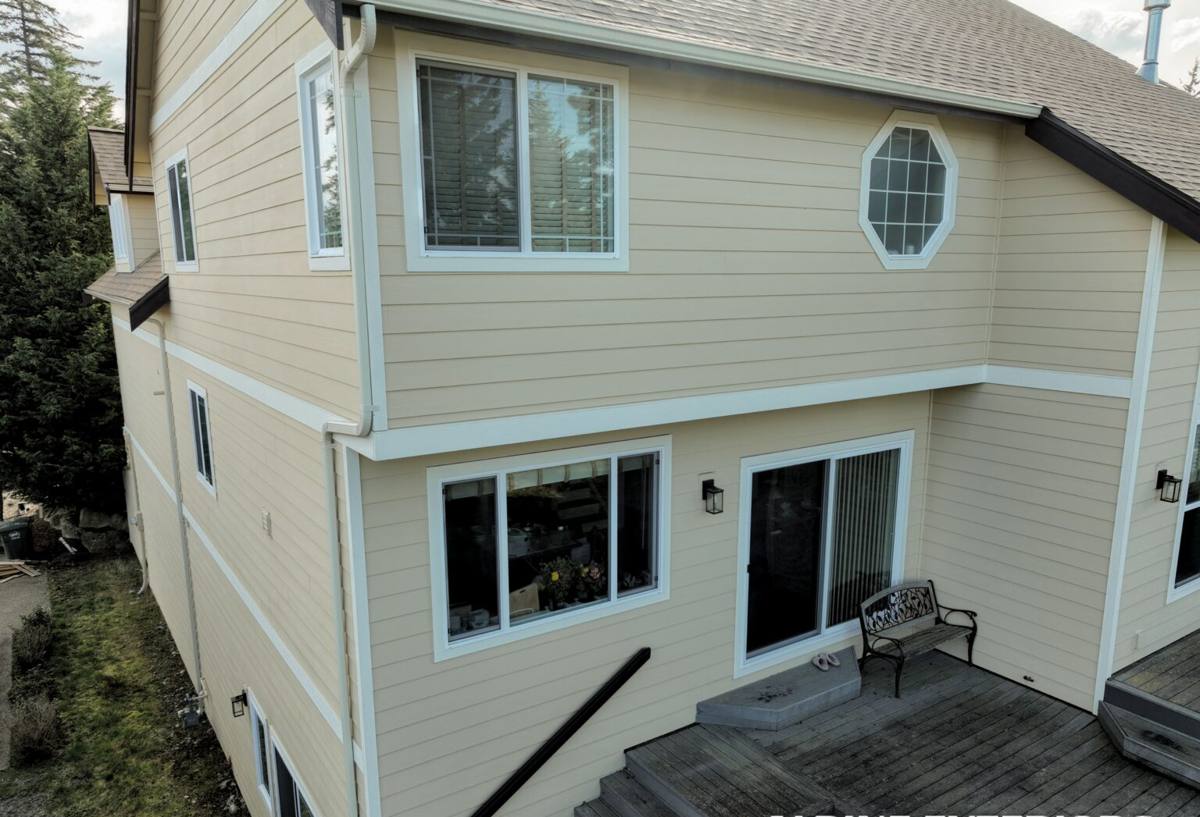
Why This Climate Is Harder on Decks Than It Looks
Salt Air and Metal Fasteners
Proximity to the bay means airborne salt settles on every exterior surface, including deck hardware. Standard fasteners and connectors corrode faster here than they would further inland, which is why the hardware spec matters as much as the decking material itself — a beautiful deck board fastened with the wrong screws or hangers is a five-year problem waiting to happen.
Rain Volume and Duration
Bellingham doesn't just get rain, it gets rain for extended stretches, often falling at an angle that drives moisture under railings, against ledger boards, and into any gap where end grain is exposed. A deck that isn't detailed to move that water off and away will hold it, and wood-based products in particular will tell you about it within a few seasons.
Moss and Algae Season
Shaded yards, tree cover, and consistent moisture create ideal conditions for moss and green algae film on deck boards, especially on the north or east side of a house where sun exposure is limited. This is less about the composite material failing and more about surface texture, drainage, and airflow underneath the deck — all things we control at the build stage.
What "Composite Decking" Actually Means
Composite decking is a blend of wood fiber and plastic, manufactured into boards that resist rot, splintering, and insect damage in ways solid wood can't. Within that category there's real variation:
- Capped composite — a wood-plastic core wrapped in a protective polymer shell on all sides. This is our standard recommendation for this area because the cap resists moisture absorption and staining far better than uncapped boards.
- Uncapped composite — older-style, all-through composite material. It costs less but absorbs more moisture over time and is more prone to surface mold and fading in a wet climate like ours.
- PVC (cellular vinyl) decking — no wood fiber at all, fully synthetic. Excellent moisture resistance, though it handles differently underfoot and in temperature swings, and it's a different price tier.
For a Cordata property, we lean toward capped composite for most projects — it strikes the best balance of moisture performance, appearance, and cost, and it's the product we can back with a straightforward warranty structure.
Building a Deck That Actually Holds Up Here
The decking board itself gets most of the attention, but the substructure underneath is where a deck actually succeeds or fails in this climate. Details we treat as non-negotiable on every install:
Ledger and Flashing
Where the deck attaches to the house is the single most common source of hidden water damage. Proper flashing — installed so water sheds outward and never behind the siding — is standard on every project, not an upcharge.
Joist Protection
Composite boards may be moisture-resistant, but the wood framing underneath them isn't automatically. We use joist tape or an equivalent protective barrier on framing members to keep standing water from sitting against untreated wood over the years.
Fastener and Hardware Spec
Given the salt air off the bay, we spec corrosion-resistant, coated or stainless hardware for structural connections rather than the minimum-grade fasteners that show rust streaking within a couple of seasons.
Airflow and Drainage Underneath
Proper joist spacing, ground clearance, and in some cases a drainage or ventilation gap keep air moving under the deck. Stagnant, damp air trapped beneath the boards is exactly what accelerates moss growth and slows drying after every rain event.
Board Spacing
Composite boards expand and contract with temperature and moisture more than people expect. Correct gap spacing at installation prevents buckling, and it also gives water somewhere to go instead of pooling on the surface.
Composite vs. the Alternatives
| Material | Moisture Behavior in This Climate | Maintenance | Typical Lifespan |
|---|---|---|---|
| Capped Composite | Strong resistance to moss staining and swelling | Periodic washing, no sealing or staining | 25–30+ years |
| Uncapped Composite | More prone to surface mold in wet, shaded areas | Regular cleaning, some fading over time | 15–20 years |
| PVC / Cellular Vinyl | Excellent moisture resistance, doesn't absorb water | Low, occasional washing | 25–30+ years |
| Pressure-Treated Wood | Absorbs water readily, prone to moss and splintering | Annual sealing/staining recommended | 10–15 years without upkeep |
| Cedar | Attractive but softens and grays quickly in constant damp | Regular sealing to maintain appearance | 10–15 years |
Wood decking isn't a bad product on its own merits, but in a shaded, rain-heavy Cordata yard it demands a maintenance schedule most homeowners don't actually keep up with. That gap between "recommended upkeep" and "what actually happens" is where wood decks in this area tend to fail early — not because the wood was defective, but because the climate outworks the maintenance plan.
Our Process
- On-site assessment — we look at sun and shade exposure, drainage patterns, existing structure (for replacements), and how the deck ties into the house.
- Material and layout discussion — we walk through board options, railing systems, and layout based on how you actually use the space, not a generic template.
- Written estimate — a clear scope covering materials, structural work, hardware spec, and timeline, with no vague allowances buried in the fine print.
- Structural build — framing, flashing, joist protection, and hardware installed to hold up against this climate specifically, not just to code minimums.
- Decking and rail install — boards, fascia, and railing installed with correct spacing and fastening for long-term stability.
- Final walkthrough — we go over care basics and answer questions before we consider the job done.
Living With a Composite Deck in a Marine Climate
Composite decking cuts maintenance dramatically compared to wood, but "low maintenance" isn't "no maintenance" — especially with moss season being a real annual event here.
- Sweep or rinse debris off regularly, especially in fall when leaves and needles collect and trap moisture against the boards.
- Wash the surface a couple of times a year with a soft-bristle brush and mild soap and water to keep early moss and algae film from taking hold, particularly on shaded sections.
- Avoid pressure washers on high settings directed straight at board seams — it can drive water into gaps and damage the surface texture.
- Keep planters and furniture legs from sitting in standing water directly on the boards for extended periods.
- Check railing posts and stair connections annually for any looseness, which is often the first sign of a fastener or structural issue worth catching early.
What Affects Cost
Every deck is different, but the main cost drivers for a Cordata project are generally the same:
| Factor | Why It Matters |
|---|---|
| Deck size and shape | More linear footage and complex layouts (multiple levels, curves, cutouts) increase material and labor |
| Board tier (capped vs. uncapped vs. PVC) | Material cost varies significantly and affects long-term maintenance and lifespan |
| Substructure condition | New builds and full tear-outs cost more than resurfacing an existing, structurally sound frame |
| Railing system | Composite, aluminum, cable, and glass railings all price differently |
| Site access and grading | Slope, height off the ground, and equipment access affect labor time |
We give straight, itemized numbers rather than a single lump figure, so you can see exactly what you're paying for and where there's room to adjust scope if needed.
Why Local Experience in Cordata Matters
A crew that works this specific corner of Bellingham regularly understands things a general contractor from outside the area might not think to plan for — how much shade a given lot orientation gets through the winter, how fast moss establishes on a north-facing deck near tree cover, and which hardware actually holds up to a full winter of salt-tinged rain rather than just looking good on install day. That local pattern recognition is the difference between a deck that's designed for this climate and one that's simply installed in it.
We also stand behind the work with a crew you can actually reach afterward — for warranty questions, for a maintenance question three years down the line, or for the next project on the same property.
Get a Straightforward Estimate
If you're planning a new deck or replacing an aging one in Cordata, we're happy to come take a look and give you honest guidance on materials, layout, and cost — no pressure, no upsell. Use the form below to request a free estimate.