 Bellingham Siding
 Why Cordata Homes Need a Window Installation Built for This Climate
Cordata sits in north Bellingham, close enough to the water that homes here take on the same weather pattern as the rest of Whatcom County: long stretches of driving rain, damp air carrying salt off Bellingham Bay and the Strait of Georgia, and a moss season that can run from October through May. That combination is hard on windows in ways that don't show up right away. A window that's slightly out of level, or flashed with the wrong sequence, might look fine for a year or two before water finds its way behind the trim and into the wall framing.
We install windows differently for homes in this area than we would for a dry-climate build. That means more attention to how water sheds off the window, how the opening is sealed against wind-driven rain, and how the whole assembly holds up to years of damp, mossy conditions rather than a handful of dry days between storms.
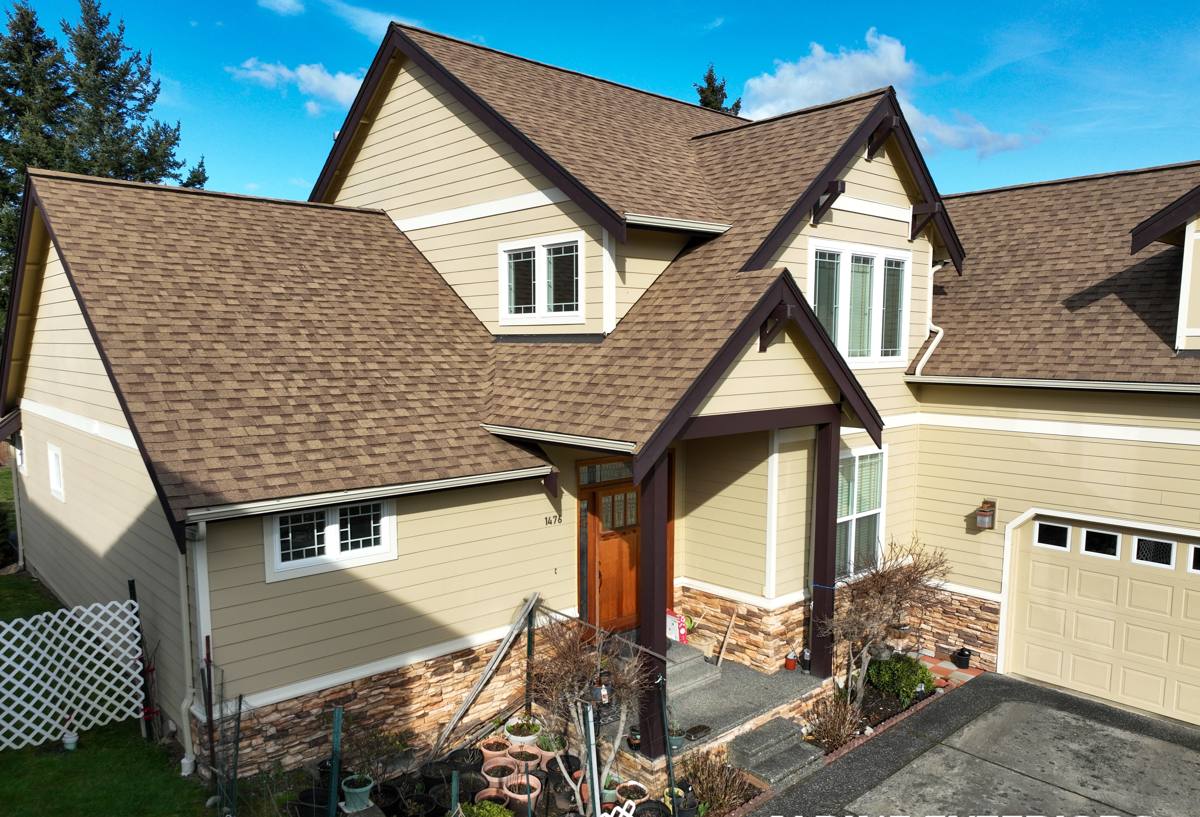
What Correct Window Installation Actually Involves
Window installation is often treated as a carpentry task — measure, cut, set, trim. In a climate like ours, that's only part of the job. The parts that actually determine whether a window lasts happen before the window ever goes into the opening.
The Rough Opening and Sill Pan
Every opening should get a sloped sill pan flashing before the window sets, so any water that gets past the window sheds back outside instead of pooling on the sill and soaking into the framing. This is the single most common shortcut we see skipped on older installs, and it's the one that causes the most rot.
Flashing Sequence
Flashing has to be layered correctly — sill first, then the window, then jamb flashing, then head flashing, integrated with the weather-resistive barrier (housewrap) so everything laps like shingles, water always moving down and out, never trapped behind a layer above it.
Sealant and Backer Rod
Exterior sealant isn't a substitute for good flashing, but it matters. We use backer rod and a quality sealant rated for our climate at the right joints, and we don't rely on caulk alone to keep water out of an opening.
Insulation Around the Frame
Low-expansion window foam or backer rod and fiberglass insulation around the frame closes the gap between the window and framing without bowing the frame out of square — a common problem when installers over-fill with the wrong foam.
Signs Your Cordata Home's Windows Are Already Failing
Given the local weather, we get a lot of calls after a wet winter rather than before one. Some things worth checking now:
- Soft or discolored trim or siding directly around a window frame
- Moss or dark green-black staining building up on the sill or lower corners
- Condensation forming between panes (a sign the seal on a double-pane unit has failed)
- Visible daylight or a noticeable draft along the frame edges
- Paint bubbling or peeling on interior window trim, which usually means moisture is already inside the wall
- Windows that stick, won't latch, or have visibly sagged in the frame
None of these mean you automatically need a full replacement, but they're worth a look before another wet season adds to the damage.
Replacement Approach: Retrofit vs. Full-Frame
Not every window job is the same, and the right method depends on the condition of the existing frame and sheathing, not just the homeowner's preference.
Retrofit (Pocket) Replacement
The new window is installed into the existing frame, leaving exterior trim and siding largely undisturbed. This is faster and less invasive, but it only makes sense when the existing frame, sill, and flashing are still sound. Installing a retrofit unit over a frame that already has hidden water damage just seals the problem in.
Full-Frame Replacement
The old window, frame, and trim come out entirely, exposing the rough opening down to the framing. This is the only way to properly inspect for rot, correct bad flashing from a prior install, and set a new sill pan. It costs more in labor, but on a home where we suspect water has already gotten behind the wall, it's the only honest way to do the job right.
We'll tell you which one your home actually needs after opening things up or inspecting the exterior closely — not before.
Choosing Window Materials for Whatcom County Weather
Material choice matters more here than in drier climates, because whatever you choose has to handle repeated wet-dry cycling and salt-laden air without warping, corroding, or holding moisture.
| Material | How It Handles Our Climate | Maintenance |
|---|---|---|
| Vinyl | Good moisture resistance, won't rot or corrode; can expand/contract with temperature swings | Low — occasional cleaning |
| Fiberglass | Very stable dimensionally, holds paint well, strong resistance to moisture and salt air | Low |
| Wood-clad | Attractive interior wood with a protective exterior shell; exterior clad handles rain well if properly flashed | Moderate — watch cladding seams and interior wood |
| Bare wood | Requires diligent upkeep in constant damp conditions; higher risk of rot if finish is neglected | High |
| Aluminum (older style) | Prone to condensation and thermal transfer in our cool, damp winters unless thermally broken | Moderate to high |
We don't push one brand over another as a rule — we talk through what fits your home's style, your budget, and how much upkeep you actually want to do. What we won't do is install a product into an assembly where the moisture management doesn't match the material's needs.
Our Window Installation Process for Cordata Homes
- On-site assessment — we look at existing window condition, siding type, and any visible signs of past water intrusion before quoting anything.
- Product selection — we go over material, glazing (double vs. triple pane), and frame options suited to your home's exposure.
- Removal — old windows and, if needed, surrounding trim or siding come out carefully to expose the opening.
- Inspection and repair — any soft sheathing or framing found underneath gets repaired before a new window goes in, not covered over.
- Sill pan and flashing — sloped sill pan, then window, then jamb and head flashing integrated with the housewrap.
- Set and shim — window is leveled, plumbed, and squared before fastening.
- Insulate and seal — low-expansion foam or fiberglass around the frame, sealant at exterior joints.
- Trim and siding tie-in — exterior trim and siding are reinstalled or matched so the finished look is consistent with the rest of the wall.
- Final check — we test operation, look for gaps, and walk the job with you before we call it done.
What Affects the Cost
| Factor | Why It Matters |
|---|---|
| Retrofit vs. full-frame | Full-frame involves more labor, trim, and possible siding repair |
| Number of windows | Per-window cost typically drops when several are done in one visit |
| Frame material and glass package | Fiberglass and triple-pane units cost more upfront than standard vinyl double-pane |
| Hidden repairs | Rotted sheathing or framing discovered during removal adds labor and material |
| Siding tie-in | Matching or patching siding around the new window adds time, especially on older lap or shake siding |
Simple, straightforward window projects generally run into a modest per-window range for materials and labor combined; anything involving structural repair or full siding rework will run higher. We give a firm number after we've actually seen the windows, not a phone estimate.
Why It Matters to Hire a Crew That Already Works in Cordata
A crew that regularly works in this part of Bellingham already knows how the local weather behaves against different home orientations, what older Whatcom County construction tends to hide behind the siding, and how to sequence a job around our wet season instead of getting caught mid-install by a week of rain. We also know the building department process for this area, which keeps permitted work moving instead of stalling out on paperwork. That familiarity shows up in fewer surprises and a tighter, drier install.
Simple Maintenance to Extend the Life of New Windows
- Clear moss and debris from window sills and tracks each fall before the rains set in
- Check exterior caulking annually and touch up any cracked or shrunken beads
- Keep gutters and downspouts clear so overflow doesn't run down onto window heads
- Wipe down interior sills after heavy condensation to prevent mold growth
- Trim back vegetation that keeps window surfaces shaded and damp
If you're noticing drafts, staining, or foggy glass on a Cordata home, or you're planning ahead for a wet Whatcom County winter, we're happy to take a look and give you a straight answer on what your windows actually need. Request a free, no-pressure estimate using the form below.