 Bellingham Siding
 Why Ferndale Siding Takes More Punishment Than People Expect
Ferndale sits close enough to Bellingham Bay and the Strait of Georgia that homes here deal with a mix of weather most siding products were never designed for. Salt-laden air moves in off the water, wind-driven rain hits walls sideways instead of falling straight down, and a long gray stretch from late fall through spring keeps exterior surfaces damp for weeks at a time. Add in the shade from mature trees on many Whatcom County lots, and you get a moss and algae season that can run most of the year on north- and west-facing walls.
None of that is unusual for this part of Washington. But it does mean siding choices that work fine in a drier inland climate can fail early here. Paint peels sooner, seams swell, and anything with exposed wood grain becomes a moss magnet. When we look at a Ferndale home, we're not evaluating the siding for a generic Pacific Northwest climate — we're evaluating it for salt exposure, sustained moisture contact, and biological growth pressure, all at once.
What "Driving Rain" Actually Does to a Wall
Straight-down rain mostly sheds off a wall. Driving rain, pushed by wind off open water, gets forced sideways and upward into laps, seams, and trim joints. Over years, that's what turns a small installation shortcut — a missing flashing detail, a gap that should have been caulked, a butt joint that wasn't backed properly — into a rot problem behind the siding where nobody can see it until the damage is already done.
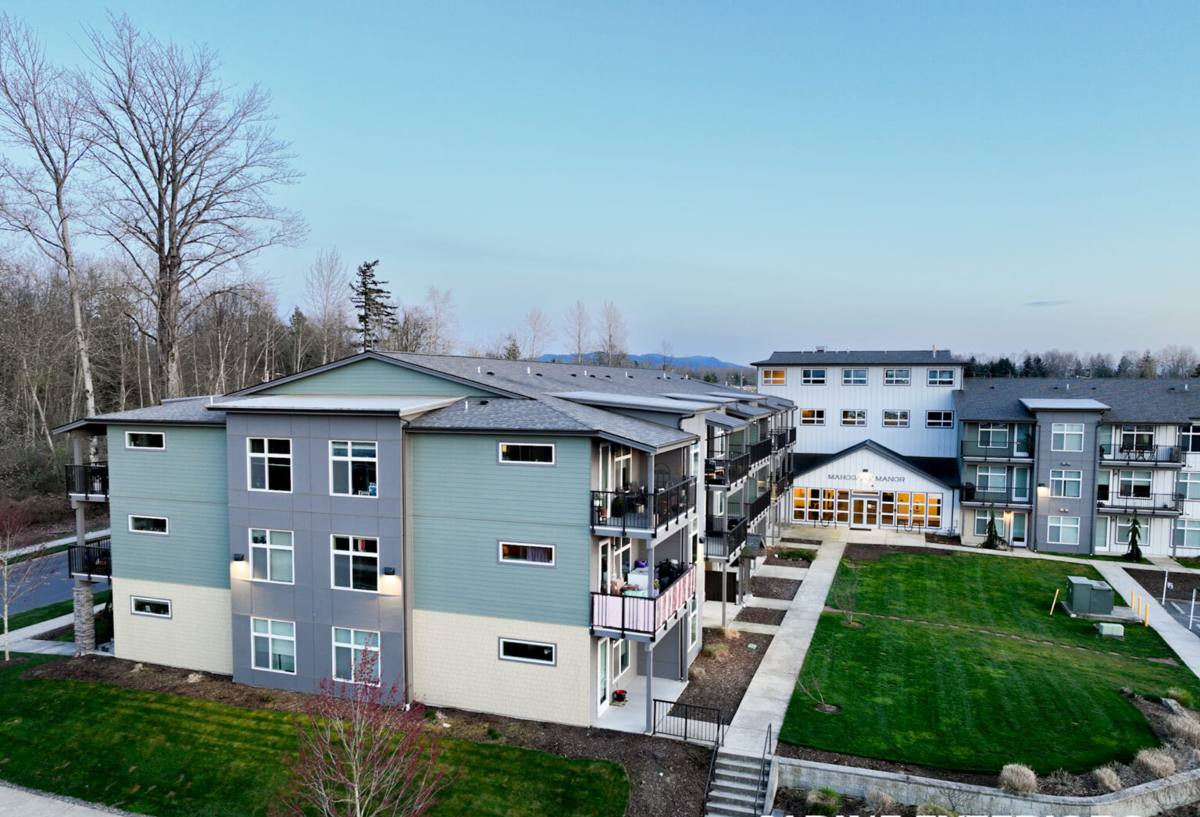
Why We Only Install James Hardie
We made a decision a while back to stop installing anything except James Hardie fiber cement siding, and Ferndale's climate is a big part of why. Hardie's HardieZone system is engineered specifically for different climate exposures, and this region falls squarely into the HZ5 zone — the specification built for wetter, cooler, coastal-influenced conditions. That's not marketing language; it changes the actual formulation and moisture-resistance engineering of the product going on the wall.
We're not going to tell you every other siding product is junk — that's not honest and it's not our call to make about materials we don't install. What we will say is that after years of doing exterior work in Whatcom County, we found ourselves repeatedly steering clients away from vinyl, LP SmartSide, primed wood, and cedar because of how each one behaves under sustained coastal moisture and moss pressure. Rather than keep having that conversation project by project, we standardized on the one product line that's engineered for this exact climate and backed it with a company policy: James Hardie, installed to spec, every time.
Non-Combustible Matters Here Too
Fire risk isn't the first thing people think about on the wet side of the Cascades, but Whatcom County still sees dry summer stretches, and wildfire smoke and ember exposure have become a real regional concern in recent years. Fiber cement is non-combustible. That's a genuine, material difference from vinyl or wood-based products, and it's one more reason Hardie fits our standard regardless of which specific product line a homeowner ends up choosing.
Which Hardie Products Make Sense for Ferndale Homes
James Hardie isn't one product — it's a system of profiles that can be mixed to match different architectural styles common around Ferndale and greater Bellingham.
- HardiePlank lap siding — the most common choice for traditional homes, available in several exposure widths and textures (smooth or cedar-grain)
- HardieShingle siding — for homes with Craftsman or cottage details, staggered or straight-edge panels that mimic cedar shake without the moss and moisture upkeep
- HardiePanel vertical siding — used for board-and-batten accents, gable ends, or full modern-style facades
- HardieTrim boards — for corners, window and door surrounds, and fascia, keeping the whole exterior in one consistent, factory-finished material
Most Ferndale projects end up using a primary lap profile for the main walls with trim and an accent panel or shingle detail to break up larger elevations — a look that reads well against the region's mix of wooded lots and water-view properties without relying on wood-toned finishes that need constant upkeep.
ColorPlus Factory Finish
We push clients toward ColorPlus finished products rather than field-painted siding whenever the color selection allows it. The finish is baked on at the factory under controlled conditions, which gives more consistent coverage and better fade and moisture resistance than a job-site paint job applied in variable weather — a real factor here, where you can't always count on a clean dry stretch to paint in.
What a Correct Installation Actually Involves
Fiber cement siding is only as good as the installation behind it. This is where most of the failures we get called out to inspect actually originate — not from the material itself, but from shortcuts taken in the details you can't see once the job is finished.
The Parts That Matter Most
- Weather-resistive barrier — a continuous, properly lapped moisture barrier behind the siding, not just wrapped around openings
- Flashing at every penetration — windows, doors, hose bibs, light fixtures, and anywhere else something interrupts the wall plane
- Correct fastener placement — following Hardie's engineering specs for fastener type, spacing, and embedment, not generic siding nail patterns
- Proper clearances — gaps at the bottom of the siding above roof lines, decks, and grade to keep splash-back and standing moisture away from the board edges
- Joint treatment — butt joints backed and sealed per spec, not just butted and caulked over
- Manufacturer-approved caulk and sealants — used at the specified joints only, since over-caulking can trap moisture rather than shed it
Every one of those details matters more in a climate that pushes rain sideways and keeps humidity high for months at a stretch. A flashing detail that would be a minor oversight in a drier climate can turn into hidden sheathing rot within a few wet seasons here.
Our Process for a Ferndale Siding Job
The sequence itself isn't unusual, but we don't skip steps to save time, and we walk clients through each stage before it happens.
- Assessment — we inspect existing siding, sheathing, and trim, and check for any moisture damage or rot before quoting the job
- Removal — old siding comes off cleanly, and we inspect the sheathing underneath rather than just siding over unknown conditions
- Sheathing repair — any soft, rotted, or damaged sheathing gets replaced before anything new goes on
- Weather barrier installation — continuous house wrap or building paper, properly lapped and taped at seams
- Flashing — installed at all windows, doors, and penetrations before siding starts
- Hardie installation — siding, trim, and accent panels installed to manufacturer fastening and clearance specs
- Caulking and touch-up — factory-matched caulk at specified joints, field-painted cut edges sealed per Hardie's guidelines
- Final walkthrough — we go over the finished job with the homeowner before calling it complete
Comparing Siding Options for a Coastal Whatcom County Home
We only install Hardie, but homeowners deserve an honest picture of why we made that call. Here's how the main factors stack up in a climate like Ferndale's.
| Factor | James Hardie Fiber Cement | Vinyl | Wood / Cedar |
|---|---|---|---|
| Moisture behavior | Engineered for HZ5 coastal exposure; resists warping | Doesn't absorb water but can warp/buckle with temperature swings and impact | Absorbs moisture; prone to rot without diligent upkeep |
| Moss and algae resistance | Factory finish resists growth better than raw or painted wood grain | Smooth surface resists growth reasonably well | High — wood grain and shade encourage moss and mildew |
| Fire rating | Non-combustible | Combustible | Combustible |
| Finish longevity | ColorPlus factory finish holds color well over time | Color molded in, but can fade and chalk | Requires repainting or restaining every few years |
| Maintenance | Periodic wash-down; minimal repainting if ColorPlus | Low, but cracks/holes are hard to spot-repair invisibly | Regular painting, staining, and moss treatment |
| Warranty structure | Long, transferable manufacturer warranty when installed to spec | Varies by manufacturer, often prorated | Typically no manufacturer warranty on the material's weathering |
None of this means the other materials are unusable everywhere — they're just not what we're willing to put our name behind in this specific climate, which is why we made Hardie our standard rather than offering a menu of options.
Why Local Installation Experience Matters in Ferndale
A crew that mostly works drier inland areas will make different assumptions than one that works Whatcom County's coastline regularly. Things like where to expect the worst wind-driven exposure on a given lot, how much clearance to leave given the moss and drainage patterns typical around here, and which wall orientations need extra attention aren't things you learn from a spec sheet — they're things you learn from doing the work in this specific climate repeatedly.
There's also a practical side: local crews know Whatcom County's permitting expectations, typical inspection timelines, and how weather windows actually work here for scheduling a multi-day siding job without losing days to rain delays. That local rhythm is worth something on a job that can take a week or more depending on the size of the home.
Signs a Ferndale Home May Need Siding Attention Soon
- Persistent moss or dark streaking that comes back shortly after cleaning
- Soft spots, bubbling, or visible warping in existing siding boards
- Paint that's peeling or blistering rather than just fading evenly
- Visible gaps at seams, corners, or trim joints
- A musty smell near exterior walls, which can indicate moisture getting behind the siding
- Siding that's original to a home built before more current moisture-management practices were standard
Maintenance After Installation
Correctly installed Hardie siding isn't maintenance-free, but it's low-maintenance compared to what most Ferndale homeowners are used to. A periodic gentle wash to keep moss and salt residue from building up, an annual look at caulked joints, and prompt attention if a section ever gets damaged by impact are really all it takes. Because the ColorPlus finish is factory-applied, most homeowners go many years without needing to think about repainting at all — a meaningful difference in a climate where painting season is short and unpredictable.
If your Ferndale home's siding is showing its age, or you're planning ahead of a repaint you'd rather not do again in five years, we're happy to take a look and give you a straight, no-pressure assessment. Use the form below to request a free estimate, and we'll walk the exterior with you and explain exactly what we'd recommend and why.