 Bellingham Siding
 Ferndale's Climate Is Hard on Windows — Here's Why
Ferndale sits close enough to Bellingham Bay and the Salish Sea that salt-laden air is a fact of life, not an occasional nuisance. That air works on window frames, hardware, and seals year-round, and it doesn't take a storm to do it — a steady onshore breeze on an ordinary afternoon carries enough salt to accelerate corrosion on unprotected metal components and slowly degrade weaker vinyl and wood finishes. Add in Whatcom County's long stretch of driving rain — wind-driven, sideways rain that hits window assemblies from angles a lot of installation details were never built to handle — and you have a climate that punishes shortcuts.
Then there's moss season, which in this part of Washington runs most of the year. Moisture that lingers around window frames, sills, and trim feeds moss and algae growth, and once organic growth gets a foothold in a gap or seam, it holds water against wood and framing far longer than open air would. Combined, these three factors — salt air, driving rain, and extended moss season — mean window replacement in Ferndale isn't just a cosmetic upgrade. It's a chance to correct water and air intrusion problems before they become rot, mold, or structural repairs.
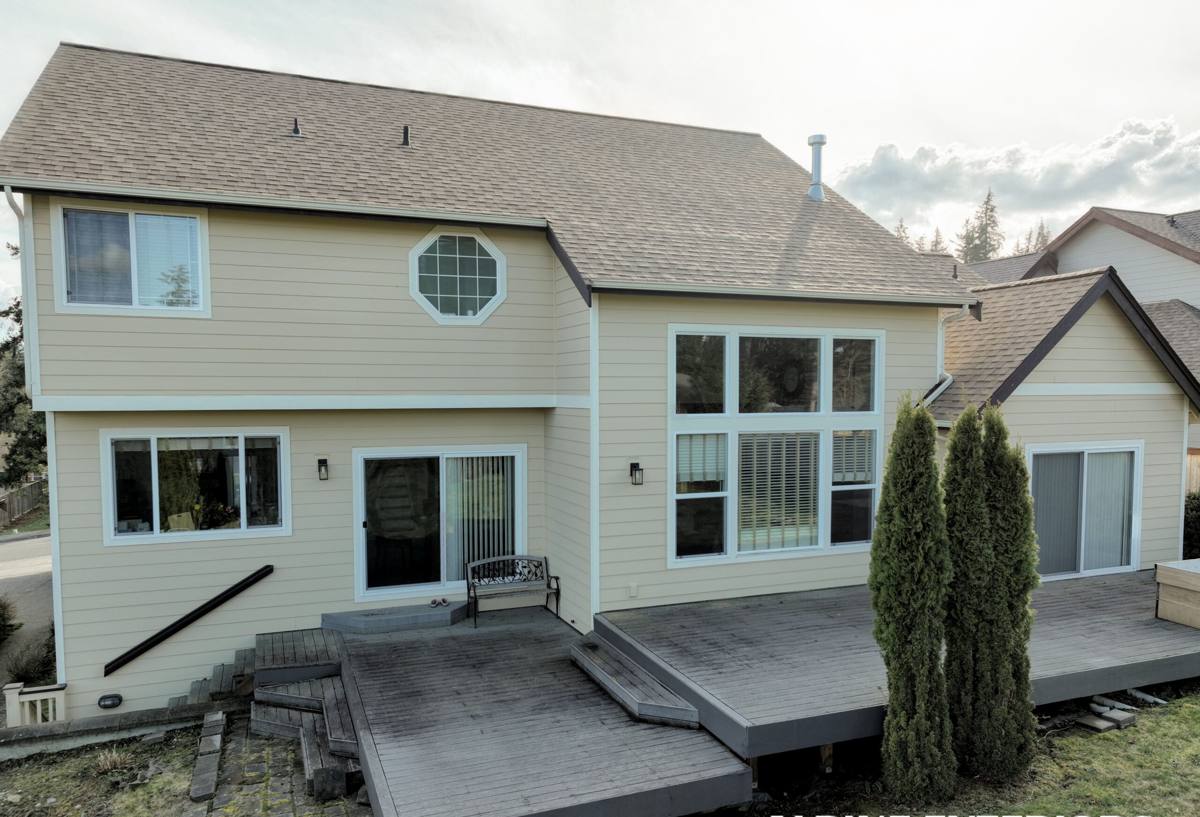
Signs Your Ferndale Home's Windows Need Replacing
Some warning signs are obvious. Others show up slowly enough that homeowners get used to them and stop noticing. Worth a walk-through of your own home with this list in hand:
- Fogging or a hazy film between panes — the seal between glass layers has failed and the insulating gas is gone
- Windows that are difficult to open, close, or lock, especially after damp weather
- Visible gaps around the frame where you can feel a draft or see daylight
- Soft, discolored, or spongy wood on the sill, jamb, or exterior trim
- Moss or dark streaking building up on the sill or lower frame faster than you can clean it off
- Condensation forming on the inside of the glass regularly, even in mild weather
- Noticeably higher heating bills without another clear explanation
- Paint or finish that keeps peeling or bubbling near the window frame no matter how often it's touched up
Any one of these can be a minor fix. Two or three together, especially on a home that's had its original windows for 15-20+ years, usually points to replacement being the more sensible long-term move than another round of caulk and touch-up paint.
What a Correct Window Replacement Job Actually Involves
It's Not Just Swapping Glass
A window replacement done right is as much about the installation as it is about the product. In a climate like Ferndale's, the flashing, sealing, and integration with your home's water management are what actually keep rain out — the window unit itself is only part of the system. We flash openings to shed water down and away from the framing, use sealants and tapes rated for the temperature swings and moisture exposure this region sees, and make sure the rough opening is properly prepared before a new window ever goes in.
Attention to the Details That Fail First
Corners, weep holes, and the interface between the window and your siding are where problems start. Weep holes need to stay clear so trapped moisture can drain instead of pooling inside the frame. Corners need continuous, not patched, sealant coverage. And the transition to siding needs to be weather-tight without trapping moisture behind the trim — a common mistake that looks fine for a year or two and then causes hidden rot.
Full Installation Checklist
- Remove old window and inspect the rough opening for hidden water damage or rot
- Repair or replace any compromised framing before installing anything new
- Install house wrap or flashing membrane correctly lapped to shed water downward
- Set the new window level, plumb, and square — not just "close enough"
- Insulate the gap between frame and rough opening without overcompressing it
- Seal the exterior with a sealant rated for the exposure the window faces
- Confirm weep holes are clear and functioning
- Test operation, locks, and seals before calling the job done
- Clean up and haul away old materials
Choosing the Right Window Materials for a Marine Climate
There's no single "best" window material — the right choice depends on your home, your budget, and how much upkeep you want to take on. Here's how the common options actually perform under Ferndale conditions, framed honestly rather than as a sales pitch.
| Material | How It Handles Salt Air & Rain | Maintenance | Typical Trade-Off |
|---|---|---|---|
| Vinyl | Good — won't corrode or rot, holds up well to salt exposure | Low — occasional cleaning | Fewer color/finish options; quality varies a lot by manufacturer |
| Fiberglass | Very good — dimensionally stable, resists moisture and salt well | Low | Higher upfront cost than vinyl |
| Wood (unclad) | Poor without diligent upkeep — vulnerable to moisture, rot, and moss in this climate | High — regular painting/sealing required | Best classic appearance, but the highest long-term maintenance burden here |
| Wood-clad (aluminum or vinyl exterior) | Good on the exterior face, but any breach in the cladding lets moisture reach wood underneath | Moderate | Interior wood warmth with exterior protection, if installed with care around seams |
| Aluminum | Fair — durable but conducts cold and can show pitting near salt air over time without a quality finish | Low to moderate | Slim sightlines, but generally less energy-efficient than other options |
For most Ferndale homes, vinyl and fiberglass are the practical workhorses — they shrug off salt air and repeated wet-dry cycles without demanding constant attention. Wood and wood-clad windows can still be the right call for a period-appropriate look on an older home, but we're upfront that they come with a real maintenance commitment in this climate, and we'll walk through what that commitment looks like before you commit to it.
Glass Packages That Make Sense for This Region
Double-pane, low-E glass with an argon fill is the baseline we'd recommend for most Ferndale homes — it handles the region's mild-but-damp temperature range well and cuts down on the condensation issues that come with older single-pane or failing units. Triple-pane glass is worth discussing for homes with specific noise concerns or rooms that run cold, but it's a real cost jump and isn't necessary for every application in this climate. We'll talk through what your specific home actually needs rather than defaulting to the most expensive option.
Our Window Replacement Process
1. On-Site Assessment
We start by walking the exterior and interior of your home, checking existing windows for the signs listed above, and looking at how water currently moves around your window openings — including any evidence of past leaks or moss buildup.
2. Honest Product Recommendation
Based on your home's exposure — how much direct salt air and driving rain it takes on, which windows face the weather — we recommend materials and glass packages that fit, not whatever has the highest margin.
3. Detailed, Written Estimate
You get a clear breakdown of scope, materials, and cost before any work starts. No vague allowances.
4. Installation
Old windows come out, any hidden framing damage gets addressed, and new windows go in following the flashing and sealing standards outlined above — not shortcuts that only hold up until the next atmospheric river event.
5. Final Walkthrough
We test every window with you before we consider the job finished, and go over basic care so the windows perform the way they're supposed to for years, not just for the first season.
What Affects the Cost of Window Replacement in Ferndale
| Factor | Why It Matters |
|---|---|
| Number and size of windows | Larger openings and whole-house projects have different economies of scale than a single replacement |
| Material choice | Vinyl, fiberglass, and wood-clad carry different material and labor costs |
| Glass package | Double-pane low-E vs. triple-pane vs. specialty coatings changes unit cost |
| Condition of the rough opening | Hidden rot or framing damage found during removal adds repair scope |
| Exterior finish work | Trim, siding tie-in, and repainting around new windows adds labor |
| Access and home layout | Second-story or hard-to-reach windows take more time and equipment |
We'd rather give you an honest range up front and a precise number after assessment than a lowball figure that grows once work starts. Broad ranges only get meaningful once we've seen the actual openings, so the assessment step matters more than any number we could quote sight-unseen.
Why It Matters That We Already Work in Ferndale
A contractor who regularly works Whatcom County homes has already seen how salt air, driving rain, and moss season play out on real houses in this specific stretch of coastline — not a generic climate zone on a spec sheet. That familiarity shows up in small decisions: which sealants actually hold up here, how much ventilation gap to leave around a frame, where moss tends to build up first, and which manufacturers' finishes are worth the price difference in this particular environment. It also means a crew that isn't guessing about permitting norms or typical home construction in the area, and one that's accountable locally if a callback is ever needed.
Keeping New Windows Performing Long-Term
New windows still need basic upkeep in this climate. Rinsing salt residue off frames and glass periodically, keeping weep holes clear of debris and moss, and checking exterior sealant for cracking once a year go a long way toward protecting the investment. We're happy to walk through a simple maintenance routine specific to your window material and your home's exposure at the end of the installation.
If your windows are showing any of the signs above, or you're simply planning ahead for a home that has to stand up to Ferndale's salt air, driving rain, and moss season year after year, we'd be glad to take a look. Use the form below to request a free, no-pressure estimate — we'll assess your windows honestly and give you options that fit your home and your budget, not a one-size-fits-all pitch.