 Bellingham Siding
 Ferndale Roofs Work Harder Than the Brochure Photos Suggest
Ferndale sits close enough to saltwater and open marine weather that its roofs age differently than roofs fifty miles inland. Homeowners here are used to hearing generic roofing advice that was written for a drier, sunnier climate and just doesn't hold up once you're dealing with Whatcom County's version of a Pacific Northwest winter. Salt-laden air off the water accelerates corrosion on exposed metal fasteners and flashing. Driving rain, often pushed sideways by wind, finds every weak seam and gap in flashing that a calmer climate would never expose. And a long, low-sun moss season means organic growth gets a real foothold on roofs that never fully dry out between storms.
None of that means Ferndale roofs are doomed to fail early. It means a roof replacement here has to be specified and installed with those three stressors in mind from the start, not treated as an afterthought.
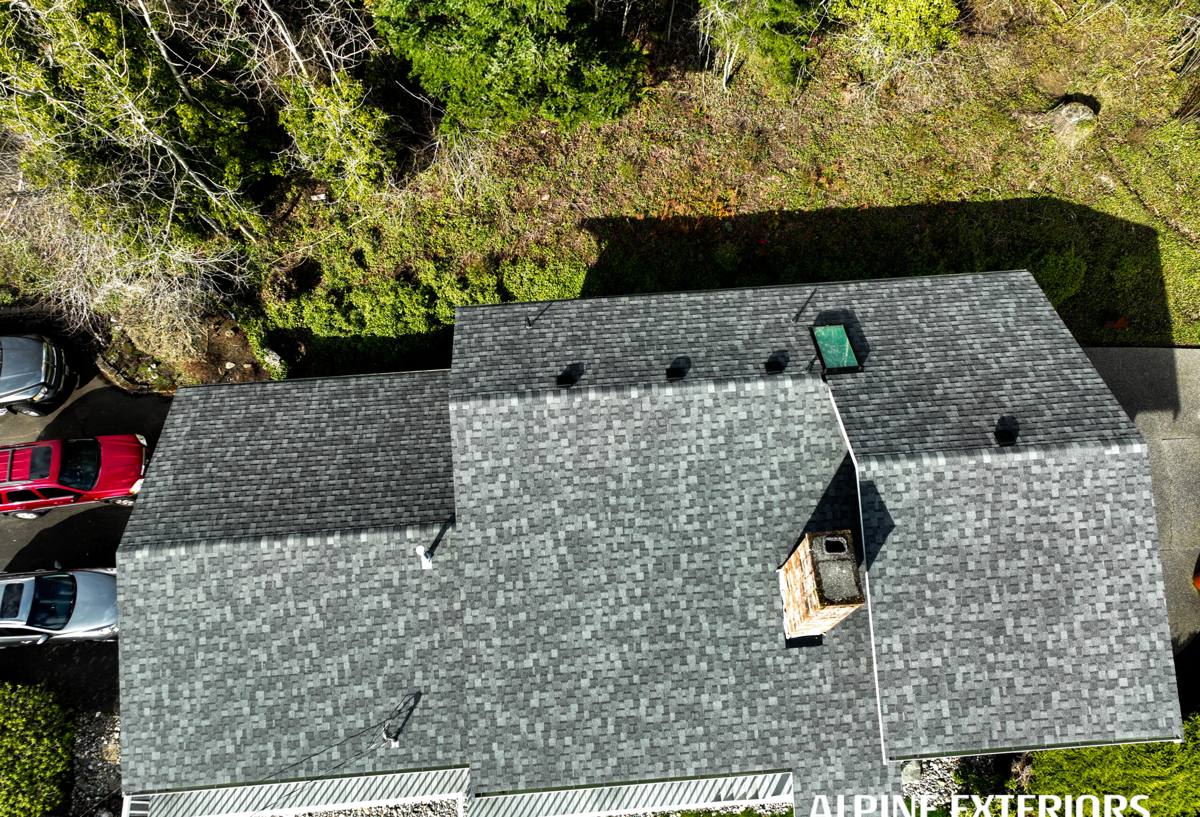
How to Tell a Ferndale Roof Needs Replacement, Not Another Repair
Repairs make sense when the underlying roof structure and majority of the material are still sound and the problem is localized. Replacement becomes the honest recommendation when the damage is systemic rather than isolated. A few patterns we look for:
- Granule loss heavy enough that you can see bare asphalt mat across multiple slopes, not just one worn patch
- Shingles that are cupping, curling, or cracking across the whole roof rather than in one sun-exposed section
- Moss growth that has worked under shingle tabs and started lifting them, rather than just sitting on the surface
- Soft or spongy decking felt underfoot during an inspection, which points to sustained moisture intrusion
- Recurring leaks in different spots each winter, suggesting the underlayment has failed broadly rather than at one flashing point
- A roof already past, or close to, its material's expected service life in a coastal climate
If a roof is showing two or more of these at once, patch repairs usually become a cycle of chasing new leaks every wet season rather than actually solving the problem.
What a Correct Roof Replacement Actually Involves
A roof replacement is more than swapping old shingles for new ones. In a climate like Ferndale's, the layers underneath the visible surface matter as much as the material on top.
Tear-off and deck inspection
Full removal of the old roofing down to the decking lets us actually see what's underneath instead of guessing. Any decking that's soft, delaminated, or water-stained gets replaced before anything new goes down. Covering over a compromised deck is one of the most common shortcuts that leads to early failure.
Underlayment built for wind-driven rain
Standard felt underlayment is fine in calmer climates. In a coastal, storm-exposed area, synthetic underlayment with strong water resistance, plus self-adhering membrane at eaves, valleys, and other vulnerable transitions, gives the roof a real second line of defense when wind pushes rain up under the shingle laps.
Flashing at every transition
Chimneys, skylights, sidewalls, and valleys are where most leaks actually start, not in the open field of the roof. Correctly formed and properly lapped flashing, in a corrosion-resistant material, is non-negotiable this close to salt air.
Ventilation that matches the climate
A roof that can't breathe traps moisture in the attic, which shortens the life of the decking and the shingles from underneath. Balanced intake and exhaust ventilation is part of a correct replacement, not an optional upgrade.
Choosing a Roofing Material for Ferndale's Climate
There isn't one universally "best" roofing material — the right choice depends on budget, the home's architecture, and how much long-term maintenance the homeowner wants to take on. Here's how the common options actually compare under Ferndale's conditions.
| Material | Typical Coastal Lifespan | Moss & Algae Resistance | Maintenance Needs |
|---|---|---|---|
| Asphalt composition shingle (standard) | Moderate | Fair — benefits from algae-resistant granules | Periodic moss removal recommended |
| Asphalt composition shingle (architectural, algae-resistant) | Moderate to long | Good | Lower, still benefits from occasional cleaning |
| Standing seam metal | Long | Very good — sheds moss more effectively due to smooth surface | Low, watch fastener and seam condition near saltwater |
| Synthetic shake/slate composites | Long | Good | Low to moderate |
Our professional standard leans toward algae-resistant asphalt or metal for most Ferndale homes, specifically because of how much moss and algae exposure this area gets compared to drier parts of the state. Untreated, standard-grade shingles simply take on more organic growth here, which shortens their practical service life even if the manufacturer's paper rating looks similar to a treated product's.
How Our Roof Replacement Process Works
- On-site inspection and assessment — we walk the roof, check the attic, and evaluate decking, flashing, and ventilation, not just the shingle surface.
- Straightforward estimate — a written scope of work and material recommendation, with the reasoning explained so you understand what you're paying for.
- Scheduling around the weather window — we plan tear-off in stretches where we can get the roof dried in and protected before the next system rolls through.
- Tear-off and deck repair — old material removed, decking inspected, any compromised sections replaced.
- Underlayment, flashing, and ventilation installed — the layers that actually determine how the roof performs in wind-driven rain and moss season.
- Final material installation and cleanup — new roofing installed to manufacturer specification, site cleaned of debris and fasteners.
- Walkthrough — we go over the finished roof with you before calling the job done.
Moss and Algae: Prevention Built Into the Roof, Not Bolted On After
Moss doesn't just sit on a roof looking bad — over time it holds moisture against the shingle surface, works into laps and edges, and physically lifts material as it grows. In a climate with this much shade, tree cover, and damp air, moss isn't a maintenance failure on the homeowner's part; it's a predictable outcome of the local environment. The most effective prevention starts during replacement: algae-resistant shingle granules, adequate roof ventilation to reduce the moisture the roof holds onto, and where practical, keeping overhanging branches trimmed back to let the roof surface dry between rains. Zinc or copper strips near the ridge can help slow regrowth on some roofs, though they're a supplement to good material choice and airflow, not a substitute for either.
What Actually Drives the Cost of a Roof Replacement
Every roof replacement is priced around the specifics of that roof, and we won't put a number on a job we haven't inspected. What we can tell you is which factors move the price up or down, so an estimate makes sense when you see it.
| Factor | Why It Matters |
|---|---|
| Roof size and pitch | More surface area and steeper pitches both increase material and labor time |
| Number of existing layers | Tear-off of multiple old layers takes more labor and disposal than a single layer |
| Decking condition | Rot or water damage found during tear-off means replacement decking, which adds cost but is not optional to skip |
| Material selection | Standard asphalt, algae-resistant asphalt, and metal all sit at different price points |
| Roof complexity | Valleys, dormers, chimneys, and skylights each add flashing work and time |
| Access and site conditions | Tree cover, steep lots, or limited staging space can add labor |
Broadly, homeowners should expect a full roof replacement to be one of the larger exterior investments they make in the house — but the honest number only comes from an actual inspection, not a phone estimate based on square footage alone.
Why Hiring a Crew That Already Works in Ferndale Matters
A roofing crew that mostly works drier, inland climates will often spec a roof the same way they would anywhere else — because that's what they know. A crew that regularly works Ferndale and the surrounding Whatcom County coastline has already seen which shortcuts fail here: underlayment that isn't rated for wind-driven rain, flashing that corrodes faster near saltwater, ventilation that's undersized for how much moisture this climate holds. That local pattern recognition shows up in fewer callbacks and a roof that's actually built for the weather it has to survive, not just the weather on a spec sheet.
It also means a crew that understands the practical realities of scheduling around this region's wet season, and how to sequence a tear-off so your home isn't sitting exposed when a storm rolls in off the water.
Permits and Timing in Whatcom County
Roof replacements in Ferndale typically require a building permit, and the process is straightforward once the scope of work is defined. We handle the permit process as part of the job rather than leaving it for the homeowner to sort out. On timing: while roofing can be done across most of the year here, we prioritize scheduling tear-offs during stretches with a reliable dry window, and we sequence the work so the roof is dried in and protected the same day whenever conditions allow — not left open overnight waiting on the next stage.
If your roof is showing its age or you're just not sure whether repair or full replacement makes sense, we're happy to take a look and give you a straightforward assessment. Use the form below to request a free, no-pressure estimate.